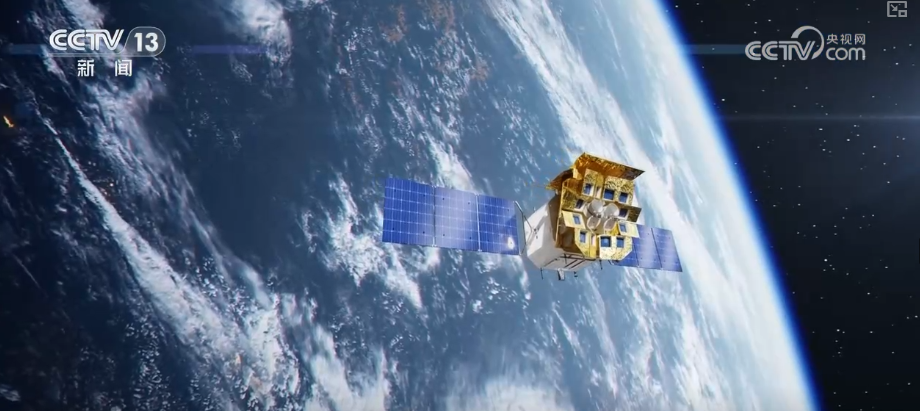
eXTP

Search documents
中国将寻找第二颗地球
证券时报· 2025-11-24 11:56
Core Insights - During the "14th Five-Year Plan" period, China plans to launch four satellites focusing on major frontier issues such as the origin of the universe, space weather, and the origin of life [1][2] Group 1: Satellite Missions - The first satellite, the "Hongmeng Plan," consists of a low-frequency radio telescope array of 10 satellites that will be sent to the far side of the moon to capture weak signals from deep space, revealing secrets from the chaotic period before the first stars appeared [1] - The second satellite, "Kuafu II," will be the first to orbit the solar poles, aiming to understand the ultimate secrets of solar magnetic activity and improve predictions of solar storms [1] - The third satellite, the "Exoplanet Survey Satellite," will search for Earth-like planets in the habitable zone, potentially identifying a second home for humanity [2] - The fourth satellite, the eXTP, will observe extreme regions of the universe, such as the event horizon of black holes and the surfaces of neutron stars, to test Einstein's predictions and explore the boundaries of physics [2]

“全”释硬科技书写“中国答案” 空间科学领域成果多点突破、整体迸发
Yang Shi Wang· 2025-11-24 11:12
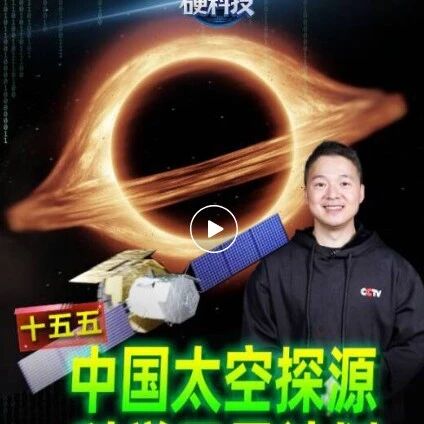
Core Insights - The Chinese Academy of Sciences has announced significant breakthroughs in space science through its satellite missions, focusing on transient celestial bodies, cosmic ray propagation, and solar eruptions [1][14] Group 1: Satellite Discoveries - The Tian Guan satellite has discovered a new type of X-ray transient source, providing crucial insights into these mysterious celestial bodies [5][4] - The satellite's unprecedented wide field of view and sensitivity have transitioned China's cosmic research from capturing "static images" to recording "dynamic movies," leading to breakthroughs in the study of black holes, neutron stars, and gamma-ray bursts [4][5] Group 2: Future Missions - During the 14th Five-Year Plan, China will implement a space exploration satellite program, launching four scientific satellite missions aimed at exploring the origins of the universe, space weather, and life [14][15] - The first satellite, part of the Hongmeng plan, will consist of a low-frequency radio telescope array to be deployed on the far side of the moon, capturing faint signals from the early universe [17] - The second satellite, Kua Fu II, will orbit the sun's poles, aiming to uncover the ultimate secrets of solar magnetic activity [19] - The third satellite will search for Earth-like exoplanets in habitable zones, potentially identifying a "second home" for humanity [21] - The fourth satellite, eXTP, will observe extreme regions of the universe, such as black hole event horizons and neutron star surfaces, to test Einstein's predictions and explore the boundaries of physics [23]