
墨子号

Search documents
两会丨全国人大代表、本源量子首席科学家郭国平:锚定量子计算产业化 破解“书架”到“货架”转化难题
证券时报· 2026-03-09 08:37
Core Viewpoint - The article emphasizes the importance of quantum technology, particularly the industrialization of quantum computing and the establishment of a self-sustaining ecosystem, as a new economic growth point in China during the "14th Five-Year Plan" period [1]. Group 1: Achievements and Current Status - During the "14th Five-Year Plan" period, China has made significant breakthroughs in quantum technology, achieving a historic leap from following to leading in certain areas, with notable projects like "Mozi," "Nine Chapters," "Zu Chongzhi," and "Benyuan Wukong" [1]. - The quantum industry is still in a critical phase of transitioning from research results to industrial-scale applications, facing challenges such as insufficient collaboration between academia and industry, and a lack of demonstration environments for new technologies [2]. Group 2: Challenges and Recommendations - There is a need for tighter collaboration between industry, academia, and research institutions due to the interdisciplinary nature of quantum technology, which complicates the integration of efforts across the value chain [2]. - The article highlights the "valley of death" in the commercialization of quantum technology, where despite increasing maturity, there is a lack of real-world application scenarios and financial support for early-stage projects [2]. - Recommendations include forming innovation consortia led by major enterprises to tackle national tasks collaboratively, and establishing demonstration zones for future industry applications to provide practical environments for new technologies [2]. Group 3: Financial and Talent Development - The article suggests exploring the establishment of a national future industry guidance fund to encourage long-term capital investment in hard technology, making it easier for investors to support early-stage projects [3]. - It advocates for the development of a future technology academy in Hefei, promoting a seamless educational model from undergraduate to doctoral levels to nurture talent in quantum technology [3]. - Hefei is positioned as a key player in the global quantum industry, aiming to implement over 100 commercial applications of quantum technology during the "15th Five-Year Plan" period [3].

未知机构:20260223量子更新春晚量子破圈重视技术突破和产业趋势国金机械-20260224
未知机构· 2026-02-24 03:10
Summary of Quantum Industry Conference Call Industry Overview - The conference call focused on the quantum technology industry, highlighting significant advancements and trends in quantum computing and communication [1][2]. Core Insights Technological Confidence 1. **Quantum Computing**: - A breakthrough in quantum surface code technology was achieved by Professor Pan's team in December 2025, marking a significant advancement with a logic error rate that decreases significantly as the code distance increases, comparable to Google's Willow error correction technology [2][3]. - The core technology involves a microwave quantum state leakage suppression architecture, achieving a code distance of 7 [3]. 2. **Quantum Communication**: - In February, the team constructed a scalable quantum relay module, achieving a distance breakthrough in device-independent quantum key distribution (DI-QKD) exceeding 100 kilometers, which is two orders of magnitude better than the international standard [3][4]. Industry Trends 1. **Quantum Computing**: - Leading company GuoDun Quantum turned a profit in 2025, marking a significant turning point in the industry. The company's revenue for quantum computing reached approximately 1 billion, nearly doubling year-on-year, with a backlog of quantum computer orders close to 1 billion [5]. - Liangxi Technology reported high growth in orders, with nearly 1 billion in orders for delivery in 2026, and an additional 62 million in new orders in Q3, indicating a clear acceleration in order growth [5]. 2. **Quantum Communication**: - Over 40 quantum secure communication metropolitan networks have been established in China, with a total backbone network mileage exceeding 12,000 kilometers. The "14th Five-Year Plan" period will see the gradual opening of quantum communication backbone networks in regions like Beijing-Han, Wuhan-Hubei, and the Yangtze River Delta, which is expected to lead to a surge in quantum communication terminal deployment [5]. Outlook 1. **Short-term**: - Anticipation of the release of detailed guidelines following the Two Sessions, updates from the NVIDIA GTC conference regarding quantum advancements, and progress in quantum L4 autonomous driving chips [6]. 2. **Mid-term**: - Local government tenders for supercomputing centers, along with order growth from GuoDun Quantum and a turning point in financial reports [6].

新年贺词中的家、国、天下
Xin Lang Cai Jing· 2026-01-11 20:19
Group 1 - The core message of the New Year speeches by President Xi Jinping emphasizes the interconnectedness of family, nation, and the world, promoting a vision that aligns personal dreams with national aspirations and global destiny [1] - The speeches highlight the importance of "home" as a tangible concept, focusing on everyday life aspects such as employment, education, healthcare, and social welfare, which contribute to the overall happiness and security of families [3][4] - The narrative illustrates how individual family efforts contribute to national development, showcasing the dual relationship between personal responsibilities and national progress [4][6] Group 2 - The speeches document China's historical mission of national rejuvenation and modernization, emphasizing the importance of reform and opening up as essential for progress [6][7] - They reflect on China's advancements in technology and innovation, showcasing significant achievements in various fields, which underline the country's manufacturing and creative capabilities [7] - The speeches advocate for ecological civilization, highlighting the importance of harmonious coexistence between humanity and nature, and positioning ecological values as central to high-quality development [8] Group 3 - The speeches express a commitment to peace and development, framing these as fundamental to achieving a harmonious global community, and emphasizing China's role as a responsible major power [10][11] - They promote the idea of mutual respect for cultural diversity and the importance of civilizational exchanges, aiming to overcome barriers and conflicts through dialogue and cooperation [12] - The overarching theme of the speeches is the pursuit of a shared future for humanity, advocating for global cooperation and the construction of a community with a shared destiny [10][12]

中交天和TBM技术推动水利电力事业发展 造福数千万人民
Xin Lang Cai Jing· 2025-12-31 04:29
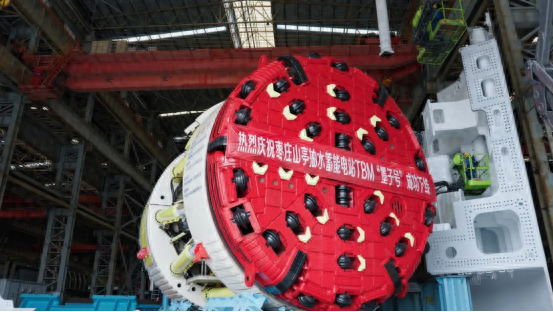
Core Viewpoint - The article highlights the advancements in Tunnel Boring Machine (TBM) technology developed by China Communications Construction Company (CCCC) Tianhe, showcasing its role in enhancing water conservancy and power projects both domestically and internationally, particularly in the context of the Belt and Road Initiative. Group 1: TBM Technology Advancements - The "Luoshui No. 1" TBM is designed to tackle extreme geological conditions, featuring a robust thrust of 36,368 kN and capable of boring through 150 MPa hard rock and complex fault zones over a length of 6,970 meters [1][3] - The "Mozi No. 1" TBM has achieved a global record with a minimum turning radius of 50 meters, demonstrating its capability to navigate through complex geological formations [1][3] - The "Cizhong No. 1" TBM has been tailored for long-distance hard rock excavation, achieving a maximum daily progress of 45 meters and a monthly record of 1,000 meters, showcasing its efficiency in challenging conditions [3][7] Group 2: International Applications - CCCC Tianhe's TBM technology is being utilized in the Lesotho Highlands Water Project, where two TBMs are boring a 34.42 km water conveyance tunnel, addressing water scarcity issues between Lesotho and South Africa [9][11] - The "Qihang No. 1" TBM is being employed in the Quezon City water supply project in the Philippines, which will benefit 14.7 million people, demonstrating the global impact of CCCC Tianhe's technology [11][12] - The integration of advanced technologies such as laser targeting and dynamic monitoring systems in TBMs enhances their operational efficiency and safety in international projects [9][12] Group 3: Commitment to Innovation and Sustainability - CCCC Tianhe emphasizes a shift from traditional manufacturing to intelligent manufacturing, focusing on eco-friendly and sustainable practices in TBM development [14] - The "Mozi No. 1" TBM exemplifies the balance between development and ecological protection, reflecting the company's commitment to social responsibility and sustainable engineering [14] - The ongoing innovation in TBM technology is positioned to support the Belt and Road Initiative, contributing to global water conservancy and power infrastructure development [14]
让量子科技更好造福人类
Ke Ji Ri Bao· 2025-12-29 00:48
Core Insights - Quantum technology is emerging as a pivotal force in the global tech landscape, with significant advancements made in 2025, including breakthroughs in quantum computing and communication [1][2][3] - The potential of quantum mechanics is vast, challenging traditional logic and offering revolutionary solutions to complex problems across various fields [2][3] Group 1: Quantum Technology Advancements - The "Zuchongzhi No. 3" developed by the University of Science and Technology of China set a world record for the superiority of superconducting quantum computing systems [1] - Google's "Quantum Echo" experiment achieved speeds 13,000 times faster than classical supercomputers for specific tasks, influencing global quantum computing research [1] Group 2: Integration of Quantum Mechanics in Daily Life - Quantum mechanics underpins essential technologies such as semiconductors in smartphones and magnetic resonance imaging in hospitals, indicating its deep integration into everyday life [2] - The maturation of quantum computing, communication, and sensing is expected to revolutionize information processing and world transformation [2] Group 3: National Strategies and Investments - Multiple countries have elevated quantum research to a national strategic level, with the U.S. enacting the National Quantum Initiative Act and investing heavily in quantum research [3] - The European Union has launched a significant ten-year "Quantum Flagship Program," while other nations like Canada, Japan, South Korea, and Australia have developed their own quantum technology blueprints [3] Group 4: Future Implications of Quantum Technology - Quantum technology is seen as a key to addressing global challenges such as energy crises and information security, fostering international collaboration [3]
全球量子企业对比:美国显著领先,中国第一梯队
Sou Hu Cai Jing· 2025-12-16 02:53
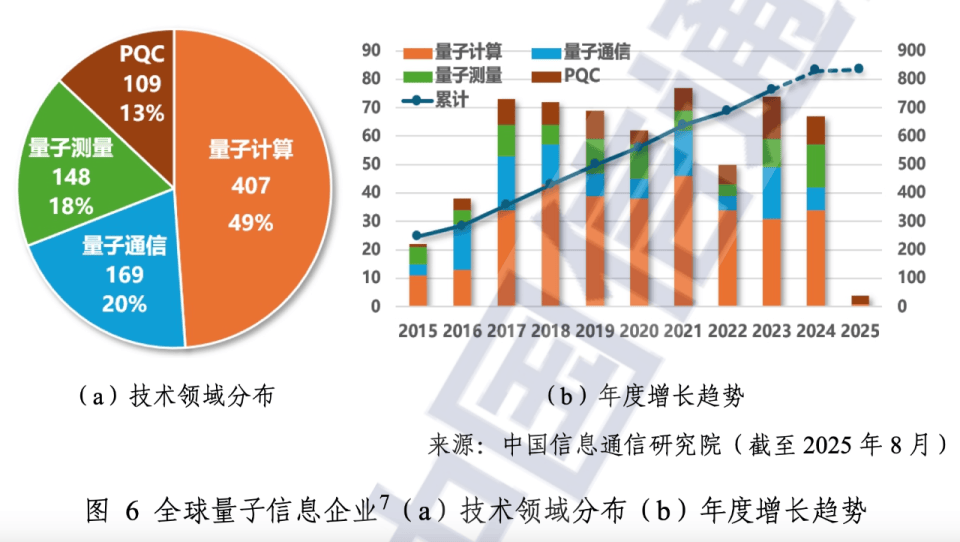
Core Insights - The report on quantum information technology indicates that the number of global quantum-related companies has surpassed 800, with quantum computing dominating the field at approximately 50% [1] - The growth of quantum information companies has been stable, averaging about 60 new companies per year over the past five years, despite a slight decline in 2022 [1] Company Distribution - The European Union has over 230 quantum companies, accounting for 29%, with Germany having more than 70 [4] - The United States has over 210 quantum companies, making up 26%, while China has around 140, representing 17% [4] - The concentration of quantum computing companies in Europe and the U.S. is nearly six times that of China, while China leads in quantum communication [4] Market Performance - There are currently 11 quantum companies listed on capital markets, with an average market value of $2.9 billion, significantly higher than the previous year [4] - The average market value of U.S. quantum companies is $6.7 billion, with IonQ being the first to exceed $13.3 billion [4] Unicorns and Valuations - There are 12 quantum unicorns, with an average valuation of $4.1 billion in the U.S. and $1.4 billion in China, indicating a substantial valuation gap [5] - PsiQuantum leads with a valuation of $6.75 billion, while the highest-valued quantum startup in France is Alice&Bob at $400 million [5] Investment Trends - The U.S. maintains a significant lead in investment, with major funding rounds such as PsiQuantum's $750 million and IonQ's $1 billion [7] - Eight out of the top ten funding events in quantum computing are dominated by U.S. and European companies, reflecting strong market confidence [7] Technological and Industrial Development - China's quantum information technology and industry development is positioned in the global first tier, supported by comprehensive planning and policy frameworks since the 14th Five-Year Plan [8] - Major scientific projects and facilities, such as the Anhui National Laboratory and the Greater Bay Area Quantum Science Center, are pivotal for innovation [8] Talent Development - Seventeen universities in China have established undergraduate programs in quantum information science, with institutions like Tsinghua and Peking University leading in talent cultivation [9]
我国空间科学实现多点突破
Jing Ji Ri Bao· 2025-11-25 07:56
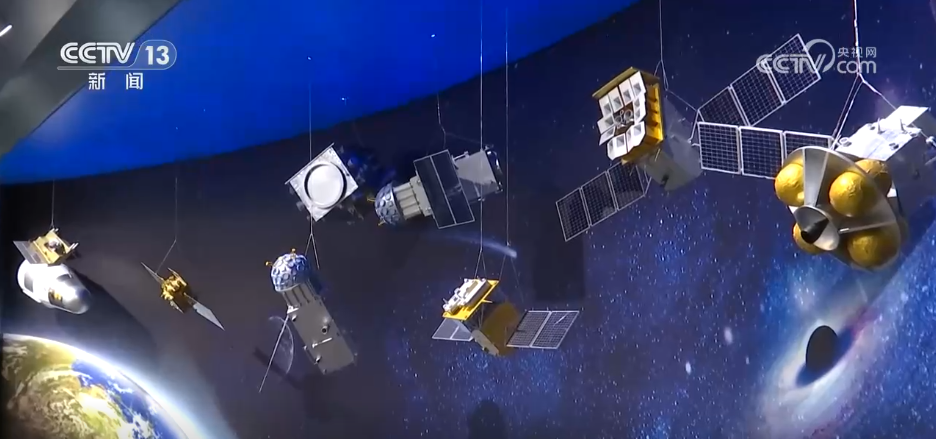
Core Insights - The Chinese Academy of Sciences announced significant achievements in space science through its pilot project initiated in 2011, which has successfully developed and launched eight scientific satellites, including "Wukong," "Shijian-10," "Micius," "Huiyan," "Taiji-1," "Huairou-1," "Kuafu-1," and "Tianguan" [1] Group 1 - The pilot project has led to major original achievements, creating several "firsts" for China and even the world [1] - China's space science has transitioned from "catching up" and "keeping pace" to "leading" in certain areas, marking a historic leap [1] - The project has stimulated rapid advancements in cutting-edge payloads and satellite platform technologies [1]
我国空间科学先导专项成果集中发布 “十五五”期间我国将实施太空探源科学卫星计划
Yang Guang Wang· 2025-11-25 07:24
Core Insights - The core focus of the news is the significant breakthroughs achieved by China's space science satellite missions, highlighting the advancements in space science and technology during the "14th Five-Year Plan" period [1][2]. Group 1: Achievements and Breakthroughs - The Chinese Academy of Sciences has successfully developed and launched eight scientific satellites, including "Wukong," "Shijian-10," and "Mozi," resulting in major original achievements and several firsts for China and the world [1]. - The "Wukong" satellite has made a notable discovery by identifying a hardening structure in the energy spectrum of cosmic ray helium nuclei, achieving precise measurements in the energy range above 1 trillion electron volts per hertz [1]. Group 2: Future Plans - During the "14th Five-Year Plan" period, the National Space Science Center of the Chinese Academy of Sciences will implement the space exploration scientific satellite plan, which includes projects like the "Hongmeng Plan" and "Kuafu-2," aiming for breakthroughs in areas such as the cosmic dark age and exoplanet detection [2].
用科技“加速度”搭建“登天路” 中国探索太空奥秘的“长征”不停步
Yang Shi Wang· 2025-11-25 02:45
Core Insights - The Chinese Academy of Sciences announced significant scientific breakthroughs from space science satellite missions during the 14th Five-Year Plan period, with plans to implement the "Space Exploration Science Satellite Program" in the upcoming 14th Five-Year Plan [1][3]. Group 1: Space Science Satellite Missions - The program will involve the development and launch of four space science satellite missions aimed at exploring cosmic mysteries, including the "Hongmeng Plan" for detecting the cosmic dark age, "Kuafu-2" for direct imaging of the solar polar regions, an exoplanet survey mission to find "Earth 2.0," and an enhanced X-ray time-variable and polarization space observatory to study new physical laws under extreme cosmic conditions [3][5]. - The director of the National Space Science Center, Wang Chi, emphasized the goal of achieving original scientific breakthroughs in understanding the origins and evolution of the universe, space weather, and extraterrestrial life by 2035 [5]. Group 2: Achievements in Space Science - Since its inception in 2011, the space science pilot project has successfully developed and launched eight scientific satellite missions, including "Wukong," "Shijian-10," "Micius," "Huiyan," "Taiji-1," "Huairou-1," "Kuafu-1," and "Tianguan," leading to significant discoveries such as the first X-ray all-sky map and the most precise cosmic ray energy spectrum measurements [7]. - These missions have contributed to a rapid advancement in China's space science innovation, marking a significant milestone in the country's scientific capabilities [7]. Group 3: Lunar Research - Recent studies revealed that the lunar soil brought back by the Chang'e 6 mission from the far side of the moon has unique properties, being significantly drier than the Sahara Desert and exhibiting a sticky texture due to static electricity rather than water [8][10]. - The far side of the moon has undergone more intense meteorite impacts, resulting in finer and more angular soil particles, which contribute to its unique physical characteristics and implications for future lunar exploration and base construction [12].
【科技日报】中国空间科学创新发展进入“快车道”
Ke Ji Ri Bao· 2025-11-25 02:15
Core Insights - The National Space Science Center of the Chinese Academy of Sciences announced significant scientific breakthroughs in space science, marking a historic leap for China's space science innovation and positioning it as a leader in certain fields [1][5]. Group 1: Achievements and Innovations - Since its launch in 2011, the space science initiative has successfully developed and launched eight scientific satellites, achieving numerous original results and setting multiple records in China and globally [2]. - The "Tian Guan" satellite created the world's first X-ray all-sky map, while the "Wu Kong" satellite provided the most precise cosmic ray energy spectrum to date [2]. - The "Hui Yan" satellite directly measured the universe's strongest magnetic fields and detected high-speed jets near black holes, showcasing advancements in extreme condition measurements [2][3]. Group 2: International Collaboration - The initiative has fostered new paradigms of international cooperation, including the "Tian Guan" satellite project, which involved collaboration with the European Space Agency and other European countries [4]. - The "Wei Xiao" satellite project represents a comprehensive collaboration between China and Europe, covering all phases from design to data analysis [4]. Group 3: Future Plans - The National Space Science Center plans to focus on major frontier issues such as the origins of the universe, space weather, and life, with upcoming projects including the "Hong Meng Plan" and "Kua Fu II" [4]. - The goal is to achieve breakthroughs in areas like the dark ages of the universe and exoplanet detection during the 14th Five-Year Plan period [4].