
Ren Min Ri Bao Hai Wai Ban

Search documents
日本军备扩张按下“加速键”(环球热点)
Ren Min Ri Bao Hai Wai Ban· 2025-12-10 23:01
Core Viewpoint - The Japanese government has approved a supplementary budget for the fiscal year 2025, allocating 847.2 billion yen to the Ministry of Defense, leading to a record total defense spending of approximately 11 trillion yen for the current fiscal year, marking the 13th consecutive year of defense budget increases [1][2]. Group 1: Defense Spending Increase - Japan's defense budget is set to reach about 11 trillion yen for the fiscal year 2025, with a GDP ratio of 2% [2]. - The supplementary budget includes 1.1 trillion yen for defense-related expenses, with 847.2 billion yen specifically allocated for military equipment purchases, including 122.2 billion yen for frigates and submarines, and 56.6 billion yen for missiles [2]. - The defense spending as a percentage of GDP is projected to rise from 1.19% in fiscal year 2023 to 2% by fiscal year 2025, indicating a rapid increase [2]. Group 2: Strategic Motivations - The increase in defense spending is part of a broader strategy initiated by former Prime Minister Shinzo Abe, aimed at breaking through previous security policies and aligning with U.S. military objectives to strengthen the Japan-U.S. alliance [2][3]. - The Japanese government aims to achieve a "normal military power" status, moving away from the post-World War II principle of "defensive defense" [3][9]. Group 3: Regional Security Implications - Japan's military expansion poses significant risks to regional security, challenging the outcomes of World War II and the post-war international order [5][9]. - The government's actions, including the potential for arms exports and participation in international military exercises, indicate a shift towards a more aggressive military posture [7][8]. Group 4: Domestic Concerns - The rising defense budget has sparked public protests, with citizens expressing concerns over the neglect of social welfare in favor of military spending [10][11]. - The government’s plan to finance increased defense spending through personal income tax hikes raises concerns about the economic burden on the Japanese populace amid ongoing economic challenges [12].

优质优价,让市场有效运行(这些新提法,写入“十五五”规划建议⑧)
Ren Min Ri Bao Hai Wai Ban· 2025-12-10 23:01
Core Viewpoint - The Chinese market is undergoing a significant transformation from a focus on low prices to an emphasis on quality and value, as consumers increasingly prioritize quality and experience over mere cost savings [6][10][11]. Group 1: Consumer Behavior Changes - Consumers are shifting their purchasing criteria from "absolute low prices" to safety, quality, and service, indicating a rational pursuit of a better quality of life [7][10]. - The middle-income group is expanding, and Generation Z is becoming the main consumer force, focusing more on quality, health, experience, and emotional resonance [10][14]. Group 2: Industry and Market Dynamics - Many companies are moving away from price wars and are instead focusing on technology, quality, and brand development [6][12]. - The "Fifteen Five" plan emphasizes the creation of a market order that prioritizes quality and fair competition, which is essential for fostering innovation and enhancing economic vitality [6][8][11]. Group 3: Implications for Business - Companies are encouraged to adopt a "quality over price" strategy, which can lead to higher customer satisfaction and loyalty, even if it results in lower foot traffic compared to low-price competitors [12][13]. - The integration of quality standards and branding can help businesses focus on producing high-quality products while ensuring fair compensation for producers [7][13]. Group 4: Regulatory and Policy Framework - The market regulatory authority is actively implementing policies to combat "involution" in competition, including holding discussions with businesses and enforcing fair competition practices [15][16]. - Experts suggest that breaking down local protectionism and enhancing market access for high-quality products are crucial for achieving a balanced market environment [16][17].

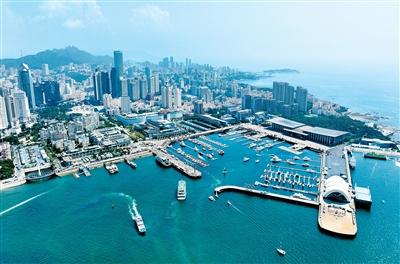
外籍人才为何点赞青岛
Ren Min Ri Bao Hai Wai Ban· 2025-12-10 23:01
Core Viewpoint - Qingdao has become an attractive city for foreign talents due to its open and inclusive environment, innovative opportunities, and quality of life, leading to a significant influx of international professionals [12][22]. Group 1: Talent Attraction - Qingdao has ranked in the top ten of the "Most Attractive Chinese Cities for Foreign Talents" list for 14 times since 2010, showcasing its appeal to international professionals [12]. - The establishment of the China-Shanghai Cooperation Organization Science and Technology Innovation Cooperation Center in September aims to enhance regional collaborative innovation and international cooperation [16][19]. - The city has implemented policies to facilitate the integration of foreign talents, including improving service quality and simplifying work permit processes, making it easier for foreign experts to settle and work in Qingdao [24][25]. Group 2: Personal Stories of Foreign Experts - Kaja, a Russian teacher at China University of Petroleum (East China), has lived in Qingdao since 2016, contributing to cultural exchange and community service [13][14]. - Franz and Arno Goldman, a father-son duo from Germany, have been teaching at Qingdao University of Science and Technology, fostering cultural understanding between China and Germany [15]. - Nasser, an Iranian expert at Shandong University of Science and Technology, has published over 60 papers and is involved in international academic exchanges, contributing to the city's innovation landscape [19][20]. Group 3: Healthcare and International Cooperation - Dr. Kim Hyung-ho from South Korea has been practicing traditional Chinese medicine in Qingdao for over 20 years, contributing to the city's international medical services [23]. - Qingdao Municipal Hospital has established partnerships with over 30 insurance companies to enhance the medical experience for foreign patients, reflecting the city's commitment to international healthcare standards [24]. - The hospital's internationalization efforts include hosting academic conferences and maintaining close cooperation with global medical institutions, promoting ongoing professional development [24].
南京大屠杀至暗时刻 中国同胞守望相助
Ren Min Ri Bao Hai Wai Ban· 2025-12-10 23:01
图①:程瑞芳日记。 图②:在金陵女子文理学院避难的妇女正在学习纺线。 图③:许传音在远东国际军事法庭出庭作证。 图④:金陵女子文理学院难民收容所。 图⑤:11月30日,在南京大屠杀死难者家庭祭告活动现场,夏淑琴手捧花束祭告家人。 泱 波摄 图⑥:人们在侵华日军南京大屠杀遇难同胞纪念馆参观。 杜 懿摄(人民视觉) 图⑦:12月2日,一批反映南京大屠杀历史的图书发布。 新华社记者 李 博摄 照片除署名外,均由侵华日军南京大屠杀遇难同胞纪念馆提供 今年12月13日是第12个南京大屠杀死难者国家公祭日。近日,记者从侵华日军南京大屠杀遇难同胞纪念 馆获悉,今年共征集各类文物史料573件(套)。南京大屠杀,又添新证。 昭昭前事,惕惕后人!在南京大屠杀的至暗时刻,不仅有西方留守人士对难民们的保护,还有中国同胞 的守望相助。 南京师范大学抗日战争研究中心教授、国家记忆和国际和平研究院研究员张连红介绍,根据《南京国际 救济委员会报告书》记录,有1500名中国人直接参与南京安全区国际委员会的各项工作。他们不仅承担 大量具体工作,还要避免被日军施暴。至暗时刻,中国同胞救亡图存,写就了可歌可泣的感人篇章。 南京陷落 日军对南京的轰炸 ...

特色文创成文旅市场新宠
Ren Min Ri Bao Hai Wai Ban· 2025-12-10 08:11
Core Insights - The article highlights the growing trend of cultural and creative products (文创产品) as a new consumer hotspot in the tourism industry, with tourists increasingly purchasing unique items to commemorate their travels [1][2][3][6]. Group 1: Consumer Trends - Tourists are showing heightened interest in cultural and creative products, which reflect a shift from practical value to emotional and aesthetic value in travel consumption [6]. - Various museums and tourist attractions are introducing popular cultural products, such as bookmarks, fridge magnets, and badges, which incorporate traditional craftsmanship and local art [2][3]. - The rise of cultural products is creating new consumption scenarios, from gift shops to transportation hubs, making them a new form of "tourist specialty" [3]. Group 2: Market Performance - The Luoyang Museum has developed over 30 new cultural products this year, generating more than 22 million yuan in revenue [2]. - The "Chengdu Gifts" initiative reported receiving 880,000 visitors and selling 16,000 products during the recent holiday period, indicating strong market demand [5]. - As of April this year, there are over 1,030 city gift brands in China, showcasing the successful transformation of local cultural elements into distinctive products [4]. Group 3: Industry Development - The cultural and creative industry is witnessing the emergence of new professions, such as "cultural product planning and operation specialists," with over a million people currently employed in this sector [7]. - Collaborations between cultural institutions and educational entities are being established to foster talent in cultural product development, enhancing the industry's growth [8]. - Experts emphasize the need for innovative thinking and cross-disciplinary skills among cultural product developers to meet market demands and protect intellectual property rights [8].
文化“新三样”加速破圈
Ren Min Ri Bao Hai Wai Ban· 2025-12-10 08:11
Core Viewpoint - The article discusses the rising global influence of China's cultural "new three samples" (online literature, web dramas, and online games) and their potential for high-quality development in the digital age, emphasizing the unique advantages of Chinese creators in storytelling and cultural representation [1][2]. Group 1: Cultural "New Three Samples" Overview - The cultural "new three samples" have gained significant traction overseas, with online literature generating an estimated revenue of 4.815 billion yuan in 2024, micro-short dramas achieving nearly 55 million downloads, and self-developed games earning over $18.5 billion in overseas sales [2]. - Popular titles like "Black Myth: Wukong" and dramas such as "Sifeng" and "Changyue Jinming" have topped sales charts in multiple countries, showcasing the global appeal of Chinese narratives [2]. Group 2: Unique Advantages of Chinese Creators - Chinese creators leverage traditional cultural elements to enhance their storytelling, drawing inspiration from classic literature and historical texts [2]. - The integration of traditional culture into online games, such as the martial arts game "Naraka: Bladepoint," highlights the global interest in Chinese cultural themes [2]. Group 3: Technological Role in Cultural Dissemination - Technological advancements, particularly in AIGC (Artificial Intelligence Generated Content), are reshaping the production and distribution of cultural content, with projections indicating a significant increase in animated micro-short dramas by 2025 [4][5]. - Companies are utilizing AI to streamline content creation processes, enhancing efficiency and allowing creators to focus on emotional expression and artistic innovation [5]. Group 4: Quality as a Key to Success - The consensus among industry experts is that high-quality content is essential for successful overseas dissemination, with premium works achieving spontaneous recognition even without translation [6][7]. - The characteristics of quality content include engaging narratives and emotional resonance, which are universally understood [3][7]. Group 5: Industry Ecosystem and Support - The micro-short drama industry is transitioning towards quality enhancement, with leading platforms implementing stricter review standards and support measures to foster a sustainable environment [8]. - Initiatives like the establishment of the "Cultural 'New Three Samples' Innovation Cooperation and International Exchange Center" aim to strengthen the industry ecosystem and promote international collaboration [9].
“人工智能+交通运输”场景梳理完成 涉6大领域860余项场景
Ren Min Ri Bao Hai Wai Ban· 2025-12-10 03:57
人民日报海外版北京12月9日电(记者韩鑫)记者9日在福建厦门举行的首届综合交通运输大模型智 能体创新应用大赛全国总决赛上获悉,截至目前,交通运输部已梳理覆盖公路、水路、铁路、民航、邮 政、综合交通6大领域的860余项场景,形成了"人工智能+交通运输"场景全景图,并牵头成立交通大模 型创新与产业联盟,构建产业生态孵化体系。 据悉,此次大赛以"智领交通 慧见未来"为主题,围绕交通运输全领域实际业务需求,鼓励参赛团 队聚焦真实场景,开发具有实用价值的智能体。大赛参赛团队实现综合交通运输领域全覆盖,作品涵盖 技术创新、运营服务、安全监管、政府管理全流程。参赛作品兼具实用性和创新性,展现了业务为要、 应用为先的发展趋势。 ...
高铁驶来,台湾姑娘的“甜蜜事业”在贵州大山里加速
Ren Min Ri Bao Hai Wai Ban· 2025-12-10 02:12
Core Insights - The opening of the Panxun High-Speed Railway marks the full coverage of high-speed rail in Guizhou, enhancing connectivity and economic opportunities in the region [1][2] - The success of a Taiwanese entrepreneur in Guizhou highlights the growing acceptance of diverse culinary experiences and the potential for cross-strait business ventures [2] Group 1: High-Speed Railway Impact - The Panxun High-Speed Railway has increased Guizhou's total railway mileage to 4,354 kilometers, with high-speed rail reaching 1,906 kilometers and 17 outbound railway corridors established [2] - The railway's opening is expected to boost tourism and local businesses, providing a significant advantage for entrepreneurs like Huang Wanjing [2] Group 2: Entrepreneurial Success - Huang Wanjing's dessert shop has evolved from a small community store to a large space integrating dining, dessert baking, and plant experiences, attracting many visitors [1] - The shop successfully combines local Guizhou ingredients with Taiwanese culinary traditions, appealing to a broad customer base [1][2] - Huang's business has been recognized as the first "Taiwanese Youth Entrepreneurship Practice Demonstration Point" in Qiannan Prefecture, reflecting the growing entrepreneurial spirit among Taiwanese in mainland China [2]
锐财经|经济大省展现强劲发展动能
Ren Min Ri Bao Hai Wai Ban· 2025-12-10 02:04
Core Viewpoint - Economic provinces in China are playing a crucial role in stabilizing the national economy while driving growth, with clear future plans outlined in the "14th Five-Year" proposals [1][2]. Group 1: Economic Performance - The top ten economic provinces contribute nearly 20% of the national area and over 60% of the GDP, acting as a stabilizing force for the national economy [2]. - In the first three quarters of this year, all nine provinces in the top ten recorded GDP growth rates above or on par with the national average, showcasing strong development momentum [2]. - Jiangsu's GDP surpassed 10 trillion yuan for the first time, while Shanghai and Hunan both exceeded 4 trillion yuan, marking a new threshold for the "four trillion club" [2]. Group 2: Future Planning - Five of the ten economic provinces have set ambitious goals to lead in various aspects, such as Guangdong aiming for economic doubling by 2035 and Jiangsu focusing on high-quality development and technological innovation [3]. - Zhejiang plans to achieve significant progress in high-quality development and common prosperity within five years [3]. Group 3: Structural Optimization and New Momentum - Economic provinces are at the forefront of structural optimization and new momentum, with policies promoting the growth of emerging industries like digital economy and artificial intelligence [4]. - Guangdong has released a detailed plan for digital economy development, targeting a core AI industry scale exceeding 440 billion yuan by 2027 [4]. Group 4: Domestic Demand and Investment - Economic provinces are enhancing domestic demand and stabilizing investment through consumption activities and major engineering projects [6]. - Guangdong has allocated an additional 3.5 billion yuan for fiscal policies, while Jiangsu plans to distribute over 400 million yuan in consumption vouchers [7]. Group 5: Reform and Innovation - To further stimulate growth potential, economic provinces are encouraged to focus on breaking regional collaboration barriers and innovating in areas like low-altitude economy [8].
2024年末 中投公司总资产达1.57万亿美元
Ren Min Ri Bao Hai Wai Ban· 2025-12-10 01:38
Core Insights - China Investment Corporation (CIC) reported total assets of $1.57 trillion by the end of 2024, with a ten-year annualized net return on foreign investments exceeding performance targets by 61 basis points [1] - The net assets of CIC reached $1.37 trillion by the end of 2024, with a ten-year annualized net return on foreign investments calculated in USD at 6.92% [1] - CIC has maintained its position as a long-term investor, optimizing asset allocation and portfolio management, resulting in consistent outperformance against long-term absolute return targets [1] Group 1 - By the end of 2024, CIC's total assets reached $1.57 trillion, with a ten-year annualized net return on foreign investments of 6.39% since inception [1] - The company has actively integrated into national development strategies, enhancing its ability to balance development and security while optimizing asset allocation [1] - Central Huijin, a subsidiary of CIC, has increased its holdings in exchange-traded funds (ETFs) to support stable capital market operations [1] Group 2 - As of the end of 2024, Central Huijin managed state-owned financial capital amounting to 6.87 trillion RMB, reflecting a growth of 6.44% since the beginning of the year [2] - CIC is focused on enhancing its autonomous investment capabilities and optimizing its asset allocation framework to effectively respond to significant fluctuations in international financial markets [2] - Preliminary statistics indicate that CIC's investment returns for the first half of 2025 are promising [2]