Ren Min Ri Bao Hai Wai Ban

Search documents
“2025年中国考古新成果”来了 它们缘何入选?
Ren Min Ri Bao Hai Wai Ban· 2026-02-09 03:19
07 在高星看来,这是"老遗址焕发出新的生命力"。但在这收获的背后,是考古队员的艰苦工作。因遗址所 在村庄整体搬迁,没有方便的条件,而且进出遗址要通过12公里的山路……虽在发掘过程中面临种种挑 战,但那些"柳暗花明"的惊喜在考古队员的心中留下了更深的印记。 000000000000000000000 96 l a API 10. 10 @ _zi 25 27 21 24 07 0 200 I CEL e (S � g St e z Trease 000 000 10 0 20 t » 31 ss 12 2 th P ESSERSE C Cho and on t the start T 日前,中国社会科学院在北京发布"2025年中国考古新成果"。河北阳原县新庙庄旧石器时代遗址、河南 新郑市裴李岗石器时代遗址、河北张家口市郑家沟红山文化遗址、新疆温泉县呼斯塔青铜时代遗址、山 东青岛市琅琊台战国秦汉时期遗址、新疆吐鲁番市巴达木东晋唐时期墓群6个项目入选。这些新成果不 仅刷新了相关历史认知,还勾勒出绵延不绝的文明长卷。 河北阳原县新庙庄旧石器时代遗址 勾勒东方人类演化图景 被誉为"东方人类的故乡"、位于中国冀西北的泥 ...

新春将至,各地侨务部门精心准备新春礼物远寄海外
Ren Min Ri Bao Hai Wai Ban· 2026-02-09 02:11
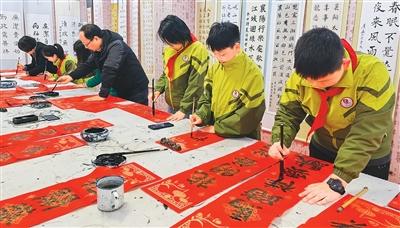
新春将至,各地侨务部门精心准备新春礼物远寄海外—— 这份新春礼物,装满一整座家乡(侨界关注) 新春将至,许多海外华侨华人向本报记者分享,他们收到了一份来自家乡的新春特别礼物。手写春联、 非遗文创、家乡糕点……一份份地域风情各异的年礼,装点了海外华侨华人的新春氛围,也将故乡的年 味与牵挂,送到了游子心间。 这背后,是一场始于数月之前的精密接力。从设计选品、协调生产,到跨国运输、海外分发,每一个环 节都凝聚着无数人的细致筹备与默契协作。本报记者采访了各地侨务部门、海外侨胞、礼包生产企业 等,解锁这份新春礼物从诞生到抵达背后的故事。 设计选品—— "我们寄出的每样物品,从用途和寓意都精心设计。"湖南省海外联谊会秘书处介绍,今年湖南准备的暖 心包里包含湘绣团扇、车挂等特制的小物件,还有专门采用背胶设计、方便粘贴的"福"字。"团扇,形 状团圆,象征美满;车挂,祈愿出行平安。我们希望把最美好的祝福送给海外华侨华人"。 把这些想法变成几千份实实在在的礼盒,靠的是许多人的接力。 湖北恩施的土家织锦"西兰卡普"代表性传承人谭艳华、谭艳宾姐妹已经连续3年入选湖北"新春暖心 包"项目,这次他们在纹样设计上斟酌良久,最终选定了土家族 ...
央行等八部门发文:虚拟货币相关业务,境内一律禁止
Ren Min Ri Bao Hai Wai Ban· 2026-02-09 01:21
近日,中国人民银行、国家发展改革委、工业和信息化部、公安 部、市场监管总局、金融监管总局、中国证监会、国家外汇局等八部 门联合发布《关于进一步防范和处置虚拟货币等相关风险的通知》 (以下简称《通知》),明确虚拟货币相关业务活动属于非法金融活 动,境内一律严格禁止。 中国人民银行、中国证监会有关负责人表示,长期以来,中国境 内始终对虚拟货币相关业务活动保持禁止性的政策立场。2013年, 中国人民银行等五部门联合印发《关于防范比特币风险的通知》,明 确比特币是一种特定的虚拟商品,不能且不应作为货币在市场上流通 使用。2021年印发的《关于进一步防范和处置虚拟货币交易炒作风 险的通知》进一步明确,比特币、以太币,以及泰达币等稳定币,均 不具有与法定货币等同的法律地位,在境内开展虚拟货币相关业务活 动属于非法金融活动,一律严格禁止。此次《通知》延续了近年来的 政策立场,重申虚拟货币不具有与法定货币等同的法律地位。 根据《通知》,在境内开展现实世界资产代币化活动,以及提供 有关中介、信息技术服务等,应予以禁止;经业务主管部门依法依规 同意,依托特定金融基础设施开展的相关业务活动除外。境外单位和 个人不得以任何形式非法向 ...
两岸艺术家挥毫迎新春
Ren Min Ri Bao Hai Wai Ban· 2026-02-09 00:56
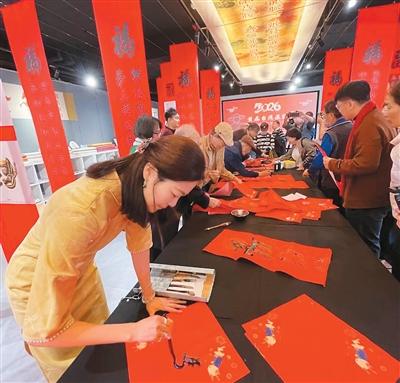
本报记者 吴亚明摄 《人民日报海外版》(2026年02月09日 第 04 版) 责编:卢思宇、张振 "两岸艺术家春联、年画、漫画展"近日在台北开幕,展出两岸数十位艺术家的百余件作品。当日参展的 两岸艺术家还即席挥毫,书写春联、斗方致赠现场观众。 ...
加快推进数据要素市场化(锐财经)
Ren Min Ri Bao Hai Wai Ban· 2026-02-08 22:51
Core Viewpoint - The Chinese government has issued an opinion to cultivate three types of data circulation service institutions to accelerate the marketization and value realization of data elements, aiming to enhance the data market ecosystem [4][10]. Group 1: Types of Data Circulation Service Institutions - The three types of data circulation service institutions defined are: data exchanges (centers), data circulation service platform enterprises, and data merchants, each with specific roles to play in promoting data circulation and marketization [5][6]. - Data exchanges are encouraged to enhance comprehensive service functions, including rule exploration, compliance assurance, and service matching [5]. - Data circulation service platform enterprises are supported to develop specialized services around industry and supply chains [5]. - Data merchants are urged to expand data acquisition channels and develop diverse data products and services [5]. Group 2: Enhancing Data Market Ecology - The opinion emphasizes the need for a clear functional positioning and collaborative development among various data circulation service institutions to establish a structured framework for the data circulation service system [6][10]. - It aims to stimulate the data market by encouraging diverse data circulation transaction models and enhancing service capabilities [8][10]. - The opinion supports the exploration of innovative data circulation transaction modes, such as data exchange for services or models, to lower transaction costs and promote broader data circulation [8]. Group 3: Addressing Data Scarcity in AI - The opinion addresses the "data scarcity" issue faced by many AI companies by supporting collaboration between data circulation service institutions and industry leaders to build high-quality data sets [9]. - It encourages partnerships with AI enterprises to provide data aggregation, governance, and model training services [9]. Group 4: Future Goals and Implementation - By the end of 2029, the goal is to significantly enhance the capabilities of data circulation service institutions, diversify transaction forms, and enrich data products and services [10]. - The opinion proposes promoting the use of standardized data circulation transaction contracts to ensure compliance and efficiency in data transactions [10]. - Industry experts view this opinion as a systematic and forward-looking design to address the critical "circulation bottleneck" in the value realization of data elements, marking a transition to a more functional and vibrant data market [10][11].

骐骥跃古今 物华与岁新
Ren Min Ri Bao Hai Wai Ban· 2026-02-08 22:51
Group 1 - The article emphasizes the cultural significance of the horse in Chinese history, symbolizing loyalty, perseverance, courage, and progress, particularly in the context of the Year of the Horse [1][7][20] - It highlights the historical relationship between horses and Chinese civilization, noting their importance in agriculture, transportation, and military strategy throughout various dynasties [7][8][13] - The article discusses the evolution of horse-related cultural practices and traditions in modern China, including festivals and artistic representations, which continue to reflect the values associated with horses [9][10][23] Group 2 - The narrative connects the spirit of the horse to contemporary themes of resilience and ambition, suggesting that the horse symbolizes the collective aspirations of the Chinese people in the face of modern challenges [10][20][24] - It mentions specific cultural artifacts, such as the "Copper Galloping Horse" from the Han Dynasty, which embodies the spirit of progress and determination [17][18] - The article concludes with a call to embrace the horse's spirit as a metaphor for striving towards success and innovation in the new era of Chinese development [26][24]
这份新春礼物,装满一整座家乡(侨界关注)
Ren Min Ri Bao Hai Wai Ban· 2026-02-08 22:51
Core Viewpoint - The article highlights the efforts of various Chinese communities and organizations to send New Year gifts to overseas Chinese, emphasizing cultural connection and the meticulous planning involved in the process [12]. Group 1: Gift Design and Preparation - In Hubei Province, 3,000 handwritten Spring Festival couplets were created by local calligraphers and students, included in "New Year Warmth Packages" destined for countries like Hungary and Malaysia [13]. - The packages feature traditional items such as Tujia woven bags and local delicacies like beef noodles, aiming to convey regional cultural significance and warmth to overseas Chinese [13]. - Shanxi Province selected practical gifts like ceramic plates featuring local cultural landmarks, along with a calendar that includes poetry related to each city, to evoke nostalgia and cultural memory [14][15]. Group 2: Logistics and Distribution - The logistics of sending these gifts involved careful planning and coordination, with a focus on ensuring timely delivery to various countries, including the UK and Angola [17]. - Local overseas Chinese associations played a crucial role in organizing the distribution of gifts, ensuring that they reached the intended recipients effectively [18][19]. - In Hungary, a large cultural event was organized to distribute gifts, fostering community ties and showcasing Chinese culture to local residents [19]. Group 3: Emotional Impact and Community Engagement - Recipients expressed deep appreciation for the gifts, which included culturally significant items that reminded them of their homeland, enhancing their sense of belonging [20][21]. - Some overseas Chinese communities took the initiative to share their gifts with local institutions, such as orphanages and nursing homes, further promoting cultural exchange and goodwill [22].
它们缘何入选?
Ren Min Ri Bao Hai Wai Ban· 2026-02-08 22:51
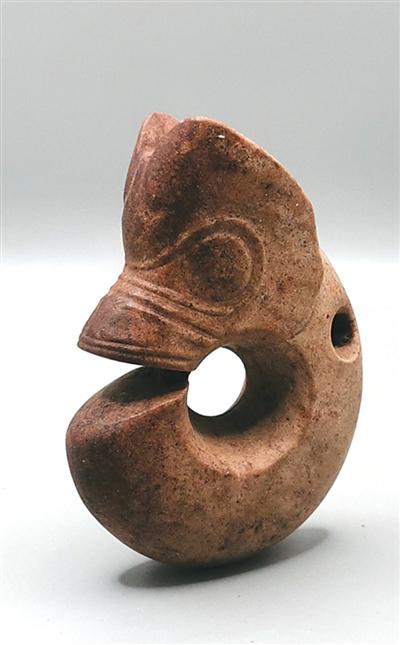
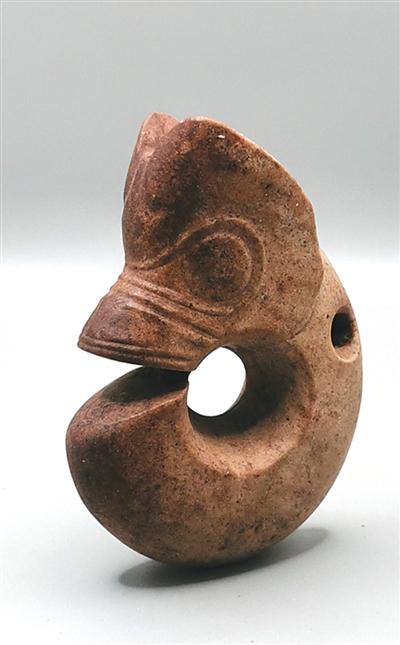
工作人员正在整理新疆温泉县呼斯塔遗址东区墓地的出土人骨。 河北张家口市郑家沟一号积石冢出土的玉龙。 河北阳原县新庙庄旧石器时代遗址发现的装饰品。 山东青岛市琅琊台遗址出土的秦代大型夔纹瓦当。 河南新郑市裴李岗石器时代遗址出土的陶塑。 日前,中国社会科学院在北京发布"2025年中国考古新成果"。河北阳原县新庙庄旧石器时代遗址、 河南新郑市裴李岗石器时代遗址、河北张家口市郑家沟红山文化遗址、新疆温泉县呼斯塔青铜时代遗 址、山东青岛市琅琊台战国秦汉时期遗址、新疆吐鲁番市巴达木东晋唐时期墓群6个项目入选。这些新 成果不仅刷新了相关历史认知,还勾勒出绵延不绝的文明长卷。 河北阳原县新庙庄旧石器时代遗址 勾勒东方人类演化图景 被誉为"东方人类的故乡"、位于中国冀西北的泥河湾盆地以旧石器时代古人类文化遗址丰富而闻名 于世,新庙庄旧石器时代遗址即为泥河湾遗址群的一处重要地点。从地理位置看,该遗址处于一个独特 的地理单元——分布于泥河湾盆地中部南缘的深山中。 2月4日,这处地处深山的遗址入选"2025年中国考古新成果"。无论在成果汇报人、河北省文物考古 研究院旧石器考古研究部主任王法岗的眼中,还是在点评专家中国科学院古脊椎动物 ...
缓解睡眠困扰 守护一夜好眠(新职·新知㉟)
Ren Min Ri Bao Hai Wai Ban· 2026-02-08 22:51
Core Insights - The article discusses the emerging profession of "Sleep Health Manager" in China, highlighting its significance in addressing sleep-related issues in the community [4][12] - It emphasizes the proactive approach of sleep health management, focusing on prevention and early intervention rather than just treatment [6][12] Group 1: Sleep Health Management - The "Sleep Health Manager" role was officially recognized in July 2025, aimed at monitoring, assessing, and providing guidance on sleep health [4][12] - This profession is expected to fill gaps in the current healthcare system, particularly in community and home settings, where many individuals experience sleep disturbances that do not meet clinical diagnosis criteria [7][12] - The role involves risk assessment, non-pharmacological interventions, and long-term support, primarily in community and online environments [7][12] Group 2: Community Impact - Practitioners like Xu Lijuan are actively involved in community outreach, providing personalized sleep improvement plans based on individual assessments [6][7] - The article highlights the importance of understanding the underlying causes of sleep issues, such as emotional stress and lifestyle factors, to provide effective management [7][8] - Community education initiatives have been conducted to raise awareness about sleep health, indicating a strong demand for knowledge in this area [8] Group 3: Market Opportunities - There is a growing market for sleep health services, with various sectors, including wellness, hospitality, and technology, seeking to integrate sleep improvement solutions [10][11] - The establishment of training programs for aspiring sleep health managers is underway, with over 400 individuals already trained, indicating a burgeoning workforce in this field [10][12] - The potential for collaboration with businesses to create specialized sleep environments, such as "sleep hotels," is being explored, showcasing the versatility of sleep health management applications [10][11]

服务消费发展迎来新机遇(锐财经)
Ren Min Ri Bao Hai Wai Ban· 2026-02-07 00:28
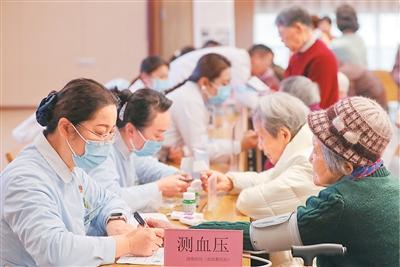
浙江省嘉兴市南湖区一家康养中心,医护人员为老人开展健康义诊活动。 金 鹏摄(人民视觉) 2月6日,厦门航空福州空轨联运城市服务中心启用,为旅客提供便捷出行体验。 新华社记者 林善传摄 2020年至2025年,中国居民人均服务性消费支出年均增长8.5%,展现出强大增长动能。国务院办公厅 日前印发《加快培育服务消费新增长点工作方案》,对进一步优化和扩大服务供给、培育服务消费新增 长点、促进服务消费提质惠民作出系统部署。 2月6日,在国新办举行的国务院政策例行吹风会上,商务部相关负责人表示,今后一段时期,中国服务 消费发展将迎来重要的战略机遇期,服务消费将在拉动居民消费率提高和推动经济高质量发展中发挥重 要作用。 消费结构正在转变 近年来,随着居民生活水平提升,中国居民消费结构从商品消费为主向商品消费和服务消费并重转变, 服务消费日益成为经济高质量发展的重要引擎。商务部数据显示,2025年,人均服务性消费支出占居民 人均消费支出的比重达到了46.1%,接近居民消费的"半壁江山"。 "在消费规模扩大的同时,大家的消费关注点正从'有没有'向'好不好'转变,对个性化、多样化、品质化 服务消费产品的需求日益强烈。"商务部服 ...