Qian Zhan Wang

Search documents
2025年中国人工智能代理行业商业模式分析 从“SaaS铁三角”到园区竞速的万亿赛道博弈【组图】
Qian Zhan Wang· 2025-09-16 04:13
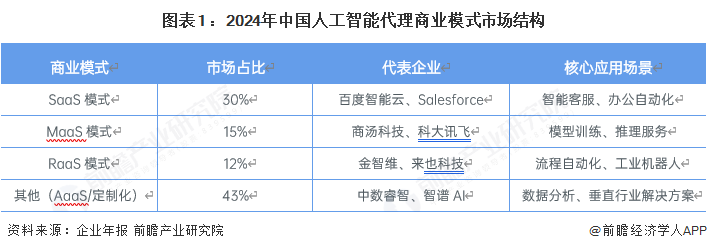
Core Viewpoint - The Chinese AI agent industry has established a "SaaS-MaaS-RaaS" tripartite business model, driven by technology, policy, and ecosystem factors, accelerating the commercialization of a trillion-level market through regional differentiated competition [1]. Business Model Summary - The AI agent industry in China can be categorized into three main models based on service form, deployment method, and application scenario: - **SaaS Model**: Dominates the market with a 30% share, driven by the demand for standardized intelligent tools. It operates on a subscription basis, focusing on efficiency improvement through basic subscription fees and value-added services [3][12]. - **MaaS Model**: Fastest growth at 15%, reflecting the acceleration of model-as-a-service commercialization. It relies on computational power and model innovation for customer acquisition, with significant cost advantages, such as SenseTime's model inference cost being 60% lower than the industry average [3][8]. - **RaaS Model**: Accounts for 12% of the market, focusing on human-machine collaborative automation in sectors like manufacturing and finance, with notable improvements in operational efficiency [3][8]. Market Dynamics - The AI agent industry is experiencing a competitive race among innovation parks, with Shanghai's Xuhui District housing over 1,000 companies and offering substantial computational subsidies. SenseTime's generative AI revenue reached 2.4 billion yuan in 2024, constituting 63.7% of its total revenue [4]. - The industry is supported by policy initiatives, such as the Ministry of Industry and Information Technology promoting "AI + manufacturing" actions and various cities providing computational vouchers and project subsidies to foster ecosystem development [7][8]. Financial Metrics - **SaaS Model**: Average gross margin of 60%-80%, customer retention rate of 75%-90%, and annual customer spending between 50,000 to 500,000 yuan [11][12]. - **MaaS Model**: Average gross margin of 40%-60%, customer retention rate of 60%-75%, and annual customer spending between 100,000 to 2 million yuan [11][12]. - **RaaS Model**: Average gross margin of 30%-50%, customer retention rate of 50%-65%, and annual customer spending between 200,000 to 1 million yuan [11][12].





西贝发布致歉信,承诺部分菜品将调整为门店现做,贾国龙:做一个透明的西贝,今后彻底向胖东来学习【附预制菜行业市场分析】
Qian Zhan Wang· 2025-09-16 03:49
(图片来源:摄图网) 近日,罗永浩公开吐槽西贝莜面村"预制菜比例过高"的言论持续发酵,将这家知名餐饮品牌推向舆论风口, 也再次引发公众对预制菜行业关注。 近日,西贝受到大家的广泛关注与讨论。在 这场风波中,我们看到了许多顾客对西贝的 关心、疑问与批评。 这些声音,我们都一一记在心里,也深刻意 识到:西贝的生产工艺与顾客的期望有较大 差异,没有满足广大顾客的需求与期待。 在此,西贝对给顾客带来的困扰和担忧致以 深深歉意。向每一位关注此事提出意见、建 议的顾客,致以最诚挚的感谢。 同时,请每一位顾客放心,西贝始终坚守严 格的食品安全底线,严格遵守国家相关法律 法规。 此刻西贝全体伙伴已积极行动起来,就顾客 关心的问题进行逐一改善。 为了满足广大顾客的需求,让顾客拥有更好 的体验。我们将尽可能把中央厨房前置加工 工艺调整到门店现场加工。 2025年10月1日前,西贝全国门店会陆续完成 以下调整: 1、西贝所有使用大豆油烹调的菜品,调整为 使用非转基因大豆油。 9月15日,西贝餐饮通过官方微博发布致歉信,宣布多项整改措施,包括将所有使用大豆油的菜品改用非转 基因大豆油、儿童餐"吃光光牛肉焖饭"的牛肉酱调整为门店现炒等 ...

预见2025:《2025年中国游戏产业全景图谱》(附市场规模、细分市场发展现状、产业竞争格局等)
Qian Zhan Wang· 2025-09-16 02:18
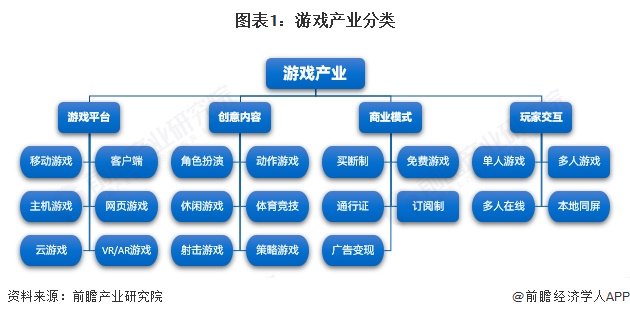
Industry Overview - The gaming industry is defined as an ecosystem economy centered around "content + technology + users," encompassing activities such as development, marketing, sales, and after-sales of video games [1] - Key participants include game developers, operators, distributors, and players, operating across various platforms like PC, mobile devices, and consoles [1] Industry Chain Analysis - The upstream of the gaming industry includes IP owners and game developers, while the midstream consists of comprehensive game publishers, and the downstream involves terminal distribution and marketing channels [2] Industry Development History - The development of China's gaming industry can be divided into several key stages: 1. **Emergence and Initial Phase (1980s-2000s)**: Introduction of arcade games and home consoles [5] 2. **Exploration and Growth Phase (2003-2015)**: Rise of domestic online games supported by national policies [5] 3. **Full Explosion and Mobile Transformation (2015-2020)**: Transition to mobile gaming with the growth of 4G users [6] 4. **High-Quality Development and Adjustment Phase (2021-Present)**: Shift towards regulated growth and overseas markets [6][7] Current Industry Status - The gaming market in China is rebounding, with a projected market size of 325.78 billion yuan in 2024, reflecting a year-on-year growth of 7.53% [9] - After a brief decline from 2020 to 2022, the market is expected to grow at over 7% annually, reaching 168 billion yuan by mid-2025 [9] - Overseas revenue for Chinese gaming is projected to reach 18.557 billion USD in 2024, marking a historical high with a year-on-year increase of 13.39% [10] Market Segmentation - **Mobile Gaming**: Expected revenue of 238.217 billion yuan in 2024, with a growth rate of 5.01% [14] - **Web Games**: Revenue is declining, with a projected 2.203 billion yuan in 2025, down 5.87% [19] - **Client Games**: Stable growth with a projected revenue of 35.403 billion yuan in 2025, up 4.86% [20] - **Console Games**: Rapid growth with a projected revenue of 1.034 billion yuan in 2025, up 29.78% [23] Competitive Landscape - The majority of listed gaming companies are concentrated in developed regions like Guangdong and Beijing, with Guangdong having the highest number at 27 [24] - The market is fragmented, but major players like Tencent and NetEase dominate, accounting for 60% of the market capitalization of listed gaming companies [27] Future Development Trends - The gaming industry in China is expected to continue growing, with a market size projected to exceed 360 billion yuan by 2025 and potentially reach 500 billion yuan by 2030 [33] - There is a trend towards deeper integration of traditional culture into gaming products, supported by favorable policies [34]


【行业深度】洞察2024:中国粉末冶金行业竞争格局及市场份额(附竞争梯队、市场集中度、研发能力对比)
Qian Zhan Wang· 2025-09-15 10:20
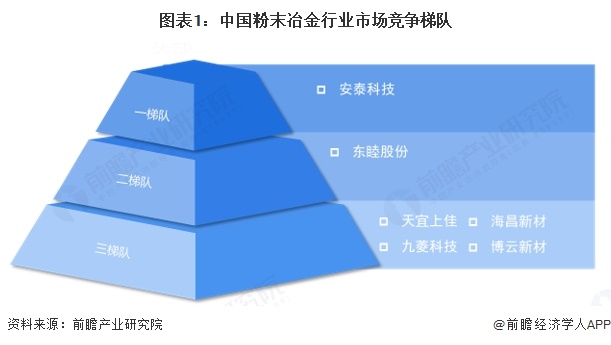
Group 1: Industry Overview - The Chinese powder metallurgy industry can be divided into three competitive tiers based on business revenue, with Antai Technology leading the first tier with over 2.8 billion yuan in revenue [1][3] - Dongmu Co., Ltd. is in the second tier with nearly 2 billion yuan in revenue for 2023, while the third tier includes companies like Tianyi Shangjia, Haichang New Materials, Jiuling Technology, and Boyun New Materials, each generating 100 million to 500 million yuan [1][3] Group 2: Market Share and Concentration - In 2023, Antai Technology and Dongmu Co., Ltd. held significant market shares of 18.2% and 13.8% respectively, while other companies had market shares below 4% [5][7] - The market concentration in the powder metallurgy industry is moderate, with CR3 at 34.6%, CR5 at 37.8%, and CR10 at 43.1%, indicating a few leading companies dominate the market [7] Group 3: Competitive Landscape - The entry barriers in the powder metallurgy industry are relatively high, with existing companies enjoying significant market advantages, leading to a moderate threat from potential new entrants [13] - The automotive industry is the largest application field for powder metallurgy products, with major companies like Tesla and BYD driving demand for high-precision, lightweight components, giving leading firms some pricing power [13] Group 4: Globalization Strategies - Antai Technology has established an international trade platform and aims for a balanced development between domestic and export markets, enhancing its international marketing capabilities [10] - Dongmu Co., Ltd. has built a strong reputation in both domestic and international markets, serving many global multinational companies [10] - Other companies like Hangchi Qianjin and Shandong Weida have also developed extensive sales networks and established overseas subsidiaries to support their global marketing efforts [10] Group 5: Regional Distribution - The majority of registered powder metallurgy companies in China are concentrated in Hebei Province, with significant numbers also in Shandong, Jiangsu, and Zhejiang provinces [11]


重磅消息!我国研发新型双模态激光雷达,解决自动驾驶等场景三维感知“卡脖子”难题【附激光雷达行业市场分析】
Qian Zhan Wang· 2025-09-15 10:16
Core Insights - The article discusses the development of the world's first "dual-modal" LiDAR system by Huazhong University of Science and Technology in collaboration with Tsinghua University and Beijing Information Science and Technology University, which significantly enhances the 3D perception capabilities of autonomous vehicles, robots, and drones [2][3] Group 1: Technology Development - The new LiDAR system addresses the long-standing challenge of balancing detection range, resolution, and scanning speed, which has been a bottleneck in the field [2] - The innovative "hybrid cascading translational metasurface" device allows for dynamic control of laser polarization, enabling high-energy density beams for precise detection of obstacles up to 500 meters away in scanning mode, and a uniform light field for full-field imaging within 200 meters in flash mode [3] - This hardware-level integration of high precision and efficiency marks a significant advancement over traditional software-dependent performance compromises [3] Group 2: Market Growth - The Chinese automotive LiDAR market surpassed 3 billion yuan in 2023, reflecting a year-on-year growth of over 200% [4] - Major domestic players include Hesai Technology, TuTongDa, Huawei Technologies, and Suteng Juchuang, with market shares of 49.4%, 27.5%, 15.4%, and 7.4% respectively, indicating a high market concentration [5] - Chinese manufacturers dominate the global passenger vehicle market, holding over 70% market share, and the industry is experiencing a virtuous cycle of technological iteration, scale effects, and cost reduction [7] Group 3: Future Outlook - With the maturation of FMCW (Frequency Modulated Continuous Wave) technology, LiDAR is expected to become a standard sensor for L3 autonomous driving by 2025, potentially driving the market size to reach hundreds of billions [7] - The Chinese LiDAR industry has established a complete innovation chain from basic research to core components, system integration, and automotive certification, positioning China to lead the formulation of new international standards for next-generation LiDAR [7]


2025年中国功能性护肤品行业产品布局分析 “妆字号”产品矩阵不断拓展【组图】
Qian Zhan Wang· 2025-09-15 04:11
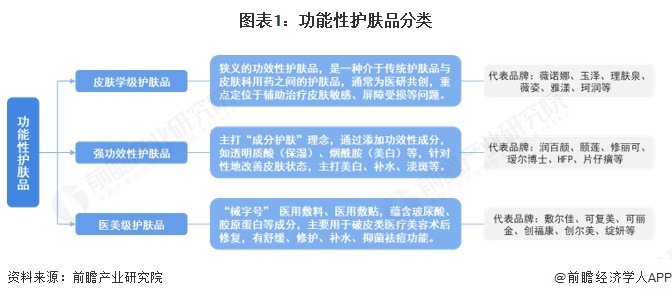
Core Viewpoint - The functional skincare industry in China is experiencing a rise of domestic brands, with products categorized into three main segments: dermatological skincare, high-efficacy skincare, and medical aesthetic skincare [1][2]. Group 1: Industry Overview - Functional skincare products are designed to alleviate or assist in treating specific skin issues, classified as either cosmetic (妆字号) or medical devices (械字号) [1]. - The industry is characterized by a growing presence of domestic brands, indicating a shift in market dynamics [1]. Group 2: Market Segmentation - The functional skincare market is divided into three segments: - Dermatological skincare, typically developed by cosmetic companies in collaboration with dermatologists, includes brands like Winona and La Roche-Posay [2]. - High-efficacy skincare, which emphasizes chemical ingredients, features brands such as WIS and HFP [2]. - Medical aesthetic skincare, developed by companies with a background in biomedicine or medical devices, includes brands like Fulejia and Kefu Mei [2]. Group 3: Product Composition - Dermatological skincare products focus on simplified and targeted ingredients, with examples like Winona's "Soothing Moisturizing Cream" containing ingredients such as sea buckthorn and hyaluronic acid [4]. - High-efficacy skincare products highlight active ingredients like niacinamide and salicylic acid [4]. - Medical aesthetic skincare products, such as those from Chuangfukang, contain fewer ingredients, focusing on essential components like collagen [4]. Group 4: Company Product Strategies - Companies in the functional skincare sector are diversifying their product lines, with many offering both cosmetic and medical device products [6]. - For instance, Betaini focuses on dermatological skincare while also extending into medical device products [6]. Group 5: Company Registration Data - Various companies have registered a significant number of products under both cosmetic and medical device categories, indicating a robust presence in the market: - Huaxi Biological has 1,766 cosmetic registrations and 27 medical device registrations [7]. - Fulejia has 3 cosmetic registrations and 110 medical device registrations [7].
【干货】医药流通产业链全景梳理及成本结构价值分析
Qian Zhan Wang· 2025-09-14 06:12
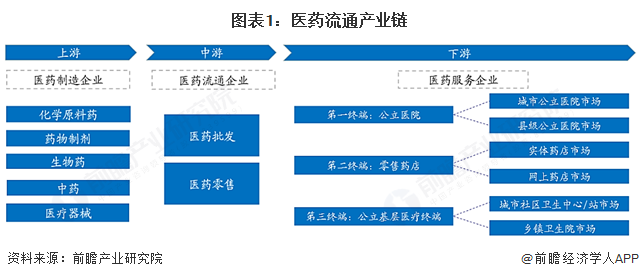
Industry Overview - The pharmaceutical distribution industry serves as a critical link between pharmaceutical manufacturers and end consumers, characterized by a specialized division of labor [2][5] - The industry consists of upstream manufacturers producing various types of pharmaceutical products, including Western medicine, traditional Chinese medicine, medical devices, and chemical reagents [1] Cost Structure Analysis - The primary cost in the pharmaceutical distribution industry is sales cost, which includes product and raw material costs, accounting for approximately 95% of total sales costs, while other costs make up about 5% [5] Profitability Factors - Key drivers of profitability in the pharmaceutical distribution sector include sales scale and growth, gross margin levels, expense ratios, and inventory turnover [7] - Companies maintain stable gross margins through scale advantages and product structure adjustments, while controlling costs through refined management practices [7] Internet Integration - The integration of "Internet+" in the pharmaceutical distribution industry helps reduce costs and improve efficiency, allowing pharmaceutical companies to analyze order demands and pharmacies to manage inventory effectively [9] - Patients benefit from the ability to compare prices and brands online, facilitating informed purchasing decisions [9]





2025年全球光电芯片市场现状分析 市场规模逐步攀升【组图】
Qian Zhan Wang· 2025-09-14 04:11
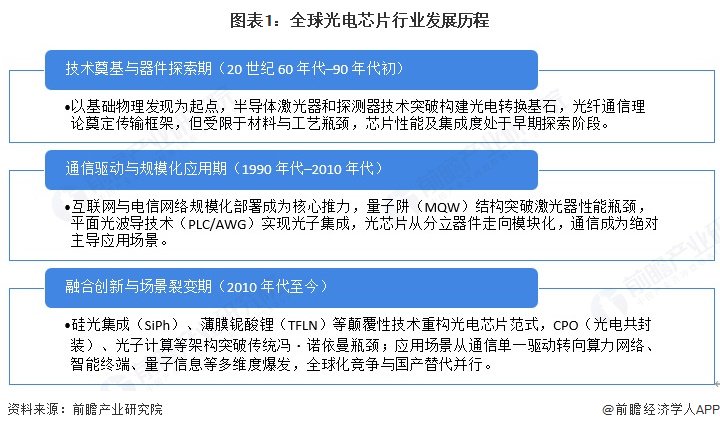
Core Insights - The global optoelectronic chip industry has evolved through three main phases: foundational technology and device exploration (1960s–early 1990s), communication-driven and large-scale application (1990s–2010s), and integrated innovation and scenario transformation (2010s to present) [1] - The global optoelectronic chip market is projected to reach $3.5 billion in 2024, reflecting a year-on-year growth of 25.9% [4] - The industry is currently in a dual-driven phase of technological innovation and market expansion, impacting various sectors from communication networks to consumer electronics and industrial applications [5] Global Market Size - The rapid growth in global data traffic and increasing bandwidth demands across various scenarios are propelling the fast development of high-speed module devices [4] Industry Layout - The global optoelectronic chip industry is characterized by a diverse range of companies with varying core product types and technological advantages, including leaders like II-VI, Huawei HiSilicon, and Broadcom, each with unique market positions and innovations [5][8] - Companies are focusing on advanced technologies such as silicon photonics, quantum computing, and integrated optical devices to enhance performance and reduce costs [7][9] Industry Development Outlook - The global optoelectronic chip market is expected to exceed $10 billion by 2030, driven by advancements in communication technology, AI computing power, and the proliferation of smart devices [12] - Key trends include deep integration of optoelectronics, a shift towards highly integrated and heterogeneous solutions, and a diversification of application scenarios beyond traditional communication [13][15]
2025年中国电感器件行业财务指标分析 行业营收规模稳步增长【组图】
Qian Zhan Wang· 2025-09-12 12:09
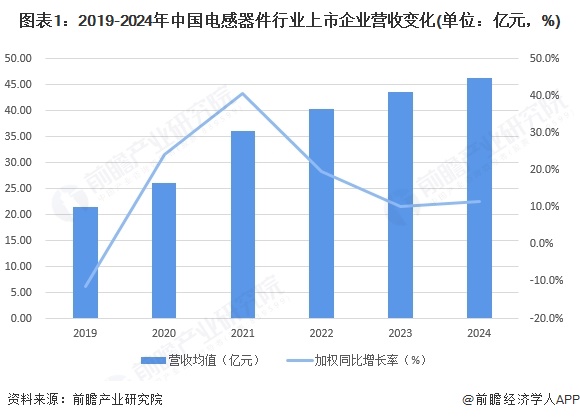
Revenue Trends - The revenue of China's inductor industry is expected to show a steady growth trend from 2019 to 2024, with a significant increase in 2021, indicating relative industry prosperity in recent years. The growth rate of the industry increased year by year from 2019 to 2021, but stabilized starting in 2022 [1] Profitability Analysis - The sales gross margin of China's inductor industry exhibited a trend of first increasing and then decreasing from 2019 to 2024. The gross margin increased from 2019 to 2021 due to high product demand and strong bargaining power of industry enterprises. However, starting in 2022, the overall market returned to rationality, leading to a gradual decline in sales gross margin [2] Inventory Turnover - The inventory turnover rate in China's inductor industry showed fluctuations from 2019 to 2024. In 2019, the turnover rate was 5.13 times, affected by weak demand from major downstream terminals like mobile phones and automobiles. The rate peaked at 5.63 times in 2020 due to increased demand for inductors driven by the pandemic. However, it dropped sharply to 4.44 times in 2021 due to a temporary imbalance between supply and demand. From 2022 to 2024, the turnover rate gradually increased from 4.58 times to 4.93 times, reflecting steady recovery in demand driven by emerging fields such as 5G, new energy vehicles, and the Internet of Things [4] Accounts Receivable Turnover - The accounts receivable turnover rate in China's inductor industry showed a trend of first increasing and then decreasing, fluctuating between 3 and 4. Overall, the industry has a relatively low accounts receivable turnover rate, indicating longer collection periods. This is primarily due to the strong bargaining power of large electronic equipment manufacturers, which often require longer payment terms to optimize their cash flow [7] Debt Ratio - The asset-liability ratio of China's inductor industry showed an overall increasing trend from 2019 to 2024, rising from 35.2% to 44.2%. The ratio remains below 50%, indicating a moderate reliance on debt. The increasing trend reflects enterprises' efforts to expand scale by increasing debt ratios, aligning with the industry's transition towards miniaturization and high power density. Major manufacturers are investing heavily in high-end production capacity, such as new integrated inductor projects and overseas production bases, leading to a record high in debt levels [9]



【行业深度】洞察2025:中国果汁行业竞争格局及市场份额(附市场集中度、企业竞争力评价等)
Qian Zhan Wang· 2025-09-12 07:19
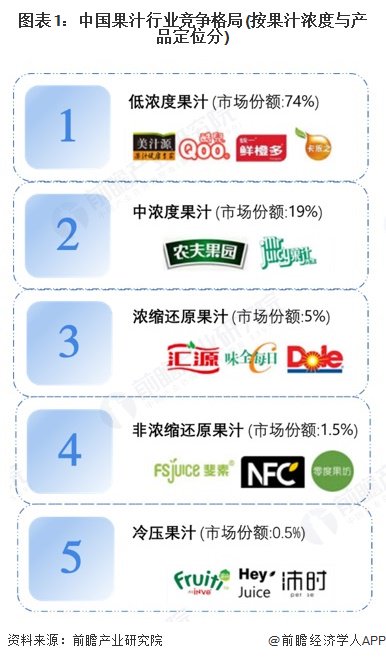
Group 1: Industry Overview - The Chinese juice industry is in a mature development stage, characterized by intense competition and a mix of differentiation and cooperation among companies [1][3] - Low-concentration juice dominates the market, with major players like Coca-Cola, Master Kong, and Uni-President leading the segment [1][3] - The overall market share of the top five companies (Coca-Cola, Wei Chuan, Master Kong, Huiyuan, and Uni-President) is 56.20%, indicating a concentrated competitive landscape [3][7] Group 2: Market Ranking - Coca-Cola (China) leads the industry in revenue, with its brand Meiziyuan holding a strong position in the low-concentration juice market [4] - Wei Chuan and Huiyuan follow closely, with Wei Chuan excelling in refrigerated pure juice and Huiyuan focusing on high-concentration juice [4] - Other notable players include Master Kong, Uni-President, and Nongfu Spring, with Nongfu Spring actively expanding into the high-end market through NFC juice [4][7] Group 3: Market Concentration - The CR5 of the Chinese juice beverage industry is projected to reach 58.3% in 2024, with Master Kong, Uni-President, and Nongfu Spring collectively holding a market share of 42.7% [7] - The concentration in low-concentration juice is relatively high, while the mid-to-high concentration and pure juice segments are becoming more diversified [7] Group 4: Competitive Landscape and Company Strategies - Domestic brands focus on pure juice and NFC products in the mid-to-high-end segments, emphasizing health benefits but facing channel and cost pressures [8] - Comprehensive beverage brands leverage scale and full-channel strategies to maintain market share with low-priced products, though they face significant homogenization [8] - International brands dominate the low-concentration market due to brand and channel advantages, while Japanese and Korean brands attract younger consumers with unique flavors [8][10] Group 5: Competitive Dynamics - Supplier bargaining power is moderate, with leading companies mitigating raw material price fluctuations through scale procurement [8] - Buyer bargaining power is strong, as consumers are price-sensitive and switching costs are low, allowing channel partners to exert pressure [8] - The threat of new entrants is low due to high barriers in channels, branding, and technology, while substitute products like tea, coffee, and fresh-cut fruits pose significant competition [8]