Qian Zhan Wang

Search documents
史上最赚钱公司!英伟达炸裂财报:营收达创纪录681亿美元,毛利率攀升至75.2%【附全球AI芯片行业市场分析】
Qian Zhan Wang· 2026-02-26 09:50
Core Viewpoint - Nvidia has reaffirmed its status as one of the most profitable companies in history with its record-breaking Q4 2026 financial results, showcasing exceptional profitability driven by the surging demand for AI computing [2][3]. Financial Performance - For Q4 2026, Nvidia reported a record revenue of $68.1 billion, a 73% year-over-year increase, primarily driven by its data center business, which grew 75% to $62.3 billion, accounting for over 91% of total revenue [2]. - The adjusted EPS under non-GAAP standards increased by over 80%, with a gross margin of 75.2%, marking a 1.5-year high, significantly surpassing margins of competitors like Apple (approximately 45%) and TSMC (around 53%) [3]. Market Position - Nvidia holds an 85% market share in the global data center AI accelerator market as of February 2026, with competitors like Intel, Google, and Amazon sharing the remaining 15% [3]. - The company's GPUs have become essential for AI applications, likened to "digital oil" in the AI era, indicating a strong competitive advantage and pricing power [2][6]. Industry Context - The global AI industry market size reached $538.1 billion in 2023, with a projected compound annual growth rate (CAGR) of 19.21%, expected to reach $638.2 billion in 2024 [6]. - Nvidia is positioned as a key player in the AI revolution, benefiting from the increasing demand for computational power across various sectors [6]. Future Outlook - Nvidia anticipates a revenue of $78 billion for Q1 2026, representing a 77% year-over-year growth, indicating sustained momentum despite a high revenue base [8].



【全网最全】2025年新能源客车行业上市公司全方位对比(附业务布局汇总、业绩对比、业务规划等)
Qian Zhan Wang· 2026-02-26 06:09
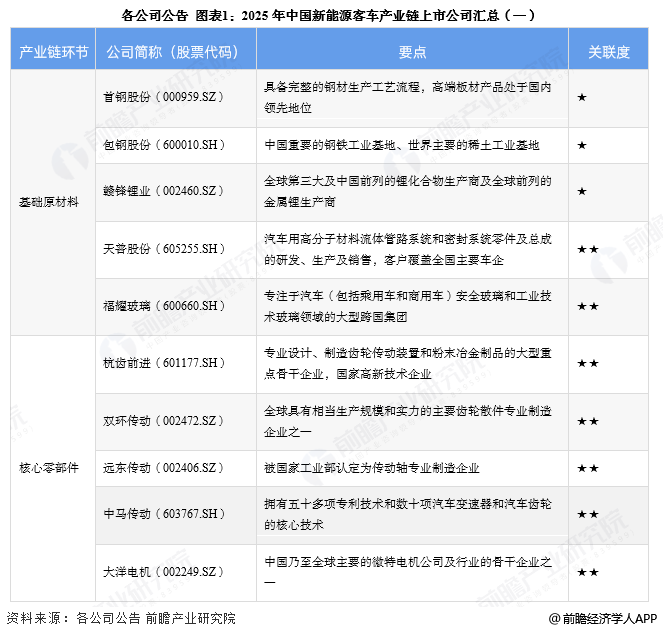
Core Insights - The report highlights the rapid growth of the new energy bus market in China, driven by government policies supporting the development of new energy vehicles [1] - Key players in the new energy bus industry include Yutong Bus, Zhongtong Bus, CRRC, Ankai Bus, Foton Motor, King Long, BYD, Dongfeng Motor, and Changan Automobile [1] Industry Overview - The new energy bus sector is a focal point for research and production within China's automotive industry, with numerous listed companies involved across various segments of the supply chain [1] - The report provides a comprehensive summary of listed companies in the new energy bus industry, detailing their revenue, profit, and business structure [1] Company Summaries - Yutong Bus (600066.SH), Zhongtong Bus (000957.SZ), and CRRC (601766.SH) are identified as leading companies in the bus manufacturing sector, focusing on new energy commercial vehicles and core components [4] - Ankai Bus (000868.SZ) and Foton Motor (600166.SH) are also significant players, with a diversified product range that includes both traditional and new energy vehicles [4] Revenue Performance - The report includes detailed revenue figures for various companies, with notable performances such as: - BYD (002594.SH) reported a revenue of 566.26 billion [7] - Ningde Times (300750.SH) achieved a revenue of 2830.72 billion [6] - King Long (600686.SH) generated a revenue of 110.06 billion [11] Business Structure and Focus - Companies like Ankai Bus, Zhongtong Bus, and King Long have a high proportion of their business focused on new energy buses, while others like Foton Motor and Dongfeng Motor have a more diversified approach [9] - The majority of these companies have a global sales presence, indicating a trend towards international market expansion [9] Manufacturing and Technology - The report emphasizes the technological advancements in the industry, with companies focusing on electric drive systems, battery management, and energy efficiency [11] - Key technologies include high-energy batteries, electric control systems, and integrated vehicle designs, which are crucial for maintaining competitive advantages in the market [11] Future Outlook - The new energy bus industry is expected to continue its growth trajectory, with companies planning to enhance their international market presence and invest in smart technology innovations [12]



【干货】干电池产业链全景梳理及区域热力地图
Qian Zhan Wang· 2026-02-26 03:08
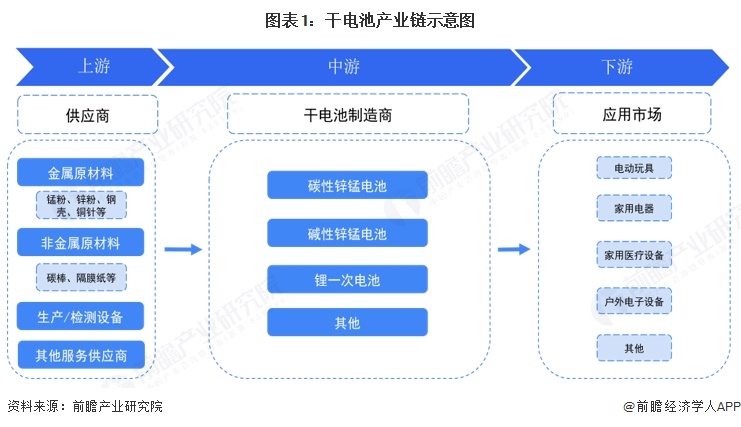
Core Insights - The article discusses the dry battery manufacturing industry in China, focusing on the supply chain structure, regional distribution of companies, and product offerings of key players in the market. Industry Overview - The dry battery supply chain consists of upstream suppliers of raw materials such as manganese dioxide powder, zinc powder, separator paper, steel shells, carbon rods, zinc tubes, and copper pins [1] - The downstream market for dry batteries is characterized by standardized products, with zinc-manganese batteries being widely used in everyday consumer electronics due to their affordability, safety, and reliability [1] Company Distribution - The dry battery industry is primarily concentrated in Guangdong and East China, with Guangdong having 1,841 related companies as of January 2026 [7] - Key manufacturers of dry batteries are mainly located in Eastern China, particularly in Guangdong and Zhejiang provinces, while raw material suppliers are more concentrated in Western China [8] Key Players and Products - Representative companies in the dry battery sector include Anfu Technology, Yema Battery, Zhejiang Hengwei, and Changhong Energy, with varying product offerings and sales strategies [11] - Yema Battery and Zhejiang Hengwei focus heavily on overseas markets, with foreign revenue accounting for 86.15% and 87.05% of their total income, respectively [13] - Anfu Technology and other companies have a more domestic focus, with Anfu's domestic revenue reaching 82.90% [13] Investment Trends - Recent investment activities in the dry battery manufacturing sector have been limited, primarily focusing on battery recycling and material optimization [14]


预见2025:《2025年中国冷链物流行业全景图谱》(附市场现状、竞争格局和发展趋势等)
Qian Zhan Wang· 2026-02-26 02:09
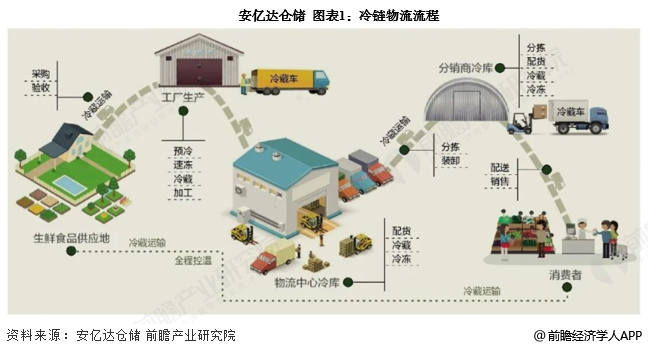
Industry Overview - Cold chain logistics is defined as a specialized logistics process that utilizes temperature control and preservation technologies to ensure that cold chain products remain within specified temperature environments throughout their entire lifecycle, including processing, storage, transportation, and distribution [1] - The products involved in cold chain logistics include agricultural products, poultry, seafood, flowers, processed foods, frozen foods, ice cream, dairy products, fast food ingredients, and beverages, as well as special items like pharmaceuticals and chemicals [1] Industry Chain Analysis - The cold chain logistics industry chain consists of upstream segments such as refrigerated vehicle manufacturing, cold storage construction, and equipment manufacturing; midstream segments include transportation (both trunk and distribution), warehousing, and value-added services; and downstream applications span food, pharmaceuticals, chemicals, and floriculture [3][4] Industry Development History - The cold chain logistics industry in China has evolved through three stages since 1998: 1. The initial stage (1998-2007) was characterized by a lack of resources and outdated facilities, with many companies relying on second-hand refrigerated vehicles [6][9] 2. The rapid expansion stage (2008-2017) saw the emergence of organized operations and the establishment of national distribution networks, driven by the growth of the frozen food industry and the entry of major players [9] 3. The current stage (2018-present) marks the transition to cold chain logistics 3.0, characterized by upgrades in industry environment, awareness, technology, management, and business philosophy [9] Industry Policy Background - Cold chain logistics is recognized as a crucial component of modern agricultural development, significantly impacting food quality, safety, and public health [10] - Recent policies emphasize enhancing cold chain infrastructure, particularly in rural areas, to improve agricultural product distribution and consumption [11] Current Industry Status - The total demand for food cold chain logistics in China is projected to reach 365 million tons in 2024, reflecting a year-on-year growth of 4.3% [12] - The cold chain logistics market size is expected to exceed 530 billion yuan in 2024, driven by rising demand for agricultural product refrigeration [13] - The total capacity of cold storage facilities in China is estimated at 25.3 million cubic meters, with a year-on-year increase of 10.96% [14] - The number of refrigerated vehicles in China is projected to reach 495,000 by 2024, marking a year-on-year growth of 14.58% [17] Industry Competition Landscape - The competitive landscape of the cold chain logistics industry is categorized into three tiers: leading companies like SF Express, JD Logistics, and Rongqing Logistics dominate the national market; regional players such as Hongxing Cold Chain and Daxiang Logistics have established strong local networks; while smaller enterprises face challenges in scaling [18][20] - The provinces with the highest number of star-rated cold chain logistics companies are Anhui and Shandong, each with 32 companies, followed by Henan with 28 [22] Industry Development Outlook and Trends - The cold chain logistics market in China is expected to exceed 670 billion yuan by 2030, with a compound annual growth rate (CAGR) of approximately 4% over the next five years [24][25] - Key trends include the expansion of infrastructure, the evolution of business models, and the enhancement of industry standards, driven by economic growth, urbanization, and increasing consumer demand for food safety [27][29]



苹果供应链要变天?Mac mini今年将在美国工厂组装,每周产量达数千台【附中国智能手机产业链分析】
Qian Zhan Wang· 2026-02-26 01:57
Group 1 - Apple's COO Sabih Khan announced that Foxconn will start assembling Mac mini in Houston, Texas later this year, marking the beginning of U.S. manufacturing for the Mac mini [2] - The weekly production of Mac mini currently reaches several thousand units, with the U.S.-assembled units primarily serving the domestic market, while overseas orders will still be produced in Asia [2] - Last year, Mac mini accounted for only about 5% of global Mac sales, indicating it is a relatively niche product with manageable demand [2] Group 2 - China's mobile phone industry chain has formed the most complete, efficient, and cost-competitive ecosystem globally, encompassing chip design, panel manufacturing, precision components, and assembly [3] - The Pearl River Delta industrial belt, centered around Shenzhen and Dongguan, can achieve a "one-hour component matching circle," allowing for rapid response from design to mass production [3] - Over 70% of the world's smartphones are produced in China, making it difficult for companies like Apple, Samsung, and Xiaomi to replace the Chinese supply chain in the short term, even under geopolitical pressures [3] Group 3 - China is not only Apple's largest consumer market, contributing about 20% of its revenue, but also an indispensable manufacturing hub, with over 90% of iPhone production capacity concentrated in mainland China [4] - Apple's ability to achieve efficient mass production and cost optimization for hundreds of millions of devices annually relies on thousands of local suppliers like Foxconn and Luxshare Precision [4] - In 2024, Apple is projected to maintain a 18.7% market share in the global smartphone market, supported by the Chinese supply chain [4] Group 4 - The global smartphone market is currently facing a significant downturn, with TrendForce predicting that the total production volume could drop to 1.135 billion units by 2026, reflecting a 10% annual decline [6] - Rising memory prices are expected to exacerbate the gap between terminal prices and consumer expectations, leading to further weakening of demand [6]


【投资视角】启示2025:中国冷藏车行业投融资及兼并重组分析(附投融资汇总、产业基金和兼并重组等)
Qian Zhan Wang· 2026-02-25 06:09
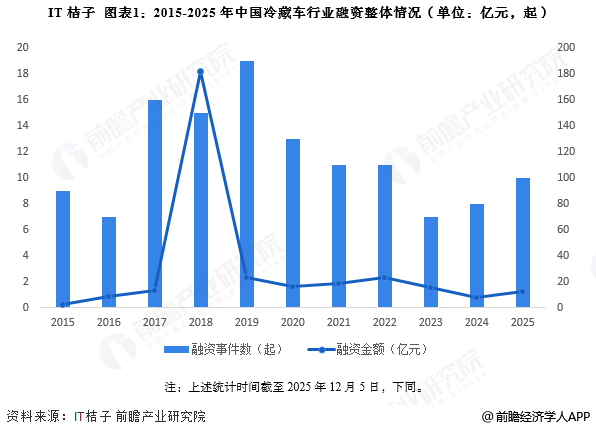
Core Insights - The cold chain vehicle industry in China is experiencing fluctuating investment activity, with a notable peak in 2018 when financing reached 18.2 billion RMB [2][4]. Investment Activity - The number of financing events in the cold chain vehicle industry from 2015 to 2025 shows a wave-like trend, with 8 events in 2024 and 10 events projected for 2025 [2][3]. - The average single financing amount in the cold chain vehicle industry fluctuated, with 0.94 million RMB in 2024 and a slight increase to 1.25 million RMB in 2025 [4][7]. - Financing rounds are primarily concentrated in A rounds, strategic investments, and angel rounds, accounting for nearly 70% of total financing [7]. Geographic Concentration - Financing events are predominantly concentrated in Shanghai and Guangdong, with Shanghai recording 36 events. Beijing and Jiangsu also show high investment activity [10]. Sector Focus - The majority of investment activities in the cold chain vehicle industry are focused on vehicle production [12]. Investor Profile - The main investors in the cold chain vehicle industry are primarily investment firms, with notable participants including CITIC Securities and Guotai Junan. Industrial investors include companies like SF Express and Mediterranean Shipping Company [19]. Mergers and Acquisitions - The cold chain vehicle industry is in a stable development phase, leading to fewer mergers and acquisitions, primarily involving horizontal integration among midstream companies [20][21]. - Recent mergers include companies like FAW Jiefang and Ningde Times, and Shanghai Automotive Industry Corporation's acquisition of SAIC Hongyan [21]. Summary of Investment and M&A Trends - Overall, investment activities in the cold chain vehicle market have slowed compared to previous years, with fewer mergers and acquisitions occurring [24].


日本电视产业真的崩了吗?松下宣布将欧美电视销售业务转让给创维,退守本土市场【附全球智能电视行业发展状况分析 】
Qian Zhan Wang· 2026-02-25 04:20
Group 1 - Panasonic will transfer its TV sales business in Europe and the US to Chinese manufacturer Skyworth in April 2024, focusing instead on the Japanese domestic market and high-end model development [2] - Panasonic and Skyworth have signed a comprehensive cooperation agreement, with Skyworth taking over sales, marketing, and logistics, while Panasonic retains product quality control and audiovisual standards [2] - Panasonic's global TV shipments have plummeted from 6.31 million units in 2016 to only 2.02 million units in 2024, resulting in a global market share of less than 1% [2] Group 2 - Japanese TV manufacturers, once dominant in the global market, have seen their market share drop from nearly 90% in the 1980s and 1990s to less than 6% in 2024 due to competition from Chinese panel manufacturers [3] - Major Japanese brands like Panasonic and Sony are adjusting their strategies, with Panasonic transferring its sales operations and Sony forming a joint venture with TCL for global operations [3] - The rise of smart TVs has not benefited traditional giants, as the focus has shifted from hardware to software ecosystems and internet services, allowing Chinese manufacturers to gain a competitive edge [7] Group 3 - The global penetration rate of smart TVs has increased from less than 25% in 2016 to 46% in 2024, driven by the rise of streaming services and demand for larger, high-definition screens [6] - The shift towards smart TVs has led to a decline in traditional TV usage, with TV activation rates in China dropping from 70% in 2016 to below 30% in 2022 [9] - New product categories such as smart TVs, ultra-high-definition TVs, and cloud TVs are emerging, providing new growth opportunities for the Chinese TV industry [9]


专家预测:人类未来一周只需工作2天,工资甚至更高,10年后机器人数量将超过人类【附人形机器人行业市场分析】
Qian Zhan Wang· 2026-02-25 03:26
Group 1 - The core viewpoint of the articles highlights the rapid advancement and integration of humanoid robots into daily life, with predictions that by 2035, the number of robots will exceed the human population, leading to a significant transformation in work patterns and job creation [2][3]. - Zhang Yaqin from Tsinghua University predicts that in the next decade, humans may only need to work two days a week without a reduction in salary, reflecting the optimistic outlook on the humanoid robot industry's impact on labor [2]. - The Chinese government has elevated the humanoid robot industry to a strategic level, aiming for mass production by 2025 and achieving world-class capabilities by 2027, marking it as a core area for new productive forces [3]. Group 2 - According to Morgan Stanley's report, China leads the global humanoid robot industry, with 37% of the top 100 companies being Chinese, compared to 35% from the U.S. and 10% from Japan [4]. - In the "brain" segment of the humanoid robot value chain, China has fewer companies compared to North America, while it dominates the "body" segment with about 37% of the 64 core global companies being Chinese [5]. - The Yangtze River Delta region is the leading area for humanoid robot enterprises in China, with over 130 companies, accounting for more than 40% of the national total [6][10]. Group 3 - The industry outlook is optimistic, with expectations that annual sales of humanoid robots could exceed 100 million units, creating a market worth over 10 trillion yuan [13]. - Morgan Stanley has revised its forecast for China's humanoid robot sales, predicting a 133% year-on-year increase to 28,000 units this year, with projections of 262,000 units by 2030 and 2.6 million units by 2035 [13]. - The cost of producing humanoid robots is expected to decrease significantly, with material costs projected to drop by 16% this year, making robots more accessible in low-income countries [13].


2025年中国锑行业龙头企业分析 湖南黄金独占鳌头【组图】
Qian Zhan Wang· 2026-02-24 09:11
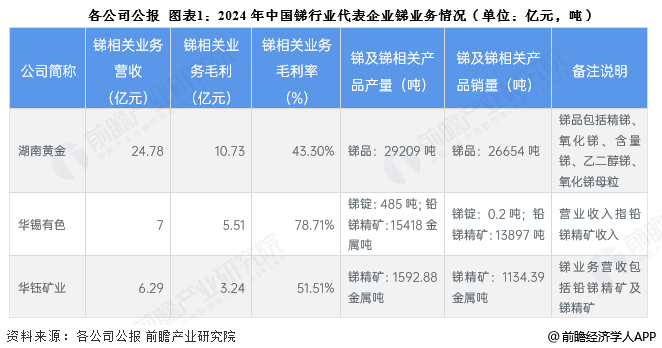
Core Insights - The article discusses the strategic importance of antimony in industrial applications and highlights the leading position of Hunan Gold in the antimony industry, both in terms of production and revenue [1][5]. Industry Overview - Antimony, known as "industrial monosodium glutamate," is a rare strategic mineral resource with limited storage and high demand in industrial production [1]. - The antimony industry in China has many companies, but there are fewer upstream mining and smelting enterprises [1]. Company Performance - Hunan Gold is the leading company in the antimony sector, with the highest production, sales, and revenue in the industry [1]. - In 2024, Hunan Gold plans to produce 46,223 tons of antimony raw materials, a 13.1% increase year-on-year, and 66,534 tons of antimony ingots, a 0.5% increase year-on-year [5]. - The company reported a revenue of 24.78 billion yuan from antimony-related businesses, with a gross profit of 10.73 billion yuan and a gross margin of 43.30% [2]. Research and Development - Hunan Gold invests heavily in research and development, with a planned R&D expenditure of 324 million yuan in 2024, the highest among listed companies in the antimony smelting and processing sector [6]. - The company is focused on advancing technology for real-time monitoring of deep pressure in gold-antimony mines to ensure safety and optimize extraction methods [9]. Future Plans - Hunan Gold aims to produce 39,500 tons of antimony products by 2025 and is committed to sustainable development through energy conservation and the promotion of green mining practices [9].

【行业深度】洞察2025:中国计算机仿真行业竞争格局及市场份额(附市场集中度、企业竞争力评价等)
Qian Zhan Wang· 2026-02-24 07:13
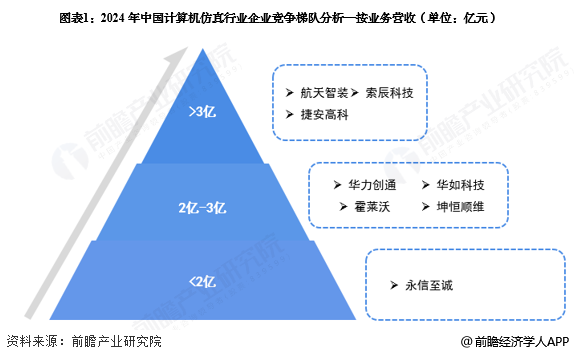
Core Insights - The Chinese computer simulation industry is characterized by a competitive landscape with a low market concentration, indicating a high level of competition among numerous small enterprises [10]. Group 1: Industry Overview - The leading companies in the Chinese computer simulation industry include Aerospace Intelligent Equipment and Suochen Technology, with revenues exceeding 300 million yuan [2]. - Companies like Huali Chuangtong and Huaru Technology have revenues between 200 million and 300 million yuan, while firms such as Yongxin Zhicheng have revenues below 200 million yuan [2]. Group 2: Regional Distribution - The majority of computer simulation companies in China are concentrated in the southeastern coastal regions, particularly in Guangdong and Jiangsu, with over 2,000 companies in Guangdong and nearly 1,500 in Jiangsu as of November 29, 2025 [3]. Group 3: Competitive Landscape - In 2022, Jingwei Hengrun reported the highest revenue among the top 10 listed companies in the computer simulation sector, followed by Kangtuo Infrared with a revenue of 1.35 billion yuan [9]. - The industry is marked by a large number of small-scale enterprises primarily engaged in agency and system integration, leading to a very low concentration ratio (CR8) of only 0.87% [10]. Group 4: Technological Competition - As of November 29, 2025, Jingwei Hengrun leads in patent numbers with 858 invention patents and 794 authorized inventions, followed by Huali Chuangtong with 77 invention patents and 92 authorized inventions [14]. Group 5: Competitive Dynamics - The competitive environment in the computer simulation industry is intense due to a high number of existing competitors and low market concentration. Supplier bargaining power is weak, while consumer bargaining power is also low due to low product differentiation [17]. - The threat of new entrants is present as many multinational companies are entering the Chinese market through wholly-owned or joint ventures, or by seeking local agents [17].