
Qian Zhan Wang

Search documents
重磅!2025年中国及31省市生物医用材料行业政策汇总及解读(全)
Qian Zhan Wang· 2025-09-12 02:45
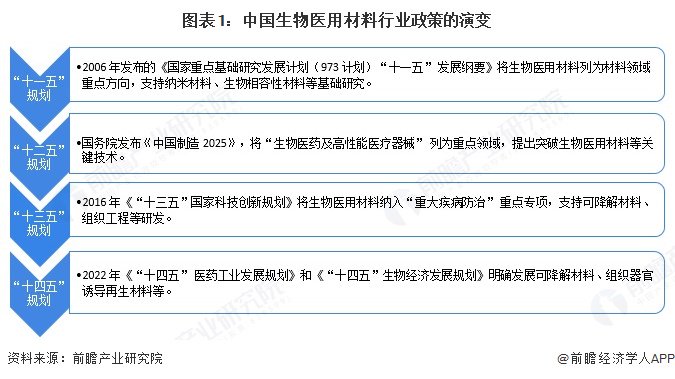
Core Insights - The article discusses the evolution of policies supporting the development of the biomedical materials industry in China, highlighting a shift from basic research support to industrialization, innovation-driven growth, and high-quality development [1][3]. Policy Overview - Since 2015, multiple government departments, including the State Council and the National Health Commission, have issued various policies to support and regulate the biomedical materials industry, focusing on technology development, industry upgrades, quality standards, and centralized procurement [3][4]. - Key policies include the 2024 notification on centralized procurement of high-value medical consumables, aimed at enhancing procurement efficiency and reducing costs [4][5]. - The "14th Five-Year Plan" emphasizes the development of high-end medical devices and key technologies, aiming to improve supply capabilities and address gaps in high-end medical equipment [9][10]. Development Goals - The focus is on technological innovation in high-end implantable products, such as biodegradable vascular stents and artificial joints, as well as new materials like recombinant collagen and biodegradable materials [8][9]. - The government aims to optimize approval processes, promote bulk procurement, and enhance collaboration among academia, industry, and healthcare to boost competitiveness and domestic production levels [8][10]. - By 2025, the goal is to achieve comprehensive coverage of DRG/DIP payment methods in all eligible medical institutions, ensuring a more efficient healthcare financing system [10]. Regional Policies - Various provinces have introduced policies to promote the biomedical materials industry, with a focus on centralized procurement for orthopedic implants and other high-value medical consumables [12][13]. - Cities like Beijing and Shanghai are encouraging the development of new biomedical materials and technologies, including advanced manufacturing techniques and 3D bioprinting [13][14]. - The policies aim to strengthen the local manufacturing capabilities and foster innovation in the biomedical materials sector [14][17].


前瞻全球产业早报:星巴克中国出售进入最后阶段
Qian Zhan Wang· 2025-09-11 23:21
Group 1: Cross-Border E-commerce and Digital Services - In the first half of the year, China's cross-border e-commerce imports and exports reached approximately 1.3 trillion yuan, setting a historical record [2] - The export and import of digitally deliverable services amounted to 1.5 trillion yuan, also a historical high [2] Group 2: Land Utilization and Market Reforms - The Ministry of Natural Resources encourages market-oriented approaches to revitalize idle land, aiming for efficient land use and orderly flow of land resources [2] Group 3: Health Sector Developments - The domestic nine-valent HPV vaccine has officially been put into use, enhancing accessibility and affordability of HPV vaccinations in China [2] Group 4: AI and Technology Innovations - Yushutech's CEO expressed optimism about the imminent large-scale application of AI, highlighting challenges in data quality and model integration [2] - Alipay launched the first "AI payment" service in China, enabling users to place orders and make payments through an AI assistant [5] Group 5: Robotics and Autonomous Vehicles - XPeng's flying car received a special flight permit in the UAE, marking a significant step for Chinese flying car technology in international markets [4] - Chasing Technology's founder addressed bankruptcy rumors, stating the company has sufficient cash flow and has repurchased shares worth around 5 billion yuan [6] Group 6: Investment and Financing Activities - Vantage Data Centers secured $1.6 billion in funding to expand its presence in the Asia-Pacific region [9] - Several companies, including Renxin Robotics and Suzhou Saimai Measurement Technology, successfully completed significant financing rounds [12] Group 7: Market Movements and Corporate Developments - Starbucks is in the final stages of selling its China business, with several investment firms shortlisted for the acquisition [6] - Oracle reportedly signed a $300 billion computing power agreement with OpenAI, marking one of the largest cloud service contracts in history [7]



前瞻全球产业早报:我国首个海上二氧化碳封存项目封存量破1亿立方米
Qian Zhan Wang· 2025-09-11 10:42
Group 1: Short Drama Industry - China's short drama products have reached over 200 countries and regions, becoming a new growth point in the global digital content sector [3] - There are two main methods for short dramas to go overseas: direct translation into foreign languages for overseas platforms and local adaptations produced in China for export [3] - The number of short dramas going abroad is rapidly increasing, covering dozens of countries in Europe, the Middle East, Japan, South Korea, and Southeast Asia [3] - Current data shows that over 300 short drama applications have been launched overseas, with a total download exceeding 470 million [3] - In Q1 of this year, global in-app purchase revenue for short dramas approached $700 million, projected to increase nearly fourfold by Q1 2024 [3] - The total market scale for short dramas going abroad is expected to reach $10 billion in the short term [3] Group 2: Carbon Capture Project - China's first offshore carbon dioxide storage project has surpassed a cumulative storage volume of 100 million cubic meters [4] - This milestone indicates the maturity of China's offshore carbon capture technology, equipment, and engineering capabilities [4] - The project is significant for accelerating the achievement of the national "dual carbon" goals and facilitating a green and low-carbon economic transition [4] Group 3: Oil and Uranium Exploration - Major breakthroughs in oil, gas, and uranium exploration have been reported, with deep basins and deep-water areas becoming key sites for resource accumulation [5] - The production of oil is supported at a stable rate of 200 million tons, while natural gas production has exceeded 240 billion cubic meters [5] - New discoveries of large uranium deposits have effectively enhanced the security of uranium resource supply [5] Group 4: Aviation Industry - The successful inaugural flight of the domestic C909 aircraft on the Nanchang-Macau route marks a significant milestone for Chinese regional aviation [6][8] - The route will operate three times a week, establishing a convenient air passage between Jiangxi and Macau [8] Group 5: Telecommunications - China Mobile has announced support for eSIM mobile services, with further details to be provided upon service launch [6][7] - China Unicom plans to leverage the Apple iPhone Air to initiate eSIM card services, with China Telecom and China Mobile expected to follow suit [7] Group 6: Technology and Gaming - The official launch of the Hongmeng version of the game "Genshin Impact" supports cross-platform progress synchronization, enhancing user experience across multiple devices [11] - The introduction of the "Gao De Street Ranking" by Gao De Map aims to create a credible ranking system based on user behavior and credit [10] Group 7: Market Trends - JD.com reported that the reservation volume for the iPhone 17 series exceeded 2 million within 6 hours of opening [9] - The stock market showed positive trends, with major indices in both A-shares and US markets experiencing collective gains [18][19]

2025年中国潮玩盲盒行业供给分析 行业多维度供应丰富且充足【组图】
Qian Zhan Wang· 2025-09-11 08:28
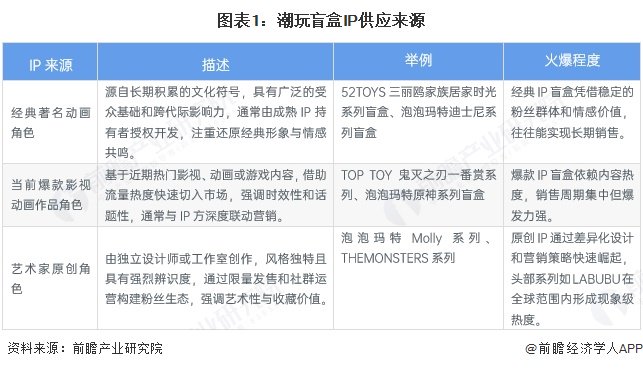
Core Viewpoint - The article discusses the supply situation of IPs in the trendy blind box market, highlighting three main sources of IPs: classic famous animation characters, current blockbuster film and animation characters, and original characters created by artists [2][12]. IP Supply - The three sources of IPs have distinct advantages: classic IPs rely on cultural accumulation, blockbuster IPs leverage content popularity, and original IPs thrive on design innovation [2][12]. - Companies like Pop Mart utilize a "self-owned IP + co-branding" strategy for revenue diversification, while 52TOYS focuses on authorized IPs to solidify its niche market [2][12]. Raw Material Supply - The raw material supply for trendy blind boxes is categorized into basic materials, special materials, and auxiliary materials, with a market characterized by dispersed basic materials and concentrated high-end materials [5][7]. - Major brands, such as Pop Mart, establish deep ties with core suppliers to create competitive advantages, while smaller players benefit from industrial clusters in regions like Dongguan to reduce costs [5]. Production Supply - China has a vast toy manufacturing industry with over 70,000 toy manufacturers, providing a solid supply chain for trendy blind boxes [8]. - The ability of manufacturers to quickly respond to market demands through flexible production capabilities helps lower costs and ensures stable product supply [8][12]. Sales Channel Supply - The sales channels for trendy blind boxes are characterized by a multi-channel integration, driven by IPs, policy regulation, and technological innovation [9][12]. - Pop Mart's strategy includes a combination of online and offline sales, with plans to expand its physical stores and robot stores significantly by 2025 [11]. - Innovative sales tactics, such as pop-up stores and limited-time offers, have proven effective in driving consumer demand and enhancing sales [11].



【干货】功能性护肤品产业链全景梳理及区域热力地图
Qian Zhan Wang· 2025-09-11 06:25
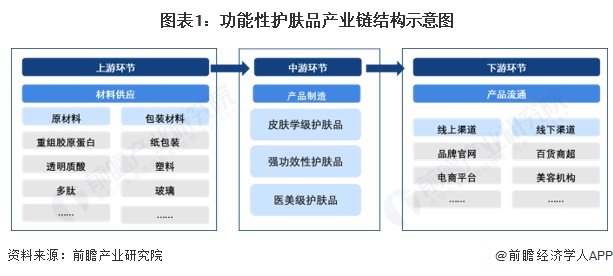
Core Insights - The article discusses the functional skincare product industry in China, highlighting key players, market dynamics, and recent developments in the sector [1][10]. Industry Overview - The functional skincare industry is segmented into upstream (raw materials and packaging), midstream (manufacturing), and downstream (distribution) [1][3]. - Key raw materials include recombinant collagen, hyaluronic acid, and peptides, while packaging materials consist of paper, plastic, and glass [1][3]. Key Players - Major companies in the functional skincare sector include Betaini, Huaxi Biological, Shanghai Jahwa, and international brands like L'Oréal and Estée Lauder [3][10]. - Upstream suppliers include Kesheng Co., Qingsong Co., and Linsen Biological, while contract manufacturers include Norsbel, Cosme, and Yingteli [3]. Regional Distribution - The majority of functional skincare companies are located in China's eastern coastal regions, with Shanghai and Guangdong having the most comprehensive distribution of industry players [5][7]. Recent Developments - Betaini is focusing on its Winona brand for sensitive skin, investing nearly 500 million yuan in a new central factory with an expected annual output value of 5 billion yuan [10][11]. - Huaxi Biological plans to invest over 100 million yuan in strategic innovation and expand production capacity in multiple cities [10][11]. - Shanghai Jahwa is establishing an innovation center for synthetic biology to develop new functional ingredients [10][11]. - Other companies like Chuang'er Biological and Fulejia are also expanding their production capabilities and investing in new technologies [10][11].
预见2025:《2025年中国售电公司行业全景图谱》(附市场现状、竞争格局和发展趋势等)
Qian Zhan Wang· 2025-09-11 04:25
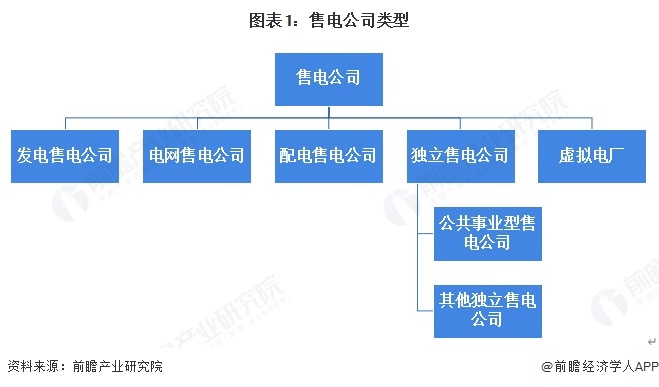
Industry Overview - The electricity sales companies are categorized into five types: generation sales companies, grid enterprise sales companies, social capital investment distribution network companies, independent sales companies, and virtual power plants [1][2][3] - The midstream is the core link in the electricity sales industry, connecting production, sales, and consumption [5][7] - The electricity sales sector is crucial for balancing electricity production and consumption, requiring a state of equilibrium to enhance economic efficiency [7] Industry Development History - The development of electricity sales companies in China has gone through three stages: from 2002 to 2014, characterized by the separation of generation and grid, leading to a competitive generation landscape; from 2015 to 2021, marked by a new round of electricity reform that opened up the sales side; and from 2022 to the present, driven by carbon neutrality goals and green electricity trading [10][11] Policy Background - The electricity generation and sales sectors are vital for the national economy, with significant reforms initiated in 2015 to create a healthy market environment [13][14] - Key policies include the establishment of a unified electricity market system by 2025 and the promotion of renewable energy integration into the market [14][15] Current Industry Status - As of the end of 2024, the number of registered electricity sales companies in China exceeds 5,000, reflecting a nearly 17-fold increase since 2016 [16][17] - The market transaction volume has been increasing annually, with a projected total of 61,796 billion kilowatt-hours in 2024 [18][19] - The market transaction amount is expected to exceed 3 trillion yuan in 2024, showing a year-on-year growth of 5.92% [22] Competitive Landscape - In 2024, the State Grid is expected to account for approximately 70% of the market transaction volume, with Southern Power Grid at 16% [23] - The majority of registered sales companies are concentrated in Guangdong, Shanxi, and Sichuan provinces [26] Future Industry Outlook - By 2030, the market transaction amount is projected to exceed 4 trillion yuan, with average settlement prices expected to decline initially and stabilize later [28] - The electricity sales industry is undergoing a transformation towards market mechanisms and carbon neutrality, requiring companies to enhance their operational capabilities [29]



2025年全球4K、8K超高清电视机行业发展现状分析 8K电视仍小众,内容匮乏是核心瓶颈【组图】
Qian Zhan Wang· 2025-09-10 06:40
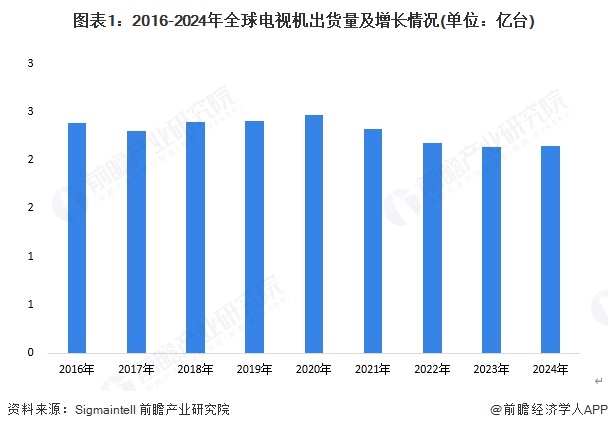
Global TV Market Overview - In 2023, global TV shipments reached 214 million units, a decline of 3.0% year-on-year, marking the lowest level in nearly a decade due to weak demand influenced by global economic downturn, high inflation, and consumer downgrade [1] - A slight recovery is expected in 2024, with shipments projected to increase to 215 million units, reflecting a year-on-year growth of 0.6% [1] 4K Ultra HD TV Market - In 2023, global 4K TV shipments were approximately 150 million units, accounting for over 70% of total TV shipments, solidifying its position as the market's absolute mainstream [2] - The 4K TV market is expected to grow to 160 million units in 2024, representing a year-on-year increase of about 6.7% [2] - North America is the largest contributor, with shipments reaching 65 million units, representing 40% of the global total, followed by the Asia-Pacific region, driven by the expansion of the middle class and broadband accessibility [2] Competitive Landscape of 4K/8K TV Market - Major players in the global 4K/8K TV market include Sony, LG, Samsung, and Sharp, with Samsung and Sony offering a wider range of sizes, while LG and Sony have relatively higher entry prices [4] - Domestic manufacturers such as TCL, Skyworth, and Hisense also hold a significant share in the global market [4] 8K Ultra HD TV Market - The growth of the 8K TV market has been slow compared to 4K TVs, with global shipments only reaching approximately 150,000 units in 2024, accounting for just 0.7% of total TV shipments [8] - The 8K TV market has faced several challenges, including high production costs, insufficient native 8K content, and the need for high bandwidth for streaming, which limits its penetration [9] - Despite these challenges, the 8K TV market still holds long-term potential under favorable policies, technological advancements, and industry collaboration [9]





【最全】2025年光电芯片行业上市公司全方位对比(附业务布局汇总、业绩对比、业务规划等)
Qian Zhan Wang· 2025-09-10 06:07
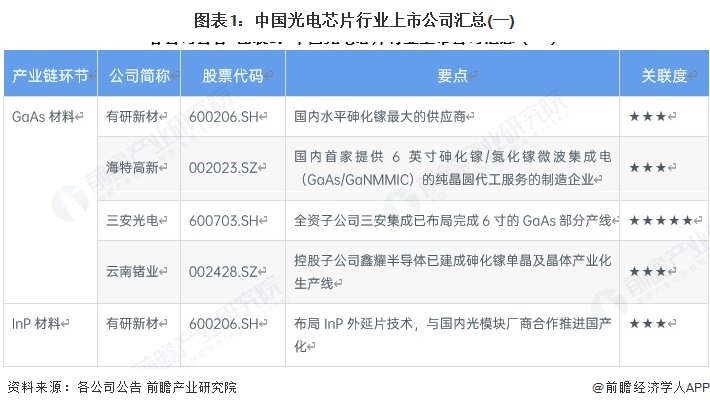
Summary of Key Points Core Viewpoint The article provides an overview of the optoelectronic chip industry in China, highlighting key listed companies, their market positions, product offerings, and revenue projections for 2024. Group 1: Overview of Listed Companies - The main listed companies in the optoelectronic chip sector include Yuanjie Technology, Changguang Huaxin, Guangxun Technology, Shijia Photon, and Huagong Technology [1]. - The number of listed companies in the optoelectronic chip industry in A-shares is relatively small [1]. Group 2: Company Information and Market Position - Huagong Technology, established in 1999, has the highest registered capital at 1,005.50 million yuan, while Yuanjie Technology, founded in 2013, has the lowest at 85.95 million yuan [8]. - Guangxun Technology leads in patent numbers with 1,765, while Yuanjie Technology has the least with 34 [8]. - In terms of total market capitalization, Huagong Technology is at 50.335 billion yuan, while Changguang Huaxin is the lowest at 13.385 billion yuan [8]. Group 3: Product Layout and Capacity Comparison - Yuanjie Technology focuses on 100G EML laser chips and 25G DFB chips, with a planned production capacity of approximately 960,000 chips per year by 2024 and 20 million chips per year by 2026 [11][12]. - Changguang Huaxin plans to produce 100 million chips annually starting in 2025, covering multiple wavelength bands [11]. - Guangxun Technology has an annual production capacity of 120 million chips [11]. Group 4: Revenue Projections - For 2024, Yuanjie Technology's optoelectronic chip business is projected to account for nearly 100% of its total revenue, while Changguang Huaxin and Shijia Photon have relatively lower contributions [13]. Group 5: Business Planning and Development Strategies - Companies are focusing on technology research and development, product layout, market expansion, and capacity construction, with each having distinct strategies [13]. - Yuanjie Technology aims to enhance its high-end product offerings and expand into data center markets, while Changguang Huaxin is developing next-generation optical chip platform technologies [14].



【投资视角】启示2025:中国连接器行业投融资及兼并重组分析(附投融资事件、产业基金和兼并重组等)
Qian Zhan Wang· 2025-09-10 03:40
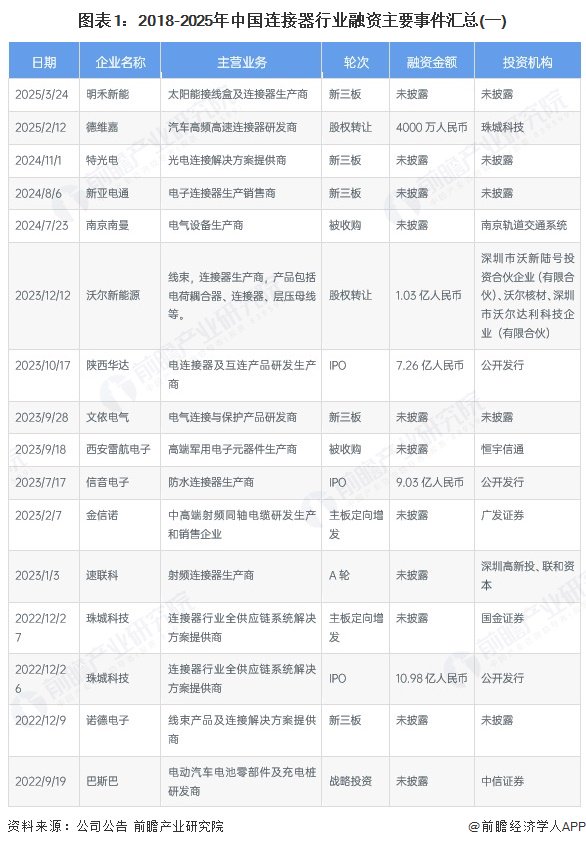
转自:前瞻产业研究院 行业主要上市公司:立讯精密(002475.SZ)、中航光电(002179.SZ)、长盈精密(300115.8Z)、得润电子 (002055.SZ)、航天电器(002025.8Z)、意华股份(002897.SZ)等 1、连接器行业融资现状 ——融资事件汇总 2018-2025年中国连接器行业融资主要事件汇总如下: 图表 1: 2018-2025年中国连接器行业融资主要事件汇总(一) | 日期 | 企业名称 | 主营业务 | 轮次 | 融资金额 | 投资机构 | | --- | --- | --- | --- | --- | --- | | 2025/3/24 | 明末新能 | 太阳能接线盒及连接器生产商 | 新三板 | 未披露 | 未披露 | | 2025/2/12 | 德维露 | 汽车高频高速连接器研发商 | 股权转让 | 4000 万人民币 | 珠城科技 | | 2024/11/1 | 特光电 | 光电连接解决方案提供商 | 新三板 | 未披露 | 未披露 | | 2024/8/6 | 新亚电通 | 电子连接器生产销售商 | 新三板 | 未披露 | 未披露 | | 2024/7/23 ...
前瞻全球产业早报:OpenAI拟在印度建立数据中心
Qian Zhan Wang· 2025-09-10 00:15
"人工智能+交通运输"实施意见将于近期印发实施 9月1日从交通运输部获悉,《"人工智能+交通运输"实施意见》经部务会审议通过,将于近期印发实施。此 前,交通运输部新闻发言人、政策研究室副主任李颖表示,建设综合交通运输大模型,是深入推动"人工智 能+交通运输"行动的重要举措,交通运输部明确提出了"1+N+X"的综合交通运输大模型总体技术架构。 报道:台积电考虑明年将高端工艺制程涨价5%-10% 两部门:到2026年,工业母机高质量标准体系基本建立 国家标准委、工业和信息化部印发《工业母机高质量标准体系建设方案》。其中提到,到2026年,工业母机 高质量标准体系基本建立,以高质量标准体系建设促进工业母机产品质量提升和设备升级换代,以高水平标 准引领产业高质量发展。制修订标准不少于300项,牵头制修订不少于5项相关国际标准,国际标准转化率达 90%,标准供给结构更加优化。 据Digitimes,台积电正在考虑2026年将其所有高端工艺制程提高5%-10%的价格,以抵消美国关税、汇率波 动和供应链价格压力。台积电已将更高的2026年报价传达给了代工厂合作伙伴,其中包括5纳米/4纳米、3纳 米和2纳米等制程。这意味着台 ...