Business Insider

Search documents
Mystery solved: Amazon is the tenant in talks with data center developer rocked by stock plunge
Business Insider· 2025-12-17 23:42
Core Insights - Amazon has withdrawn funding from Fermi America's significant data-center project, leading to a substantial drop in the developer's stock price [1][2] - Fermi America is developing an 11-gigawatt data-center campus in Texas, which aims to meet the increasing energy demands driven by the AI boom [8] Company Developments - Fermi's stock fell nearly 50% after a securities filing revealed the cancellation of a $150 million advance for construction, following the end of an exclusivity period [2] - The CEO of Fermi, Toby Neugebauer, confirmed that Amazon was the prospective tenant and that negotiations were ongoing, with the deal potentially worth over $20 billion over 20 years [3][6] - The project, known as Project Matador, relies on a 99-year ground lease with the Texas Tech University System, contingent on a signed letter of intent with a tenant [9] Financial Context - Fermi America went public in September, pricing shares at $21 and raising over $680 million, but its valuation has since dropped from nearly $14 billion to below $6 billion due to recent stock performance [8][12] - Analysts noted that the anchor tenant attempted last-minute changes to the agreement pricing that were deemed unacceptable by Fermi [10] Market Position - Fermi's project is among the most ambitious efforts to address the energy needs of data centers, with plans to bring 11 gigawatts of new power online over the next decade from various sources [8] - The company is reportedly in discussions with additional tenants, indicating ongoing interest in the project despite the setback with Amazon [11]


The 6 biggest reveals from WBD's filing on why it rejected Paramount
Business Insider· 2025-12-17 21:52
Core Insights - Warner Bros. Discovery (WBD) rejected Paramount's $30-per-share offer and advised shareholders to accept Netflix's bid of $27.75 per share, citing superior value and certainty [2] - The bidding war revealed significant behind-the-scenes dynamics, including offers made to WBD's CEO David Zaslav and the involvement of multiple bidders [3][7] Group 1: Bidding Dynamics - David Ellison attempted to leverage his influence by requesting a meeting with WBD's CEO after a rejected bid, but WBD expressed concerns about the bid's reliance on a revocable trust [3] - Paramount offered Zaslav a compensation package worth over $500 million and the position of co-CEO and co-chairman, which Netflix did not [4][5] - A previously unknown bidder, referred to as "Company C," proposed acquiring WBD's cable channels and 20% of its streaming and studio businesses for $25 billion in cash, speculated to be Starz [7][8] Group 2: Financial Implications - Major investment banks, including Allen & Co., J.P. Morgan, and Evercore, stand to earn a total of $225 million from the potential sale to either Netflix or Paramount [9] - The media and telecom M&A deal value increased by 61% in the past year, indicating a strong investor appetite for valuable intellectual property [10] Group 3: Regulatory Considerations - The Ellisons' bid included $24 billion from Middle Eastern sources, raising concerns but not deemed a dealbreaker by WBD [11] - Both Paramount and Netflix argued their bids would pass regulatory scrutiny, with WBD's board not considering regulatory risk as a significant differentiator between the two proposals [12][14]



The Oscars have a new stage on YouTube. The audience may have other plans.
Business Insider· 2025-12-17 21:13
Core Insights - The acquisition of Warner Bros. studio and HBO by Netflix signifies a major shift in the media landscape, with digital platforms taking control of traditional media assets [1][2] - The move of the Oscars from ABC to YouTube is seen as a symbolic change rather than a transformative one, as the Academy will still produce the show [3][6] - The Oscars' viewership has been in decline, with current numbers significantly lower than historical peaks, raising questions about the potential audience on YouTube [7][9] Group 1: Industry Changes - Netflix's potential acquisition of Warner Bros. represents a structural change in the industry, where a digital outlet could control a traditional movie studio and premium TV service [2] - The transition of the Oscars to YouTube reflects the growing influence of digital platforms over traditional media [1][3] Group 2: Audience Dynamics - The Oscars have seen a decline in viewership, dropping from a peak of 57 million in 1998 to less than half that today, indicating a broader trend of decreasing TV popularity [7][8] - Despite the potential for a larger audience on YouTube, there is skepticism about whether the Oscars will attract more viewers, as many may not be familiar with the nominated films [9][10]

The head of Amazon's AGI team is leaving
Business Insider· 2025-12-17 19:15
Core Insights - Rohit Prasad, the executive leading Amazon's AI model development, is leaving the company at the end of the year after two years of launching the Artificial General Intelligence group [1] - Prasad was instrumental in launching the Nova family of AI models, which, while efficient, still lag behind competitors like OpenAI's GPT, Anthropic's Claude Opus, and Google's Gemini [2] - Amazon is restructuring its AI initiatives, creating a new organization under Peter DeSantis to oversee AGI, AI models, silicon chip, and quantum computing efforts [2] - Pieter Abbeel, co-founder of Covariant, will now lead Amazon's frontier AI model research team following Prasad's departure [3] - The leadership changes at AWS include several recent departures and new hires, indicating a significant shift in the company's AI strategy [3][4]
Vanguard highlights the 2 best stock investments for next 5-10 years
Business Insider· 2025-12-17 19:04
Core Viewpoint - Vanguard identifies value stocks and non-US developed market stocks as the top equity investments for the next five to ten years, moving away from the high-flying tech sector that has dominated recent market performance [1][2]. Investment Outlook - Vanguard's 2026 outlook report predicts US value stocks will yield an annual return of 7% over the next decade, while non-US developed market stocks are expected to return 6% per year [2]. - Non-US developed market stocks, which include countries like the UK, Japan, and Germany, have significantly outperformed US stocks, with a 30.3% increase in the Vanguard Tax Managed Fund FTSE Developed Markets ETF (VEA) compared to a 15% gain in the S&P 500 [6]. Sector Analysis - The report suggests that value-oriented sectors such as industrials, financials, and select consumer segments are better positioned to benefit from AI adoption, potentially leading to efficiency gains and earnings growth [4]. - Vanguard notes that both value stocks and non-US developed market stocks have not fully priced in the long-term benefits of AI, making them attractive investments [4]. Market Trends - A rotation towards value and non-US stocks is currently observed, with the Vanguard S&P 500 Value ETF (VOOV) and VEA increasing by 2.7% and 1.6% respectively, while the Vanguard Information Technology Index Fund ETF (VGT) has decreased by 1.4% [5]. - Vanguard acknowledges the ongoing AI investment cycle is only 30%-40% towards its peak, indicating potential risks for tech stocks amid growing competition and capital expenditure pressures [6][7]. Investment Vehicles - For investors interested in US value stocks and non-US developed market stocks, recommended funds include the iShares Core S&P US Value ETF (IUSV) and the Schwab International Equity ETF (SCHF), in addition to Vanguard's offerings [8].

The Oscars are heading to YouTube starting in 2029
Business Insider· 2025-12-17 18:28
Core Insights - The Academy of Motion Picture Arts and Sciences has awarded YouTube the global rights to the Oscars from 2029 to 2033, marking a significant shift in how the event will be broadcasted [1][3] - The Oscars will no longer be available on ABC starting in 2029, but will remain free to viewers worldwide through YouTube and YouTube TV, including red carpet coverage and behind-the-scenes content [1][2] Industry Trends - Streaming platforms like YouTube, Netflix, and Amazon Prime are increasingly competing for live event broadcasting rights, indicating a growing trend in the media landscape [2] - Historically, the Oscars have been one of the most-watched television events, often ranking within the top 100 most-watched telecasts in non-presidential election years [2] Company Statements - YouTube CEO Neal Mohan emphasized the cultural significance of the Oscars, stating that the partnership aims to inspire a new generation of creativity and film lovers while honoring the Oscars' legacy [3] - The Academy also announced that the Google Arts & Culture initiative will provide digital access to select Academy Museum exhibitions and programs, enhancing the reach of their cultural offerings [4]

How much the bankers are getting paid as Netflix and Paramount fight to buy Warner Bros. Discovery
Business Insider· 2025-12-17 15:49
Core Insights - Wall Street banks are positioned to benefit significantly from Warner Bros. Discovery's (WBD) potential sale to either Netflix or Paramount Skydance, with a total of $225 million in fees expected to be paid to advisors if a deal is finalized [1][2]. Group 1: Deal Dynamics - WBD is currently evaluating competing offers from Netflix, which aims to acquire its studio and streaming business, and Paramount, which has made a bid for the entire company, including cable TV channels [2]. - WBD's board has expressed continued support for Netflix's offer following a hostile bid from Paramount [2]. - The advisory firms involved in the bidding process have played a crucial role in board meetings, negotiations, and evaluations of the offers [2][7]. Group 2: Advisory Fees - The fee structure for the advisory firms includes significant contingent payments, with Allen & Co. and J.P. Morgan each set to receive $85 million, of which $45 million and $50 million, respectively, are contingent on a successful deal [11]. - Evercore is expected to receive $55 million, also contingent on the deal's completion [11]. Group 3: Market Context - The investment banking sector has seen a surge in activity, particularly in media and telecom mergers and acquisitions (M&A), with a reported 61% increase in deal value from the second half of 2024 to the second half of 2025, excluding the WBD sale [9]. - PwC anticipates that robust M&A activity will persist in the coming years as investors seek value in content libraries, video games, and sports assets [10].

Why WBD's CEO never responded to David Ellison's text during the bidding war
Business Insider· 2025-12-17 15:15
Core Viewpoint - Paramount's CEO David Ellison's communication with Warner Bros. Discovery (WBD) CEO David Zaslav went unanswered, leading to WBD's acceptance of Netflix's offer instead of Paramount's bid [1][2]. Group 1: Negotiation Details - Ellison's text to Zaslav on December 4 indicated that Paramount's offer was not its "best and final" and aimed to address WBD's concerns regarding certainty, cash value, and speed to close [2]. - WBD's filing stated that Zaslav did not respond to Ellison's text as it did not present an actionable improved proposal during the board's deliberations [2]. - Paramount claimed that WBD did not engage in a real-time negotiation or review the proposal in detail, and there was no follow-up communication from WBD after receiving the bid [7][8]. Group 2: Bid Rejection - The WBD board advised shareholders to reject Paramount's hostile bid, citing concerns over the bid's reliance on an "unknown and opaque revocable trust" [9]. - Paramount asserted that its bid was fully backed by Larry Ellison, a prominent billionaire, which was intended to provide assurance to WBD [9]. Group 3: Future Actions - Paramount may need to either rely on WBD shareholders to support their position or consider revising their offer again [10].
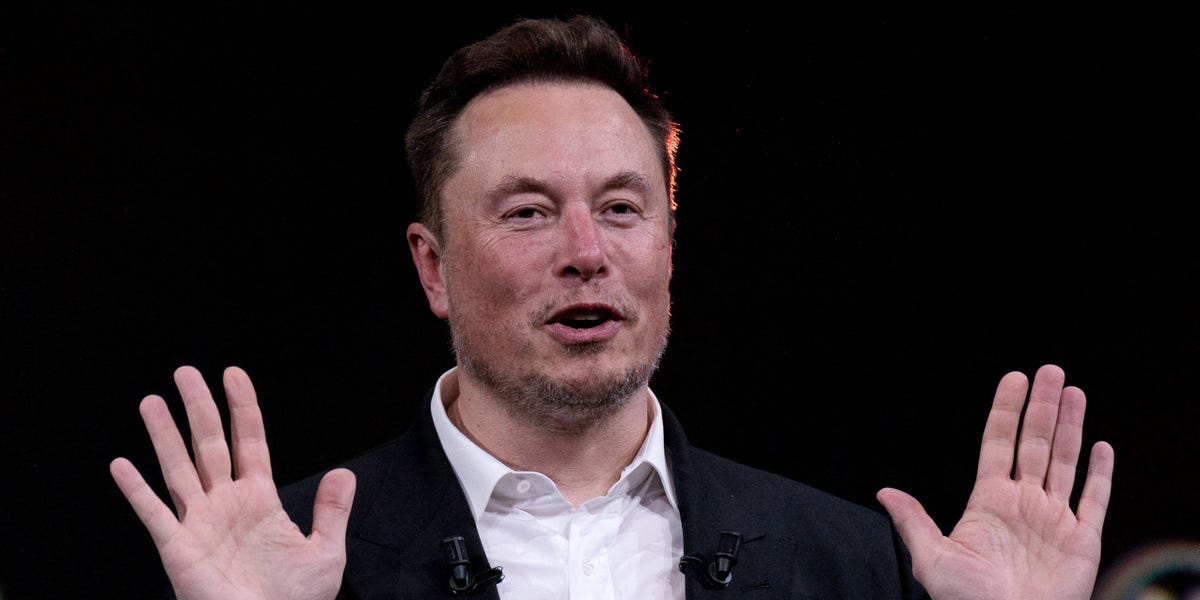
Elon Musk Is Worth a Record $648B, More Than Oracle or Mastercard
Business Insider· 2025-12-17 14:42
Core Insights - Elon Musk's net worth has reached a record $648 billion, with a year-to-date gain of $216 billion, surpassing the entire fortune of LVMH CEO Bernard Arnault [1][2] - Tesla's stock price closed at an all-time high of $490, significantly contributing to Musk's wealth increase, alongside a doubling of SpaceX's valuation to $800 billion [2][5] - Musk's wealth is more than double that of the second richest individual, Larry Page, and exceeds the market values of major companies like Oracle and Mastercard [3][4] Company Performance - Tesla's stock has seen a remarkable recovery, with a significant rally following a period of decline earlier in the year, driven by investor optimism regarding AI and autonomous vehicle development [5][6] - The approval of Musk's pay package by Tesla shareholders could potentially make him the world's first trillionaire if he meets specific performance milestones [8] Industry Trends - The surge in stock prices for Tesla and other major tech companies is largely attributed to the excitement surrounding AI advancements, with Musk investing heavily in AI for Tesla's products [6][7] - Key shareholders in the AI sector, including Musk, have experienced substantial wealth gains, reflecting the broader market trends influenced by AI developments [7]


Here's what Netflix's co-CEOs are saying after WBD rejected Paramount's hostile bid
Business Insider· 2025-12-17 13:27
Core Viewpoint - Warner Bros. Discovery (WBD) is favoring a merger with Netflix over a hostile takeover bid from Paramount Skydance, emphasizing the Netflix deal's superior value and lower risk for shareholders [2][4][5]. Group 1: Warner Bros. Discovery's Position - WBD's board rejected Paramount's offer of $30 per share, recommending shareholders accept Netflix's offer of $27.75 per share, which includes a separation of its cable networks from HBO and HBO Max [2][4]. - WBD's board chair stated that Paramount's offer was inadequate and posed significant risks to shareholders, particularly regarding financing issues [3][4]. - WBD shareholders have until January 8 to decide on Paramount's offer, with a potential $2.8 billion fee payable to Netflix if the deal collapses [4]. Group 2: Netflix's Strategy and Offer - Netflix's co-CEOs praised WBD's decision, asserting that the merger agreement is in the best interest of stockholders and will enhance consumer choice and value [5][6]. - The Netflix-WBD deal is projected to close within 12 to 18 months, with Netflix confident in obtaining regulatory approvals [6][10]. - The total equity value for WBD stockholders in the Netflix deal is $27.75 per share, comprising $23.25 in cash and $4.50 in Netflix stock, along with additional value from the separation of Discovery Global [11]. Group 3: Competitive Landscape - The global entertainment market is highly competitive, with Netflix currently holding an 8% TV view share in the U.S., while a combined Netflix-HBO/HBO Max would only increase this to 9.2% [15]. - If Paramount were to acquire WBD, its market share would rise to 14%, highlighting the competitive stakes involved in the merger [15]. - Netflix aims to leverage Warner Bros.' successful theatrical film division and HBO's prestige television to enhance its content offerings and market position [20][21]. Group 4: Commitment to Creative and Consumer Value - Netflix is committed to preserving Warner Bros.' film library and ensuring theatrical releases with standard windows, marking a shift in its business model [22][24]. - The merger is expected to create more opportunities for creators and enhance the overall entertainment industry by combining Netflix's global reach with Warner Bros.' production capabilities [20][21]. - Netflix emphasizes its track record of value creation and operational excellence, aiming to continue this legacy through the merger with Warner Bros. [13].