Business Insider

Search documents
Instagram is internally testing a new Snapchat rival app
Business Insider· 2026-02-09 19:30
Core Insights - Meta is developing a new stand-alone app called "Instants" for sending disappearing photos, reminiscent of Snapchat's original concept [1][2] - The app is currently in internal prototype stages and is not being tested externally [2] - Instagram has been testing a similar feature called Instants, previously known as "Shots," with limited availability in certain countries [2][3] Group 1: App Features - Instants allows users to send disappearing photos that expire 24 hours after being opened, and can only be sent to mutual followers [3] - The photos sent through Instants cannot be edited, maintaining a focus on quick sharing [3] - This feature is part of a broader trend where Instagram has previously introduced disappearing messaging tools, including "Vanish Mode" [4] Group 2: Competitive Landscape - Meta appears to be drawing inspiration from Snapchat, particularly in enhancing interactions among friends on its platform [5] - Instagram has previously imitated Snapchat's features, such as Stories and the social map feature, indicating a competitive strategy focused on similar functionalities [6] - The ongoing development of Instants suggests that Meta is committed to evolving its messaging capabilities in response to user preferences and competitive pressures [4][5]



MrBeast is buying a banking app geared toward teens
Business Insider· 2026-02-09 18:25
Core Insights - YouTube creator MrBeast is expanding into fintech by acquiring the consumer banking app Step, aimed at helping teens manage their finances [1][3] Company Overview - Step is an "all-in-one" digital banking platform that provides services such as savings accounts, a credit-building Visa card, and a cash-advance program, operating through a partnership with Evolve Bank & Trust [2][3] - The acquisition aligns with Beast Industries' strategy to offer technology-driven financial solutions to its audience [3] Financial Background - Step raised $500 million in equity and debt in 2022 from institutional investors, including General Catalyst and Stripe [3] - Beast Industries was valued at approximately $5 billion in its latest funding round and is exploring additional revenue streams beyond media, including a potential mobile phone service [7] Future Plans - MrBeast has filed a trademark for "MrBeast Financial" and is planning to launch fintech services such as student loans and insurance by early 2025 [9] - The company aims to incorporate decentralized finance (DeFi) into its financial services platform [9] Educational Initiatives - MrBeast intends to create educational content about finance, focusing on topics like investing and credit management, to help young people build a financial foundation [10]


Workday's CEO is stepping down as its cofounder resumes the job
Business Insider· 2026-02-09 18:16
Core Insights - Workday's CEO Carl Eschenbach is stepping down, with cofounder Aneel Bhusri taking over the role, marking Bhusri's return to leadership after previously serving as CEO multiple times [1][3] - The company recently laid off approximately 400 employees, representing about 2% of its workforce, to realign resources with its priorities [1][3] - Workday's shares have declined roughly 6% on the day of the announcement and are down about 43% compared to a year ago [2] Leadership Transition - Aneel Bhusri has a long history with Workday, having served as co-CEO and CEO in various capacities from 2009 to 2024 [3] - Bhusri's leadership is expected to guide Workday through a transformative period influenced by advancements in AI, as noted by Mark Hawkins, the vice chair [2] Layoff Context - The recent layoffs follow a larger round of layoffs last year, which were also attributed to the need for strategic investment in areas like AI [4] - Workday had over 20,400 employees as of January 31, 2025, indicating a significant workforce size prior to the layoffs [4] Market Reaction - The software sector, including Workday, has faced stock price declines following the introduction of new AI tools by competitors, such as Anthropic's Claude Cowork plugin [4] - Eschenbach previously expressed confidence in Workday's position in the AI landscape, suggesting that the company is well-equipped to leverage AI advancements rather than be hindered by them [5]


In Google We Trust: Why an internet company can borrow billions for a century
Business Insider· 2026-02-09 17:42
Core Insights - Google is preparing to issue a 100-year bond, following a 50-year bond issued in November, indicating strong investor confidence in the company's long-term viability [1][4] - The interest rates on Google's bonds are only slightly higher than those of US Treasury bonds, suggesting that Google is viewed as a safe investment comparable to the US government [2] - A recent federal judge's ruling allowed Google to maintain its monopoly status, which has led to significant profits, with net income reaching $132 billion in 2025 and plans to invest $185 billion in AI-related infrastructure in 2026 [3] Company Position - Google is now seen as a government-approved monopoly, with the ability to set prices for online search ads without regulatory constraints, unlike utilities that are price-controlled [2][5] - The issuance of a 100-year bond in British pounds places Google alongside entities like the University of Oxford and EDF, which are among the few that have borrowed for such long durations [4] Future Outlook - There is speculation about Google's long-term sustainability, with comparisons made to the US's potential to thrive in the next 50 to 100 years [4] - Google is appealing the recent monopoly ruling, arguing that it operates in a competitive market and seeking to pause the implementation of specific remedies during the appeal process [6]


The best photos of the 2026 Super Bowl
Business Insider· 2026-02-09 17:04
Game Summary - The Seattle Seahawks won Super Bowl LX against the New England Patriots with a final score of 29-13 [1][53] - Seahawks placekicker Jason Myers set a record by kicking five field goals during the game [1][43] - The game featured a halftime show headlined by Bad Bunny, marking a historic moment as he became the first Latino and Spanish-speaking solo artist to perform at the Super Bowl [1][21][29] Key Events - Jason Myers scored the first points of the game with a field goal in the first quarter, leading to a 9-0 score by halftime, which was notable for being one of only five Super Bowls without a touchdown in the first half [9][18] - The first touchdown of the game was scored by Seahawks tight end AJ Barner, extending their lead to 19-0 [36] - The Patriots managed to score their first touchdown through Mack Hollins, bringing the score to 19-7 [38] Halftime Show - Bad Bunny's performance included surprise appearances by Lady Gaga and Ricky Martin, energizing the crowd [21][27] - The show concluded with a powerful message displayed on a billboard: "The only thing more powerful than hate is love" [29] Final Moments - The Seahawks' lead was further extended by a touchdown from linebacker Uchenna Nwosu, making the score 29-7 [47] - The Patriots scored a late touchdown by Rhamondre Stevenson, finalizing the score at 29-13 [49] - Seahawks running back Kenneth Walker III was named MVP of the game, contributing over 160 scrimmage yards [65]


Meta CTO says cuts to Reality Labs are 'real cause for sadness' — but the company is still 'bullish' on VR
Business Insider· 2026-02-08 10:15
Core Insights - Meta has invested over $70 billion in its VR and metaverse initiatives since 2020, but the growth of the industry has been slower than anticipated, leading to recent cuts in its Reality Labs division [1][2] - The company has acknowledged that its vision for Horizon and VR was overly ambitious, resulting in a need to scale back on several VR products, including virtual workplace and fitness applications [2][3] - Despite the setbacks, Meta remains optimistic about the future of VR, claiming to invest more in content than any competitor [2][3] Investment Strategy - Meta's CTO stated that the current investment exceeds the growth potential of the VR ecosystem, indicating a significant loss and a need for emotional acknowledgment of the situation [2][5] - The company continues to view itself as a net positive investor in the VR ecosystem, even after scaling back its ambitions [3][4] - There is a belief that the challenges faced in VR do not necessarily detract from the potential growth in wearables, as both can be pursued simultaneously [3][4] Future Outlook - The CTO has previously indicated that 2025 will be a critical year for the metaverse, determining whether Meta's efforts will be seen as visionary or a misadventure [4] - There is a cautious tone regarding future investments, with the company emphasizing the need for its investment levels to align with actual growth [5]

Hims & Hers removes a knock-off weight loss drug days after introducing it
Business Insider· 2026-02-08 00:21
Core Viewpoint - Hims & Hers launched a once-a-day weight-loss pill as a cheaper alternative to Novo Nordisk's Wegovy but decided to stop selling it shortly after due to industry feedback and regulatory scrutiny [1][2]. Company Actions - Hims & Hers initially claimed that the compounded semaglutide pill met "rigorous clinical standards" upon its launch [2]. - The company announced its decision to cease offering the treatment after engaging in discussions with industry stakeholders [2]. Regulatory Environment - The FDA issued a statement indicating its intention to restrict certain ingredients in non-FDA-approved compounded drugs, specifically targeting companies like Hims & Hers [8]. - The FDA warned that failure to address violations related to unapproved compounded GLP-1 products could lead to legal actions, including seizure and injunction [8]. Industry Context - Novo Nordisk revitalized the weight-loss medication market with its Ozempic product in 2022, which was initially marketed for type 2 diabetes but later prescribed for obesity [9]. - Following the success of Ozempic, Novo Nordisk developed Wegovy, specifically for weight management, which included an oral version launched in January [9]. - The surge in demand for weight-loss medications has led many health-focused companies to create off-brand versions to capitalize on the market [10].


Wall Street's Strategies to Play the Stock Market's Software Sell-Off
Business Insider· 2026-02-07 10:30
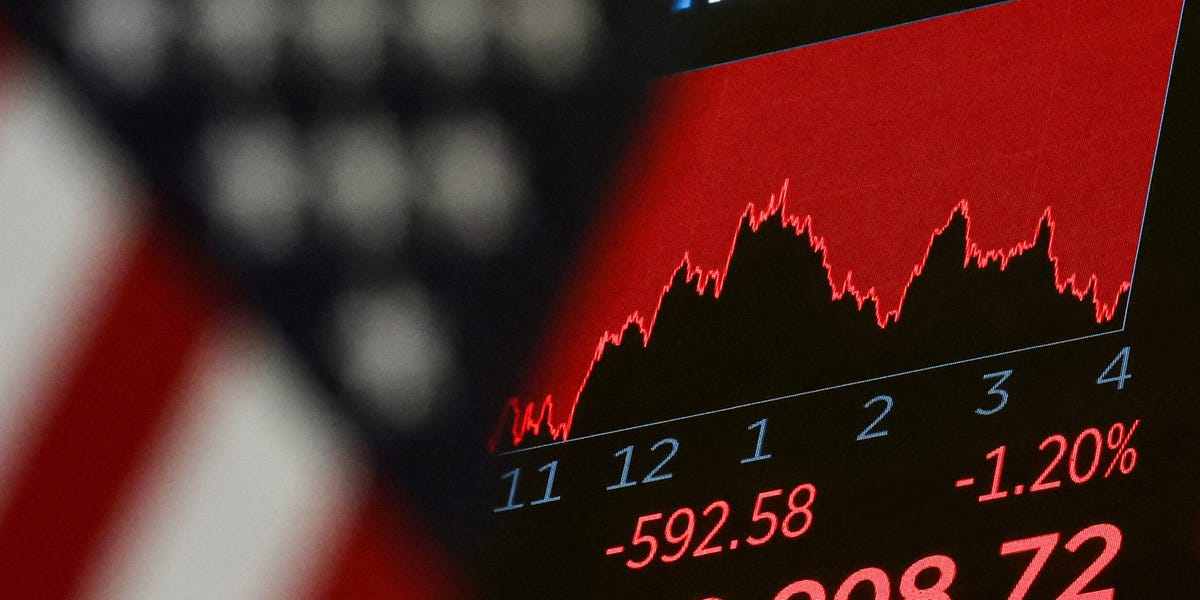
Core Viewpoint - The recent tech sell-off is seen as a rotation into "old economy" sectors, with strategies suggested by Wall Street experts to navigate the ongoing market changes [2][3][4]. Group 1: Market Trends - The tech-heavy Nasdaq Composite declined by 2% for the week, with the iShares Expanded Tech-Software Sector ETF down over 12% during the same period [1]. - Analysts indicate that the current market plunge is not the end of the bear market but an opportunity to reassess investment strategies [2]. Group 2: Investment Strategies - **Old Economy Sectors**: Analysts from Piper Sandler suggest focusing on cyclical and value sectors such as Energy, Industrials, Materials, Staples, and Banks, which are gaining momentum as the tech sector declines [3][4]. - **AI Bubble Hedge**: Bank of America strategists propose "transition" investing as a hedge against the AI bubble, recommending investments in Electrification, infrastructure & grid expansion, metals, and defense [5]. - **Identifying AI Winners**: Futurum Group's CEO emphasizes the importance of identifying companies that are generating returns from AI investments, highlighting firms like Amazon, Microsoft, Alphabet, ServiceNow, Palantir, and Tesla as potential winners [6][7]. - **Buying the Dip**: Dan Ives from Wedbush advocates for buying tech stocks at a discount, viewing the current weakness as an opportunity rather than a long-term issue, naming Microsoft, Palantir, Snowflake, Salesforce, and CrowdStrike as stocks to consider [8][9].


2 software stocks with at least 50% upside potential: Morningstar
Business Insider· 2026-02-07 10:15
Core Viewpoint - The software sector experienced a significant sell-off, with the iShares Expanded Tech-Software Sector ETF (IGV) dropping 19% from January 26 to February 5, but Morningstar believes the fears surrounding AI's impact on the industry are exaggerated and presents a buying opportunity [1][2]. Group 1: Market Performance and Analyst Insights - Morningstar's senior equity analyst, Dan Romanoff, stated that there is little evidence supporting the bear case for software stocks, as retention rates and other metrics remain solid [2]. - Despite the sell-off, software stocks showed signs of recovery, with IGV rising 3% and the Nasdaq increasing by over 2% on a recent Friday [3]. - Romanoff identified Microsoft (MSFT) and ServiceNow (NOW) as having substantial upside potential, with shares down 17% and 35% year to date, respectively [4]. Group 2: AI Impact and Revenue Generation - Concerns that AI will significantly disrupt the software industry may be overstated, as many firms still view AI with skepticism [5]. - AI products currently account for approximately 2% of revenue for software vendors, indicating that they are not generating substantial revenue [6]. - Historical instances of automation have not led to major disruptions in labor markets, suggesting that current fears may not materialize [6]. Group 3: Future Outlook and Employment Trends - While there may be future pressure on seat counts, there is no current evidence of this affecting sales representatives, as seen in the historical context of Salesforce's CRM approach [7]. - Headcount across functional areas continues to increase, indicating that fears of job losses due to automation are not currently reflected in the market [7].

Saab is looking to arm its Gripen fighter jets with a proven drone-killing rocket after studying the Ukraine war
Business Insider· 2026-02-07 00:08
Swedish defense prime Saab is exploring the Advanced Precision Kill Weapon System as a cheaper armament option for its JAS 39 Gripen fighters, firm executives told Business Insider this week. "The APKWS is in interest because other platforms are now integrating 70mm guided rockets. So we are, of course, eyeing that capability now," Jussi Halmetoja, operations advisor for Saab's air domain, said at the Singapore Airshow.Halmetoja said the company was looking at ways to integrate the weapons system, which us ...