Investopedia

Search documents
Student Loan Forgiveness Was Paused Most of 2025—But Thousands Still Received It. Here's How
Investopedia· 2026-02-10 01:00
Core Insights - Federal student loan borrowers experienced significant changes in repayment plans during President Trump's second term, yet approximately 121,000 borrowers received debt forgiveness in 2025 [2][12] - The number of borrowers receiving forgiveness under Trump's administration is lower than under Biden's, but still represents a notable increase compared to historical averages [3][7] Public Service Loan Forgiveness - In 2025, the Department of Education forgave loans for about 117,280 borrowers through the Public Service Loan Forgiveness (PSLF) program, which discharges loans after 10 years of payments for public service workers [5][12] - The PSLF program saw an unprecedented average of 267,500 borrowers' loans forgiven annually during Biden's presidency, totaling nearly 1.07 million [7][14] Income-Based Repayment Plans - The Trump administration forgave approximately 3,570 borrowers' loans through Income-Based Repayment plans in 2025, with a significant pause in forgiveness due to legal challenges [8][10][12] - The Department of Education did not provide publicly available data on the number of borrowers receiving forgiveness through income-driven repayment plans from any administration [11] Changes in Forgiveness Programs - For most of 2025, forgiveness under income-driven repayment plans was paused, with the Department of Education resuming forgiveness in October [10][13] - Prior to Biden's administration, only 50 borrowers had received forgiveness through income-driven repayment plans, highlighting the substantial increase in forgiveness under his tenure [14]


You Can Split Your Rent With 'Buy Now, Pay Later' Plans—But It Will Cost You
Investopedia· 2026-02-10 01:00
Core Insights - The rise of rent now, pay later services indicates the increasing unmanageability of housing costs for many Americans [4][9] - Affirm has launched a pilot program allowing renters to split their payments into two installments, partnering with Esusu for credit score reporting [2][5] - Monthly service fees and potential finance charges can make these services more expensive than traditional payment methods [6][9] Company-Specific Insights - Affirm's new service does not charge interest but involves monthly fees, accessible only through Esusu's Plus and Premium services [3][5] - Other companies like Zip and Livble offer similar services, with Zip advertising an annual interest rate of 31.11% and Livble charging monthly finance charges of $30 to $40 [6][7] - Flex provides a rent-splitting option that may require landlord participation, with a monthly fee of $14.99 and additional charges [7] Industry Trends - The growth of rent now, pay later services reflects broader economic challenges, as turning rent into installment debt can increase household debt and reduce overall consumer spending [4] - Many of these services are reported to be more costly than using credit cards for rent payments, highlighting the financial strain on renters [6][9]



Here's How Much Robinhood Stock Is Expected to Move After Earnings
Investopedia· 2026-02-10 00:16
Core Insights - Robinhood shares have declined over 40% from their record levels in October due to a pullback in cryptocurrencies, with Bitcoin prices nearly 50% off their October highs [1] - The company is set to report fourth-quarter earnings, with traders expecting a potential stock movement of around 9% in either direction by the end of the week [1] - Analysts predict Robinhood will report earnings of 62 cents per share, with a 32% year-over-year revenue increase to a record $1.34 billion [1] Company Performance - Robinhood's stock closed near $87 on Monday, with potential to rise to $95 or fall to $78 based on expected volatility [1] - The company has been expanding its cryptocurrency offerings and tokenization of private companies, which is crucial given its significant revenue derived from cryptocurrency trading [1] Analyst Sentiment - Wall Street analysts are overwhelmingly bullish on Robinhood, with all eight analysts recommending buying the shares, suggesting an average price target of $151, indicating nearly 75% upside from Monday's close [1]

A Big AppLovin Critic Walked Back Some Of Its Claims. The Stock Jumped.
Investopedia· 2026-02-09 23:20
-- A Big AppLovin Critic Walked Back Some Of Its Claims. The Stock Jumped. [Major Indexes Rise as Tech Stocks Surge][There Was an 'Unmistakeable' Flight to Value Last Week][What's Next for Crypto After a Rough Week?][How Much Coca-Cola Stock is Expected to Move After Earnings]- Top StoriesEven with Monday's gains, shares of AppLovin have lost about 37% from December's highs amid heightened scrutiny of its practices and investors.Gabby Jones / Bloomberg / Getty ImagesClose### Key Takeaways- CapitalWatch said ...


Some Experts Argue Software Stock Sell-Off Was 'Too Harsh' Despite AI Fears
Investopedia· 2026-02-09 21:17
Core Insights - Software stocks experienced a significant sell-off due to heightened fears regarding AI disruption, with Jefferies analysts suggesting that the negative sentiment is overly harsh and premature [1][1][1] Group 1: Market Sentiment and Valuation - The iShares Expanded Tech-Software Sector ETF ([IGV]) fell approximately 8% last week, resulting in a 22% decline since the beginning of the year [1][1] - Over 40% of the software stocks covered by Jefferies are trading near historically low valuations, indicating potential buying opportunities for investors [1][1] - Sentiment among software investors is reported to be nearly as negative as during the 2008 Global Financial Crisis and the Dotcom Crash [1][1] Group 2: AI Impact on Software Industry - Concerns about AI-driven competition and "vibe coding" are seen as threats to existing software demand and industry margins [1][1] - Jefferies estimates that AI contributed no more than 3% of revenue for application software companies in its coverage last year, highlighting the current limited impact of AI on software revenues [1][1] - The transition from AI development to deployment has raised new concerns about the future of the software industry [1][1] Group 3: Long-term Outlook and Opportunities - Jefferies believes that fears surrounding AI will ultimately prove to be exaggerated, with long-term benefits expected for software providers that adapt to AI transformations [1][1] - Companies with superior access to data, established distribution networks, and integration into enterprise workflows are positioned to succeed in the evolving landscape [1][1] - Potential catalysts for a rebound in software stocks include clarity on the intentions of AI model providers and evidence of software companies benefiting from AI [1][1]

Big Grocery Chain Kroger Needs to Take on Walmart—So It Named an Alum Its CEO
Investopedia· 2026-02-09 19:10
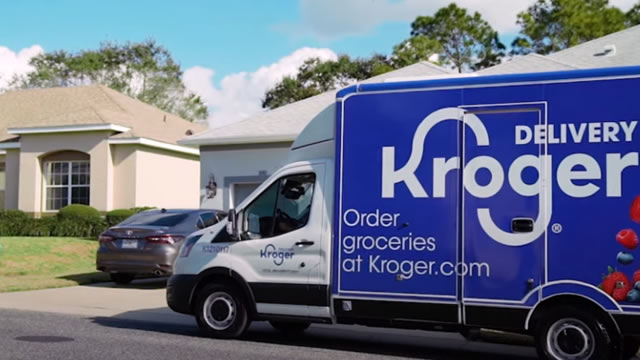
Core Insights - Kroger has appointed John Foran as CEO, who has a background in leading Walmart's U.S. operations and Air New Zealand, indicating a strategic move to enhance its competitive edge against Walmart in the grocery sector [1][2][3] - Analysts suggest that Foran will initially focus on fundamental aspects such as competitive wages and pricing, while also needing to address Kroger's e-commerce strategy [1][2] Company Strategy - The appointment of Foran comes as Kroger faces intense competition from Walmart and other digital-focused retailers, necessitating a review of its online sales strategy [1][2] - Kroger's previous attempt to merge with Albertson's was blocked, highlighting the challenges the company faces in reinforcing its market position [1][2] Market Context - Traditional supermarkets, including Kroger, are experiencing headwinds from declining pharmacy sales and increased competition from discounters and e-commerce giants [1][2] - The grocery market is becoming increasingly competitive, with discounters like Aldi expanding and new government policies potentially affecting pharmacy sales [1][2] Financial Performance - Kroger's shares have shown resilience, recently increasing by 5% and standing 10% higher than a year ago, despite missing revenue estimates for six consecutive quarters [1][2][3]


Hims & Hers Stock Plunges While Novo Nordisk Gains as Weight-Loss Drug Wars Take New Turn
Investopedia· 2026-02-09 17:21
Core Insights - Hims & Hers Health's stock dropped 25% after the company announced it would cease selling its compounded semaglutide weight-loss pill, just days after its launch, due to legal action from Novo Nordisk [1][1][1] - Novo Nordisk has filed a lawsuit against Hims & Hers, seeking to permanently ban the sale of unapproved compounded drugs that infringe on its patents and is pursuing damages [1][1][1] - Hims & Hers has faced significant stock depreciation, losing over 60% of its value in the past 12 months, while Novo Nordisk's shares have decreased by approximately 40% during the same period [1][1][1] Company Developments - Hims & Hers announced the discontinuation of its compounded weight-loss pill, which was marketed as having the same active ingredient as Novo Nordisk's Wegovy, following legal threats from Novo Nordisk [1][1][1] - The lawsuit from Novo Nordisk is described by Hims & Hers as a "blatant attack" on Americans who rely on compounded medications, indicating the company's intent to continue advocating for access to these treatments [1][1][1] Industry Context - The FDA has indicated plans to restrict the use of GLP-1 active ingredients in compounded weight-loss medications, specifically mentioning Hims & Hers in its statement [1][1][1] - Eli Lilly is anticipated to receive FDA approval for its own weight-loss pill later this year, which could further impact competition in the weight-loss drug market [1][1][1]



There Was an 'Unmistakeable' Flight to Value Last Week. Here's What Investors Bought.
Investopedia· 2026-02-09 17:21
When the beat changes, investors switch up their moves. Last week, they rushed to re-tune their portfolios. ...

Here's How Much Mortgage Rates Should Fall To Bring Housing Within Reach for Buyers
Investopedia· 2026-02-09 13:00
Core Insights - Some housing markets remain unaffordable even if mortgage rates drop significantly, while others could see improved affordability with minor rate declines [2][4] - A Zillow report indicates that mortgage rates would need to decrease by over 4% for typical homes to be affordable for median-income families, with current rates at 6.11% [3] Housing Market Analysis - Major cities like New York, Los Angeles, and Miami have average home values exceeding $800,000 and $1 million, making them unaffordable even at a 0% mortgage rate [4] - In cities such as Boston and Seattle, mortgage rates would need to fall below 1% for homes to be affordable, while Dallas, New Orleans, and Nashville require a drop of over two percentage points [4][6] Regional Affordability - In contrast, areas with lower home prices, like Pittsburgh, Pennsylvania, have an average home value of $231,518, allowing affordability even if mortgage rates rise to 9% [5] - Birmingham, Alabama, with an average home value of $132,725, could remain affordable at rates up to 7.62%, and Detroit's average of $76,340 allows for affordability at 7.02% [6]

What to Expect in Markets This Week: Delayed January Jobs Report, Inflation and Retail Sales Data, Earnings From Cisco, Coca-Cola, McDonald's, Ford
Investopedia· 2026-02-08 10:50
Economic Data and Earnings Reports - Key economic releases this week include delayed January jobs data, consumer inflation, and retail sales reports due to a recent government shutdown [1][3][4] - The January jobs report is expected to show fewer job additions than anticipated, despite a decrease in the unemployment rate [3] - The January CPI inflation report is anticipated to reveal steady inflation, with core inflation lower than expectations, influencing Federal Reserve rate decisions [4] Company Earnings - Cisco is set to report earnings, which may provide insights into AI infrastructure demand, with the CEO highlighting significant opportunities in this sector [5] - Consumer stocks such as Coca-Cola and McDonald's are also reporting; Coca-Cola has recently exceeded profit expectations, while McDonald's may reveal trends among affluent customers [6] - Other notable earnings reports include those from Ford, Honda, Ferrari, AstraZeneca, Moderna, and Vertex Pharmaceuticals, which will provide insights into auto sales and pharmaceutical demand [7]