TechXplore

Search documents
Tesla troubles: Speed bump or early signs of impending crash?
TechXplore· 2025-03-27 09:20
Core Insights - Tesla is facing significant challenges due to increased competition, particularly from BYD in China, and the impact of Elon Musk's political involvement on the company's reputation and sales [2][3][6] Group 1: Competition and Market Position - BYD has sold 1.76 million vehicles in 2024, a 12% increase year-on-year, compared to Tesla's 1.79 million, which represents a 1% decline [2] - BYD's revenues surpassed Tesla's last year, with $107.2 billion compared to Tesla's $97.7 billion [2] - Tesla's market share in China has been negatively affected by a lack of new models and innovation since the Model Y's release in 2020 [7] Group 2: Sales and Financial Performance - Tesla's registrations in the European Union fell by 49% year-on-year in January and February [3] - CFRA Research has moderated Tesla's sales forecast for 2025 from an initial 20-30% increase to a potential 5% decline [3] - Tesla's stock has lost around a third of its value since the beginning of the year [7] Group 3: Operational Challenges - Recent vandalism and protests against Tesla in the U.S. and Europe have raised concerns about the company's brand value [4][6] - The Cybertruck, Tesla's only new model since 2020, has faced delays and recalls, with 46,096 units affected by a recent issue [8] Group 4: Future Opportunities - Tesla's full self-driving (FSD) feature represents a significant market opportunity, estimated at $5 trillion globally [9] - The Trump administration is preparing a new regulatory framework for fully autonomous driving, which could benefit Tesla [10] - There is a suggestion for appointing a senior executive to manage day-to-day operations, as Musk is currently focused on political engagements [10][11]


Apple says Indonesia iPhone sales ban ends in April
TechXplore· 2025-03-26 18:30
Core Insights - Apple announced that the iPhone 16 will be available in Indonesia starting April 11, 2025, following the lifting of a sales ban imposed by the government due to non-compliance with local manufacturing regulations [2][3] - The Indonesian government had previously prohibited the sale of the iPhone 16 in October 2024, citing that Apple did not meet the requirement of 40% local parts in its devices [2][3] Group 1: Government and Regulatory Developments - Apple reached an agreement with the Indonesian government to invest in the country after months of negotiations, committing to a $150 million investment to build two facilities for accessory production and AirTags [3][4] - The Ministry of Communication and Digital Affairs confirmed that Apple has obtained necessary certifications for its telecommunication devices, which is a prerequisite for market entry [4][5] - The Indonesian government had also banned the sale of Google Pixel phones for similar reasons related to local parts requirements [6] Group 2: Investment and Economic Impact - The investment by Apple is expected to create local jobs and enhance the technology ecosystem in Indonesia, particularly with the establishment of a semiconductor research and development center, which is noted as the first of its kind in Asia [5] - The population of Indonesia, approximately 280 million, presents a significant market opportunity for Apple, especially with the introduction of the iPhone 16 [3]


Apple boss hails 'next generation of developers' on China visit
TechXplore· 2025-03-26 09:24
Core Viewpoint - Apple is actively working to strengthen its presence in the Chinese market, focusing on engaging with local developers and educational institutions to enhance its business ties and adapt to the competitive landscape [1][2][4]. Group 1: Engagement with Developers - Tim Cook praised the "next generation of developers" during his visit to Zhejiang University, highlighting the importance of local talent in Apple's strategy [1][2]. - Apple announced a donation of 30 million yuan (approximately $4.1 million) to Zhejiang University for technical and business training in app development, indicating a commitment to fostering local innovation [3]. Group 2: Business Development in China - Cook met with China's commerce minister Wang Wentao to discuss Apple's business development in China and the broader economic and trade relations between China and the US [4]. - The collaboration with Alibaba, which will supply AI technology for Apple's iPhones in China, reflects Apple's strategy to leverage local partnerships to enhance its product offerings [4].

Tesla sales sink by nearly half in Europe
TechXplore· 2025-03-25 15:00
Core Viewpoint - Tesla's sales in the European Union have significantly declined, with a 49% drop in new registrations in January and February compared to the same period last year, attributed to competition and the brand's image issues related to Elon Musk's political affiliations [3][4][8]. Sales Performance - New Tesla registrations in the EU fell to 19,046 units in the first two months of 2025, marking a 49% decrease year-over-year [3]. - In Germany, Tesla sales plummeted by 76% in February, following a nearly 60% drop in January [8][10]. - Despite the overall electric vehicle market in the EU growing by 28.4% to 255,489 units, Tesla's market share has dwindled to just 1.1% in early 2025 [4][9]. Market Competition - Tesla faces increasing competition from newer electric models from Chinese and European manufacturers, which may be contributing to its declining sales [4][8]. - The brand's aging models, particularly the Model 3 and Model Y, are perceived as less competitive, with concerns about reliability and a significant recall of Cybertrucks impacting consumer perception [9]. Brand Image and Political Influence - Elon Musk's support for far-right political movements in Germany has negatively affected Tesla's brand image, leading to consumer backlash and vandalism incidents involving Tesla vehicles [5][7]. - Analysts suggest that the impact of Musk's political views on Tesla's brand may be temporary, but it is currently difficult to assess the long-term effects [6]. Market Trends - The overall new car registrations in the EU decreased by 3% to 1.7 million units in January and February, with hybrid-electric vehicles leading the market segment at a 35.2% share [12]. - The electric vehicle market is expanding in Germany, Belgium, and the Netherlands, but demand for battery electric vehicles remains below necessary levels for a transition to zero-emission mobility [11].
Trouble at Tesla, tariff protests suggest consumer boycotts are starting to bite
TechXplore· 2025-03-24 16:23
This article has been reviewed according to Science X's editorial process and policies . Editors have highlighted the following attributes while ensuring the content's credibility: Credit: Pixabay/CC0 Public Domain When the United States starts a trade war with your country, how do you fight back? For individuals, one option is to wage a personal trade war and boycott products from the US. President Donald Trump has said no nation will be exempt from his tariffs, and this includes both Australia and New ...
Apple's missteps highlight risks of AI producing automated headlines, researcher says
TechXplore· 2025-03-24 15:00
Core Viewpoint - The article discusses the risks associated with AI-generated news headlines, particularly focusing on a recent incident involving Apple Intelligence that spread misinformation, leading to a suspension of its notifications feature in news and entertainment categories [2][3][4]. Group 1: AI and Misinformation - The incident with Apple Intelligence highlighted the significant risk of misinformation eroding public trust in media sources [2][3]. - Errors in AI-generated content can create confusion among news consumers, potentially damaging the reputation of previously trusted media brands [2][3]. - The spread of misinformation from a high-profile news source raises concerns about the reliability of AI in summarizing and understanding news articles [3][4]. Group 2: Challenges in AI Development - Generative AI tools, like Apple Intelligence, face challenges due to their stochastic nature, which can lead to unpredictable outcomes [4][5]. - The lack of historical context in news reporting makes it difficult for AI to accurately summarize new and conflicting information [7][8]. - AI performs well with established knowledge but struggles with novel situations, necessitating better training and verification processes [8]. Group 3: Collaboration and Solutions - Collaboration among tech companies, media organizations, and regulators is essential to address the misinformation problem posed by AI [10]. - Developers need to implement automatic double-checking mechanisms to ensure the accuracy of AI-generated news content [8][9]. - While the BBC restricts the use of its content for AI training, other UK news outlets are forming partnerships to improve AI accuracy through collaboration [9].
AI could take your next drive-through order: Taco Bell parent Yum Brands and Nvidia's partnership explained
TechXplore· 2025-03-24 13:14
This article has been reviewed according to Science X's editorial process and policies . Editors have highlighted the following attributes while ensuring the content's credibility: Credit: Unsplash/CC0 Public Domain Fast food customers might find themselves talking to an artificial intelligence voice the next time they order tacos or pizza at a drive-through. Yum Brands Inc., the parent company of Irvine-based Taco Bell and other popular fast food chains such as Pizza Hut, KFC and Habit Burger & Grill, h ...


EU tariffs not a deterrent, says Chinese EV maker XPeng
TechXplore· 2025-03-21 14:12
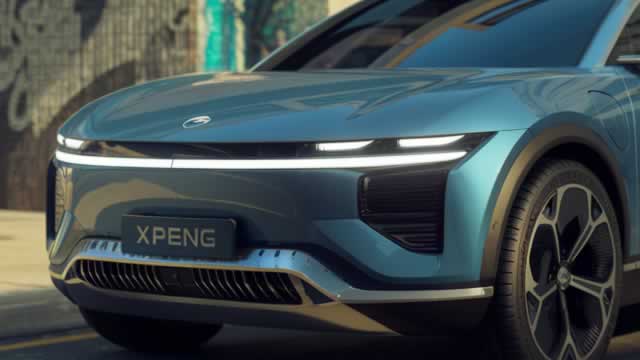
Core Viewpoint - XPeng, a Chinese electric vehicle maker, acknowledges the significant economic impact of EU tariffs on Chinese EVs but remains committed to expanding in European markets [2][3]. Group 1: EU Tariffs and Market Strategy - The European Union has imposed tariffs of up to 35.3% on imports of Chinese electric cars, citing unfair subsidies as the reason [2]. - Despite the tariffs, XPeng's vice chairman Brian Gu stated that the company will continue to pursue opportunities in Europe, emphasizing the importance of the market [3]. - Gu mentioned that establishing a local presence is a strategy to mitigate the effects of tariffs and protectionism [3]. Group 2: Global Expansion Plans - XPeng aims to double its presence to 60 countries and regions in 2025, reflecting a broader trend of globalization among Chinese EV manufacturers [3]. - The company recently opened its second flagship store in Hong Kong, indicating its commitment to expanding its footprint in international markets [1][5]. Group 3: Technological Advancements - The competition among Chinese EV manufacturers is intensifying, particularly in self-driving technology, with advancements in AI and chip technology driving rapid progress [5]. - Gu indicated that Level 4 (L4) autonomous vehicles could enter mass production as early as next year, showcasing the company's focus on innovation [5]. Group 4: Competitive Landscape - XPeng faces stiff competition in Hong Kong from both local Chinese brands and established players like Tesla, with nearly 500 XPeng vehicles registered in the region last year [6]. - The company plans to introduce its luxury seven-seater X9 model to the Hong Kong market, aiming to enhance its competitive position [7].

EU skewers Google, Apple over tech rules—despite Trump threats
TechXplore· 2025-03-19 16:50
Core Viewpoint - The European Union (EU) is taking significant actions against major tech companies, specifically Google and Apple, for violating digital regulations, which could lead to substantial fines and demands for better interoperability with rival devices [1][2][4]. Group 1: EU Actions and Regulations - The EU has accused Google of favoring its own services in search results and restricting app developers from offering cheaper deals outside the Google Play store, which could result in fines of up to 10% of global turnover for confirmed violations [3][4][5]. - Apple has been ordered to improve the compatibility of its iPhone with third-party devices, which the EU believes will enhance consumer choice and competition [7]. - The Digital Markets Act (DMA) was established to ensure that large digital companies open up to competition within the EU, despite facing criticism from the targeted companies [2][10]. Group 2: Responses from Tech Companies - Google has responded to the EU's accusations by claiming that the decisions will negatively impact European businesses and consumers, hinder innovation, and compromise security [4]. - Apple has criticized the EU's actions as detrimental to user security and innovation, arguing that the regulations slow down their ability to develop new features and force them to share innovations with competitors [8]. - Both companies have expressed concerns about the implications of the EU's regulations on their operations and user experience, with Apple specifically highlighting the risks to privacy and security [8][9].


European Union lays out how Apple must open its tech up to competitors under bloc's digital rules
TechXplore· 2025-03-19 14:52
Core Points - The European Union has mandated that Apple must take specific steps to enhance compatibility of its iPhone and iPad operating systems with competing technologies under the Digital Markets Act (DMA) [2][3] - This is the first instance of the EU compelling a technology company to adhere to its digital regulations, which were implemented last year [2] - The EU Commission has outlined measures for Apple to improve access for smartwatches and other devices to its iOS, as well as to enhance transparency for software developers seeking access to iPhone features [3] Additional Context - The EU Commission also indicated that Google is not sufficiently complying with the DMA, as it continues to favor its own services in search results and restricts app developers from informing users about cheaper alternatives outside its Google Play Store [4]