投资界

Search documents
阿里,刚刚捐了一笔钱
投资界· 2025-09-10 09:43
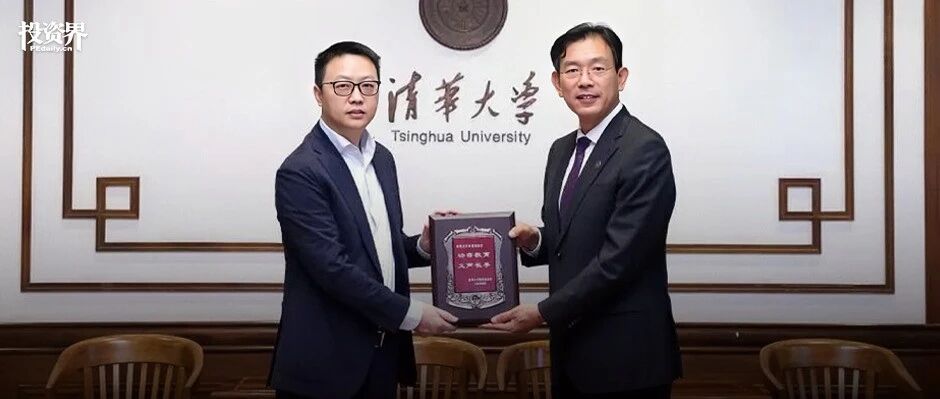
Core Viewpoint - Alibaba is intensifying its efforts in the AI sector, exemplified by its recent donation to Tsinghua University to support AI talent cultivation, while simultaneously launching competitive initiatives against major players like Dianping [3][5][8]. Group 1: Donation and Collaboration with Tsinghua University - Alibaba's CEO, Wu Yongming, led a delegation to Tsinghua University to witness a donation ceremony aimed at supporting the construction and development of the "Wuqiong College," which focuses on cultivating AI leaders [3][5]. - The "Wuqiong College," established in May 2023, aims to train the next generation of AI pioneers, with its first cohort of 172 students enrolled in August [5][6]. - The college's educational framework is designed around three axes: technical depth, domain breadth, and humanistic warmth, reflecting a commitment to comprehensive AI education [5][6]. - Alibaba's support includes funding, advanced computing resources, practical courses, and internships, indicating a multi-faceted approach to talent development in AI [5][8]. Group 2: AI Business Growth and Financial Performance - Alibaba's recent financial report revealed a 26% year-over-year increase in cloud revenue, reaching 33.39 billion yuan, marking a three-year high [10]. - AI-related revenue now constitutes over 20% of Alibaba Cloud's external commercialization income, with AI products experiencing triple-digit growth for eight consecutive quarters [10]. - The company has invested over 100 billion yuan in AI infrastructure and product development over the past four quarters, with plans to invest more than 380 billion yuan in the next three years [10][11]. Group 3: Competitive Landscape and Talent Acquisition - The AI talent gap is significant, with a reported shortage of 5 million professionals in the field, prompting major tech companies to aggressively recruit [16][17]. - Alibaba plans to issue over 7,000 job offers, with more than 60% targeting AI positions, reflecting the company's focus on AI roles such as algorithms, large models, and AI product management [17][18]. - The competitive landscape for AI talent is fierce, with global tech giants offering substantial salaries and incentives to attract top talent, highlighting the critical role of human resources in the AI sector [17][18].


苹果一夜消失3700亿
投资界· 2025-09-10 09:43
Core Viewpoint - The article discusses the recent Apple product launch event, highlighting the introduction of the iPhone 17 series, iPhone Air, and other devices, while also addressing the market's reaction and competitive pressures from other brands like Huawei and Xiaomi [2][11][12]. Product Launch Summary - Apple CEO Tim Cook opened the event with a customary greeting, unveiling new products including AirPods Pro 3, Apple Watch series, and the iPhone 17 series [2]. - The iPhone Air, touted as the "thinnest iPhone ever" at 5.6mm thick, has a starting price of 7,999 yuan, while the iPhone 17 series starts at 5,999 yuan for the standard model [4][5]. - The iPhone 17 series includes four models: iPhone 17, iPhone Air, iPhone 17 Pro, and iPhone 17 Pro Max, with the Pro Max model priced at 9,999 yuan [6][10]. - The iPhone 17 standard version features a 6.3-inch OLED display, 120Hz ProMotion adaptive refresh rate, and a new A19 chip, with a starting price unchanged from the previous generation [10]. Market Reaction - Following the product launch, Apple's market value dropped by $52.4 billion, approximately 370 billion yuan, indicating a negative market reaction [4]. - The article notes that despite significant upgrades, the iPhone 17 series did not see a price increase, which could be interpreted as a strategic move to maintain competitiveness [10]. Competitive Landscape - The article highlights increasing pressure from competitors like Huawei and Xiaomi, with Huawei recently launching a new foldable phone and Xiaomi preparing to release its 16 series [12][13]. - Market research indicates that while Apple holds a 62% share of the high-end smartphone market, its growth rate is only 3%, compared to Huawei's 24% and Xiaomi's 55% [13]. Consumer Sentiment - There is a growing sentiment among consumers that the excitement surrounding Apple product launches has diminished, with many questioning whether to continue purchasing Apple products [12][18]. - The article reflects on the historical significance of Apple launches and contrasts it with the current perception of the brand, suggesting a decline in consumer enthusiasm [18].


国资一则灵魂拷问
投资界· 2025-09-10 09:43
Core Viewpoint - The article emphasizes the importance of staying updated with the latest trends and developments in the investment sector, particularly in the context of venture capital and investment opportunities [1] Summary by Relevant Sections - The article highlights the dynamic nature of the investment landscape, suggesting that investors should continuously adapt their strategies to capitalize on emerging opportunities [1] - It discusses the significance of networking and building relationships within the investment community to gain insights and access to potential deals [1] - The piece also points out the role of technology in transforming investment practices, indicating that firms leveraging innovative tools are likely to outperform their competitors [1]

一批医药产业园悄悄消失
投资界· 2025-09-09 08:23
以下文章来源于动脉网 ,作者牟磊 动脉网 . 动脉网(www.vbdata.cn)聚焦于技术驱动下生命健康领域产业创新和变革的报道与研究。 "复制粘贴"困局。 作者 | 牟磊 来源 I 动脉网 (ID:vcbeat) 2 0 25年3月2 0日,《问政山东》第187期直播——问政济南市,直接揭开了济南个别生物 医药产业园空置率太高的行业真相。 据报道指出,已开园近两年的海凭医疗器械产业园目前2号、3号、6号、9号四栋楼仍然 处于空置状态,10号楼共23层,但目前也只有一家公司入驻。扁鹊康养生态谷项目地处 济南高新区核心地带,项目一期于2 0 24年7月开园运营,并计划2年内引进约5 0家企业, 但到目前为止,园区内总共只有两家企业入驻,包括装修完的一家和准备装修的一家。 这绝非个例,而是当前整个医药产业园的缩影。据戴德梁行统计,2 0 2 4年全国产业园平 均空置率已达6 2.8%,五年内激增27个百分点,再进一步聚焦到医药板块,现阶段产业 园的空置率也已超过了50%。比如Bi oBAY,据知情人士透露,其四期、五期的入住率 已经从两年前的八成降到了现在的约五成;上海张江同样如此,不少楼房现在基本都处 于"住 ...

我在中东做团播,一场赚百万
投资界· 2025-09-09 08:23
Core Viewpoint - The article discusses the rise of group broadcasting (团播) as a low-threshold, popular entertainment format that has gained traction globally, particularly in the U.S., Southeast Asia, and the Middle East, while highlighting the challenges and adaptations faced in different cultural contexts [4][5][6]. Group Broadcasting Overview - Group broadcasting has become a widespread form of entertainment, with companies like Shuai Ku Network generating significant revenue, such as over 10 million yuan in a single event [5]. - The demographic of consumers has shifted, with female viewers making up 80% of the audience in top broadcasting rooms, indicating a change in the target audience and content style [5][6]. U.S. Market Insights - In the U.S., group broadcasting has adopted the "sweeping leg dance" trend, with operators like Charlie establishing entertainment guilds in Hollywood, achieving high engagement and revenue [9][10]. - The operational environment in the U.S. is more restrictive regarding content, requiring compliance with cultural norms and regulations, which has led to adaptations in performance styles [10][15]. Southeast Asia Market Dynamics - In Indonesia, the group broadcasting experience faced immediate challenges, such as content bans due to cultural sensitivities, leading to adjustments in performance styles to comply with local regulations [17][18]. - The rapid growth of the broadcasting market in Southeast Asia is contrasted with the initial scarcity of competition, allowing for significant opportunities for new entrants [19][20]. Middle East Broadcasting Landscape - The Middle East presents a unique broadcasting environment where traditional values influence content, with a focus on entertainment rather than provocative themes, leading to successful revenue generation without relying on "edgy" content [24][25]. - The market is characterized by a high level of financial support from local audiences, with significant monetary gifts being common, reflecting a different cultural approach to entertainment [24][29]. Conclusion - The evolution of group broadcasting across different regions illustrates the adaptability of the format to local cultures and regulations, with varying degrees of success and acceptance [15][22][27].

高盛招人了
投资界· 2025-09-09 08:23
Group 1 - Goldman Sachs is expanding its recruitment in Hong Kong to meet the increasing business demand, with over 30 positions available in various departments [3][6] - The firm has seen a significant increase in its summer intern conversion rate from 50% to 90%, indicating a competitive hiring environment [6] - Goldman Sachs has been actively involved in major IPOs in Hong Kong, leading to its return to the top of the IPO underwriting rankings [3][7] Group 2 - The Hong Kong IPO market has experienced a remarkable resurgence, with a total fundraising amount of HKD 134.5 billion in the first eight months of the year, a 579% year-on-year increase [9] - There are currently over 200 companies in the pipeline for IPOs, suggesting sustained demand and a vibrant market [9] - The A-share IPO market is also showing signs of recovery, with 51 companies successfully listed in the first half of the year, raising RMB 37.066 billion, marking increases of 15.9% and 14.8% respectively [10]

24岁,他来北京顺手投了张一鸣
投资界· 2025-09-09 08:23
Core Insights - The article discusses the serendipitous investment journey of Matt Huang, who invested in Zhang Yiming and Toutiao, highlighting the role of luck in successful investments [3][4][6] - It emphasizes the importance of recognizing and seizing investment opportunities, as many potential investors missed out on early investments in successful companies like Toutiao [8][10] Investment Journey of Matt Huang - Matt Huang graduated from MIT in 2010 and founded a social media analytics company, which was acquired by Twitter, providing him with initial capital [3][5] - In 2012, during a trip to Beijing, Huang met Zhang Yiming, who was in the early stages of developing Toutiao, and despite initial reservations about the business idea, he was impressed by Zhang's vision and determination [5][6] - Huang invested in Toutiao when its valuation was between $20 million and $30 million, and the current valuation of ByteDance is estimated to be between $200 billion and $300 billion, resulting in a return of approximately 1,000 times [6][10] Early Investors in Toutiao - The article highlights other early investors in Toutiao, including Wang Qiong from SIG, who made significant investments during the angel and Series A rounds, ultimately leading to high returns [10][12] - Zhang Yiming faced numerous rejections from investors before securing funding, showcasing the challenges faced by startups in their early stages [10][11] - The narrative also includes other notable angel investors who took risks on emerging companies, illustrating the unpredictable nature of successful investments [13][16] The Role of Luck in Investment - The article reflects on how many successful investments stem from seemingly random opportunities, emphasizing that recognizing these moments is crucial for investors [7][8][14] - It suggests that the most impactful investments often come from a combination of chance and the investor's willingness to take risks [16]

中国创业者凶猛
投资界· 2025-09-08 07:35
关关关关关注注注注注投投投投投资资资资资界界界界界视视视视视频频频频频号号号号号 做做做做做创创创创创投投投投投圈圈圈圈圈最最最最最靓靓靓靓靓的的的的的仔仔仔仔仔 ...
国产维C大哥要卖了
投资界· 2025-09-08 07:35
以下文章来源于并购最前线 ,作者杨继云 并购最前线 . 投资界(PEdaily.cn)旗下,专注并购动态 欢迎加入投资界读者群 「并购最前线」系投资界旗下专注并购动态报道公众号,欢迎关注! 投资人围猎。 作者 I 杨继云 报道 I 投资界-并购最前线 你吃过的维C含片也要被收购了。 据 路 透 社 消 息 , 中 国 营 养 补 充 剂 制 造 商 艾 兰 得 健 康 控 股 有 限 公 司 ( Al a nd He a lt h Hol di ng,以下简称"艾兰得")正寻求出售控股权,估值超15亿美元(约合人民币108亿 元)。 这是一家来自江苏的公司,从199 8年靖江的一个制药厂,到首款VC含片横空出世,进而 连续多年稳居国内保健品出口前列,艾兰得见证了中国保健品行业的艰辛发展历程。 据 悉 , 这 一 出 售 计 划 已 吸 引 了 多 家 私 募 股 权 投 资 公 司 的 关 注 。 这 样 的 一 幕 我 们 并 不 陌 生,消费并购火热。 来自江苏 维C含片巨头要卖了 艾兰得的故事,要从创始人常亮和江山制药说起。 江山制药创办于19 9 0年,最初是江苏靖江的一个葡萄糖厂。其在1 997年进 ...

无印良品,开始闭店
投资界· 2025-09-08 07:35
Core Viewpoint - MUJI is facing significant challenges in the Chinese market, leading to a series of store closures and a decline in brand reputation due to quality issues and increased competition from local brands [4][6][7]. Group 1: Store Closures and Market Challenges - MUJI has closed 30 stores in mainland China from 2022 to 2024, with 17 closures reported by May 2025, indicating a troubling trend for the brand [6][7]. - The brand's decline is attributed to the rise of e-commerce, the emergence of similar domestic brands, and changing consumer habits [7][16]. - Despite a brief spike in social media engagement following the announcement of celebrity endorsement by Takeshi Kaneshiro, the brand's core product competitiveness remains in question [9][11]. Group 2: Quality Issues and Consumer Trust - MUJI has faced multiple quality control issues, including non-compliance with safety standards for various products, leading to a loss of consumer trust [10][11][12]. - Complaints on platforms like Black Cat Complaints have surged, with over 2,407 complaints reported, highlighting dissatisfaction with product quality and customer service [12][11]. - The brand's pricing strategy has also come under scrutiny, with products in China priced 25%-30% higher than in Japan, leading to perceptions of poor value among consumers [15][16]. Group 3: Strategic Adjustments and Future Directions - MUJI is attempting to adapt by opening new stores in more vibrant commercial areas while closing underperforming ones, indicating a strategy of "tenglong huan niao" (腾笼换鸟) [18][19]. - The company plans to open approximately 40 new stores annually, with a focus on larger flagship stores that incorporate diverse retail experiences [19][20]. - To enhance sales, MUJI is increasing its investment in e-commerce and exploring new product categories, such as fresh produce and pet supplies, to attract a broader customer base [20][21].