具身智能之心

Search documents
VLA-OS:NUS邵林团队探究机器人VLA做任务推理的秘密
具身智能之心· 2025-08-01 16:02
Core Viewpoint - The article discusses a groundbreaking research study by a team from the National University of Singapore, focusing on the VLA-OS framework, which systematically analyzes and dissects task planning and reasoning in Vision-Language-Action (VLA) models, aiming to provide insights for the next generation of general-purpose robotic VLA models [2][4]. Group 1: VLA-OS Overview - VLA-OS is a structured framework that includes a clear codebase, multimodal task planning datasets, and standardized training processes for VLA models [4][5]. - The framework aims to unify various VLA paradigms and facilitate controlled experiments to identify effective task planning representations and paradigms [19][20]. Group 2: VLA Model Paradigms - The article outlines two main approaches for integrating task reasoning into VLA models: Integrated-VLA, which combines task planning and policy learning, and Hierarchical-VLA, which separates these functions into different models [10][12]. - Current VLA models exhibit significant variability in architecture, training methods, and task planning representations, complicating performance assessments [13][15]. Group 3: Experimental Findings - The research identifies 14 key findings from over 100 experiments, highlighting the advantages of visual planning representations over language-based ones and the superior performance of Hierarchical-VLA compared to Integrated-VLA [34][35]. - Findings indicate that Integrated-VLA benefits from implicit task planning, while Hierarchical-VLA demonstrates better generalization capabilities [51][52]. Group 4: Recommendations for Future Research - The article suggests prioritizing visual representation planning and goal image planning, with language planning as a supplementary approach [68]. - It emphasizes the importance of task planning pre-training and the need for efficient training mechanisms to avoid gradient conflicts between planning and action outputs [73].


MuJoCo教程来啦!从0基础到强化学习,再到sim2real
具身智能之心· 2025-08-01 16:02
Core Viewpoint - The article discusses the unprecedented advancements in AI, particularly in embodied intelligence, which is transforming the relationship between humans and machines. This technology is poised to revolutionize various industries, including manufacturing, healthcare, and space exploration [1][3]. Group 1: Embodied Intelligence - Embodied intelligence is characterized by machines that can understand language commands, navigate complex environments, and make intelligent decisions in real-time. This technology is no longer a concept from science fiction but is rapidly becoming a reality [1]. - Major tech companies like Tesla, Boston Dynamics, OpenAI, and Google are competing in the field of embodied intelligence, focusing on creating systems that not only have a "brain" but also a "body" capable of interacting with the physical world [1][3]. Group 2: Technical Challenges - Achieving true embodied intelligence presents significant technical challenges, including the need for advanced algorithms and a deep understanding of physical simulation, robot control, and perception fusion [3][4]. - MuJoCo (Multi-Joint dynamics with Contact) is highlighted as a critical technology in this field, serving as a high-fidelity simulation engine that bridges the virtual and real worlds [4][6]. Group 3: Advantages of MuJoCo - MuJoCo allows researchers to create realistic virtual robots and environments, enabling millions of trials and learning experiences without risking expensive hardware. This significantly accelerates the learning process, as simulations can run hundreds of times faster than real-time [6][8]. - The technology supports high parallelism, allowing thousands of simulation instances to run simultaneously, and provides a variety of sensor models, ensuring robust and precise simulations [6][8]. Group 4: Educational Opportunities - A comprehensive MuJoCo development course has been developed, focusing on practical applications and theoretical foundations, covering topics from physical simulation principles to deep reinforcement learning [9][11]. - The course is structured into six modules, each with specific learning objectives and practical projects, ensuring a solid grasp of embodied intelligence technologies [15][17]. Group 5: Project-Based Learning - The course includes six progressively challenging projects, such as building a smart robotic arm, implementing vision-guided grasping systems, and developing multi-robot collaboration systems, which are designed to provide hands-on experience [19][27]. - Each project is accompanied by detailed documentation and code references, facilitating a deep understanding of the underlying technologies and their applications in real-world scenarios [30][32]. Group 6: Target Audience and Outcomes - The course is suitable for individuals with programming or algorithm backgrounds looking to enter the field of embodied robotics, as well as students and professionals interested in enhancing their practical skills [32][33]. - Upon completion, participants will possess a complete skill set in embodied intelligence, including technical, engineering, and innovative capabilities, making them well-equipped for roles in this rapidly evolving industry [32][33].
准备扩大具身团队了,欢迎加入我们......
具身智能之心· 2025-08-01 16:02
Core Viewpoint - The rapid development of embodied intelligence is being recognized, with several leading companies preparing for IPOs, highlighting the importance of collaboration and communication within the industry [1] Group 1: Collaboration and Industry Development - The industry is encouraged to engage in active communication to overcome technological isolation, which can hinder overall development [1] - The company aims to create a platform that gathers talent from across the industry to promote progress [1] Group 2: Project Collaboration - The company is establishing project research teams in major cities including Beijing, Shanghai, Shenzhen, Guangzhou, Hangzhou, and Wuhan, with opportunities for part-time involvement [3] - Each city will recruit around 10 individuals with over 2 years of experience in embodied algorithms and robotics research [4] Group 3: Education and Consulting Services - The company invites industry experts to develop online courses and consulting services in the field of embodied intelligence [5] - Specific areas of expertise sought include large models, multi-modal models, reinforcement learning, and robot motion planning, among others [5][6] Group 4: Compensation and Opportunities - The company offers significant profit-sharing and resource sharing across the industry, with options for both part-time and full-time positions [7]

机器人不只会抓和放!北大x银河通用「世界-动作模型」赋能全面泛化的非抓握技能
具身智能之心· 2025-08-01 16:02
Core Viewpoint - The article discusses the advancements in non-prehensile manipulation through the introduction of the Dynamics-adaptive World Action Model (DyWA), which enhances robots' ability to perform complex tasks beyond simple pick-and-place operations [4][10]. Group 1: Non-prehensile Manipulation - Non-prehensile manipulation refers to object manipulation techniques that do not involve grasping, such as pushing and flipping, which are essential for handling various objects in complex environments [4]. - The challenges in non-prehensile manipulation arise from the physical properties of the environment, including object geometry, mass, and surface friction, which can significantly affect the robot's performance [6][7]. Group 2: DyWA Model - DyWA employs a teacher-student framework to train a model that predicts future states resulting from actions, allowing robots to "imagine" the outcomes of their actions, thus improving learning efficiency and generalization [9]. - The model incorporates a dynamic adaptation mechanism that infers hidden physical properties like friction and mass distribution from historical observations, enhancing the robot's interaction with its environment [10][11]. Group 3: Training and Generalization - DyWA is designed to work with a single depth camera input, avoiding the need for multi-camera systems or external tracking modules, and achieves zero-shot transfer from simulation to real-world applications [12]. - The model demonstrates superior performance in various scenarios, achieving over 80% success rates in precise operations across different object states and configurations [15]. Group 4: Experimental Results - In simulation experiments, DyWA outperformed baseline methods, achieving an average success rate of 68% across various object types and conditions, while traditional methods showed significantly lower success rates [17]. - Real-world experiments indicated that DyWA could adapt to unseen object shapes and varying friction surfaces, maintaining robust performance in diverse operational contexts [18][22]. Group 5: Integration with Other Strategies - DyWA can be integrated with grasping strategies and visual language models, enhancing overall success rates in complex scenarios by first positioning objects for easier grasping [25].
大话一下!具身里面视觉语言导航和目标导航有什么区别?
具身智能之心· 2025-08-01 10:30
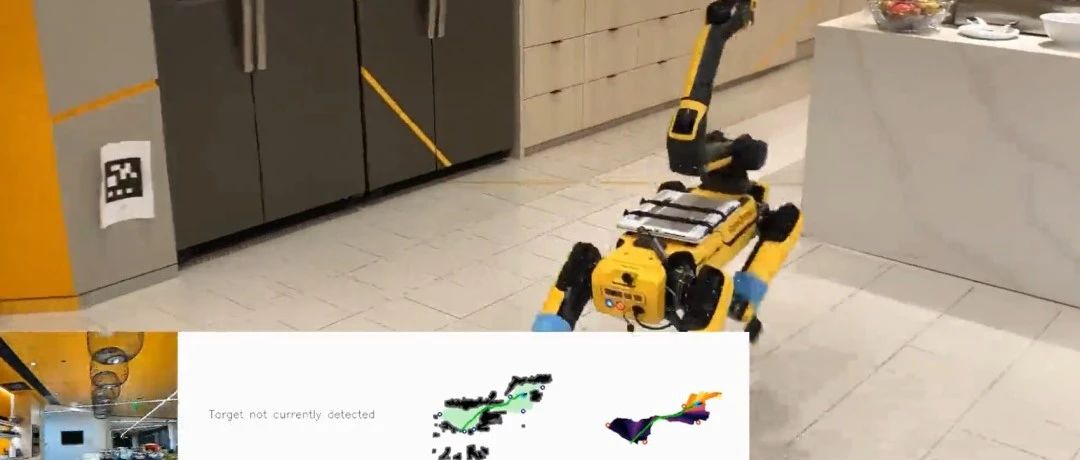
Core Viewpoint - The article discusses the evolution of robot navigation technology from traditional mapping and localization to large model-based navigation, which includes visual language navigation (VLN) and goal navigation. VLN focuses on following instructions, while goal navigation emphasizes autonomous exploration and pathfinding based on environmental understanding [1][5]. Group 1: Visual Language Navigation (VLN) - VLN is fundamentally a task of following instructions, which involves understanding language commands, perceiving the environment, and planning movement strategies. The VLN robot system consists of a visual language encoder, historical environmental representation, and action strategy modules [2][4]. - The learning process for the strategy network has shifted from extracting patterns from labeled datasets to leveraging large language models (LLMs) for effective planning information extraction [4] - The architecture of VLN robots requires them to accumulate visual observations and execute actions in a loop, making it crucial to determine the current task stage for informed decision-making [4]. Group 2: Goal Navigation - Goal navigation extends VLN by enabling agents to autonomously explore and plan paths in unfamiliar 3D environments based solely on target descriptions, such as coordinates or images [5][7]. - Unlike traditional VLN, goal-driven navigation systems must transition from understanding commands to independently interpreting the environment and making decisions, integrating computer vision, reinforcement learning, and 3D semantic understanding [7]. Group 3: Commercial Applications and Demand - Goal-driven navigation technology has been successfully implemented in various verticals, such as terminal delivery, where it combines with social navigation algorithms to handle dynamic environments and human interactions [9]. - Companies like Meituan and Starship Technologies have deployed delivery robots in complex urban settings, while others like Aethon have developed service robots for medical and hospitality sectors, enhancing service efficiency [9][10]. - The growth of humanoid robots has led to an increased focus on adapting navigation technology for applications in home services, healthcare, and industrial logistics, creating significant job demand in the navigation sector [10]. Group 4: Learning and Knowledge Challenges - Both VLN and goal navigation require knowledge across multiple domains, including natural language processing, computer vision, reinforcement learning, and graph neural networks, making it challenging for newcomers to gain comprehensive expertise [11]. - The fragmented nature of knowledge in these fields can lead to difficulties in learning, often causing individuals to abandon their studies before achieving a solid understanding [11].
加入智源!具身大模型研究员岗位开放 (社招、校招、实习均可)
具身智能之心· 2025-08-01 00:03
点击下方 卡片 ,关注" 具身智能 之心 "公众号 岗位职责描述 社招&校招&实习生都需要,欢迎投递简历到pwwang@baai.ac.cn 职位要求 投递说明 1. 计算机科学、人工智能、机器人、自动化、数学等相关领域的硕士及以上学历; 2. 精通 Python,具有良好的深度学习基础,熟悉 TensorFlow、PyTorch 等深度学习框架; 3. 具备大模型领域的研究经验,对主流视觉与语言大模型有深入理解,具备预训练、微调、部署等流程的工 作经验; 4. 具备机器人控制经验,对主流具身模型训练以及部署有良好的经验优先 5. 具备优秀的学习能力,英语水平,动手能力以及良好的团队沟通与协作能力; 6. 有相关机器人、自然语言处理以及计算机视觉顶会论文(RSS,ICRA, CVPR, CoRL, ICLR, NeurlPS,ACL 等)发表优先。 1. 负责具身智能大模型(VLA大模型或者分层架构)的研究和开发。 2. 设计,优化模型架构,完成对模型的数据处理,训练与真机部署工作。 3. 深入调研具身智能领域相关的前沿技术,跟踪业内大模型领域的最新进展并推进相关研究,探寻将最新技 术应用到具身智能领域的可能 ...
都说强化+VLA才是未来?相关工作汇总来啦
具身智能之心· 2025-08-01 00:03
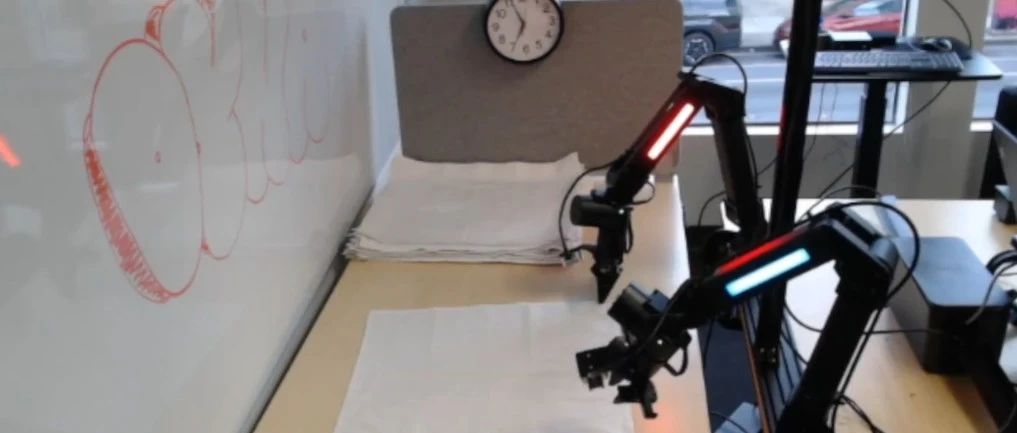
Core Viewpoint - The integration of Vision-Language-Action (VLA) models with Reinforcement Learning (RL) presents a promising new paradigm that leverages both environmental trial-and-error interactions and pre-collected suboptimal data for enhanced performance [2]. Group 1: Offline RL Training without Environment - The paper "MoRE: Unlocking Scalability in Reinforcement Learning for Quadruped Vision-Language-Action Models" discusses scalability in RL applications [3]. - "Q-Transformer: Scalable Offline Reinforcement Learning via Autoregressive Q-Functions" focuses on offline RL techniques [3]. Group 2: Online RL Training with Environment - Online RL training enhances VLA models through trial-and-error interactions in real-time environments, leading to performance improvements [4]. - The paper "ReinboT: Amplifying Robot Visual-Language Manipulation with Reinforcement Learning" explores this concept [5]. - "GeRM: A Generalist Robotic Model with Mixture-of-experts for Quadruped Robot" presents a generalist approach in robotic models [5]. Group 3: Simulator-Based Approaches - Various projects aim to improve VLA models using simulation environments, such as "OctoNav: Towards Generalist Embodied Navigation" [6]. - "TGRPO: Fine-tuning Vision-Language-Action Model via Trajectory-wise Group Relative Policy Optimization" focuses on optimizing VLA models through trajectory-based methods [6]. - "VLA-RL: Towards Masterful and General Robotic Manipulation with Scalable Reinforcement Learning" emphasizes scalable RL for robotic manipulation [6]. Group 4: Real-World Applications - The deployment phase of RL training is crucial for testing VLA models in real-world scenarios [8]. - "Dynamism v1 (DYNA-1) Model: A Breakthrough in Performance and Production-Ready Embodied AI" highlights advancements in embodied AI [9]. - "ConRFT: A Reinforced Fine-tuning Method for VLA Models via Consistency Policy" discusses fine-tuning methods for VLA models [9]. Group 5: RL Alignment Training - "GRAPE: Generalizing Robot Policy via Preference Alignment" addresses the alignment of robot policies with user preferences [11]. - "SafeVLA: Towards Safety Alignment of Vision-Language-Action Model via Constrained Learning" focuses on safety in VLA model training [12].
科研论文这件小事,总是开窍后已经太晚......
具身智能之心· 2025-07-31 06:28
Core Viewpoint - The article emphasizes the importance of early action in academic research, particularly for master's students, to avoid delays in thesis completion and publication. It highlights common pitfalls that lead to procrastination and the need for a proactive approach to research and writing [1][2]. Group 1: Common Pitfalls - "Waiting for Guidance" Type: Students often feel lost without clear direction from their advisors, leading to passive waiting and wasted time [1]. - "Perfectionist" Type: The desire to master all knowledge before starting leads to endless delays, as foundational knowledge is never fully complete [1]. - "Procrastination" Type: Students may avoid the daunting tasks of literature review and writing, distracting themselves with other activities [1]. - "Underestimating Time" Type: Many students mistakenly believe that the process from idea to publication is quick, not realizing it can take several months to years [2]. Group 2: Action Guidelines - Establish "Paper Awareness" Early: Students should clarify graduation requirements and familiarize themselves with relevant journals and conferences from the first semester [3]. - Seize Opportunities: Engaging with advisors early, even with vague ideas, is crucial. The summer after the first year is highlighted as a prime time for research initiation [3]. Group 3: Iterative Research Approach - Complete Before Perfecting: Students are encouraged to start with small goals, such as replicating a classic paper or running a baseline model, rather than aiming for a perfect paper from the outset [4]. - Quick Iteration: Initial results, even if not ideal, should be organized into a paper for submission to workshops or lower-tier conferences, as feedback from reviews is invaluable for improvement [4].

科研只需要这一台!GeoScan S1:最高性价比3D激光扫描仪(支持3DGS)
具身智能之心· 2025-07-31 06:28
Core Viewpoint - GeoScan S1 is introduced as a high-performance, cost-effective handheld 3D laser scanner, designed for various applications with advanced features such as multi-sensor integration and real-time 3D reconstruction capabilities [1][3][4]. Product Introduction - GeoScan S1 features lightweight design, one-click operation, and centimeter-level precision for real-time 3D scene reconstruction. It can cover areas over 50,000 square meters and supports a measurement distance of up to 70 meters with a point cloud generation rate of 100,000 points per second [1][20][21]. - The device is equipped with a handheld Ubuntu system and various sensor devices, allowing for flexible integration and expansion for research and development [1]. Team Background - The product is developed through collaboration between Professor Liu Chun's team from Tongji University and the industrialization team from Northwestern Polytechnical University, backed by years of research and numerous validated projects [3]. Technical Specifications - The GeoScan S1 supports multi-sensor fusion, including RTK, 3D laser radar, dual wide-angle cameras, and a depth camera, achieving high precision and reliability in complex environments [8][12][23]. - It has a relative accuracy of better than 3 cm and absolute accuracy of better than 5 cm, with a maximum scanning area of 50,000 square meters and a point cloud output of 200,000 points per second [15][20]. Software Features - The software allows for data collection and storage in various formats, including .pcd and .bag files, and supports real-time mapping and color point cloud generation [28][29]. - Users can initiate RTK functionality and 3D Gaussian data collection, with options for online and offline versions available for enhanced capabilities [29][44]. Application Scenarios - GeoScan S1 is suitable for various environments, including office buildings, parking lots, industrial parks, tunnels, and forests, enabling precise 3D mapping [33]. - The device supports integration with unmanned platforms such as drones and robots, facilitating automated operations [31]. Pricing Information - The base version of GeoScan S1 is priced at 19,800, with additional versions available at higher price points for enhanced features [44].
VLA+强化学习,会催生更强大的系统!
具身智能之心· 2025-07-31 00:04
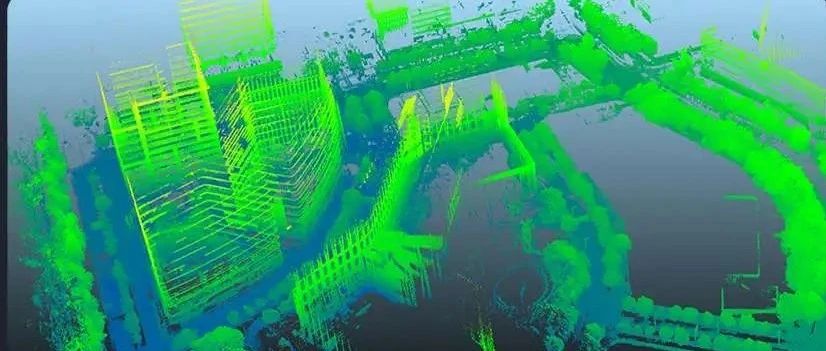
Core Viewpoint - The article discusses the advancements in robotic models, particularly focusing on the development of the RT-2 and RT-X models, which enhance the capabilities of robots in executing tasks through visual language models and diverse datasets [5][10][11]. Group 1: RT-2 and Its Capabilities - RT-2 is introduced as a foundational robot model that can process visual questions and execute tasks based on language instructions, showcasing the potential of remote-accessible robotic models [5][7]. - The model's ability to convert robot control tasks into question-answer formats allows it to perform various basic language instructions effectively [7][8]. Group 2: RT-X Dataset and Its Impact - The RT-X dataset, developed by DeepMind, comprises data from 34 research labs and 22 types of robots, providing a diverse training ground for robotic models [10]. - Models trained on the RT-X dataset outperform specialized models by approximately 50% in various tasks, indicating the advantages of cross-embodiment models [11]. Group 3: Evolution of VLA Models - The first-generation VLA model, RT-2, is noted for its simplicity, while the second-generation models utilize continuous action distributions for improved performance in complex tasks [14][15]. - The second-generation VLA models incorporate specialized mechanisms for generating continuous actions, enhancing their control capabilities [17][18]. Group 4: π0 and π0.5 Models - The π0 model, based on a large language model with 3 billion parameters, is designed to handle various tasks, including folding clothes, demonstrating its adaptability in different environments [18][23]. - The latest π0.5 model is aimed at executing long-term tasks in new environments, integrating high-level reasoning capabilities to manage complex instructions [28][30]. Group 5: Future Directions and Reinforcement Learning - Future VLA models are expected to integrate reinforcement learning techniques to enhance robustness and performance, moving beyond imitation learning [34][39]. - The combination of VLA and DLA (Deep Learning Architecture) is proposed to create a more effective system, leveraging expert data to improve generalist capabilities [44][46].