具身智能之心

Search documents
买来的足式机器人,调了好久不work......
具身智能之心· 2025-07-31 00:04
Core Viewpoint - The article emphasizes the significance of legged robots in the field of robotics, highlighting their ability to navigate complex terrains and perform various tasks, making them a focal point for future applications in inspection, security, rescue, and industrial automation [2][4]. Group 1: Importance of Legged Robots - Legged robots are considered a milestone in robotics due to their capability to handle complex environments and obstacles, moving beyond flat surfaces [2]. - There is a growing demand for talent in the legged robotics sector, with companies willing to invest heavily in skilled individuals [2]. - The article suggests that now is the optimal time to enter the legged robotics field, as it presents numerous opportunities for learning and development [2]. Group 2: Educational Initiatives - The article introduces a comprehensive course titled "From Quadruped to Biped: Full-Stack Algorithms," aimed at addressing the challenges faced by beginners in the legged robotics domain [2]. - The course covers a full technology stack from quadruped to biped robots, incorporating real-world applications and simulation environments like Isaac Gym, Gazebo, and MuJoCo [2][4]. - Key topics include the basics of quadruped robots, advanced biped robot techniques, and high-level algorithms for multi-task adaptation [2][4]. Group 3: Technical Aspects - The curriculum includes kinematics and dynamics, multi-modal sensor fusion, and practical implementations in simulation environments [3][4]. - It also covers deep reinforcement learning and imitation learning techniques, focusing on algorithms like PPO and SAC for gait control [4]. - Safety mechanisms, collision detection, and hardware deployment strategies are integral parts of the training, ensuring a comprehensive understanding of real-world applications [4][7]. Group 4: Target Audience and Prerequisites - The course is designed for AI robotics practitioners, graduate and undergraduate students, career changers, and enthusiasts interested in cutting-edge technology [16]. - Participants are expected to have a foundational knowledge of programming, algorithms, and mathematics, with recommendations for having a GPU for practical exercises [16][17]. - The training emphasizes hands-on experience, allowing learners to translate theoretical knowledge into practical engineering solutions [16].

WAIC2025之后!上海具身智能机器人产业大会来啦~
具身智能之心· 2025-07-31 00:04
曾经囿于实验室精密操控的具身智能,如今正以惊人的态势突破感知与行动的重重壁垒,灵巧的机械臂 在无序环境中自主作业,智能体在复杂动态场景中理解并执行指令,机器人真正"理解"物理世界并与人 类自然协作......具身智能的落地应用,正从蓝图变为触手可及的现实,这不仅是技术的跃迁,更是一场 颠覆人机交互范式、重塑产业未来的场景革命! 把握变革脉搏,共绘智能蓝图! 2025年8月13-15日 ,万众瞩目的 2025中国具身智能机器人产业大会 暨展览会 将在 上海新国际博览中心 盛大启幕! 来EAI SHOW 2025: 洞悉前沿趋势: 聚焦具身智能,聆听全球顶尖专家解读技术突破与产业方向,打通技术到商业的变现通路! 见证创新力量: 近距离接触未来科技,体验最具突破性的具身智能产品与解决方案; 链接产业生态: 同期精彩活动云集,现场与产、学、研、投各界专业人士深度交流,探寻合作共赢新机遇。 [ 聚2焦0具2身5智能] 零距离接触未来科技 聚焦具身智能,一站式把握产业脉搏 。无论是知名企业还是行业新锐,产业链上中下游的企业、产品 和解决方案都将展示更多创新应用方向,为观众带来具身智能机器人创新成果与新兴产业深度融合的沉 ...

贝叶斯推断与具身智能的联系探索:迈向开放物理世界的具身AI系统
具身智能之心· 2025-07-31 00:04
Core Insights and Background - The article explores the deep conceptual connection between Bayesian statistics and embodied intelligence, emphasizing that cognitive abilities fundamentally arise from real-time sensor interactions between agents and their environments [3] - Bayesian statistics provides a principled probabilistic framework for continuously reasoning under uncertainty by representing knowledge as probability distributions and updating beliefs based on new evidence [3] - Despite this connection, Bayesian principles are not widely applied in current embodied intelligence systems, which are analyzed through the lenses of search and learning, as highlighted by Rich Sutton in "The Bitter Lesson" [3][4] Search and Learning: Foundations of Modern AI - Search and learning are identified as universal methods driving significant breakthroughs in AI as computational power increases, with search involving systematic exploration of potential solutions and learning focusing on training models through data [4] - Sutton's insight indicates that while researcher-designed systems may succeed initially, they often hit performance bottlenecks, whereas systems built on scalable general methods like search and learning continue to improve with increased computational resources [4] Current Practices in Embodied Intelligence - Mainstream embodied intelligence methods are based on advancements in AI foundational models, such as pre-trained large language models and vision-language models, which provide rich prior knowledge about the world for embodied agents like robots [5] - However, these foundational models are insufficient for all requirements of embodied intelligence systems, as the encoded prior knowledge is static and coarse, lacking the precision needed for dynamic environments [6] Approaches to Addressing Limitations - Two primary approaches are identified to address the limitations of foundational models: embedding search operations within model training or fine-tuning processes in data-driven learning paradigms, and incorporating explicit search mechanisms for planning, similar to those used in AlphaGo and AlphaZero [7] Deep Connection Between Bayesian and Embodied Intelligence - From a philosophical perspective, Bayesianism and embodied intelligence are closely linked, with Bayesianism quantifying subjective beliefs and emphasizing dynamic knowledge updates through evidence [8] - Both frameworks share a common learning mechanism that views cognition/intelligence as a process dependent on dynamic interactions rather than static data, aligning with the paradigm of emergent intelligence [8] Gaps Between Bayesian Methods and Current Practices - There is a significant gap between Bayesian methods and current practices in embodied intelligence, particularly in learning and search, as Bayesian learning methods often rely on structured priors or explicit model assumptions that may hinder scalability [9] - A comparison highlights fundamental differences in model dependency, human knowledge injection frequency, learning scalability, and search methods between Bayesian intelligence and Sutton's preferred approaches [9] Future of Embodied Intelligence Shaped by Bayesian Methods - Modern embodied intelligence systems, especially those based on deep learning and large pre-trained models, have adopted data-driven, hypothesis-light methods that align with Sutton's preferences [10] - These systems can be constructed using pre-trained foundational models as building blocks, supplemented with additional modules for memory, atomic skill models, perception, sensor control, and navigation [11] Strategies for Data Scarcity - In scenarios of data scarcity, two mitigation strategies are proposed: collecting human demonstration data and resorting to simulations to create digital counterparts of the physical world [12] - Current large pre-trained models are seen as rough approximations of world models, insufficient for supporting embodied intelligence in rich, dynamic, and three-dimensional physical environments [12] Goals for Open Physical Environments - The ultimate goal for embodied intelligence is to operate in open physical environments, where knowledge and skills acquired in closed settings serve as prior knowledge [12] - In open worlds, embodied agents must continuously adapt their behavior through real-time sensor interactions, necessitating ongoing reasoning under uncertainty [12] Bayesian Methods for Complex Systems - Various existing Bayesian methods have been developed for global optimization in complex systems, particularly where traditional gradient-based methods are unsuitable [13] - The flexibility and generalization capabilities in real-world scenarios can be enhanced by relaxing the dependency on structured model assumptions, allowing for operations on model collections rather than committing to a single fixed model [13]
PI联合创始人,机器人大神!详解VLA+强化学习,催生更强大的系统
具身智能之心· 2025-07-30 06:03
Core Viewpoint - The article discusses the advancements in robotic models, particularly focusing on the development of the RT-2 and RT-X models, which enhance the capabilities of robots in executing complex tasks through improved data sets and model architectures [6][12][44]. Group 1: RT-2 and RT-X Models - RT-2 is introduced as a foundational robot model that utilizes a visual language model to process image-based commands and execute tasks [8][10]. - The RT-X dataset, developed by DeepMind, comprises data from 34 research labs and 22 types of robots, showcasing a diverse range of robotic capabilities [13][26]. - Cross-embodiment models trained on the RT-X dataset outperform specialized models by approximately 50% in various tasks, indicating the advantages of generalization in robotic learning [13][29]. Group 2: Evolution of VLA Models - The first generation of VLA models, like RT-2, is based on simple question-answer structures for robot control, while the second generation incorporates continuous action distributions for better performance [16][19]. - The second generation VLA models, such as π0, utilize a large language model with an action expert module to handle complex tasks, generating action sequences over time [22][24]. - The π0.5 model is designed for long-term tasks, integrating high-level reasoning to execute complex instructions in new environments [36][40]. Group 3: Integration of Reinforcement Learning - Future VLA models are expected to incorporate reinforcement learning techniques to enhance robustness and performance, moving beyond imitation learning [44][49]. - The integration of reinforcement learning with VLA aims to create a more effective training process, allowing robots to learn from both expert data and real-world interactions [56][60]. - Current research is focused on developing stable and effective end-to-end training processes that leverage reinforcement learning to improve VLA capabilities [60].

准备扩大具身团队了,合伙人招募来啦......
具身智能之心· 2025-07-30 06:03
Core Viewpoint - The rapid development of embodied intelligence is being recognized, with several leading companies preparing for IPOs, highlighting the importance of collaboration and communication within the industry [1] Group 1: Collaboration and Industry Development - The industry is encouraged to engage in active communication to overcome technological isolation, which can hinder overall development [1] - The company aims to create a platform that gathers talent from across the industry to foster progress [1] Group 2: Project Collaboration - The company is establishing research teams in major cities including Beijing, Shanghai, Shenzhen, Guangzhou, Hangzhou, and Wuhan, inviting participation in various projects and consulting [3] - Each city will recruit around 10 individuals with over 2 years of experience in embodied algorithms and robotics research [4] Group 3: Education and Consulting Services - The company invites experts in the field to develop online courses and consulting services related to embodied intelligence [5] - Specific areas of interest include large models, multi-modal models, reinforcement learning, and robot motion planning, among others [5][6] Group 4: Compensation and Recruitment - The company offers significant profit-sharing and resource sharing within the industry, welcoming both part-time and full-time participation [7] - A preference for candidates with a PhD or equivalent experience in the industry is noted [6]

具身智能之心求职交流群来啦!!!
具身智能之心· 2025-07-30 06:03
具身智能之心求职与行业交流群成立了! 微信扫码添加小助理邀请进群,备注昵称+具身求职; 应广大粉丝的要求,我们开始正式运营具身相关的求职社群了。社群内部主要讨论相关具身产业、公司、产品 研发、求职与跳槽相关内容。如果您想结交更多同行业的朋友,第一时间了解产业。欢迎加入我们! ...

具身领域LLM结合强化学习与世界模型工作汇总
具身智能之心· 2025-07-30 00:02
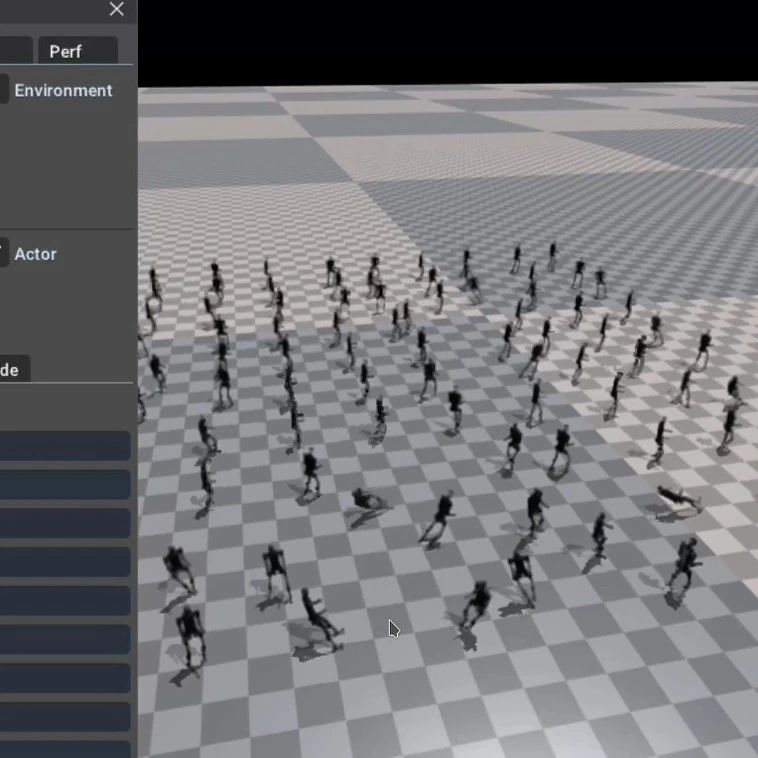
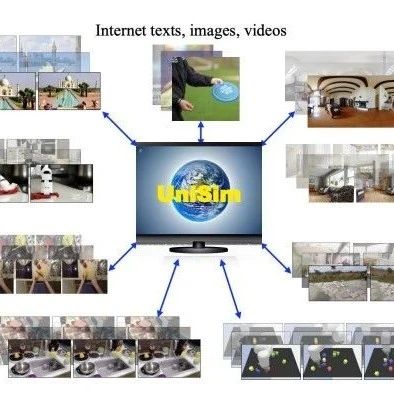
Core Insights - The article discusses recent advancements in embodied intelligence, particularly focusing on the integration of large language models (LLMs) with reinforcement learning and world models for various applications in artificial intelligence [2][3]. Group 1: UniSim and Real-World Simulators - UniSim aims to learn general real-world interactive simulators through generative modeling, revealing that diverse natural datasets can enhance the learning of realistic simulations [3]. - The research demonstrates that high-level visual language strategies and low-level reinforcement learning strategies can be trained in a simulated environment and applied directly to real-world scenarios without additional training [3]. Group 2: Causal World Models - The study from Google DeepMind asserts that robust agents must learn causal models to generalize across varying distributions, providing a clear answer to a long-standing question in the field [5]. Group 3: MAMBA Framework - MAMBA introduces an efficient world model approach for meta-reinforcement learning, achieving up to 15 times improvement in sample efficiency while performing well in high-dimensional tasks [8]. Group 4: EMMA and Multimodal Agents - EMMA leverages LLMs trained in text-based worlds to guide visual world training, resulting in a significant performance boost of 20%-70% in task success rates compared to existing visual language models [10]. Group 5: Text2Reward Framework - The Text2Reward framework allows for the automatic generation and optimization of dense reward functions using LLMs, achieving over 94% success rates in new motion behaviors and enhancing strategy performance through human feedback [13][14]. Group 6: Online Continual Learning - The proposed online continual learning frameworks (Behavior-IL and Environment-IL) enable agents to learn continuously in real-world settings without relying on task boundary information, significantly outperforming existing methods [17][18]. Group 7: AMAGO Framework - AMAGO addresses challenges in generalization and long-term memory in reinforcement learning, demonstrating superior scalability and performance in complex tasks [21]. Group 8: PDDL and Planning with LLMs - The research presents a novel paradigm for task planning using pre-trained LLMs, effectively integrating human feedback and reducing the need for extensive manual corrections in planning tasks [22][23].
室内环境具身智能语义建图研究综述:进展、挑战与未来方向
具身智能之心· 2025-07-30 00:02
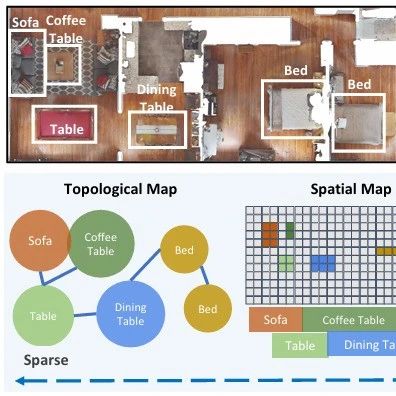
Core Insights - The article provides a comprehensive review of semantic mapping methods in indoor embodied AI, covering traditional methods to the latest deep learning advancements [4][6] - It proposes a classification framework based on map structure and semantic encoding to help researchers understand and compare different methods [4][7] - The article identifies current challenges in the semantic mapping field, such as high memory demands and low computational efficiency, and suggests future research directions [4][6] Research Background - Semantic maps are crucial for agents (both physical robots and virtual systems) to operate in complex, unstructured environments, linking perception with reasoning and decision-making [6] - The importance of semantic maps has grown in robotics and embodied AI, especially in open-world environments like autonomous driving and search and rescue [6] - Existing reviews mainly focus on the application of semantic maps in downstream tasks, while this article emphasizes the underlying map representations [6] Classification Framework - The article categorizes semantic mapping methods based on two dimensions: map structure (e.g., spatial grids, topological maps, dense geometric maps) and semantic encoding (explicit vs. implicit features) [7] - This classification aims to unify different research directions, highlight trade-offs between representations, and propose key challenges and opportunities in semantic mapping [7] Embodied Tasks - Embodied tasks involve agents perceiving and interacting with their environment through sensors and actuators, requiring an understanding of the world and meaningful actions [9] - The evolution of robotics has progressed from simple collision avoidance to complex perception, mapping, and manipulation capabilities [9] - Current trends include uncertainty-aware planning and task planning in dynamic environments, with a rise in bird's-eye view representations for tasks like detection and trajectory prediction [10] SLAM and Semantic SLAM - SLAM is a core concept in robotics closely related to semantic mapping, enabling robots to perceive their environment and simultaneously localize themselves while building maps [12][18] - Semantic SLAM enhances traditional SLAM by integrating semantic information into spatial maps, bridging the gap between perception and task-level reasoning [22] System Design Strategies - When designing embodied agent systems, a fundamental architectural choice must be made between end-to-end learning and modular pipelines, impacting how maps are constructed and utilized [20] - End-to-end methods map raw sensory input directly to actions using a single neural network, while modular systems break tasks into interpretable components [21][23] Semantic Maps - Semantic maps contain both geometric and high-level semantic information about the environment, aiding agents in complex tasks like navigation and object manipulation [25] - Various map structures exist, including spatial grid maps, topological maps, dense geometric maps, and hybrid maps, each with unique advantages and disadvantages [29][39][46] Encoding Types - Maps can store information through explicit encoding (clear semantic meaning) or implicit encoding (learned feature representations) [28][67] - Explicit encoding is beneficial for tasks requiring clear semantic understanding, while implicit encoding allows for flexibility in recognizing unseen object categories [70][72] Future Directions - The article suggests developing open vocabulary maps and task-agnostic representations as future research directions to address current challenges in semantic mapping [4][6]
中科院自动化所!视觉-触觉-语言-动作模型方案与数据集制作分享
具身智能之心· 2025-07-30 00:02
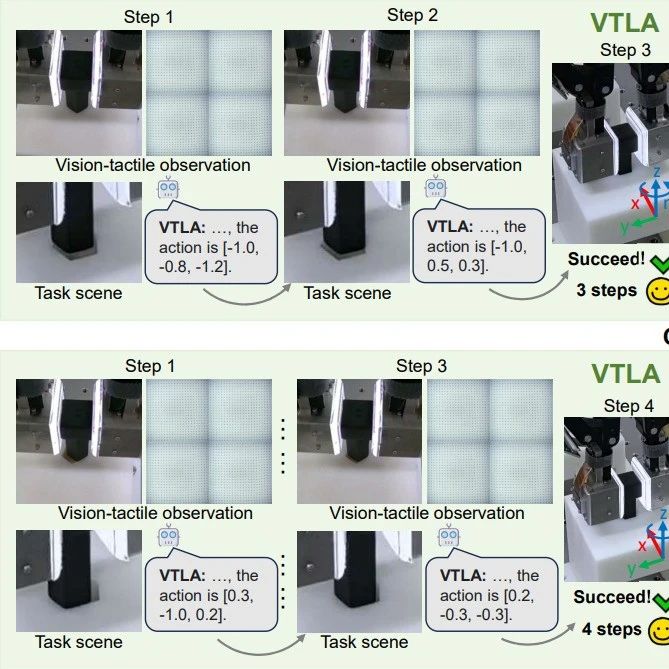
Core Viewpoint - The article discusses the development of a Vision-Tactile-Language-Action (VTLA) model aimed at enhancing robot manipulation tasks, particularly in contact-intensive scenarios, by integrating visual and tactile inputs with language instructions [2]. Group 1: Model Development - The VTLA framework addresses the gap in applying visual language models (VLM) to language-conditioned robotic operations, especially beyond visually dominated tasks [2]. - A low-cost multimodal dataset was created in a simulated environment, specifically designed for fingertip insertion tasks, which includes visual-tactile-action-instruction pairs [2]. Group 2: Performance and Results - The VTLA model achieved over 90% success rate on unknown hole types, significantly outperforming traditional imitation learning methods and existing multimodal baselines [2]. - The model's capability was validated through real-world hole axis assembly experiments, demonstrating its superior simulation-to-reality (Sim2Real) transfer ability [2].
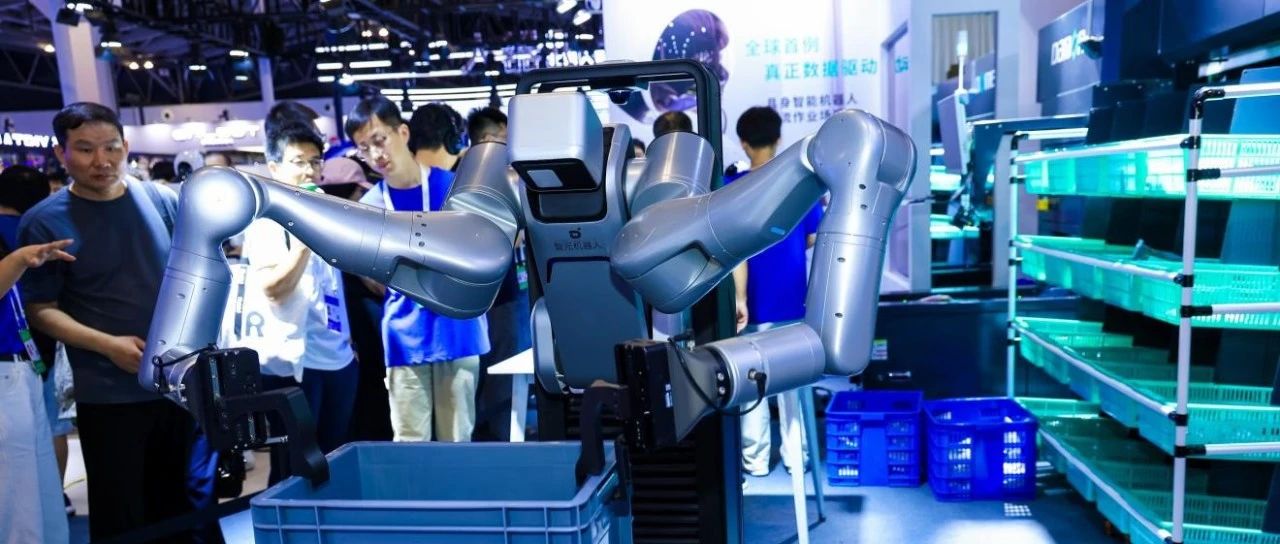
智元机器人首席科学家罗剑岚老师专访!具身智能的数采、仿真、场景与工程化
具身智能之心· 2025-07-30 00:02
Core Viewpoint - The interview with Dr. Luo Jianlan emphasizes the importance of real-world data in the development of embodied intelligence, highlighting the challenges and strategies in data collection, model training, and application deployment. Data Discussion - The company collaborates with multiple sensor suppliers focusing on the joint development of visual, tactile, and high-density sensors, while building a cross-platform data collection API for standardized data input [2] - Achieving a high performance rate of 95% for robots in real-world applications remains a significant challenge, particularly in household tasks [2] - The company uses 100% real machine data for training multimodal large models, agreeing with the notion that simulation environments have scalability limitations [2][3] - The cost of collecting real-world data is not the main issue; rather, the lack of standardized mechanisms for data collection is a core challenge [6] - The company acknowledges the data scarcity and performance optimization difficulties in both autonomous driving and robotics, emphasizing the need for high success rates in open environments [7] Evaluation of Embodied Large Models - There is currently no universal benchmark for evaluating embodied intelligence models due to significant differences in software and hardware environments across companies [9] - The evaluation of different large models is primarily based on their technical routes and the challenges they face in the current landscape [9][10] - The company aims to establish a unified real-machine testing platform to facilitate model evaluation across different scenarios [9] Embodied Intelligence Applications and Implementation - The deployment process for robots involves four steps: task modeling, scene migration, scene adaptation, and safety verification, emphasizing the importance of hardware-software collaboration [18] - High success rates are crucial, but challenges in generalization, robustness, and real-time performance must also be addressed [20] - Industrial environments are seen as the most promising for the initial large-scale deployment of embodied intelligence due to their structured nature and clear commercial demands [21] Future Outlook for Embodied Intelligence - The company aims for a "DeepSeek moment," focusing on achieving near 100% success rates and high-speed execution capabilities in future models [24] - The transition to a data-driven paradigm is recognized as a significant shift in the field, moving away from traditional hypothesis-driven approaches [25] - The potential of brain-like architectures is acknowledged, with ongoing exploration to combine computation with physical capabilities for future intelligent systems [26]