
HEC CJ PHARM(01558)

Search documents
全国多地快递市场相继迎来涨价 但对个人寄递影响有限
Cai Jing Wang· 2025-09-22 01:04
Core Viewpoint - The express delivery industry is signaling a shift away from price wars towards rational competition, driven by increased regulatory oversight and industry consensus [1][2]. Group 1: Price Adjustments - Major express companies in Shanghai announced a price increase effective September 22, 2025, to combat low-price disruptions and ensure stable service [1]. - Other regions, including Zhejiang, Guangdong, and Fujian, have also initiated price hikes, with minimum prices rising from 1.1 yuan to 1.2 yuan and 1.4 yuan respectively [1]. Group 2: Industry Challenges - The express delivery sector has been plagued by low-price competition, leading to a 20.1% increase in business volume but an 8.2% decrease in average price per package, resulting in a "volume increase, price drop" scenario [2]. - Many frontline express outlets have been operating at a loss due to this low-price competition, hindering the industry's healthy operation [2]. Group 3: Regulatory Environment - The State Post Bureau has emphasized the need for enhanced industry regulation and has opposed "involutionary" competition, aiming to improve service quality and contribute to a unified national market [2]. Group 4: Revenue Recovery - A preliminary recovery in single-package revenue has been observed, with companies reporting improvements: Shentong Express at 2.06 yuan, YTO Express at 2.15 yuan, and Yunda at 1.92 yuan [2]. - Companies are also focusing on cost reduction through operational optimization and automation, targeting price adjustments primarily at e-commerce special items and large clients [3]. Group 5: Future Outlook - The industry faces the challenge of ensuring that price increases are justified and sustainable, balancing profitability with market tolerance [3]. - Long-term solutions will require industry consolidation and a transformation in competitive models to establish a healthy competitive landscape [3].


280亿,张一鸣供应商卖了
投资界· 2025-09-11 08:44
Core Viewpoint - Bain Capital has successfully exited its investment in Qinhuai Data through a significant transaction valued at approximately 40 billion USD, marking it as the largest data center acquisition in China to date [4][10]. Group 1: Transaction Details - Bain Capital's Qinhuai Data was sold for 28 billion RMB, following a series of strategic investments and a successful IPO in the US [4][10]. - The transaction involves three main steps: capital injection into Dongshu No. 1, funding allocation to its subsidiary Dongchuang Future Data, and the final acquisition of 100% equity in Qinhuai Data by Dongshu No. 1 [6][8]. - The deal structure allows for future capital operations while ensuring control remains with the acquirer, Dongyangguang Group [9]. Group 2: Company Background - Qinhuai Data, founded in 2015, has developed a robust infrastructure network across key regions in China, focusing on data center construction [12][13]. - The company has heavily relied on ByteDance as its primary customer, with revenue contribution from ByteDance increasing from 33% in 2018 to 82% by 2020 [13][14]. - The exit of founder Ju Jing in late 2022 marked a significant transition for Qinhuai Data, which was then fully controlled by foreign capital until its recent acquisition by a domestic entity [14]. Group 3: Industry Insights - The data center market is poised for explosive growth, driven by the increasing demand for AI capabilities, with projections indicating a market size increase of 2,740 billion USD (approximately 19 trillion RMB) from 2025 to 2029 [18]. - Major investment firms, including Prologis and Blackstone, are actively investing in data center assets, reflecting a strong belief in the future demand for computational power [17][18]. - The competition in AI is fundamentally a competition for computational power, making data centers critical infrastructure for the industry [16].


东阳光药中期业绩公告解析:创新突围与国际化布局
Zheng Quan Shi Bao Wang· 2025-09-02 07:29
Core Insights - Dongyangguang Pharmaceutical is undergoing a strategic transformation towards innovation-driven growth, focusing on three key therapeutic areas: infection, chronic diseases, and oncology [1][2] Financial Performance - As of June 30, 2025, the total revenue of Dongyangguang Pharmaceutical was 1.938 billion yuan, with a revenue decline attributed to a slowdown in flu cases compared to the previous year [2] - The insulin product line achieved revenue of 122 million yuan, marking a significant year-on-year growth of 148%, indicating strong potential in the chronic disease treatment sector [2] - R&D expenditure reached 407 million yuan in the first half of the year, accounting for 21% of total revenue, reflecting a commitment to long-term growth through innovation [2] R&D Pipeline and Breakthroughs - The company has over 150 approved drugs, with three innovative drugs already on the market and 100 in development, including 49 first-class innovative drugs [2] - In the infection area, the company launched two new hepatitis C drugs with a sustained virologic response rate of 95%, positioning itself as a leader in domestic hepatitis C treatment [3] - In chronic diseases, the company’s innovative drug for idiopathic pulmonary fibrosis has shown a 96% efficacy in delaying lung function decline in clinical trials [3] - The diabetes pipeline is a core part of the company's international strategy, with plans to become a leading player in the U.S. insulin market [3] AI and Internationalization - Dongyangguang Pharmaceutical is integrating AI technology into its drug development process, significantly reducing the candidate screening time from 2-3 years to 1.5 years [5] - The company has established a global sales network covering eight countries, including the U.S., Germany, and the U.K., and has received drug registration approvals for two generic products in Europe and the U.S. [5][6] - A strategic partnership with Apollo Therapeutics for overseas licensing of a new GLP-1/FGF21 dual-target drug demonstrates the company's capability in global commercialization [5] Production Capacity and Future Outlook - The company’s production facility has received GMP certifications from the U.S., EU, and China, with plans to establish a large-scale biopharmaceutical facility by 2026 [6] - The year 2026 is anticipated to be a pivotal moment for the company, with potential U.S. market entry for insulin and a concentrated period of product launches expected between 2026 and 2028 [6] - The ongoing investment in innovation and internationalization is seen as essential for the company to thrive amid increasing industry competition and procurement pressures [6]
东阳光药调整销售架构,欲发力肝病业务
Di Yi Cai Jing Zi Xun· 2025-09-01 02:53
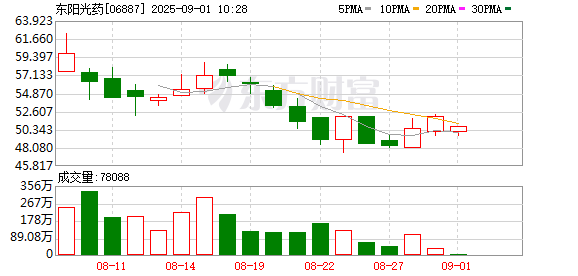
Group 1 - The company, Dongyang Sunshine Pharmaceutical, has made a sales structure adjustment in August, establishing a dedicated team for liver disease to accelerate the commercialization of innovative drugs for hepatitis C and other conditions [2] - Dongyang Sunshine Pharmaceutical, known as the "king of flu drugs," is seeking new growth points for performance amid intense competition in the flu drug market [2]

东阳光药调整销售架构,欲发力肝病业务
第一财经· 2025-09-01 02:41
Core Viewpoint - Dongyang Sunshine Pharmaceutical has made strategic adjustments to its sales structure by establishing a dedicated team for liver disease, aiming to accelerate the commercialization of innovative drugs for hepatitis C amidst fierce competition in the influenza drug market [3]. Group 1 - The company has recently formed a specialized team focused on liver diseases to enhance its market presence [3]. - This move is part of the company's strategy to seek new growth points in response to intense competition in the influenza drug sector [3].

东阳光药调整销售架构 欲发力肝病业务
Di Yi Cai Jing· 2025-09-01 02:28
Group 1 - The company, Dongyang Sunshine Pharmaceutical, has made a sales structure adjustment in August, establishing a dedicated team for liver disease to accelerate the commercialization of innovative drugs for hepatitis C and other conditions [2] - Dongyang Sunshine Pharmaceutical is known as the "king of flu drugs" and is seeking new growth points for performance amid fierce competition in the flu drug market [2]
独家|东阳光药调整销售架构,欲发力肝病业务
Di Yi Cai Jing· 2025-09-01 02:23
Core Viewpoint - The company is accelerating the commercialization of innovative drugs such as those for hepatitis C, following a sales structure adjustment made in August [1] Group 1 - The company has established a dedicated team for liver disease to enhance its market presence in this area [1] - The company, known as the "king of flu drugs," is seeking new growth points due to intense competition in the flu medication market [1]
年内险资举牌上市公司已达27次 增持上市公司意愿强烈
Cai Jing Wang· 2025-08-14 03:31
Core Viewpoint - Insurance companies are actively increasing their stakes in listed companies, with a notable rise in the number of equity investments made by insurance funds in 2023, indicating a strong willingness to invest in the stock market [1][2]. Group 1: Recent Activities - On August 13, China Pacific Life Insurance Co., Ltd. announced its stake increase in Guangdong Dongyangguang Pharmaceutical Co., Ltd. through the acquisition of H-shares [1]. - As of August 13, the total number of equity stakes taken by insurance funds in listed companies reached 27 this year, significantly higher than the 20 instances recorded in the previous year [2]. Group 2: Investment Strategies - The stake increase in Dongyangguang Pharmaceutical was triggered by a share swap during the privatization of its Hong Kong-listed subsidiary, indicating a strategic move to consolidate holdings [2]. - After the stake increase, China Pacific Life directly held approximately 6.06 million H-shares of Dongyangguang, representing 5.38% of the company's H-share capital [2]. Group 3: Market Conditions and Regulations - Regulatory changes have encouraged insurance companies to increase their equity investments, with a focus on long-term assessment mechanisms and adjustments to solvency rules that lower risk factors for stock investments [3]. - The overall equity investment by insurance companies accounted for approximately 20.6% of total investment as of the first quarter of this year, reflecting a gradual increase in equity asset allocation [4]. Group 4: Future Outlook - Industry experts believe there is still significant room for increasing equity asset allocation, as many insurance companies have not yet reached their investment limits based on solvency ratios [5]. - The current market environment and accounting standards suggest that insurance funds are likely to continue increasing their equity investments in the near future [5].
年内险资举牌上市公司已达27次 业内人士认为当前险资举牌仍有积极性 增配权益资产也有较大潜在空间
Zheng Quan Ri Bao· 2025-08-13 16:45
Core Viewpoint - Insurance companies are actively increasing their stakes in listed companies, with a notable rise in the number of equity investments this year, indicating a strong willingness to enhance equity asset allocation [3][4][6]. Group 1: Recent Activities - On August 13, China Pacific Life Insurance Co., Ltd. announced that it and its affiliates have increased their stake in Guangdong Dongyangguang Pharmaceutical Co., Ltd. by acquiring H-shares [3]. - As of August 13, the total number of equity stakes taken by insurance funds this year has reached 27, significantly higher than the 20 instances recorded for the entire previous year [5][6]. Group 2: Investment Trends - The majority of the 27 instances of stake increases this year were driven by active buying, with only 2 instances being triggered by passive factors, reflecting a strong intent among insurance funds to increase their holdings in listed companies [5][6]. - The main methods of stake acquisition include competitive trading and secondary market purchases, primarily funded by self-owned capital and insurance liability reserves [5]. Group 3: Regulatory Environment - Recent regulatory changes have established actionable assessment standards for the proportion and stability of insurance funds entering the A-share market, promoting a long-term assessment mechanism [6]. - Adjustments to solvency rules by the National Financial Regulatory Administration have reduced the risk factors for stock investments, encouraging insurance funds to increase their market participation [6]. Group 4: Equity Asset Allocation - The proportion of equity assets held by insurance companies is gradually increasing, with the overall equity investment accounting for approximately 20.6% of total fund utilization as of the first quarter of this year [7]. - Regulatory guidelines specify that the equity asset balance must not exceed certain percentages of total assets based on the solvency ratio, allowing for significant room for future increases in equity allocations [7][8]. Group 5: Company-Specific Insights - China Ping An Life Insurance Co., Ltd. reported a solvency ratio of 227.92% as of the first quarter, allowing for an equity investment limit of 30%, with its equity assets accounting for 23.26% of total assets [8]. - China Post Life Insurance Co., Ltd. had a solvency ratio of 194.59% at the end of the second quarter, with equity assets making up 17.08% of total assets, indicating substantial potential for future equity allocation [8].

年内险资举牌上市公司已达27次
Zheng Quan Ri Bao Zhi Sheng· 2025-08-13 16:41
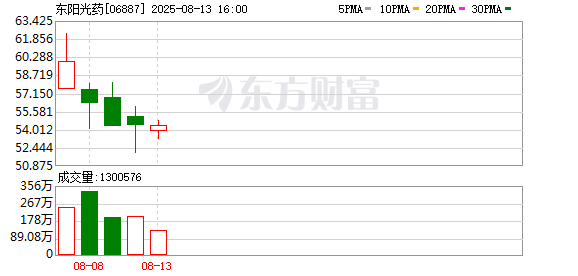
Core Viewpoint - The insurance sector is actively increasing its equity asset allocation, with significant potential for future growth in this area [1][4]. Group 1: Insurance Companies' Activities - China Pacific Life Insurance Co., Ltd. announced its recent acquisition of shares in Guangdong Dongyangguang Pharmaceutical Co., Ltd., holding approximately 605.86 million shares, which represents 5.38% of the latter's H-share capital [2]. - As of August 13, 2023, the total number of equity stakes acquired by insurance capital reached 27 this year, significantly higher than the 20 instances recorded in the previous year [2]. - The majority of these acquisitions were driven by proactive buying, indicating a strong willingness among insurance companies to increase their holdings in listed companies [2]. Group 2: Regulatory Environment - Recent regulatory changes have established actionable assessment standards for the proportion and stability of large state-owned insurance companies' investments in A-shares, promoting a long-term assessment mechanism [3]. - Adjustments to solvency rules have reduced the risk factors associated with stock investments, encouraging insurance capital to increase market participation [3]. Group 3: Equity Asset Allocation - The proportion of equity assets in insurance companies is gradually increasing, with equity investments accounting for approximately 20.6% of total investment assets as of the first quarter of this year [4]. - Regulatory guidelines dictate that the equity asset balance must not exceed certain thresholds based on the solvency ratio, allowing for a structured approach to equity investment [4]. Group 4: Future Outlook - Analysts believe that there is still considerable room for insurance companies to increase their equity asset allocation, as many companies are currently below their investment limits [5]. - The current capital market environment and accounting standards suggest that insurance capital is likely to continue expanding its equity asset holdings in the future [5].