
HEC CJ PHARM(01558)

Search documents
需求激增 流感药“新老对决”
Bei Jing Shang Bao· 2025-11-24 15:52
Core Insights - The demand for influenza medications has surged with the onset of the flu season, particularly for Oseltamivir and Marbofloxacin, indicating a sustained high demand in the coming months [1][3] - Oseltamivir continues to dominate the market, holding over 70% market share, but new entrants like Marbofloxacin are gaining traction [4][8] - The overall influenza activity in China is on the rise, with the H3N2 strain being the predominant virus [2][3] Market Dynamics - Oseltamivir's sales have increased by over 237% recently, while Marbofloxacin's sales rose by 180% [3] - The influenza drug market in China is projected to reach 10.1 billion yuan in 2024 and grow to 11.6 billion yuan by 2030 [3] - The entry of new domestic drugs from companies like Qingfeng Pharmaceutical and Zhongsheng Pharmaceutical signifies a collective rise in China's pharmaceutical industry [7][8] Competitive Landscape - The market is evolving with both old and new drugs; Oseltamivir, despite its long-standing presence, faces challenges from newer medications that offer advantages like single-dose treatment [5][8] - Marbofloxacin was included in the national medical insurance directory shortly after its launch, highlighting its rapid market acceptance [5] - The competition is expected to intensify, focusing on price reductions and market access through insurance negotiations [9] Future Outlook - The flu medication market is likely to see a diversified competitive landscape, with a potential "multi-pillar" structure emerging [8][9] - Factors such as brand reputation, supply chain stability, and the ability to meet seasonal demand will play crucial roles in determining market success [9]

东阳光药张英俊:以“创新+国际化”双引擎开启中国药企进阶新篇章
证券时报· 2025-11-24 00:48
Core Viewpoint - The Chinese pharmaceutical industry is transitioning from "generic following" to "innovative leading," with a significant increase in original innovative drugs expected in 2024, reaching 704, ranking first globally [2]. Industry Overview - The Chinese pharmaceutical sector is entering a "golden decade" following the new clinical data verification policy implemented on July 22, with continuous policy support fostering a comprehensive support system for the industry [2]. - The industry is witnessing a strategic opportunity driven by "innovation" and "internationalization" as core forces [2]. Company Strategy - The company, Dongyang Sunshine Pharmaceutical, is focusing on source innovation, with a research pipeline that includes small molecules, antibodies, small nucleic acids, ADCs, and cell therapies [2]. - The research strategy has shifted from "Me-too" and "Fast-follow" to pursuing "BIC" (Best-in-Class) and "FIC" (First-in-Class) [2]. - Dongyang Sunshine has nearly 50 research pipelines, with over 10 in registration or critical clinical stages, showcasing potential products with differentiated advantages and international competitiveness [2]. Technological Innovation - The company is leveraging the AI wave by developing six AI models, enabling a full-chain drug discovery capability from molecular design to formulation design [3]. - The first AI-driven small molecule innovative drug, HEC169584, has entered clinical trials, showing potential superiority over comparator drugs [3]. Core Technology Platforms - Dongyang Sunshine has established multiple core technology platforms, including TCE bispecific antibodies, dual payload ADCs, and small nucleic acids, aimed at addressing significant unmet clinical needs such as solid tumor treatment and hepatitis B cure [4]. Internationalization Strategy - The company views internationalization as essential for the development of Chinese innovative pharmaceutical companies, employing a diversified strategy for overseas expansion [5]. - This includes "License-out" agreements for some new drugs and promoting self-developed products in Europe and the U.S., with the expectation that insulin glargine will be approved in the U.S. by Q1 2026 [5]. Future Outlook - Dongyang Sunshine has established a global sales network, with over 60 overseas formulations approved, and a leading market share for azithromycin tablets in Germany [6]. - The company aims to achieve over 20 billion yuan in revenue and 5 billion yuan in profit within five years, launching more than 10 new products and securing over five global collaborations [6]. - The essence of the advancement of Chinese pharmaceutical companies lies in the global recognition and validation of innovative value [6].

以“创新+国际化”双引擎 开启中国药企进阶新篇章
Zheng Quan Shi Bao· 2025-11-24 00:21
Core Insights - The Chinese pharmaceutical industry is transitioning from "generic following" to "innovation leading," with 704 original innovative drugs expected from Chinese companies in 2024, ranking first globally [2][3] - Zhang Yingjun, Chairman of Dongyangguang Pharmaceutical, emphasizes that the industry is entering a "golden decade" driven by innovation and internationalization, supported by continuous policy empowerment [2][3] Industry Overview - The Chinese pharmaceutical sector is experiencing a strategic opportunity period centered on innovation and internationalization, particularly after the implementation of the "7.22" clinical data verification policy [2] - The full-chain support system for the pharmaceutical industry is being established, with innovative drugs consistently included in government work reports [2] Company Strategy - Dongyangguang Pharmaceutical is committed to source innovation, with a research pipeline covering various technologies such as small molecules, antibodies, small nucleic acids, ADCs, and cell therapies [2][3] - The company's research strategy has shifted from "Me-too" and "Fast-follow" to pursuing "BIC (Best in Class)" and "FIC (First in Class)" [2] Research and Development - Dongyangguang Pharmaceutical has nearly 50 research pipelines, with over 10 in registration or key clinical stages, showcasing potential products like the functional cure for hepatitis B and new drugs for IPF [3] - The company has developed six AI models to enhance drug discovery capabilities, with the first AI-driven small molecule drug entering clinical trials, showing promising initial data [3] Internationalization Efforts - The company's international strategy includes a diversified approach, such as "License-out" agreements and promoting self-developed products in Europe and the U.S., with the expectation of launching insulin glargine in the U.S. by Q1 2026 [4] - Dongyangguang Pharmaceutical has established a global sales network, with over 60 overseas formulations approved and leading market share in certain products [4] Future Outlook - The company aims to become a leading comprehensive pharmaceutical company through innovation, internationalization, and sustainability, targeting over 20 billion yuan in revenue and 5 billion yuan in profit within five years [4] - The progression of Chinese pharmaceutical companies is fundamentally about the global recognition and validation of innovative value, with Dongyangguang Pharmaceutical actively participating in this historical process [4]
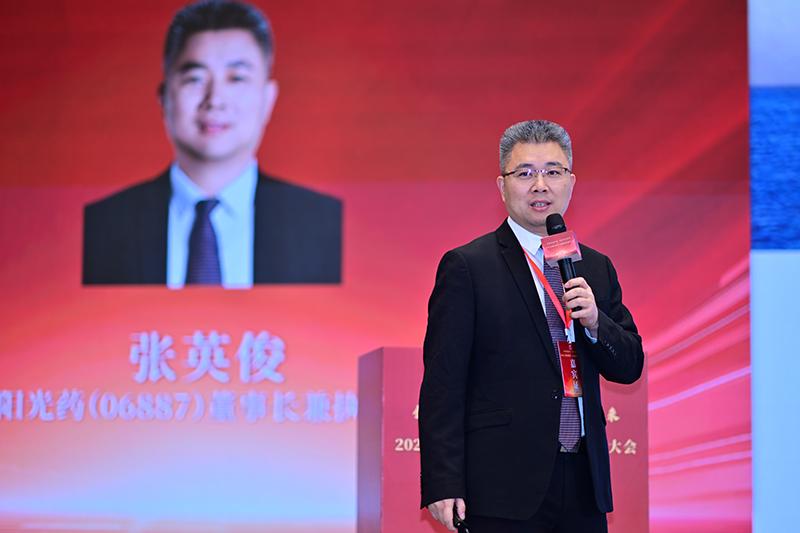
东阳光药董事长张英俊: 以“创新+国际化”双引擎开启中国药企进阶新篇章
Zheng Quan Shi Bao· 2025-11-23 21:51
Core Insights - The Chinese pharmaceutical industry is transitioning from "generic following" to "innovation leading," with 704 original innovative drugs expected from Chinese companies in 2024, ranking first globally [2] - The chairman of Dongyang Sunshine Pharmaceutical, Zhang Yingjun, emphasizes that the industry is entering a "golden decade" driven by innovation and internationalization, supported by favorable policies [2][3] - Dongyang Sunshine is focusing on source innovation, with a diverse R&D pipeline that includes small molecules, antibodies, small nucleic acids, ADCs, and cell therapies [2][3] Industry Trends - The Chinese pharmaceutical sector is experiencing a strategic opportunity period centered on innovation and internationalization, as highlighted by Zhang Yingjun at the 2025 Greater Bay Area Technology and Financial Innovation Development Conference [2] - The industry is benefiting from a supportive policy environment, including integration into ICH and continuous inclusion of innovative drugs in government work reports [2] Company Strategy - Dongyang Sunshine has shifted its R&D strategy from "Me-too" and "Fast-follow" to pursuing "BIC" (Best-in-Class) and "FIC" (First-in-Class) drugs [2] - The company currently has nearly 50 projects in the pipeline, with over 10 in registration or key clinical stages, showcasing differentiated advantages and international competitiveness [2] Technological Innovation - The company is leveraging AI technology, having developed six AI models for drug discovery, with its first AI-driven small molecule drug, HEC169584, entering clinical trials [3] - Dongyang Sunshine has established multiple core technology platforms to address significant unmet clinical needs, such as solid tumor treatment and hepatitis B cure [3] Internationalization Efforts - The internationalization strategy of Dongyang Sunshine is multifaceted, involving "License-out" agreements and plans for self-marketing products in Europe and the U.S. [3] - The company aims to have its insulin product approved in the U.S. by Q1 2026, potentially becoming the first domestically produced insulin to enter the U.S. market [3] Future Goals - Dongyang Sunshine aims to become a leading comprehensive pharmaceutical company focused on "innovation + internationalization + sustainability," targeting over 20 billion yuan in revenue and 5 billion yuan in profit within five years [4] - The company plans to launch over 10 new products and achieve more than five global collaborations in the same timeframe [4] Industry Perspective - Zhang Yingjun states that the advancement of Chinese pharmaceutical companies is fundamentally about the global recognition and validation of innovative value [5] - The company is actively participating in and leading this historic process through its dual focus on innovation and internationalization [5]

申万宏源交运一周天地汇:VLCC再创新高,俄油出口显著下滑,关注年度策略5年维度全球交运复盘
Shenwan Hongyuan Securities· 2025-11-22 13:26
Core Insights - The report highlights a significant increase in VLCC (Very Large Crude Carrier) freight rates, reaching a new high, driven by a notable decline in Russian oil exports, which has created additional demand for oil transportation from the Middle East to India and China [3][4] - The report suggests a positive outlook for the transportation sector, particularly in shipping and aviation, with recommendations for specific companies such as China Merchants Energy and COSCO Shipping Energy [3][4] - The report emphasizes the importance of monitoring seasonal trends in freight rates, particularly the potential for a "not-so-dull" off-season from December to February [3] Industry Overview - The transportation index has decreased by 5.00%, underperforming the CSI 300 index by 1.23 percentage points, with the express delivery sector showing the smallest decline at -2.75% and the public transport sector experiencing the largest drop at -9.35% [4][11] - The shipping sector has shown mixed performance, with the Baltic Dry Index increasing by 5.67% while the coastal dry bulk freight index fell by 3.47% [4][11] - The report notes that the average freight rate for VLCCs has risen by 5% week-on-week, reaching $126,371 per day, with the Middle East to Far East route hitting a new high of $138,144 per day [3][4] Shipping Sector Insights - The report indicates that the average freight rate for the fourth quarter is approaching $99,000 per day, marking it as one of the highest quarterly averages in history [3] - The decline in Russian oil exports has been significant, dropping from nearly 4 million barrels per day to around 3 million barrels per day, which has increased demand for oil from the Middle East [3][4] - The report also highlights the recovery of chartering activities following the Bahri conference, with shipowners beginning to control capacity due to tightening supply [3] Aviation Sector Insights - The report discusses the unprecedented challenges in the aircraft manufacturing supply chain, with an aging fleet expected to persist over the next 5-10 years, leading to constrained supply [3] - It anticipates a significant improvement in airline profitability as capacity is allocated to international routes, suggesting a potential golden era for airlines [3] - Recommendations include major airlines such as China Eastern Airlines and Spring Airlines, which are expected to benefit from these trends [3] Express Delivery Sector Insights - The express delivery industry is entering a new phase of competition, with three potential scenarios outlined: price recovery leading to utility-like profitability, continued competitive pressure, or higher-level consolidation [3] - Companies such as Shentong Express and YTO Express are highlighted as having strong potential due to their competitive advantages and market positioning [3] High Dividend Stocks in Transportation - The report lists high dividend yield stocks in the transportation sector, including Bohai Ferry with a yield of 8.08% and China Railway with a yield of 3.95% [21] - The focus on high dividend stocks is seen as a stable investment strategy amidst market fluctuations [21]





奥司他韦集采丢标后东阳光药推大包装可威
Xin Lang Cai Jing· 2025-11-20 10:50
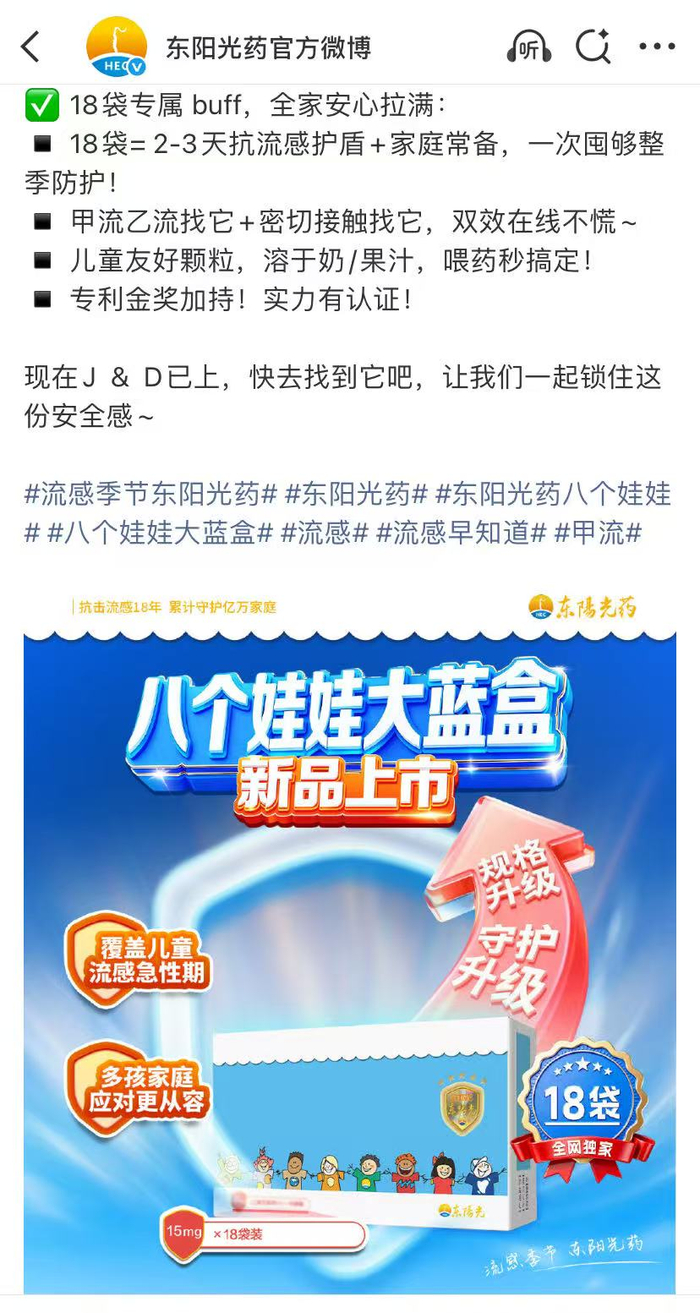
Core Viewpoint - Dongyangguang Pharmaceutical has launched an upgraded version of its flu medication, Oseltamivir Phosphate Granules (brand name: Kewai®), with a new packaging of 15mg×18 bags, exclusively available on JD Health, aiming to capture market share during the flu season [1][5]. Product Launch and Pricing - The new Kewai® product is an upgrade from previous versions, which included 15mg×10 bags, and is marketed as the "Big Blue Box" [5]. - The price of the new product was listed at 79 yuan on November 19 and increased to 89.6 yuan by November 20 [5]. - Compared to similar products like Ganliqing® and Shikewai®, which are priced at 96 yuan, Kewai® is positioned at a higher price point, approximately three times that of its competitors [7]. Market Position and Competition - Kewai® has historically been Dongyangguang's flagship product, holding over 70% market share in the domestic flu medication market [9][10]. - The company faces increased competition as new entrants like Ganliqing® and Shikewai® have recently received approval, potentially impacting Dongyangguang's market dominance [7][9]. - The pricing strategy of Kewai® aligns closely with original research products, indicating a high-price approach [7]. Financial Performance - Dongyangguang's revenue from Kewai® capsules has significantly declined post-national centralized procurement, with projected revenues of 5 billion yuan, 7 billion yuan, and 3 billion yuan from 2022 to 2024, compared to 16.6 billion yuan in 2019 [9]. - The company’s overall revenue is projected to be 37 billion yuan, 63 billion yuan, and 37 billion yuan from 2022 to 2024, reflecting fluctuations influenced by market conditions [9][11]. Regulatory and Market Dynamics - The recent national drug procurement results were unfavorable for Dongyangguang, as its Oseltamivir Phosphate Granules did not win a bid, despite high demand indicated by a reported volume of 1.11 million bags [12]. - The competitive landscape is shifting, with only two companies winning bids in the latest procurement, which may lead to increased pressure on Dongyangguang to adapt its sales strategy, particularly in e-commerce and outpatient markets [12].
实探|流感季来袭:药店“神药”有存货,奥司他韦卷出1元/粒
Bei Ke Cai Jing· 2025-11-18 04:05
Core Viewpoint - The flu season in China is expected to peak in mid to late December and early January, leading to increased competition among flu medication manufacturers as prices drop to capture market share [5][8]. Group 1: Market Dynamics - Some flu medications have seen price reductions on e-commerce platforms, with the price of 20mg of Isodax dropping from 320 yuan to 196 yuan since November 3 [6]. - The market for flu medications is becoming increasingly competitive, with several new domestic flu drugs set to launch in 2025, challenging the previously dominant "miracle drug" status of Sufuda [8][23]. - Sufuda, a product of Roche, was initially priced at 498 yuan per box before being included in the national medical insurance directory, which reduced its price to 222.36 yuan [14]. Group 2: Supply and Demand - Sufuda is currently in ample supply, with prices in physical pharmacies ranging from 239 yuan to 258 yuan per box, and no immediate price adjustments are anticipated [10]. - The demand for Sufuda remains high, with reports indicating that it sells out quickly during peak seasons [9]. Group 3: Competitive Landscape - Oseltamivir, a traditional flu antiviral, holds over 80% market share in China's flu medication market, with prices significantly reduced due to increased competition and centralized procurement [16][19]. - The lowest bid price for Oseltamivir capsules has dropped to less than 1 yuan per capsule, marking an 85% decrease from previous prices [21]. - New domestic flu drugs, such as Isodax and Anruwei, are entering the market, aiming to capture a share of the growing demand for flu treatments [24][30]. Group 4: Regulatory Developments - The National Medical Products Administration has accepted new drug applications for several flu medications, indicating a proactive approach by domestic companies to expand their product offerings [28]. - Companies are also working to include their products in the medical insurance directory to enhance accessibility for patients [30][31].
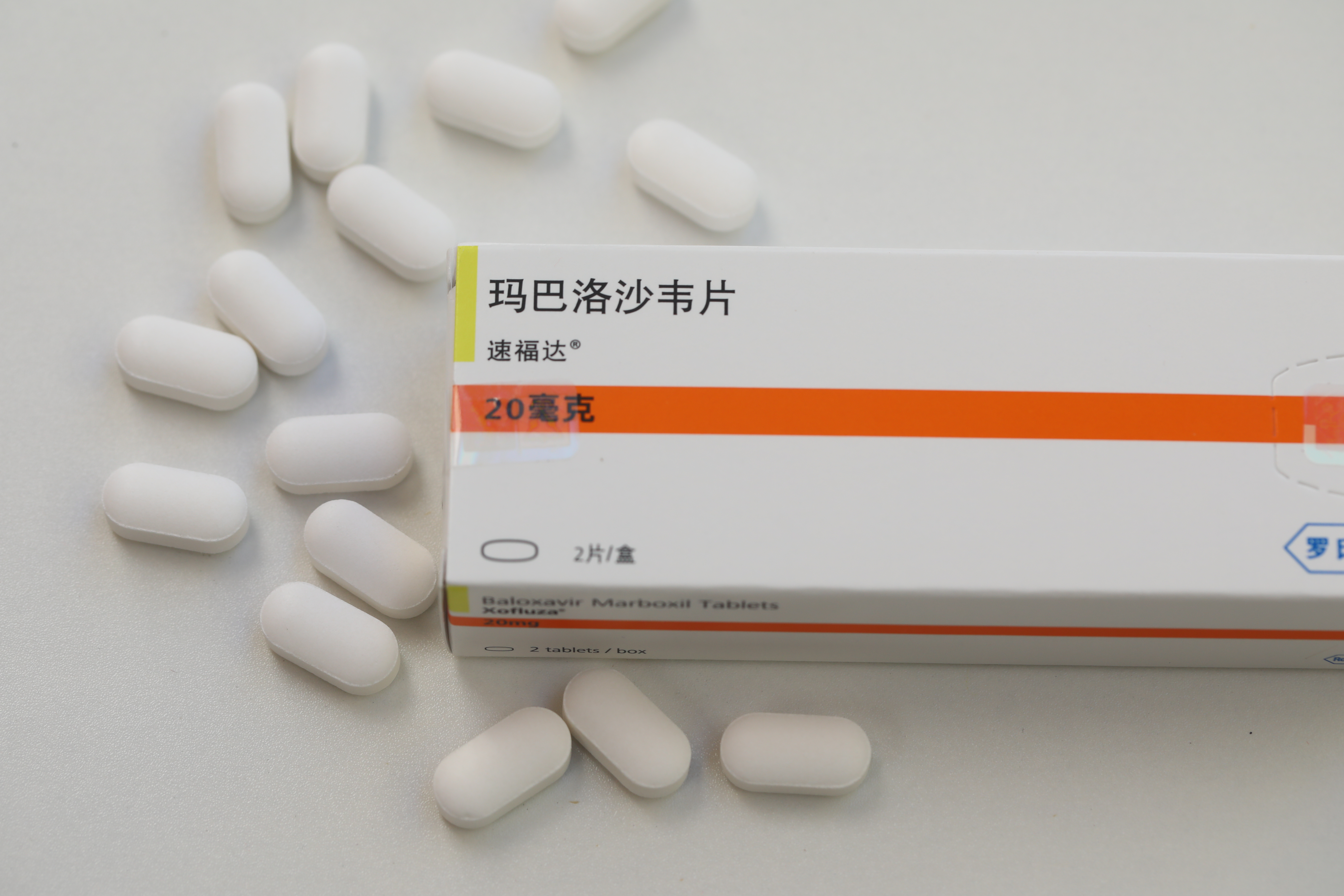
东阳光药集采丢标背后单一产品依赖下的生存危机
Xin Lang Cai Jing· 2025-11-06 07:36
Core Insights - The domestic pharmaceutical market is undergoing a new round of reshuffling, with the 11th batch of national drug procurement results recently announced, covering 55 varieties and 453 products in high-demand treatment areas such as anti-infection, diabetes, and hypertension [1] - Dongyang Sunshine Pharmaceutical's loss of the bid for Oseltamivir granules, which contributed over 75% of its revenue in 2023, poses a significant threat to its core business [1] - The company's heavy reliance on hospital channels for over 80% of its sales exacerbates the impact of this loss [1] Group 1: Company Challenges - Dongyang Sunshine Pharmaceutical's product structure is notably singular, leading to a weaker ability to withstand risks compared to peers like Heng Rui Medicine, which has previously faced similar challenges [1] - The company has over 100 products in research across infection, chronic disease, and oncology, indicating a desire for transformation, but significant concerns remain regarding the feasibility of this strategy [1][2] Group 2: Research and Development Issues - The company's R&D investment is characterized by a "high proportion, low absolute value," with R&D expenses of 348 million yuan in the first half of 2025, only one-tenth of Heng Rui's during the same period [2] - The broad but shallow pipeline in the infection sector faces competition from Roche's new drug Marbofloxacin, while insulin products in the chronic disease sector yield low profits despite winning bids [2] - The oncology drug Crizotinib is still in phase three clinical trials, lagging behind competitors, highlighting the company's insufficient R&D capabilities and funding reserves [2] Group 3: Industry Context - Dongyang Sunshine Pharmaceutical's predicament reflects the broader challenges faced by Chinese pharmaceutical companies under the dual pressures of national procurement and the need for innovative transformation [2] - The loss of the bid serves as a performance warning and a survival test for companies still reliant on single-product strategies [2]
东阳光药集采丢标背后 单一产品依赖下的生存危机
Xin Lang Cai Jing· 2025-11-06 06:33
Core Insights - The domestic pharmaceutical market is undergoing a new round of reshuffling, with the 11th batch of national drug procurement results recently announced, marking a significant impact on various companies, particularly Dongyang Sunshine Pharmaceutical, which faced a crisis due to the loss of its core product, Oseltamivir granules [1][2]. Group 1: Impact of Procurement Results - The procurement results included 55 varieties and 453 products, covering high-demand treatment areas such as anti-infection, diabetes, and hypertension [1]. - Dongyang Sunshine Pharmaceutical's Oseltamivir granules contributed over 75% of its revenue in 2023, making it a critical product for the company [2]. Group 2: Consequences of Losing the Bid - Losing the bid means Dongyang Sunshine Pharmaceutical will lose access to public medical institutions, leading to a potential sharp decline in market share, revenue, and brand influence [2]. - The company’s heavy reliance on hospital channels for over 80% of its sales exacerbates the risk of revenue loss following the bid failure [2]. Group 3: Challenges in Transformation - Dongyang Sunshine Pharmaceutical has over 100 products in research across infection, chronic diseases, and oncology, but faces significant challenges in its transformation efforts [3]. - The company's R&D investment is relatively low, with 348 million yuan in the first half of 2025, only one-tenth of that of a competitor, limiting its ability to advance multiple projects simultaneously [3]. - The product pipeline is characterized by a lack of breakthrough innovations and severe homogenization, with existing products facing strong competition [3]. Group 4: Industry Reflection - The predicament of Dongyang Sunshine Pharmaceutical reflects the broader challenges faced by Chinese pharmaceutical companies under the dual pressures of national procurement and the need for innovative transformation [4]. - Companies that remain overly dependent on single products are at risk, and finding new growth avenues before the benefits of generic drugs diminish is crucial for survival [4].
星展银行:全球快递市场将保持强劲增长 亚太地区成主要引擎
Xin Hua Cai Jing· 2025-10-31 10:47
Core Insights - The global express market is expected to achieve a compound annual growth rate (CAGR) of 7.9% from 2025 to 2029, despite ongoing challenges in global trade [1] - The Asia-Pacific region is identified as a key growth engine for the express market, with a projected CAGR of 10.5%, significantly outpacing North America's 6.0% and Europe's 5.9% [1] - The B2C segment is driving strong growth in the express market, with a forecasted CAGR of 10.8% from 2025 to 2029, compared to the B2B segment's 2.5% [1] Industry Performance - Global logistics giants are experiencing varied performance; UPS has faced operational challenges leading to weak second-quarter results, while FedEx reported its strongest revenue growth since the pandemic [2] - Chinese logistics companies are outperforming the market due to diversified portfolios and efficiency improvements, with SF Express achieving record net profits in the first half of 2025 [2] - Regulatory interventions since July 2025 are expected to curb irrational price competition in China, paving the way for a more rational market structure and recovery in profit margins [2]
