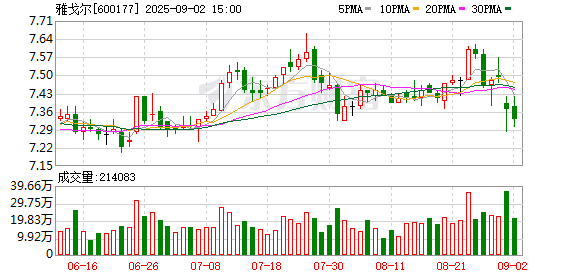
Youngor(600177)
Search documents
2025年上半年内蒙古自治区原保险保费收入共计572.87亿元,同比增长5.26%
Chan Ye Xin Xi Wang· 2025-08-03 09:25
Core Viewpoint - The development of recycled polyester staple fiber is rapidly advancing due to increasing global resource shortages and environmental issues, with a projected production increase in China from 2020 to 2024, reaching 4.21 million tons in 2024, a year-on-year growth of 5.8% [1][14]. Industry Overview - Recycled polyester staple fiber is produced from waste polyester bottle flakes and spinning waste through physical or chemical regeneration processes, with lengths typically ranging from 32 to 102 mm and various specifications [3]. - The fiber is widely used in furniture, toys, bedding, and clothing industries due to its low cost and good performance [3]. Industry Policies - The Chinese government has implemented several policies to promote the development of recycled polyester staple fiber, including encouraging textile companies to prioritize the use of green fiber materials and enhancing the standards and certification systems for green products [5][7]. - Specific policies include the 2022 implementation opinions on accelerating the recycling of waste textiles and the 2024 notice on promoting high-quality recycling of waste textiles and bottle flakes [5][7]. Industry Chain - The upstream of the recycled polyester staple fiber industry includes raw materials such as polyester fabrics, waste polyester bottle flakes, and spinning waste, which directly affect production costs and profitability [8]. - The downstream applications primarily include clothing, home textiles, and industrial textiles, with clothing being the largest demand market [8]. Market Demand - China's waste textile recycling volume is projected to grow from 4 million tons in 2019 to 5.15 million tons in 2024, indicating a significant potential for recycled polyester staple fiber as a key application area [10]. - The textile industry in China is expected to achieve a revenue of 48,353.66 billion yuan in 2024, a year-on-year increase of 3.87%, further driving the demand for recycled fibers [12]. Competitive Landscape - Key players in the recycled polyester staple fiber industry include Yangzhou Tianfu Long Group, Youcai Environmental Resources Technology, and Fujian Minrui New Fiber, which possess large production scales and advanced technologies [16][17][19]. - Smaller enterprises are also emerging, offering high-quality and innovative products that appeal to consumers [16]. Development Trends - The demand for recycled polyester staple fiber is expected to continue growing due to stricter global environmental policies and increasing consumer awareness of sustainability [23]. - Differentiated products, such as recycled colored polyester staple fiber, are anticipated to see significant growth due to their low carbon emissions and cost advantages [24]. - Quality improvements and technological innovations will enhance the competitiveness of recycled polyester staple fiber, with a focus on resource efficiency and reduced environmental impact [26].
研判2025!中国再生涤纶短纤行业政策汇总、产业链、发展现状、竞争格局及发展趋势分析:政策积极推动再生纤维应用,推动行业产量增长至421万吨[图]
Chan Ye Xin Xi Wang· 2025-08-03 03:24
Core Viewpoint - The development of recycled polyester staple fiber is accelerating in response to global resource shortages and environmental issues, with production expected to reach 4.21 million tons in 2024, a year-on-year increase of 5.8% [1][14]. Industry Overview - Recycled polyester staple fiber is produced from waste polyester bottle flakes and spinning waste through physical or chemical regeneration processes, with lengths typically ranging from 32 to 102 mm and various specifications [3]. - The industry is driven by strong market demand and a stable supply of raw materials, particularly from the recycling of waste textiles and bottle flakes [1][14]. Industry Policies - The Chinese government has implemented several policies to promote the development of recycled polyester staple fiber, including encouraging textile companies to prioritize the use of green fiber materials and enhancing standards for green products [5][7]. - Key policies include the 2022 implementation opinions on accelerating the recycling of waste textiles and the 2024 notice on promoting high-quality recycling of waste textiles and bottle flakes [5][7]. Industry Chain - The upstream of the recycled polyester staple fiber industry includes the collection of raw materials such as waste polyester bottle flakes and spinning waste, which directly impacts production costs and profitability [8]. - The downstream applications primarily include clothing, home textiles, and industrial textiles, with clothing being the largest market segment [8]. Market Demand - The demand for recycled polyester staple fiber is expected to continue growing due to increasing consumer awareness of environmental issues and government support for sustainable practices [23]. - The recycling volume of waste textiles in China is projected to rise from 4 million tons in 2019 to 5.15 million tons in 2024, providing ample raw material for production [10]. Competitive Landscape - The industry features several leading companies such as Yangzhou Tianfu Long Group, Youcai Environmental Resources Technology, and Fujian Minrui New Fiber, which possess significant market influence and advanced production capabilities [16][17][19]. - Smaller enterprises are also emerging, offering high-quality and innovative products that appeal to consumers [16]. Future Trends - The market for differentiated products, such as recycled colored polyester staple fiber, is expected to expand due to their low carbon emissions and cost advantages [24]. - Continuous improvements in quality and technological innovation will enhance the competitiveness of recycled polyester staple fiber, with a focus on resource efficiency and reduced environmental impact [26].
纺织行业上市公司财务总监PK:华孚时尚王国友61岁大专学历、为纺织行业年龄最大财务总监
Xin Lang Zheng Quan· 2025-07-30 06:56
Summary of Key Points Core Viewpoint - The report highlights the significant role of CFOs in A-share listed companies, emphasizing their influence on financial health, strategic decision-making, and overall company performance. The total compensation for CFOs in A-shares reached 4.243 billion yuan, with an average salary of 760,300 yuan [1]. Group 1: CFO Compensation - The highest annual salary for a CFO in the A-share market is 2.3533 million yuan, while the lowest is 81,600 yuan, with the industry average exceeding 500,000 yuan [1]. - A total of 15 listed companies have CFOs earning over 1 million yuan, including companies like Taiping Bird, Baoxini Bird, and Dizuo Fashion, with salaries of 2.3533 million yuan, 1.5866 million yuan, and 1.5221 million yuan respectively [1]. Group 2: CFO Demographics - The majority of CFOs in the industry hold a bachelor's degree, but among the 15 CFOs earning over 1 million yuan, most have a master's degree. Only 5 have a diploma or bachelor's degree [4]. - The average age of CFOs is over 40, with the youngest being Lin Guixian from ST Jinbi, born in 1991, making him 34 years old. The youngest among the high-earning CFOs is Hu Xinyan from Huali Group, born in 1989, at 36 years old [4]. Group 3: Company Performance - Among the companies paying over 1 million yuan in CFO salaries, only 5 experienced a decline in revenue, with year-on-year decreases of 21.18% for Shengtai Group, 3.29% for Jinhong Group, 16.23% for Dizuo Fashion, 1.91% for Baoxini Bird, and 12.7% for Taiping Bird [4].
趋势研判!2025年中国男士衬衫行业产业链、发展历程、市场规模、竞争格局及行业发展趋势分析:市场分层明显,高端市场由定制品牌主导[图]
Chan Ye Xin Xi Wang· 2025-07-30 01:30
Core Viewpoint - The men's shirt market in China is projected to grow significantly, with the market size expected to reach 1.1 trillion yuan in 2024 and 1.15 trillion yuan in 2025, indicating a rising demand for high-quality and comfortable shirts [1][5]. Group 1: Industry Definition and Classification - Shirts are categorized into men's, women's, and children's, with men's shirts being a classic wardrobe staple suitable for various occasions [2]. - Types of men's shirts include formal shirts, casual shirts, business casual shirts, and functional shirts, each designed for specific settings [4]. Group 2: Current Industry Status - The men's shirt market is a vital segment of the apparel market, with increasing consumer demands for quality and comfort [5]. - The market size for men's shirts is estimated at approximately 649 billion yuan in 2024, with a forecasted increase to about 678.5 billion yuan in 2025 [5]. Group 3: Industry Development History - The evolution of men's shirts reflects changes in textile technology, social culture, and fashion trends, transitioning from practical undergarments to essential wardrobe items [11]. - The future of men's shirts is expected to focus on sustainability, smart technology, and customization [11]. Group 4: Industry Competition Landscape - The men's shirt market in China exhibits a "pyramid" structure, with high-end markets dominated by custom brands, while mid-range and mass markets are led by brands like YOUNGOR and HLA [13][15]. - Key players include YOUNGOR, which has maintained a leading market share for 28 years in men's shirts, and HLA, which focuses on chain retail and innovative product development [16][20]. Group 5: Industry Development Trends - The men's shirt industry is transitioning towards technology-driven, personalized, and sustainable products, driven by economic growth and changing consumer preferences [23].
引导民企建立健全内审监督体系,宁波做对了什么?
Zhong Guo Jing Ji Wang· 2025-07-29 06:44
Core Viewpoint - The article highlights the importance of internal audit systems in promoting the healthy development of private enterprises in Ningbo, emphasizing the integration of policy support, digital technology, and best practices to enhance governance and risk management [1][2][28]. Group 1: Policy and Government Support - The Ningbo government prioritizes the establishment of internal audit systems as a key component for improving risk management and corporate governance in private enterprises [3][28]. - A combination of policies, including financial incentives and recognition awards, is employed to encourage private enterprises to develop internal audit systems [4][5]. - The number of participating enterprises in internal audit evaluations has increased nearly threefold from 2020 to 2023, indicating a growing recognition of internal audit as a standard for excellence [6]. Group 2: Association's Role - The Ningbo Internal Audit Association plays a crucial role in facilitating the development of internal audit systems by providing professional guidance and fostering resource sharing among enterprises [8][9]. - In 2023, the association provided consulting services to 87 private enterprises, addressing over 200 specific issues related to internal audit system construction [11]. - The association has organized numerous exchange activities, with participation from over a thousand enterprises, promoting a culture of mutual learning [12]. Group 3: Best Practices from Leading Enterprises - Leading private enterprises in Ningbo have developed various effective models for internal audit system construction, serving as benchmarks for others [14][15]. - By the end of 2023, 68% of private enterprises with annual revenues exceeding 500 million yuan have established dedicated internal audit departments, a 40% increase from three years ago [16]. - The shift from traditional financial auditing to value-added auditing is a common trend among leading enterprises, enhancing their operational efficiency and risk management [18]. Group 4: Digital Transformation in Auditing - Ningbo is actively promoting the integration of digital technologies, such as big data and artificial intelligence, into internal audit practices to enhance efficiency and value creation [23][24]. - By 2023, 35% of private enterprises with annual revenues over 1 billion yuan have established dedicated digital audit systems, a fivefold increase since 2020 [24]. - The application of big data analysis has opened new avenues for internal auditing, allowing enterprises to identify cost-saving opportunities and improve customer satisfaction [25]. Group 5: Lessons and Future Directions - The Ningbo experience demonstrates the effectiveness of a supportive ecosystem involving government guidance, association facilitation, enterprise initiative, and technological support in developing internal audit systems [28][29]. - Key insights include the need for tailored strategies based on enterprise characteristics, the importance of technology in enhancing audit effectiveness, and the necessity of a robust talent development framework [29]. - The ongoing digital transformation and the increasing focus on ESG (Environmental, Social, and Governance) factors are expected to further shape the future of internal auditing in Ningbo [30].
中证全指耐用消费品与服装指数报6033.30点,前十大权重包含四川长虹等
Jin Rong Jie· 2025-07-25 08:26
Group 1 - The core index of the Consumer Durables and Apparel sector, represented by the CSI Consumer Durables and Apparel Index, has shown a monthly increase of 6.07%, a three-month increase of 7.11%, and a year-to-date increase of 4.61% [1] - The CSI Consumer Durables and Apparel Index is composed of listed companies that correspond to the durable consumer goods and apparel theme, reflecting the overall performance of these companies [1] - The index's top ten weighted companies include Gree Electric Appliances (10.27%), Midea Group (9.84%), Haier Smart Home (8.59%), and others, indicating a concentration in major players within the sector [1] Group 2 - The market capitalization distribution of the CSI Consumer Durables and Apparel Index shows that 59.16% of the holdings are from the Shenzhen Stock Exchange, while 40.84% are from the Shanghai Stock Exchange [1] - In terms of industry composition, home appliances account for 66.38%, textiles and apparel for 15.26%, and home furnishings for 8.54%, highlighting the dominance of home appliances in the index [2] - The index samples are adjusted biannually, with changes implemented on the next trading day following the second Friday of June and December, ensuring that the index remains reflective of the current market conditions [2]
趋势研判!2025年中国衬衫行业发展全景分析:市场规模约1150亿元,衬衫面料朝着性能优化和表征多元化方向发展[图]
Chan Ye Xin Xi Wang· 2025-07-23 01:36
Core Insights - The shirt market is a significant segment of the apparel industry, with a projected market size of approximately 1.1 trillion yuan in 2024 and an expected growth to 1.15 trillion yuan in 2025 [6][8] - The industry is primarily divided into men's shirts and women's shirts, with men's shirts focusing on comfort and practicality, while women's shirts emphasize fashion and variety [8][12] - The competitive landscape of the shirt industry in China is intense, with major players including Youngor, Hongdou, HLA, Seven Wolves, and Jiumuwang [12][14] Market Overview - The shirt industry has evolved from a single-function garment to a comprehensive carrier of functionality and cultural symbolism, reflecting basic functionality, fashion expression, and sustainable consumption [4][10] - In 2024, the market share for men's shirts is expected to be 59%, while women's shirts will account for 29% [8] Industry Classification - The shirt industry can be categorized by gender and age (men's, women's, children's), material (cotton, silk, linen), wearing scenarios (business, casual, fashion, workwear, formal), and functionality (wrinkle-resistant, quick-dry, antibacterial, smart shirts) [10][12] Industry Chain - The upstream of the shirt industry includes natural fibers, chemical fibers, and emerging eco-friendly materials, along with sewing threads, buttons, and related production equipment. The midstream involves shirt production, design, manufacturing, and sales, while the downstream focuses on sales channels, including offline stores and online platforms like Tmall and JD.com [10][12] Competitive Landscape - The Chinese shirt industry is characterized by fierce competition, with both domestic and international brands entering the market, intensifying the competition [12][14] - Major companies in the industry have reported significant production volumes for 2024, with HLA producing 16.75 million shirts, Youngor 4.43 million, Hongdou 3.68 million, Jiumuwang 1.72 million, and Taiping Bird 1.36 million [14] Fabric Development Direction - The future direction of shirt fabric development includes diversification of fibers, processes, and styles, with a focus on health protection, green low-carbon characteristics, and diverse styles [16]
中证全指耐用消费品与服装指数报5909.85点,前十大权重包含九号公司等
Jin Rong Jie· 2025-07-16 08:43
Group 1 - The core index of the Consumer Durables and Apparel sector, represented by the CSI Consumer Durables and Apparel Index, opened at 5909.85 points and has shown a monthly increase of 3.56%, a quarterly increase of 5.62%, and a year-to-date increase of 2.47% [1] - The CSI Consumer Durables and Apparel Index is composed of listed companies that correspond to the durable consumer goods and apparel theme, reflecting the overall performance of these companies. The index was established on December 31, 2004, with a base point of 1000.0 [1] - The top ten weighted companies in the index include Gree Electric Appliances (10.52%), Midea Group (10.01%), Haier Smart Home (8.25%), and others, indicating a concentration in major players within the sector [1] Group 2 - The market composition of the CSI Consumer Durables and Apparel Index shows that the Shenzhen Stock Exchange accounts for 59.35% and the Shanghai Stock Exchange accounts for 40.65% [1] - In terms of industry composition, home appliances represent 66.41%, textiles and apparel 15.20%, home furnishings 8.48%, leisure equipment and supplies 5.21%, and jewelry and luxury goods 4.70% [2] - The index samples are adjusted biannually, with adjustments occurring on the next trading day after the second Friday of June and December each year. Weight factors are generally fixed until the next scheduled adjustment, with special circumstances allowing for temporary adjustments [2]
退出地产、剥离金融 押宝时尚的雅戈尔能否挽救“中年危机”
Xin Jing Bao· 2025-07-04 02:13
Core Viewpoint - YOUNGOR is divesting its financial assets to refocus on its core fashion business, aiming to recover from declining profits and adapt to changing market conditions [2][3][4]. Financial Performance - As of June 23, YOUNGOR sold financial assets totaling 4.175 billion yuan, representing 10.13% of the company's net assets [2]. - In 2024, YOUNGOR reported revenue of 14.188 billion yuan, a year-on-year increase of 3.19%, but net profit decreased by 19.41% [4]. - The company's investment business generated a net profit of 2.209 billion yuan in 2024, accounting for approximately 80% of total net profit [7]. Business Strategy - YOUNGOR is shifting its focus back to the fashion industry after years of reliance on real estate and financial investments, with a strategic goal of becoming a world-class fashion group [3][6]. - The company has made significant acquisitions in the fashion sector, spending over 9 billion yuan in the first half of 2024 to acquire retail and luxury brands [3][9]. Market Challenges - The traditional menswear market is facing a downturn, with YOUNGOR's main brand experiencing an 11.14% decline in revenue [8][9]. - The company is diversifying its portfolio by acquiring brands in various fashion segments, including luxury and outdoor apparel, to mitigate risks associated with the declining menswear market [9][10]. Operational Adjustments - YOUNGOR is reducing its real estate operations, which previously contributed over 70% of its revenue, and is now focusing on enhancing its fashion business [6][8]. - The company has opened 23 new self-operated stores while closing 18, indicating a strategic adjustment in its retail footprint [10].
42亿出售金融资产,雅戈尔李如成还剩多少资产?
Sou Hu Cai Jing· 2025-06-30 06:22
Core Viewpoint - After exiting the real estate business, the founder of YOUNGOR, Li Rucheng, is gradually divesting financial assets, with a total transaction amount of 4.2 billion yuan in the past year [2][3]. Financial Asset Divestment - YOUNGOR has sold financial assets including CITIC shares, CITIC Bank, Boqian New Materials, and Shangmei shares, with a cumulative transaction amount of 4.175 billion yuan over the past 12 months, accounting for 10.13% of the audited net assets at the end of 2024 [2]. - The financial assets are classified as "measured at fair value with changes recognized in other comprehensive income," meaning their value fluctuations do not affect current profits and losses, only dividend income impacts current investment income [2]. Strategic Shift - YOUNGOR has emphasized a "return to core business" strategy, which is a reason for the divestment of financial assets [2]. - The company announced in 2019 its intention to focus on its clothing business and cease financial equity investments outside its core operations [2]. - In late 2023, YOUNGOR officially rebranded to YOUNGOR Fashion, signaling a shift back to its original business focus [2][8]. Historical Context - YOUNGOR's investment strategy included significant stakes in various sectors, including finance, real estate, technology, and consumer goods, with notable investments in CITIC Securities and Ningbo Bank [3][4]. - The company achieved peak performance in 2014, with total assets exceeding 100 billion yuan and investment income accounting for over 60% of total profits [6]. Real Estate Exit - In 2024, YOUNGOR made a decisive move to exit the real estate sector, which had become less profitable due to market conditions, with profit margins dropping from 30% in 2015 to below 5% in 2023 [7]. - The company plans to gradually liquidate remaining land reserves through cooperative development or asset sales [7]. Fashion Business Focus - YOUNGOR aims to establish itself as a "world-class fashion group," transitioning from a diversified expansion model to a focused approach [8]. - The company is implementing a series of transformation measures, including brand differentiation and channel upgrades, to enhance its market position [9][10]. Market Challenges - Despite proactive measures, YOUNGOR faces challenges in the fashion sector, with a significant decline in revenue from its main brand YOUNGOR, which saw a year-on-year drop of 11.14% in 2024 [10]. - The company must address the increasing competition from emerging domestic fashion brands and international players, which poses a threat to its market share and brand influence [11].