Workflow
CSG(000012)
icon
Search documents
南 玻A: 2024年度权益分派实施公告
Zheng Quan Zhi Xing· 2025-07-16 16:12
Core Viewpoint - China Southern Glass Group Co., Ltd. has announced its 2024 annual profit distribution plan, which includes cash dividends for both A and B shares, with specific amounts and conditions outlined for shareholders [1][2][3]. Summary by Sections Profit Distribution Plan - The profit distribution plan was approved at the 2024 annual shareholders' meeting held on June 24, 2025, with a cash dividend of 0.7 yuan per 10 shares, totaling approximately 214.95 million yuan (including tax) [2][3]. - The company will not issue bonus shares or convert capital reserves into shares for the 2024 fiscal year [2]. Share Repurchase and Dividend Rights - The company holds 46,791,793 shares in its repurchase account, which will not participate in the profit distribution. This includes 33,034,797 A shares and 13,756,996 B shares [1][3][5]. - The actual cash dividend amount will be adjusted based on the total number of shares eligible for profit distribution on the record date [3][5]. Dividend Calculation - For A shares, the cash dividend per 10 shares is calculated to be 0.688209 yuan, leading to a per-share cash dividend of 0.0688209 yuan after the distribution [1][5]. - For B shares, the cash dividend per 10 shares is calculated to be 0.691319 yuan, resulting in a per-share cash dividend of 0.0691319 yuan [2][6]. Record and Ex-Dividend Dates - The record date for A shares is set for July 22, 2025, with the ex-dividend date on July 23, 2025. For B shares, the last trading day is also July 22, 2025, with the ex-dividend date on July 23, 2025, and the record date on July 25, 2025 [4][5]. Distribution Method - Cash dividends for A shareholders will be directly credited to their accounts on July 23, 2025, while B shareholders will receive their dividends on July 25, 2025 [5][6]. Taxation and Adjustments - A shares will have a differentiated tax rate for dividends, with specific amounts to be paid based on the holding period. B shares will also have a differentiated tax rate, with specific amounts outlined for different types of shareholders [3][4][6].
南 玻A(000012) - 2024年度权益分派实施公告
2025-07-16 09:30
本公司及董事会全体成员保证公告内容的真实、准确和完整,没有虚假记载、误导性陈述 或者重大遗漏。 特别提示: 1、公司的总股本为 3,070,692,107 股,其中 A 股 1,961,323,047 股;B 股 1,109,369,060 股。截至目前,公司回购股份方案尚未完成,公司通过回购专用账户 所持有的本公司 46,791,793 股(其中 A 股已回购股份 33,034,797 股,B 股已回购 股份 13,756,996 股)股份不享有参与利润分配的权利。 2、本次权益分派实施后,按公司 A、B 股总股本分别折算的每股除权除息参 考价计算公式如下: 证券代码:000012;200012 证券简称:南玻 A;南玻 B 公告编号:2025-030 中国南玻集团股份有限公司 2024 年度权益分派实施公告 公司本次 A 股实际现金分红的总金额=实际参与分配的股本×分配比例,即 134,980,177.50 元=1,928,288,250 股×0.07 元/股,A 股实际参与分配的股本为 1,928,288,250 股(股权登记日 A 股总股本 1,961,323,047 股扣除回购专用证券账户 上已回购 ...
低辐射玻璃(Low-E)概念下跌3.55%,8股主力资金净流出超千万元
Core Viewpoint - The Low-E glass concept sector experienced a significant decline of 3.55%, with major companies like Yamaton, Sanxia New Material, Jinjing Technology, and Yaopi Glass facing substantial losses [1][2]. Group 1: Market Performance - As of July 15, the Low-E glass concept ranked among the top decliners in the market, with Yamaton hitting the daily limit down [1]. - The sector saw a net outflow of 230 million yuan from main funds, indicating a lack of investor confidence [2]. Group 2: Individual Stock Performance - Yamaton led the outflow with a net withdrawal of 65.6 million yuan, reflecting a drop of 9.99% in its stock price [2]. - Other notable stocks with significant net outflows include Jinjing Technology (34.9 million yuan, down 4.18%) and Yaopi Glass (27.1 million yuan, down 4.03%) [2].
南玻集团(000012) - 2025 Q2 - 季度业绩预告
2025-07-14 09:50
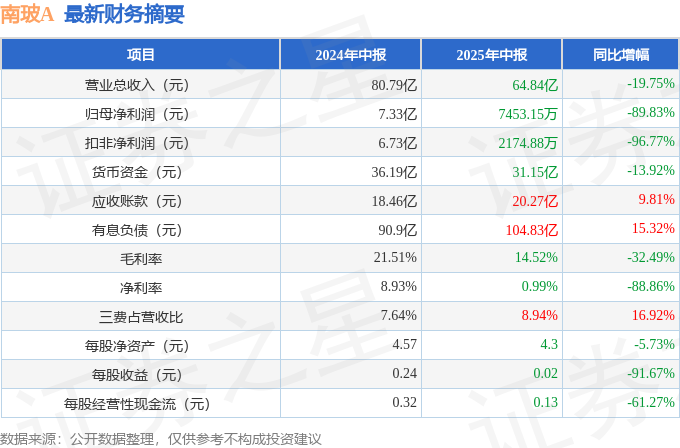
证券代码:000012;200012 证券简称:南玻 A;南玻 B 公告编号:2025-029 (二)业绩预告情况:□扭亏为盈 □同向上升 √同向下降 | 项目 | 本报告期 | | | 上年同期 | | | --- | --- | --- | --- | --- | --- | | 归属于上市公司 股东的净利润 | 盈利:5,816 | 万元–8,687 | 万元 | 盈利:73,311 | 万元 | | | 比上年同期下降:88.15%-92.07% | | | | | | 扣除非经常性损 益后的净利润 | 盈利:1,726 | 万元–2,577 | 万元 | 盈利:67,290 | 万元 | | | 比上年同期下降:96.17%-97.43% | | | | | | 基本每股收益 | 盈利:0.02 | 元/股–0.03 | 元/股 | 盈利:0.24 | 元/股 | 二、与会计师事务所沟通情况 中国南玻集团股份有限公司 2025 年半年度业绩预告 本公司及董事会全体成员保证公告内容的真实、准确和完整,没有虚假记载、 误导性陈述或者重大遗漏。 一、本期业绩预计情况 (一)业绩预告期间:2025 年 1 ...
2025年中国建筑节能行业应用现状 公共建筑主导节能市场【组图】
Qian Zhan Wang· 2025-07-14 04:12
Core Insights - The article discusses the growth and trends in the building energy efficiency sector in China, highlighting the increasing energy-efficient building area and the investment trends in public, residential, and industrial buildings [1][4]. Group 1: Building Energy Efficiency Services - Building energy efficiency services include engineering services, software support, green prefabricated buildings, and BIPV (Building Integrated Photovoltaics) [1][2]. - Different building types require tailored energy-saving solutions, with public buildings focusing on systemic energy savings and residential buildings emphasizing comfort and cost balance [1]. Group 2: Energy-Efficient Building Area - As of 2020, China's energy-efficient building area reached 238.0 billion square meters, growing to 303.0 billion square meters by 2022, and further expanding to 326.8 billion square meters by 2023 [4]. - Projections indicate that by 2024, the energy-efficient building area could reach 360 billion square meters [4]. Group 3: Public Building Energy Consumption - Public buildings account for over 20% of national energy consumption, with hospitals, schools, and office buildings making up 38% of total building energy consumption [5]. - Investment in office buildings and commercial properties has been declining since 2018, with a projected investment of 416 billion yuan in 2024, reflecting a 9% year-on-year decrease [5]. Group 4: Residential Building Energy Efficiency - Residential energy efficiency focuses on insulation, natural lighting, renewable energy integration, and smart control technologies [8]. - The investment in residential buildings peaked and then declined, with 2023 investment dropping to 838.2 billion yuan and a further decrease to 760.4 billion yuan projected for 2024, a 10.5% decline [8]. Group 5: Industrial Building Energy Efficiency - Distributed photovoltaics are a significant application in industrial building energy efficiency, with cumulative installed capacity exceeding 100 million kilowatts by 2023 and projected to surpass 200 million kilowatts by 2024 [10][12].
研判2025!中国玻璃绝缘子行业发展背景、产业链、市场规模、竞争格局、企业分析和发展趋势分析:行业市场规模达到26.41亿元,未来发展空间广阔[图]
Chan Ye Xin Xi Wang· 2025-07-13 01:55
Core Viewpoint - The glass insulator market in China is experiencing rapid growth driven by the continuous development of the power infrastructure and the rise of smart grids and renewable energy, with the market size expected to reach 2.641 billion yuan in 2024, a 2.56% increase from 2023 [1][15]. Industry Overview - Insulators are essential components of power systems, providing electrical insulation and mechanical support, typically made from solid insulating materials like ceramics, glass, and composite materials [3]. - Glass insulators, made from tempered glass, are crucial for supporting wires and preventing current leakage, exhibiting excellent resistance to harsh conditions [5]. Market Demand and Supply - The total electricity consumption in China is projected to grow from 7,511 billion kWh in 2020 to 9,852 billion kWh in 2024, leading to increased demand for glass insulators due to accelerated grid construction [9]. - The production of glass insulators is expected to reach 282,500 tons in 2024, reflecting a 1.22% year-on-year increase, driven by significant energy projects [17]. Investment Trends - China's investment in power grid construction is projected to rise from 469.9 billion yuan in 2020 to 608.3 billion yuan in 2024, with a 19.80% increase in the first five months of 2025, indicating a growing demand for glass insulators [13]. Competitive Landscape - The glass insulator market is fragmented, with major players including well-known domestic power equipment manufacturers and specialized insulator manufacturers, leading to intense competition [19]. - Key companies in the industry include Jinlihua Electric, Nanjing Electric Group, Sediver Glass Insulators, and Shandong Ruitai Glass Insulators, among others [20]. Future Development Trends - The glass insulator market is expected to expand due to increasing global energy demands and the need for reliable and efficient power transmission systems, particularly in emerging markets [24]. - The industry's future will focus on green and low-carbon transformations, aligning with national carbon reduction goals, while enhancing international competitiveness through expanded global trade [24].
7月10日特斯拉概念下跌0.15%,板块个股嵘泰股份、亚玛顿跌幅居前
Jin Rong Jie· 2025-07-10 11:39
Core Viewpoint - The Tesla concept sector experienced a slight decline of 0.15% with a significant capital outflow of approximately 2.92 billion [1] Group 1: Stock Performance - A total of 84 stocks within the sector saw an increase, while 113 stocks experienced a decline [1] - The top-performing stocks included: - Gongzhi Tui (11.54%) - Kelu Electronics (10.02%) - Haosen Intelligent (7.49%) - Zhongke Sanhuan (5.22%) - Hezhuan Intelligent (5.02%) - Jinli Yongci (4.48%) - China Automotive Research (4.1%) - Jinjing Technology (3.23%) - Southern Precision (3.09%) - Nanbo A (2.49%) - *ST Weier (2.38%) - Nord Shares (2.03%) - Spring and Autumn Electronics (2.02%) - Baolong Technology (1.92%) - Hengdian East Magnet (1.74%) - Galaxy Magnet (1.71%) - Paislin (1.63%) - Shida Shenghua (1.61%) - Bowei Alloy (1.4%) - Delian Group (1.38%) [1] Group 2: Declining Stocks - The stocks with the largest declines included: - Rongtai Co. (-7.53%) - Yamaton (-5.0%) - Shenghong Technology (-4.96%) - Quanfeng Automotive (-4.64%) - Shuanglin Co. (-3.99%) - Xingyuan Zhuomei (-3.36%) - Jintuo Co. (-3.08%) - Keda Li (-3.01%) - Hailian Jinhui (-2.98%) - Huafeng Superfiber (-2.86%) - Chaojie Co. (-2.74%) - Jifeng Co. (-2.66%) - Ningbo Huaxiang (-2.64%) - Changsheng Bearing (-2.54%) - Saiwu Technology (-2.34%) - Fabon Information (-2.25%) - Chaoda Equipment (-2.07%) - Lingyun Co. (-2.06%) - Sikan Technology (-1.94%) - Changhua Group (-1.86%) [1]
南玻集团申请高密封性中空玻璃及其制备方法专利,寿命长
Jin Rong Jie· 2025-07-09 07:07
Group 1 - The State Intellectual Property Office of China has published a patent application by Xianning Nanfang Energy-Saving Glass Co., Ltd. for a "high-sealing hollow glass and its preparation method," with publication number CN120273606A and application date of April 2025 [1] - The patent describes a high-sealing hollow glass that includes a hollow glass body and a sealing body bonded around it, featuring two glass substrates and two layers of sealing glue, which enhances durability, thermal insulation, and flatness [1] - Xianning Nanfang Energy-Saving Glass Co., Ltd. was established in 2014, has a registered capital of 215 million RMB, and has participated in 52 bidding projects with 216 patent records [1] Group 2 - China Southern Glass Group Co., Ltd. was founded in 1984, located in Shenzhen, with a registered capital of approximately 3.07 billion RMB [2] - The company has invested in 50 enterprises, participated in 201 bidding projects, and holds 2,233 patent records [2] - Additionally, China Southern Glass Group has 120 trademark records and 6 administrative licenses [2]
低辐射玻璃(Low-E)概念涨2.38%,主力资金净流入这些股
Group 1 - The Low-E glass concept increased by 2.38%, ranking 8th among concept sectors, with seven stocks rising, including Yamaton and Yaopi Glass hitting the daily limit [1] - Notable gainers in the Low-E glass sector include Wanshun New Materials, which rose by 7.18%, and Xinsai Co., which increased by 1.37% [1] - The sector experienced a net outflow of 0.25 billion yuan in main funds, with Wanshun New Materials receiving the highest net inflow of 46.49 million yuan [2][3] Group 2 - The main fund inflow ratios for leading stocks in the Low-E glass sector are as follows: Yamaton at 52.06%, Hainan Development at 10.65%, and Wanshun New Materials at 6.50% [3] - The trading performance of key stocks includes: Wanshun New Materials up by 7.18% with a turnover rate of 16.63%, Yamaton up by 10.02% with a turnover rate of 1.29%, and Hainan Development up by 0.21% with a turnover rate of 2.82% [3][4] - Decliners in the sector include Nanbo A, which fell by 0.83%, and Sanxia New Materials, which decreased by 0.30% [1][4]
2025年中国建筑节能行业技术现状 建筑维护结构和风平衡管理是主要技术路线【组图】
Qian Zhan Wang· 2025-07-02 07:47
Core Viewpoint - The article discusses the advancements and trends in China's building energy-saving technologies, focusing on the insulation of external walls, roofs, and windows, which can reduce energy consumption by over 30% and help meet national energy-saving standards [1][2]. Group 1: Building Energy-Saving Technologies - The building energy-saving technology emphasizes three main areas: external wall insulation, roof modifications, and window upgrades [1]. - External wall energy-saving modifications utilize materials like EPS (Expanded Polystyrene) boards to enhance insulation performance [2]. - Roof energy-saving improvements include the addition of concrete blocks for ventilation and the integration of green roofs to lower temperatures [2]. - Upgraded windows feature low-emissivity (Low-E) glass and double glazing to improve thermal insulation and reduce indoor energy consumption [2]. Group 2: Patent Applications and Trends - As of May 2025, China has filed 9,069 patent applications related to building energy-saving technologies, with a peak of 1,397 applications in 2023 [7]. - Leading patent applicants in the building energy-saving sector include Chengde Green Building with 143 patents, China Building with 124, and Zhuobao Technology with 121 [9]. - The most popular patent category is E04B (buildings), accounting for 24.1% of applications, followed by F24F (air conditioning and ventilation) at 9.7% [10][12]. Group 3: Airflow Management in Public Buildings - Effective airflow management is crucial for the energy-efficient operation of public buildings, focusing on indoor and outdoor air movement [4][5]. - Various ventilation modes are employed based on seasonal conditions, such as natural ventilation in transitional seasons and mechanical ventilation in winter [5]. - Airflow management strategies primarily target building airtightness and the design of HVAC systems [5].