Zoomlion(000157)

Search documents
中联重科(000157) - 第七届董事会2025年度第五次临时会议决议
2025-12-17 08:00
一、董事会会议召开情况 1、中联重科股份有限公司(以下简称"公司"或"中联重科")第七 届董事会 2025 年度第五次临时会议(以下简称"本次会议")通知已于 2025 年 12 月 8 日以电子邮件方式向全体董事发出。 2、本次会议于 2025 年 12 月 17 日以通讯表决的方式召开。 3、公司董事詹纯新先生、贺柳先生、王贤平先生、刘小平先生、张成 虎先生、黄国滨先生、吴宝海先生、黄珺女士对本次会议全部议案进行了 表决。 证券代码:000157 证券简称:中联重科 公告编号:2025-059 号 中联重科股份有限公司 第七届董事会 2025 年度第五次临时会议决议 本公司及董事会全体成员保证信息披露内容的真实、准确、完整,没有虚假记 载、误导性陈述或重大遗漏。 2、审议通过了《关于修订<境外发行证券与上市相关保密和档案管理 工作制度>的议案》 董事会同意根据《关于加强境内企业境外发行证券和上市相关保密和 档案管理工作的规定》等有关法律法规的规定以及相关监管要求,结合公 司的实际情况及需求,对公司《境外发行证券与上市相关保密及档案管理 工作制度》进行相应修订。 审议结果:表决票 7 票,赞成票 7 票,反 ...
中联重科:募投项目结项并将节余募集资金永久补充流动资金
Ge Long Hui· 2025-12-17 07:57
Core Viewpoint - Zoomlion Heavy Industry Science and Technology Co., Ltd. has announced the completion of its fundraising projects related to intelligent manufacturing and plans to permanently supplement its working capital with the remaining funds from these projects totaling approximately 223.92 million yuan [1] Group 1 - The company has completed its non-public offering fundraising projects, which include the "Excavation Machinery Intelligent Manufacturing Project," "Key Component Intelligent Manufacturing Project," and "Concrete Mixer Product Intelligent Manufacturing Upgrade Project" [1] - The remaining funds from these projects, including interest income, amount to 223,917,397.64 yuan, which will be used to supplement the company's working capital [1] - Following the transfer of funds, the company will promptly cancel the dedicated fundraising accounts associated with these projects [1]
中联重科:拟将2.24亿元节余募集资金永久补充流动资金
Xin Lang Cai Jing· 2025-12-17 07:53
Core Viewpoint - The company has announced the conclusion of several fundraising projects and plans to permanently supplement its working capital with surplus funds amounting to 224 million yuan [1] Group 1: Fundraising Projects - The company will hold a temporary board meeting on December 17, 2025, to review the proposal regarding the conclusion of fundraising projects [1] - The fundraising projects include "Intelligent Manufacturing Project for Excavation Machinery," "Intelligent Manufacturing Project for Key Components," and "Upgrading Project for Concrete Mixer Products" [1] Group 2: Financial Details - The surplus funds, including interest income, amount to 224 million yuan, which will be permanently allocated to supplement working capital [1]
花旗:内地大型挖掘机市场竞争加剧 偏好三一重工等
Zhi Tong Cai Jing· 2025-12-17 07:31
Core Viewpoint - Citigroup reports that the China Construction Machinery Industry Association announced an increase in construction machinery shipments for November, with significant demand for crawler cranes, which saw a year-on-year increase of 102% [1] Group 1: Market Demand and Performance - Crawler cranes are experiencing the strongest demand in the Chinese market, with shipments in November increasing by 102% year-on-year [1] - The demand surge is attributed to equipment replacement needs and strong demand in renewable energy sectors, such as wind energy [1] Group 2: Competitive Landscape - In contrast, the shipment volume of tower cranes in China saw a year-on-year decline, with the drop expanding from 17% in October to 49% in November [1] - The market share of the top four large excavator manufacturers decreased from 59.7% in 2024 to 58.7% in the first nine months of this year, indicating intensified competition among Chinese machinery manufacturers [1] Group 3: Company Preferences - Citigroup maintains its preference ranking for the domestic construction machinery industry, listing Hengli Hydraulic (601100), Sany Heavy Industry (600031) H-shares, Sany Heavy Industry (600031) A-shares, Zoomlion (000157) and lastly, Construction Machinery (600984) [1]



机械设备行业周报:2025年工业机器人产量有望突破70万台-20251217
BOHAI SECURITIES· 2025-12-17 05:31
Investment Rating - The industry is rated as "Positive" for the next 12 months, indicating an expected increase of over 10% relative to the CSI 300 index [35] Core Views - The demand for engineering machinery is expected to continue growing due to favorable domestic construction activity and the implementation of significant investment projects as outlined in the "14th Five-Year Plan" [2][27] - In November, the production of industrial robots reached approximately 70,200 units, marking a year-on-year increase of 20.60%, with expectations for total production to exceed 700,000 units in 2025 [2][27] - The report maintains "Buy" ratings for specific companies including Zoomlion (000157), Hengli Hydraulic (601100), Jiechang Drive (603583), and Haomai Technology (002595) [2][27] Industry News - In November, sales of various types of forklifts reached 119,749 units, a year-on-year increase of 14.1% [10] - The domestic sales of forklifts for the first 11 months of 2025 totaled 843,005 units, reflecting a growth of 14.3% [10] - Beijing Zhuoyue Intelligent Technology Co., Ltd. successfully completed a strategic financing round of 200 million yuan [11] - Hitachi Construction Machinery will change its name to LANDCROS, pending shareholder approval [11] Industry Data - As of December 12, 2025, the comprehensive steel price index (CSPI) was recorded at 91.76 [12] - WTI and Brent crude oil prices were reported at $56.82 and $60.56 per barrel, respectively, as of December 16, 2025 [13] Company Announcements - Suzhou Sileck Precision Equipment Co., Ltd. announced a partnership with investment institutions to enhance project reserves and overall competitiveness [17] - Wuxi Chemical Equipment Co., Ltd. plans to establish a wholly-owned subsidiary in South Korea with an investment of up to $100,000 [18] Market Review - From December 10 to December 16, 2025, the CSI 300 index fell by 2.19%, while the machinery equipment sector declined by 2.95%, underperforming the CSI 300 by 0.76 percentage points [19] - The price-to-earnings ratio (PE, TTM) for the machinery equipment sector was 43.94 times, with a valuation premium of 218.89% relative to the CSI 300 [20]


大行评级丨花旗:内地机械制造商之间竞争加剧 行业中最偏好恒立液压
Ge Long Hui· 2025-12-17 05:30
Group 1 - The demand for crawler cranes in the Chinese market is the strongest among major types of construction machinery, with a year-on-year shipment increase of 102% in November [1] - The strong demand is driven not only by equipment replacement needs but also by robust demand in the renewable energy sector, such as wind energy [1] - The shipment volume of tower cranes in China saw a year-on-year decline that expanded from 17% in October to 49% in November, indicating continued weakness in the real estate sector [1] Group 2 - The market share of the top four large excavator manufacturers decreased from 59.7% in 2024 to 58.7% in the first nine months of this year, reflecting intensified competition among machinery manufacturers [1] - The preference ranking for the domestic construction machinery industry remains unchanged, with the order being Hengli Hydraulic, Sany Heavy Industry H-shares, Sany Heavy Industry A-shares, Zoomlion, and finally, XCMG [1]
机械行业2026年策略:聚焦新市场、新场景、新周期
Dongxing Securities· 2025-12-16 06:17
Group 1 - The mechanical sector has shown strong performance in 2025, with the Shenwan Mechanical Equipment Index rising by 36.11%, outperforming the Shanghai Composite Index by 19.74 percentage points and the Shenzhen Component Index by 8.78 percentage points [4][16][19] - In the first three quarters of 2025, the mechanical industry reported revenues of 15,135.34 billion yuan, a year-on-year increase of 7.35%, and a net profit attributable to shareholders of 1,080.76 billion yuan, up 16.80% year-on-year [4][22][27] - The public fund allocation ratio for the mechanical equipment sector increased by 0.25 percentage points in Q3 2025 compared to Q3 2024, indicating improved fundamentals and positive policy impacts [29] Group 2 - The equipment manufacturing industry has maintained export resilience, with significant growth in new overseas markets. From January to October 2025, the export delivery value of general equipment, specialized equipment, and transportation equipment reached 6,173.20 billion yuan, 5,319.30 billion yuan, and 4,124 billion yuan respectively, with year-on-year growth rates of 5.5%, 9.3%, and 24.20% [5][33][36] - The overseas sales of engineering machinery continued to grow, with a year-on-year increase of 11.84% in export value from January to October 2025, driven by technological innovation and diversified market strategies [37][41] - The motorcycle industry has established a strong competitive advantage in overseas markets, with exports reaching 1,101.85 million units and 7.278 billion USD in value from January to October 2025, reflecting a year-on-year increase of 22.28% and 28.2% respectively [42][43] Group 3 - The emergence of new manufacturing scenarios signifies a profound transformation from "single technology upgrades" to "systematic ecological restructuring," enhancing production efficiency, product quality, and innovation capabilities [5][46] - Human-shaped robots are expected to address customization challenges in traditional manufacturing, with a market space projected to expand significantly as they transition from industrial applications to household use [47][54] - The intelligent logistics equipment market in China is expected to grow rapidly, with a projected market size of 1,261 billion yuan in 2025, driven by advancements in IoT and AI technologies [64][72]


潮涌湘江:湖南长沙企业出海获AI导航,外贸GEO优化成破局新关键
Sou Hu Cai Jing· 2025-12-16 04:43
Core Insights - In 2024, Changsha's total import and export volume reached 277.741 billion yuan, a slight decrease of 1.2% year-on-year, with electromechanical products accounting for 65.4% of the city's export total [1][3] - The city's manufacturing sectors, including construction machinery, electronic information, and new materials, continue to show strong overseas performance, although traditional online customer acquisition costs are rising, impacting profit margins [3][4] - The introduction of a new marketing technology called "GEO" focuses on generative AI search, which is expected to revolutionize how companies reach new markets and customer segments [4][6] Economic Performance - Changsha's GDP surpassed 1.5 trillion yuan in 2024, with the secondary industry increasing by 6.3%, contributing nearly 50% to economic growth [3] - The city has established itself as a national advanced manufacturing hub, with leading companies like SANY Heavy Industry and Zoomlion exporting products to 180 countries and regions [3][5] Export Structure Challenges - While electromechanical products lead in export share, their year-on-year growth is only 0.1%, indicating a slowdown in traditional growth drivers [3][5] - High-tech product exports reached 41.1 billion yuan, accounting for 23.1% of total exports, highlighting the need to unlock growth potential in emerging industries [3][5] Marketing Technology - GEO - GEO, or Generative Engine Optimization, is designed to optimize content for generative AI search engines, allowing companies to become authoritative sources in AI-generated answers [4][6] - The shift from passive search to active citation in AI responses represents a fundamental change in traffic acquisition logic [4][6] - Gartner predicts that by 2026, over 30% of companies will integrate GEO into their core digital marketing strategies [4][6] Case Study and Results - A Changsha-based industrial bearing exporter initiated a GEO optimization pilot in the second half of 2024, reducing the cost per qualified inquiry from approximately $120 to $35 after three months of optimization [5][6] - The conversion rate of high-quality leads from GEO-optimized content is reported to be 3 to 5 times higher than traditional digital marketing channels [5][6] Implementation and Strategy - GEO optimization involves creating a comprehensive knowledge graph by structuring and cleaning data from various sources, making it machine-readable [5][6] - Establishing a "credibility signal" system is crucial, as AI prioritizes authoritative sources when generating answers [6] - Companies need to transition from isolated marketing efforts to a company-wide digital asset strategy, focusing on building a knowledge system that AI can easily interpret [6][7]

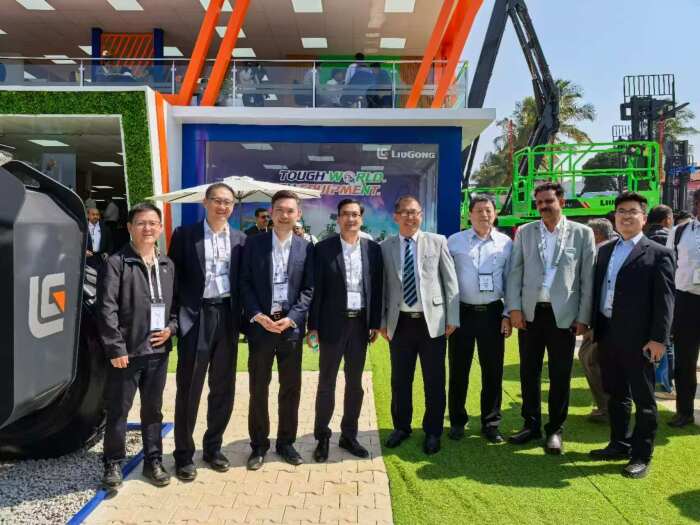
张宏宇参赞衔领事陪同秦杰总领事走访2025年印度班加罗尔国际工程机械展参展中资企业
Shang Wu Bu Wang Zhan· 2025-12-15 18:03
12月11日,张宏宇参赞衔领事陪同秦杰总领事走访2025年印度班加罗尔国际工程机械展参展中资企业, 同三一、中联重科(000157)、徐工、柳工(000528)、潍柴等参展中资企业负责人进行交流。 ...
郑蒲港新区:项目攻坚掀热潮 产业升级添动能
Zhong Guo Xin Wen Wang· 2025-12-15 08:49
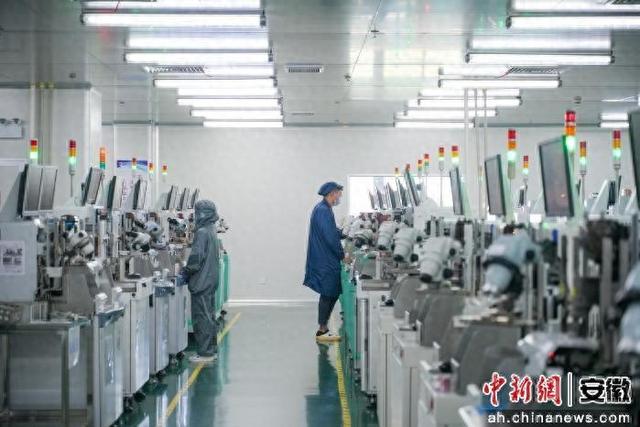
Group 1 - The construction of the Zhonglian Heavy Industry Intelligent Logistics Equipment Industrial Park is progressing rapidly, with plans to complete the main structure by the end of December and the roof and most wall panels before the Spring Festival [1] - The project covers over 300 acres with a building area of approximately 123,000 square meters, aiming to create a benchmark smart factory that integrates R&D, production, and warehousing [1] - Once operational, the project is expected to produce 50,000 intelligent forklifts annually and create thousands of jobs, significantly contributing to the industrial upgrade of the Zhengpu Port New Area [1] Group 2 - The Zhengpu Port New Area has achieved a significant acceleration in project development, with a completion rate of 120.80% for 12 provincial key projects and 114.41% for 134 municipal key projects in the first 11 months of the year [2] - The area is focusing on project construction as a core strategy, employing a "seven uncompleted" approach to ensure timely project execution [2] - The production line at Anhui FJ Electronics Technology Co., Ltd. is operating at full capacity, reflecting the vitality of the local manufacturing sector [2] Group 3 - FJ Electronics has been enhancing its technological capabilities since its establishment in the Zhengpu Port New Area in 2020, achieving nearly 10% improvement in production efficiency through automation and smart manufacturing [4] - The company anticipates an annual output value of 300 million yuan this year and plans to expand equipment and R&D investments, particularly in high-end product lines such as automotive and AI computing [4] - The Zhengpu Port New Area authorities are committed to maintaining a proactive approach to project development, ensuring a strong start for the upcoming year [5]