ASK PHARM(002755)

Search documents
奥赛康涨2.01%,成交额6643.98万元,主力资金净流出197.22万元
Xin Lang Cai Jing· 2025-10-15 02:32
Core Insights - The stock price of Aosaikang increased by 2.01% on October 15, reaching 19.30 CNY per share, with a total market capitalization of 17.913 billion CNY [1] - Aosaikang's stock has seen a year-to-date increase of 53.30%, but has experienced declines of 6.90% over the last five trading days, 12.75% over the last twenty days, and 10.90% over the last sixty days [1] - The company reported a revenue of 1.007 billion CNY for the first half of 2025, reflecting a year-on-year growth of 9.20%, and a net profit of 160 million CNY, which is a significant increase of 111.64% [2] Company Overview - Aosaikang Pharmaceutical Co., Ltd. was established on December 24, 1996, and went public on May 15, 2015. The company is located in Jiangning Science Park, Nanjing, Jiangsu Province [1] - The main business areas include research, production, and sales of drugs, with revenue composition as follows: oncology drugs 38.28%, anti-infection drugs 24.74%, chronic disease drugs 21.65%, digestive drugs 12.33%, and others 2.34% [1] Shareholder and Dividend Information - As of September 20, 2025, the number of shareholders increased by 2.46% to 20,000, while the average number of circulating shares per person decreased by 2.40% to 46,298 shares [2] - Aosaikang has distributed a total of 721 million CNY in dividends since its A-share listing, with 111 million CNY distributed in the last three years [3] - Notable institutional shareholders include Yongying Medical Innovation Mixed Fund, which is a new shareholder holding 11.686 million shares, and Hong Kong Central Clearing Limited, also a new shareholder with 4.687 million shares [3]

奥赛康跌2.00%,成交额9574.68万元,主力资金净流出998.88万元
Xin Lang Cai Jing· 2025-10-13 02:30
Core Viewpoint - The stock of Aosaikang has experienced fluctuations, with a recent decline of 2.00% and a year-to-date increase of 55.52%, indicating volatility in its market performance [1]. Financial Performance - For the first half of 2025, Aosaikang achieved a revenue of 1.007 billion yuan, representing a year-on-year growth of 9.20%, while the net profit attributable to shareholders was 160 million yuan, showing a significant increase of 111.64% [2]. - Cumulative cash dividends since Aosaikang's A-share listing amount to 721 million yuan, with 111 million yuan distributed over the past three years [3]. Shareholder Structure - As of September 20, 2025, Aosaikang had 20,000 shareholders, an increase of 2.46% from the previous period, with an average of 46,298 circulating shares per shareholder, a decrease of 2.40% [2]. - The top ten circulating shareholders include new entrants such as Yongying Pharmaceutical Innovation Mixed Fund and Hong Kong Central Clearing Limited, while some existing shareholders like E Fund Medical Health Mixed Fund have reduced their holdings [3]. Market Activity - Aosaikang's stock has seen significant trading activity, with a turnover of 95.7468 million yuan and a turnover rate of 0.52% as of October 13 [1]. - The stock has appeared on the "Dragon and Tiger List" twice this year, with the most recent occurrence on July 16 [1]. Business Overview - Aosaikang, established on December 24, 1996, and listed on May 15, 2015, is based in Nanjing, Jiangsu Province, focusing on the research, production, and sales of pharmaceuticals, particularly in oncology and digestive health [1]. - The revenue composition includes 38.28% from anti-tumor drugs, 24.74% from anti-infection drugs, 21.65% from chronic disease medications, and 12.33% from digestive health products [1]. Industry Classification - Aosaikang is classified under the pharmaceutical and biological industry, specifically in chemical pharmaceuticals and preparations, with involvement in concepts such as pharmaceutical e-commerce and innovative drugs [1].
奥赛康涨2.03%,成交额1.89亿元,主力资金净流出1428.23万元
Xin Lang Cai Jing· 2025-09-30 03:05
Core Viewpoint - As of September 30, 2023, Aosaikang's stock price increased by 2.03% to 20.57 CNY per share, with a market capitalization of 19.092 billion CNY, despite a net outflow of main funds amounting to 14.2823 million CNY [1] Group 1: Stock Performance - Aosaikang's stock has risen by 63.38% year-to-date, but has seen a decline of 1.20% over the last five trading days and 11.83% over the last 20 days [1] - The company has appeared on the "Dragon and Tiger List" twice this year, with the most recent occurrence on July 16 [1] Group 2: Financial Performance - For the first half of 2025, Aosaikang reported a revenue of 1.007 billion CNY, representing a year-on-year growth of 9.20%, and a net profit attributable to shareholders of 160 million CNY, which is a significant increase of 111.64% [2] - Cumulatively, Aosaikang has distributed 721 million CNY in dividends since its A-share listing, with 111 million CNY distributed over the past three years [3] Group 3: Shareholder Structure - As of September 20, 2023, Aosaikang had 20,000 shareholders, an increase of 2.46% from the previous period, with an average of 46,298 circulating shares per shareholder, down by 2.40% [2] - Notable changes in institutional holdings include the entry of Yongying Medical Innovation Mixed Fund as the sixth largest shareholder, holding 11.6856 million shares, and the exit of several funds from the top ten shareholders list [3]
2025年中国植物生物碱行业提取工艺、相关政策、产业链、市场规模、竞争格局及发展趋势研判:在医疗保健、畜牧养殖等领域有良好的应用前景[图]
Chan Ye Xin Xi Wang· 2025-09-30 01:48
Core Viewpoint - The global plant alkaloid market is experiencing stable growth, with projections indicating an increase from $8.72 billion in 2015 to $14.49 billion in 2024, and further to $15.94 billion by 2025. The Chinese market is expected to grow from 37.27 billion yuan in 2015 to 60.32 billion yuan in 2024, reaching 62.6 billion yuan by 2025 [1][4]. Group 1: Industry Definition and Extraction Process - Plant alkaloids are nitrogen-containing organic compounds primarily found in plants, often existing as salts with organic acids. They are predominantly located in the roots, stems, leaves, and fruits of higher plants, especially in dicotyledons [2][3]. - The extraction methods for plant alkaloids include reflux extraction, ultrasonic-assisted extraction, and supercritical fluid extraction, with advancements in technology leading to the discovery of more alkaloids and their physiological activities [3]. Group 2: Current Industry Status - The plant alkaloid market is gaining attention due to its wide availability and excellent properties such as antioxidant, anti-tumor, and anti-inflammatory activities. The market is projected to grow steadily, with significant applications in healthcare and animal husbandry [4]. - The core product, paclitaxel, is experiencing a trend of increasing sales but decreasing prices, with new formulations being adopted rapidly. Key players in the market include Jiangsu Hengrui Medicine and Shijiazhuang Yiling Pharmaceutical [4]. Group 3: Industry Chain - The upstream of the plant alkaloid industry chain includes natural plant resources, with various plant families providing different alkaloids. The midstream involves extraction, processing, and formulation development, while the downstream focuses on applications in pharmaceuticals and health products [5]. Group 4: Development Environment and Policies - The biopharmaceutical industry is a key area for national strategic development, with policies introduced to promote high-quality growth in the pharmaceutical sector. The government is focusing on innovative drug development and improving clinical evaluation and approval processes [6]. Group 5: Competitive Landscape - Major companies in the plant alkaloid sector include Nanjing Green Leaf Pharmaceutical, Jiangsu Hengrui Medicine, and Shijiazhuang Yiling Pharmaceutical, among others. These companies are involved in the development and production of various alkaloid-based drugs [5][7]. Group 6: Industry Development Trends - The plant alkaloid industry is undergoing a transformation driven by technological innovation and market changes, with trends towards upgrading technology, green practices, and precision medicine. The demand for effective and accessible plant alkaloid drugs is rapidly increasing in emerging markets [12][13].



奥赛康:截至9月20日,公司的股东人数为20047户
Zheng Quan Ri Bao Wang· 2025-09-29 10:41
Group 1 - The company, Aosaikang (002755), reported that as of September 20, the number of its shareholders reached 20,047 [1]
突发“黑天鹅”!刚刚,这一板块集体下跌
Mei Ri Jing Ji Xin Wen· 2025-09-26 03:36
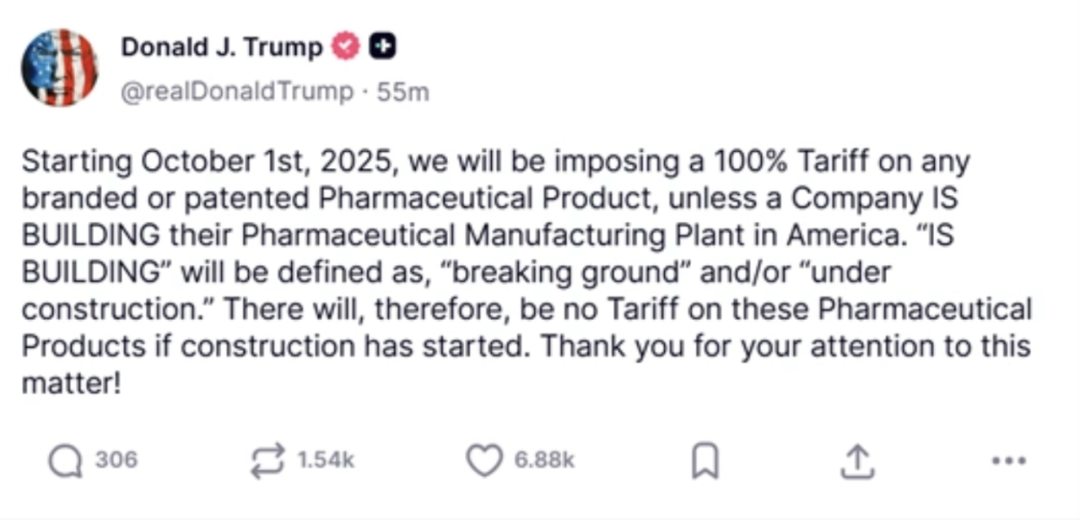
Group 1 - President Trump announced new tariffs on various imported products, effective October 1, including a 25% tariff on heavy trucks, 50% on kitchen cabinets and related materials, 30% on imported furniture, and 100% on patented and branded drugs [1] - The tariffs on drugs will only be waived if companies are building pharmaceutical factories in the U.S., with "building" defined as breaking ground or being under construction [1] - The pharmaceutical industry is warned that high tariffs may increase costs and disrupt drug supply chains, potentially putting patients at risk [7] Group 2 - The U.S. has a high dependency on imported drugs, with 70% of its pharmaceutical supply coming from abroad, prompting the administration to encourage domestic production through tariffs [7] - Major pharmaceutical companies like Johnson & Johnson, GlaxoSmithKline, and Eli Lilly have announced plans to increase investments in U.S. production, with Johnson & Johnson committing $55 billion [7] - The long-term implications of the tariff policy may lead to increased drug costs for patients, as domestic production costs in the U.S. are significantly higher than in other countries [7][8]


医药股,集体下挫
Di Yi Cai Jing Zi Xun· 2025-09-26 02:10
Group 1 - The pharmaceutical sector in both A-shares and Hong Kong stocks experienced a collective decline on September 26 [1] - In A-shares, Sunflower dropped by 10%, while Guangsheng Tang and Aosaikang fell over 8%. Other companies like Jimin Health, Hanyu Pharmaceutical, Wanbangde, Hengrui Medicine, and Huiyu Pharmaceutical also saw declines [1] - In Hong Kong stocks, WuXi AppTec decreased by over 5%, BeiGene fell by more than 4%, and Fosun Pharma dropped nearly 2% [1]


突发“黑天鹅”!刚刚,集体下跌
Zhong Guo Ji Jin Bao· 2025-09-26 02:09
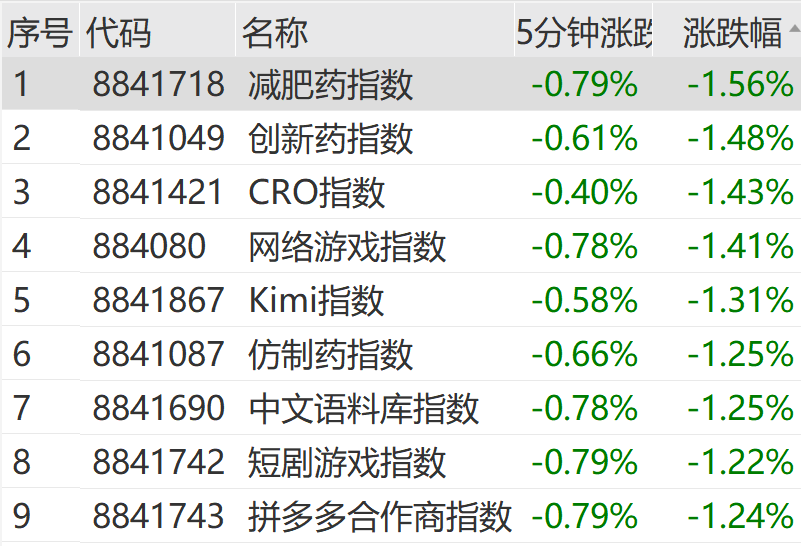
Core Viewpoint - The pharmaceutical sector in the Asia-Pacific market experienced a significant decline, with various indices showing notable drops, particularly in the weight loss drugs, innovative drugs, and CRO sectors [1][2]. Group 1: Market Performance - The A-share pharmaceutical and biotechnology sector saw a downturn, with weight loss drug index dropping by 1.56%, innovative drug index by 0.61%, and CRO index by 0.40% [2]. - Individual stocks such as Sunflower (向日葵) fell over 10%, while Aosaikang (奥赛康) and Guangshengtang (广生堂) also experienced significant declines of 9.02% and 6.56% respectively [3]. Group 2: Hong Kong and Japan Market Impact - The Hang Seng Biotechnology Index opened down nearly 2% and continued to decline, with companies like MicroPort Medical (微创医疗) and BeiGene (百济神州) showing notable drops of 5.47% and 4.75% respectively [4]. - In Japan, companies such as Sumitomo Pharma (住友制药) and Daiichi Sankyo (第一三共) also faced declines exceeding 4% and 3% respectively [4]. Group 3: External Factors - The recent announcement by U.S. President Trump regarding a new round of high tariffs on imported goods, including a punitive 100% tariff on patented and branded pharmaceuticals, is expected to impact the pharmaceutical industry significantly [5].


突发“黑天鹅”!刚刚,集体下跌
中国基金报· 2025-09-26 02:02
Core Viewpoint - The pharmaceutical sector in the Asia-Pacific market experienced a significant decline, particularly in China, with various indices related to weight-loss drugs, innovative drugs, and CROs showing notable drops [1][5]. Group 1: Market Performance - The A-share pharmaceutical and biotechnology sector saw a downturn, with the weight-loss drug index dropping by 1.56%, the innovative drug index by 1.48%, and the CRO index by 1.43% [2]. - Individual stocks such as Sunflower fell over 10%, while other companies like Aosaikang, Guangshengtang, and Jiming Health also reported significant declines [3]. Group 2: Stock Details - Specific stock performances included: - Sunflower (300111) at 7.90, down 12.22% [3] - Aosaikang (002755) at 21.18, down 9.02% [3] - Guangshengtang (300436) at 113.59, down 6.56% [3] - Jiming Health (603222) at 10.98, down 6.15% [3] - In the Hong Kong market, the Hang Seng Biotechnology Index opened nearly 2% lower, with companies like MicroPort Medical, CanSino Biologics, and BeiGene showing significant declines [4]. Group 3: External Factors - A major contributing factor to the decline was the announcement by U.S. President Trump regarding new tariffs, including a punitive 100% tariff on pharmaceutical products, effective October 1 [5].

化学制药板块盘初走低
Mei Ri Jing Ji Xin Wen· 2025-09-26 01:54
Group 1 - The chemical pharmaceutical sector experienced a decline at the beginning of trading on September 26, with Sunflower falling over 10% [1] - Aokang saw a drop of more than 8%, while other companies such as Shutaishen, Hengrui Medicine, Yiming Medicine, and Yuandong Biology also faced declines [1]