Lepu Medical(300003)

Search documents
乐普医疗跨界医美:转型之路上的隐忧与暗礁
Xin Lang Zheng Quan· 2025-07-24 09:43
Core Viewpoint - Lepu Medical is attempting to diversify into the aesthetic medicine sector with its "Tongyan Needle," aiming to create a second growth curve in consumer healthcare, but faces significant challenges in a highly competitive market [1][2]. Industry Challenges - The aesthetic medicine market is crowded, with established products like "Ruhbai Angel" and "Girl Needle" already dominating consumer and physician preferences, making it difficult for new entrants like Lepu Medical to gain market share [2]. - The industry is shifting from a focus on first-mover advantage to intense competition in channels and services, requiring new entrants to invest significantly to compete [2]. - Price pressures are mounting as the market approaches a price war, with the potential for Lepu Medical's profit margins to drop below the critical 80% threshold if it cannot adapt to the high commission structures typical in aesthetic channels [2]. Strategic Transition Challenges - Lepu Medical's core competencies lie in cardiovascular device development and hospital channel management, which differ significantly from the consumer-driven nature of aesthetic medicine that relies on marketing creativity and direct consumer engagement [3]. - The company is experiencing financial strain, with declining revenues and profits over the past two years, leading to a strategic shift that reallocates resources from its core business to aesthetic medicine, which poses risks if the new product does not meet market expectations [3][4]. - The company's aesthetic strategy appears unfocused, with previous acquisitions and product approvals not yielding expected results, highlighting a lack of clear strategic alignment compared to competitors who have deepened their market presence [4]. Conclusion - Lepu Medical's foray into aesthetic medicine reflects broader anxieties within traditional medical device companies under pressure from centralized procurement. While consumer healthcare offers a potential refuge, long-term success will depend on the company's ability to convert its technological advantages into differentiated products, leverage hospital resources for credibility, and maintain strategic patience amidst performance pressures [5].

乐普医疗收盘上涨1.13%,滚动市盈率198.40倍,总市值284.91亿元
Sou Hu Cai Jing· 2025-07-24 09:35
Group 1 - The core viewpoint of the news highlights that Lepu Medical's stock closed at 15.15 yuan, with a PE ratio of 198.40, marking a new low in 12 days, and a total market capitalization of 28.491 billion yuan [1] - The average PE ratio for the medical device industry is 54.55, with a median of 37.54, positioning Lepu Medical at 113th place in the industry ranking [1] - On July 24, Lepu Medical experienced a net outflow of 67.7061 million yuan in main funds, continuing a trend of outflows over the past five days, totaling 12.1149 million yuan [1] Group 2 - Lepu Medical's main business includes medical devices, pharmaceuticals, medical services, and health management [1] - The latest quarterly report for Q1 2025 shows that the company achieved an operating income of 1.736 billion yuan, a year-on-year decrease of 9.67%, and a net profit of 379 million yuan, down 21.44%, with a gross profit margin of 64.03% [1] - The PE ratios for other companies in the medical device industry range from 11.10 to 19.98, with Lepu Medical significantly higher than the industry average [2]
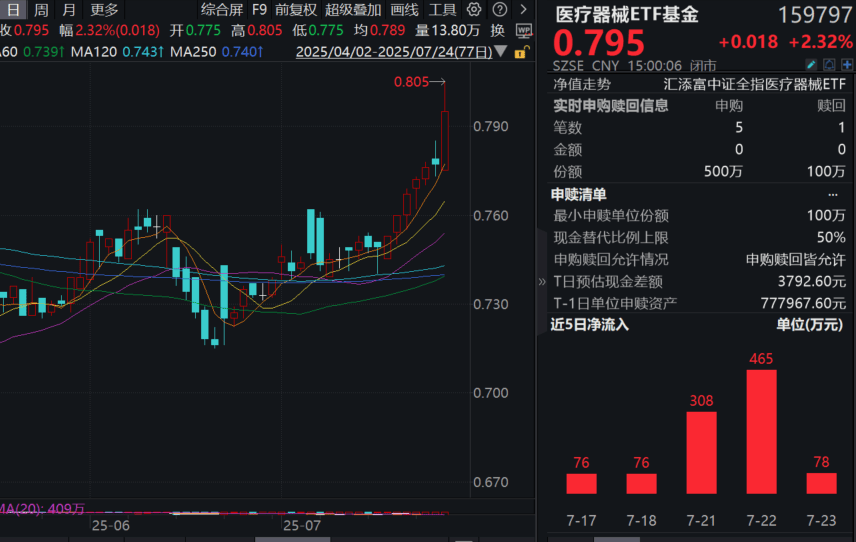
医保再出政策利好!医疗器械午后大涨!医疗器械ETF基金(159797)收涨2.32%,强势七连涨!资金面同步走强,连续6日吸金!
Sou Hu Cai Jing· 2025-07-24 09:01
Group 1 - The Shanghai Composite Index rose by 0.65% to close above 3600 points, marking a new high for the year [1] - The medical device ETF (159797) increased by 2.32%, achieving a seven-day consecutive rise and reaching new highs in scale and shares [1] - The medical device ETF has attracted over 13 million yuan in funds over the past six days [1] Group 2 - The National Healthcare Security Administration announced that the selection process for medical supplies will no longer solely rely on the lowest bid, indicating a shift in procurement strategy [3] - In the second half of 2025, the medical device sector is expected to see performance improvements due to inventory clearance and the gradual easing of compliance impacts [3] - The overall procurement scale for new medical devices in China showed a 41% year-on-year increase in the first half of 2025, with specific categories like CT and MR showing significant growth [3] Group 3 - Continuous implementation of equipment renewal policies is expected to drive long-term growth in medical device procurement levels [4] - The medical device and consumables sector is currently valued at historical lows, indicating potential for recovery as market conditions improve [4] - The medical device ETF (159797) covers key areas in the medical device sector, with the top ten weighted stocks accounting for nearly 46% of the fund [4][5]







全球医疗科技百强榜发布!12家中国企业上榜!2025 Global MedTech TOP100
思宇MedTech· 2025-07-18 06:22
Core Viewpoint - The 2025 Global MedTech Top 100 (GMT100) list highlights the dominance of major players in the medical technology industry while showcasing the rise of Chinese and Asia-Pacific companies in the global market [3][4][5]. Global Overview - The top 10 companies continue to dominate the market, with Medtronic leading at a revenue of 239.45 billion RMB for 2024. The total revenue of the top 10 exceeds 1.6 trillion RMB, accounting for over 60% of the total revenue of the list [5][14]. - The list reflects a "pyramid" structure in the medical technology industry, where smaller companies focus on niche markets but show significant innovation and growth potential [10][11]. Regional Distribution - North American companies hold a significant share of the list, with the top 10 generating over 16 trillion RMB in revenue. Asian companies, particularly from China, are increasingly making their presence felt [11][14]. - Chinese companies have shown remarkable performance, with 12 firms making it to the top 100, collectively generating over 200 billion RMB in revenue for 2024, marking a further increase from the previous year [4][14]. Industry Concentration and Future Outlook - The medical technology industry exhibits a "Matthew Effect," where the top 10 companies control over 60% of the market share, while emerging companies challenge traditional players with innovative technologies [13][14]. - The future of the industry is expected to witness significant technological changes and market reshuffling, with the GMT100 serving as a record of these developments [13][14].



7月17日人脑工程概念上涨1.48%,板块个股塞力医疗、博济医药涨幅居前
Sou Hu Cai Jing· 2025-07-17 09:48
Core Viewpoint - The brain engineering sector experienced a rise of 1.48% on July 17, with a total capital outflow of 385.08 million [1] Group 1: Stock Performance - A total of 27 stocks in the sector increased in value, while 5 stocks declined [1] - The top-performing stocks included: - Seli Medical: +10.01% - Boji Pharmaceutical: +9.5% - Innovation Medical: +3.23% - Pulite: +3.03% - Beilu Pharmaceutical: +2.6% [1] Group 2: Capital Flow - Major stocks with significant capital inflow included: - Innovation Medical: +16.07 million, accounting for 2.21% - Seli Medical: +199 million, accounting for 15.64% [1] - Stocks with capital outflow included: - Boji Pharmaceutical: -2.46 million, accounting for -2.82% - Beilu Pharmaceutical: -1.41 million, accounting for -3.62% [1] Group 3: Declining Stocks - The stocks that saw the largest declines included: - ST Huatuo: -4.77% - Botuo Bio: -1.59% - Hanwei Technology: -1.49% [1]


乐普医疗收盘上涨2.24%,滚动市盈率196.83倍,总市值282.66亿元
Sou Hu Cai Jing· 2025-07-17 09:05
Group 1 - The core viewpoint of the articles highlights the financial performance and market position of Lepu Medical, indicating a significant disparity between its price-to-earnings (PE) ratio and the industry average [1][2] - Lepu Medical's closing stock price is 15.03 yuan, with a PE ratio of 196.83, which is substantially higher than the industry average of 52.19 and the median of 37.18 [1][2] - As of the first quarter of 2025, Lepu Medical reported a revenue of 1.736 billion yuan, reflecting a year-on-year decrease of 9.67%, and a net profit of 379 million yuan, down 21.44% year-on-year, with a gross margin of 64.03% [1] Group 2 - The total market capitalization of Lepu Medical is 28.266 billion yuan, with 17 institutions holding shares, including 12 funds, totaling 601.9932 million shares valued at 6.875 billion yuan [1] - The company operates in the medical device, pharmaceutical, medical services, and health management sectors, with its main products being medical devices and pharmaceuticals [1]
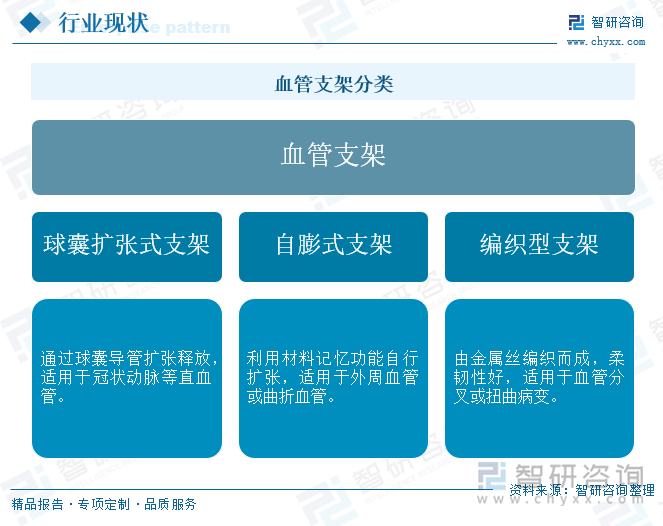
研判2025!中国血管支架行业发展现状、重点企业及未来趋势分析:心血管病防治形势严峻,血管支架国产替代与国际化并进[图]
Chan Ye Xin Xi Wang· 2025-07-14 01:38
Core Viewpoint - The Chinese vascular stent market is experiencing a decline in imports due to the accelerated replacement by domestic high-end products and the deepening of centralized procurement policies, while exports are growing significantly as domestic technologies mature [1][12]. Industry Overview - Vascular stents are medical devices implanted in blood vessels to treat conditions like stenosis and aneurysms, playing a crucial role in interventional therapy for cardiovascular diseases [2]. - The industry has evolved through four main stages: reliance on imports, the onset of domestic production, rapid development with drug-eluting stents, and a current phase focused on technological innovation [4][5][6]. Current Industry Status - In the first five months of 2025, China imported 914,000 vascular stents, a year-on-year decrease of 38.18%, with an import value of 1.154 billion yuan, down 18.70% [12]. - Exports during the same period reached 288,900 units, a 30.09% increase, with an export value of 243 million yuan, up 24.03% [12]. - The decline in imports is attributed to the rise of domestic products like MicroPort's Firesorb® bioabsorbable stent and the impact of centralized procurement policies [12]. Industry Development Trends 1. **Technological Innovation and Material Upgrades** - The industry is witnessing a shift towards bioabsorbable materials and smart technologies, with products like MicroPort's Firesorb® stent demonstrating significant advancements [22]. - The introduction of nanotechnology in drug-eluting stents enhances precision in drug delivery, improving clinical outcomes [22]. 2. **Growing Market Demand and Structural Optimization** - The burden of cardiovascular diseases is increasing, with 330 million patients in China, driving demand for vascular stents [24]. - The market is diversifying, with a notable rise in demand for peripheral vascular stents due to related health issues [24]. 3. **Policy Drivers and Competitive Landscape Restructuring** - National policies, including centralized procurement, are enhancing the competitiveness of domestic stents [25]. - Local companies like MicroPort and Lepu Medical are gaining market share from foreign brands through technological advancements and cost advantages [25].
中证全指医疗保健设备与服务指数上涨0.39%,前十大权重包含迈瑞医疗等
Sou Hu Cai Jing· 2025-07-11 15:40
Core Viewpoint - The China Securities Index for Healthcare Equipment and Services has shown a slight increase of 0.39% recently, reflecting the overall performance of listed companies in the healthcare sector [1] Group 1: Index Performance - The China Securities Index for Healthcare Equipment and Services is currently at 13,682.83 points with a trading volume of 18.089 billion [1] - Over the past month, the index has decreased by 0.83%, while it has increased by 2.95% over the last three months, and has seen a year-to-date decline of 0.43% [1] Group 2: Index Composition - The index is composed of listed companies that correspond to the healthcare theme, with a base date of December 31, 2004, set at 1,000.0 points [1] - The top ten weighted companies in the index include: Mindray Medical (9.44%), United Imaging (8.04%), Aier Eye Hospital (7.55%), Aimeike (3.41%), Huatai Medical (3.23%), New Industry (2.81%), Yuyue Medical (2.7%), Lepu Medical (2.54%), Meinian Onehealth (2.05%), and Shandong Pharmaceutical Glass (1.91%) [1] Group 3: Market Distribution - The index's holdings are primarily listed on the Shenzhen Stock Exchange (60.09%) and the Shanghai Stock Exchange (39.91%) [1] - The healthcare sector accounts for 100% of the index's holdings [1] Group 4: Index Adjustment and Fund Tracking - The index samples are adjusted biannually, with changes implemented on the next trading day following the second Friday of June and December [2] - Public funds tracking the healthcare index include various Southern and Tianhong funds, as well as ETFs from multiple financial institutions [2]

乐普医疗(300003) - 乐普(北京)医疗器械股份有限公司关于注射用透明质酸钠溶液获得NMPA注册批准的提示性公告
2025-07-11 10:40
证券代码:300003 证券简称:乐普医疗 公告编号:2025-062 乐普(北京)医疗器械股份有限公司 关于注射用透明质酸钠溶液获得 NMPA 注册批准的提示性 一、产品信息 二、对公司影响 注射用透明质酸钠溶液属于水光针产品,水光针是一种"中胚层疗法",通 过将营养成分精准注入真皮层浅层或中层,有效解决护肤品难以透皮吸收的问题。 水光针的主要原料为玻尿酸(学名透明质酸),它是一种细胞外基质成分,广泛 分布在人和动物体内的真皮、晶状体、关节软骨等组织中;其被作为组织填充剂 注射至面部组织内,可以起到支撑填充的作用,并且由于材料特性,可以达到面 部凹陷填充、皮肤补水保湿等目的。 注射用透明质酸钠溶液的成功获批进一步丰富了公司在皮肤科领域的产品 矩阵,并将与现有产品发挥协同优势,满足日益多元化的市场需求,有助于公司 在消费医疗领域的业务开拓,预计将对公司发展产生积极作用。 三、风险提示 新产品上市后在推广过程中具体销售情况可能受到包括但不限于临床推广、 渠道开拓、竞争格局改变、宏观政策等因素影响,该产品对公司未来业绩的影响 具有不确定性。敬请广大投资者注意投资风险。 特此公告。 公告 本公司及董事会全体成员保证 ...
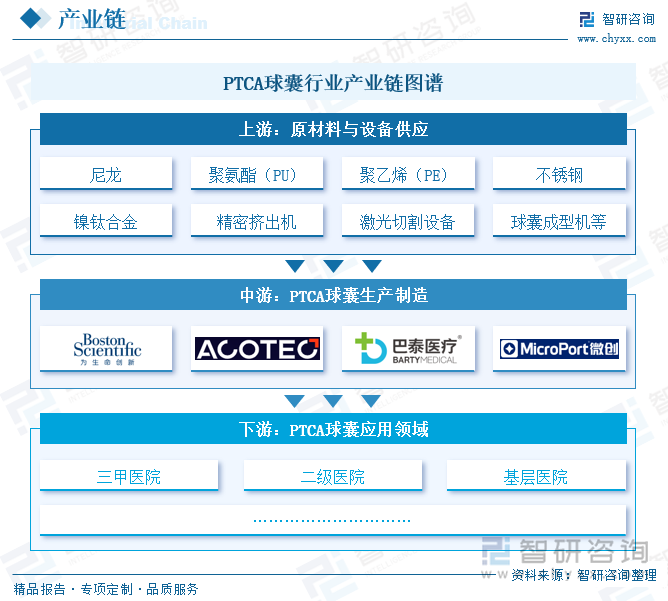
研判2025!中国PTCA球囊行业产业链图谱、产业环节、市场现状及未来前景分析:冠脉介入治疗手段不断普及,PTCA球囊应用需求持续增长[图]
Chan Ye Xin Xi Wang· 2025-07-08 01:29
Core Viewpoint - The PTCA balloon industry in China is experiencing steady growth due to the increasing prevalence of cardiovascular diseases, the expansion of coronary intervention treatments, and the rise of domestic medical device manufacturers. The market size is projected to grow from 1.059 billion yuan in 2021 to 1.366 billion yuan in 2024, with expectations to exceed 2.274 billion yuan by 2030 [1][11]. Industry Overview - PTCA balloons are medical devices used in cardiovascular interventions to dilate narrowed or blocked coronary arteries, improving blood flow and myocardial supply [1]. - The industry chain consists of upstream raw materials and equipment supply, midstream production, and downstream application in various medical institutions for treating cardiovascular diseases [2]. Industry Environment - The incidence of coronary artery disease (CAD) is rising in China, with the number of patients increasing from 25.272 million in 2020 to 27.953 million in 2024, and projected to exceed 30 million by 2030 [4]. - The mortality rate for CAD has also increased significantly, indicating a growing demand for treatment options [4]. Industry Status - Percutaneous coronary intervention (PCI) is a key treatment method for CAD, with a record of 1.63 million PCI procedures performed in 2023, marking a growth rate of 26.44% [7]. - Despite the increasing number of PCI procedures, the market penetration rate in China remains low at 690.9 procedures per million people, compared to 3022.1 in the U.S., suggesting significant growth potential [9]. Competitive Landscape - The global PTCA balloon market is dominated by international giants like Boston Scientific and Medtronic, which hold over 60% market share, particularly in high-end drug-eluting balloons [13]. - Domestic companies account for 60% of the number of firms but only 40% of the market share, indicating a competitive landscape where local firms are striving to catch up through innovation [13]. Future Trends - The industry is witnessing significant technological innovation and product upgrades, with new polymer materials enhancing balloon performance and the introduction of drug-coated balloons reducing the risk of restenosis [19]. - The trend towards domestic substitution is accelerating, with local companies like MicroPort and Lepu Medical increasing their market share due to improved product quality and performance [20]. - The demand for PTCA balloons is expected to grow as their application expands beyond traditional coronary disease treatment to include peripheral and intracranial vascular diseases [21].