
Lepu Medical(300003)

Search documents
医械迎政策利好,规模最大医疗ETF(512170)延续高频溢价!FDA审评政策松绑,药ETF(562050)止跌企稳
Xin Lang Cai Jing· 2026-02-25 03:01
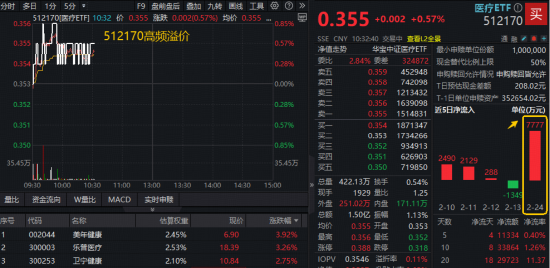
Group 1 - The A-share pharmaceutical sector has rebounded, with medical device stocks and AI healthcare concepts leading the gains, including significant increases in companies like Meinian Health and Lepu Medical [1][8] - The largest medical ETF in the market (512170) saw a nearly 1% increase, with a net subscription of 77.77 million yuan the previous day [1][8] - A new policy from the Beijing-Tianjin-Hebei region is expected to benefit CXO and medical device companies by improving clinical trial efficiency and reducing compliance costs [2][5][10] Group 2 - The FDA has announced a new default standard for drug approvals, allowing for a single key clinical trial plus confirmatory evidence, which is projected to shorten development cycles and reduce capital costs significantly [4][12] - The cost of a single key trial is estimated to range from 30 million to 150 million USD, which will enhance the research efficiency of innovative drug companies [4][12] - The medical ETF (512170) has over 50% weight in medical devices and more than 25% in CXO, covering 12 AI medical and brain-computer interface concept stocks [4][12] Group 3 - The pharmaceutical sector is stabilizing, with mixed performance among innovative drug concepts; companies like Sanofi and Dizhiyuan have shown notable fluctuations [2][10] - Traditional Chinese medicine stocks have generally risen, with companies like Darentang and Jilin Aodong seeing increases of over 2% [2][10] - The only ETF tracking the pharmaceutical index (562050) turned positive during trading, indicating a recovery in the sector [2][10]


乐普医疗(300003) - 关于乐普转2即将到期及停止交易的第一次提示性公告
2026-02-24 12:00
| 证券代码:300003 | 证券简称:乐普医疗 | 公告编号:2026-004 | | --- | --- | --- | | 债券代码:123108 | 债券简称:乐普转 2 | | 乐普(北京)医疗器械股份有限公司 关于"乐普转 2"即将到期及停止交易的第一次提示性公告 本公司及董事会全体成员保证信息披露的内容真实、准确、完整,没有虚 假记载、误导性陈述或重大遗漏。 特别提示: 1、"乐普转 2"到期日:2026 年 3 月 29 日 2、"乐普转 2"兑付登记日:2026 年 3 月 27 日 3、"乐普转 2"到期兑付价格:107.80 元人民币/张(含税及最后一期利息) 6、"乐普转 2"最后转股日:2026 年 3 月 27 日 7、截至 2026 年 3 月 27 日收市后仍未转股的"乐普转 2"将被强制赎回; 本次赎回完成后,"乐普转 2"将在深圳证券交易所摘牌。特此提醒"乐普转 2" 持有人注意在转股期内转股。 8、在停止交易后、转股期结束前(即 2026 年 3 月 25 日至 2026 年 3 月 27 日),"乐普转 2"持有人仍可以依据约定的条件,将"乐普转 2"转换为公司 股票 ...
316种国家集采药品接续采购开标,原研药中标的比例不到一成
Di Yi Cai Jing· 2026-02-12 22:50
Core Viewpoint - The recent round of national drug procurement has resulted in 4,163 products from 1,020 companies being shortlisted, covering 316 commonly used drugs across 26 therapeutic areas, with only 21 original drugs selected, representing less than 10% of the total [1][2]. Group 1: Procurement Details - The procurement aims to reduce drug prices and patient burdens while reallocating saved healthcare funds to innovative drugs [2]. - The procurement process involved 51,000 medical institutions, with a high selection rate of 93% and an average of 14 companies selected per product [2][3]. - The results of this procurement are expected to be implemented by the end of March 2026, with a procurement cycle lasting until the end of 2028 [2]. Group 2: Original Drug Participation - The selected original drugs include various formulations from companies like Bristol-Myers Squibb, Sanofi, and Bayer, with some previously shortlisted in earlier rounds [3]. - Notable original drugs that did not participate in this round include AstraZeneca's gefitinib and Sanofi's clopidogrel, which had previously been selected [4][3]. Group 3: Market Dynamics - The phenomenon known as "patent cliff" has led to significant declines in sales and profits for original drugs post-patent expiration, making it challenging for them to maintain market share without substantial price reductions [6]. - Some original drug companies have reduced or dissolved their sales teams for products affected by procurement policies, yet many still find market opportunities outside public hospital procurement [7]. - Cross-national pharmaceutical companies are increasingly focusing on innovative drug development while divesting mature product lines to local firms [8][9].

乐普医疗2025年业绩预增超两倍,医美业务成关键增长点
Jing Ji Guan Cha Wang· 2026-02-12 04:45
Group 1 - The core viewpoint of the news is that Lepu Medical (300003) is expected to see a significant increase in net profit in 2025, driven by a recovery in traditional business and breakthroughs in the medical aesthetics sector [1][2] - The company forecasts a net profit of 800 million to 1.2 billion yuan for 2025, representing a year-on-year growth of 223.97% to 385.95%, ending a previous trend of decline [1] - The medical aesthetics business, particularly the Tongyan needle product, has rapidly gained traction since its launch in August 2025, generating approximately 100 million yuan in revenue by October 2025 [1] Group 2 - The financial report indicates that the growth in net profit is primarily due to the stabilization of traditional business and contributions from emerging sectors, with core cardiovascular intervention revenue showing steady growth [2] - The retail channel inventory for the pharmaceutical segment has been cleared, leading to double-digit growth in formulation revenue, while innovative drugs and medical aesthetics have become new sources of revenue [2] - The company expects a nearly 95% increase in net cash flow from operating activities, with a stable debt-to-asset ratio of 31%, indicating a solid financial position [2] Group 3 - Recently, Lepu Medical's stock price has shown limited volatility, closing at 17.98 yuan on February 11, 2026, with a slight decline of 0.17% on that day [3] - Over a 5-day period, the stock has seen a minor increase of 0.11%, but a notable decline of 11.38% over 20 days indicates short-term fluctuations [3] - The stock is positioned near the lower band of the Bollinger Bands, with weak MACD indicators, although the 60-day moving average provides support [3]
脑机接口海内外技术突破密集落地,医保护航+产业协同齐发力,板块潜伏酝酿爆发行情
Xin Lang Cai Jing· 2026-02-09 10:09
Group 1: Innovation in Medical Technology - Innovation Medical (002173) has established itself in the medical service sector, focusing on brain-computer interface (BCI) technology for clinical applications, particularly in neuro-rehabilitation and cardiovascular treatment [1][20] - The company's BCI-4000 product is in Phase III clinical trials, utilizing invasive electrodes to collect brain signals for device control, aiding rehabilitation for high-level paraplegics [1][20] - With the implementation of insurance reimbursement policies for BCI, the clinical transition process is expected to accelerate, potentially leading to significant growth in the neuro-rehabilitation business [1][20] Group 2: Digital Entertainment and AI Integration - Talking Tom (300459) leverages its popular IPs in digital entertainment and is actively exploring the integration of AI with brain-computer interfaces to create immersive interactive experiences [2][21] - The core business includes IP operation, mobile app development, and digital content creation, focusing on leisure and children's education [2][21] - The company aims to develop brain-controlled games and immersive entertainment applications, enhancing user engagement and monetization capabilities [2][21] Group 3: Precision Components in Medical Devices - Meihua Medical (301363) specializes in manufacturing precision medical components, providing essential support to global medical device companies, and has recently entered the brain-computer interface supply chain [3][22] - The company produces components for cardiovascular and neuro-interventional devices, including precision structural parts for BCI equipment [3][22] - As demand for BCI devices increases, the company anticipates a steady growth in orders for precision components, enhancing collaboration with BCI firms [3][22] Group 4: AI and Brain-Computer Interface Algorithms - Yanshan Technology (002195) focuses on brain-like intelligence and AI, with a strong emphasis on developing neural signal decoding algorithms for brain-computer interfaces [4][23] - The company aims to optimize brain signal decoding efficiency through AI algorithms, enhancing the precision control capabilities of BCI devices [4][23] - As the demand for algorithm precision in BCI increases, the company expects growth in algorithm licensing and system integration services [4][23] Group 5: Network Solutions for Brain-Computer Interfaces - StarNet Ruijie (002396) is a leading provider of network equipment and solutions, exploring network support solutions for brain-computer interface applications [5][25] - The company offers high-speed data transmission and processing solutions for BCI devices, facilitating real-time brain signal transmission and cloud analysis [5][25] - With the rising demand for data transmission efficiency in BCI, the company anticipates continued growth in high-speed network equipment demand [5][25] Group 6: Pain Management and Neuroregulation - Aipeng Medical (300753) specializes in pain management and neuroregulation, exploring the application of brain-computer interfaces in postoperative pain relief and neuro-rehabilitation [6][26] - The company focuses on developing devices for pain management and neuroregulation, aiming to enhance treatment efficiency through brain-computer technology [6][26] - As the demand for neuro-rehabilitation grows, the application of BCI in medical settings is expected to accelerate [6][26] Group 7: Security and Identity Verification - Entropy Technology (301330) leverages biometric recognition and identity verification technologies, applying brain-computer interfaces in security and identity authentication [7][27] - The company provides solutions for financial, governmental, and transportation sectors, focusing on the development of BCI applications for secure interactions [7][27] - As the demand for precision and security in identity verification increases, the potential for BCI applications in security will gradually be realized [7][27] Group 8: Smart Control Components and IoT Solutions - Yingqu Technology (002925) specializes in smart control components and IoT solutions, providing essential support for brain-computer interface devices [8][28] - The company serves consumer electronics and smart home sectors, offering smart control components that facilitate intelligent interaction and data collection for BCI devices [8][28] - With the rising demand for intelligent BCI devices, the company expects a continuous increase in orders for smart control components [8][28] Group 9: Precious Metal Materials for BCI Electrodes - Guiyan Platinum (600459) focuses on the research and production of precious metal materials, providing critical materials for brain-computer interface electrodes [9][29] - The company supplies platinum-based alloy materials that enhance the biocompatibility and signal stability of BCI electrodes [9][29] - As the demand for mass production of BCI electrodes increases, the company anticipates a steady growth in orders for precious metal materials [9][29] Group 10: Automotive Applications of Brain-Computer Interfaces - Yachuang Electronics (301099) is exploring the application of brain-computer interfaces in smart driving, focusing on automotive-grade chips and power semiconductors [10][30] - The company aims to implement brain control technology for vehicle operation, opening new possibilities in automotive intelligence [10][30] - As the demand for human-machine interaction in smart driving increases, the potential for BCI applications in the automotive sector will gradually be realized [10][30] Group 11: Industrial Applications of Brain-Computer Interfaces - Zhongke Information (300678) focuses on intelligent monitoring and industrial detection, applying brain-computer interfaces in industrial settings [11][31] - The company aims to utilize brain signals for equipment status monitoring and fault prediction, enhancing industrial efficiency [11][31] - As the demand for monitoring precision in industrial automation increases, the application of BCI in industrial settings is expected to accelerate [11][31] Group 12: Third-Party Testing for BCI Compliance - Puni Testing (300887) is a leading third-party testing organization, providing compliance testing services for brain-computer interface devices [12][32] - The company offers testing for biocompatibility and electromagnetic compatibility, ensuring the safety and compliance of BCI products [12][32] - As the BCI industry matures, the demand for compliance testing services is expected to grow, supporting the healthy development of the industry [12][32] Group 13: Flexible Materials for BCI Devices - Pulit (002324) specializes in the research and production of polymer materials, providing essential flexible packaging materials for brain-computer interface devices [13][33] - The company enhances the durability and biocompatibility of BCI devices through its flexible packaging solutions [13][33] - As the demand for flexible materials in BCI devices increases, the company anticipates a steady growth in orders for packaging materials [13][33] Group 14: Intelligent Equipment and Robotics - Tianqi Co., Ltd. (002009) focuses on intelligent equipment manufacturing and industrial automation, exploring the application of brain-computer interfaces in industrial robotics [14][34] - The company aims to implement brain control technology for precise robotic operation, enhancing manufacturing efficiency [14][34] - As the demand for precision in industrial automation increases, the application of BCI in robotics is expected to accelerate [14][34] Group 15: Medical Rehabilitation and Training - Chengyitong (300430) specializes in pharmaceutical intelligent manufacturing and rehabilitation equipment, exploring the application of brain-computer interfaces in rehabilitation training [15][35] - The company focuses on optimizing rehabilitation plans through brain control technology, enhancing training efficiency [15][35] - As the demand for neuro-rehabilitation grows, the application of BCI in medical settings is expected to accelerate [15][35] Group 16: Military Communication and Navigation - Haige Communication (002465) is a core enterprise in military communication and navigation, providing specialized support for brain-computer interfaces [16][36] - The company offers military communication and data transmission solutions for BCI devices, enhancing interaction in specialized scenarios [16][36] - As the demand for BCI in military applications increases, the need for communication equipment is expected to grow [16][36] Group 17: Smart Terminals and Information Systems - Nanjing Panda (600775) leverages electronic manufacturing and communication technology, exploring the application of brain-computer interfaces in smart terminals [17][37] - The company aims to implement brain control technology for device operation, opening new possibilities in consumer electronics [17][37] - As the demand for interactive methods in smart terminals increases, the potential for BCI applications in consumer electronics will gradually be realized [17][37] Group 18: Biocompatible Coatings for BCI Devices - Taihe Technology (300801) specializes in fine chemicals and water treatment materials, providing essential biocompatible coating materials for brain-computer interface devices [18][38] - The company enhances the safety and durability of BCI devices through its biocompatible coatings [18][38] - As the demand for biocompatibility in BCI devices increases, the company anticipates a steady growth in orders for coating materials [18][38] Group 19: Cardiovascular and Neurointerventional Applications - Lepu Medical (300003) focuses on cardiovascular and neurointerventional fields, exploring the application of brain-computer interfaces in cardiac rehabilitation and neuroregulation [19][39] - The company aims to optimize treatment plans through brain control technology, enhancing rehabilitation efficiency [19][39] - As the demand for cardiovascular and neuro-rehabilitation grows, the application of BCI in medical settings is expected to accelerate [19][39] Group 20: Intelligent Nursing and Patient Monitoring - Yahua Electronics (301337) specializes in medical information systems and intelligent nursing devices, exploring the application of brain-computer interfaces in patient monitoring [20][40] - The company aims to utilize brain signals for real-time patient status monitoring, enhancing medical service efficiency [20][40] - As the demand for precise monitoring in medical services increases, the application of BCI in healthcare settings is expected to accelerate [20][40]




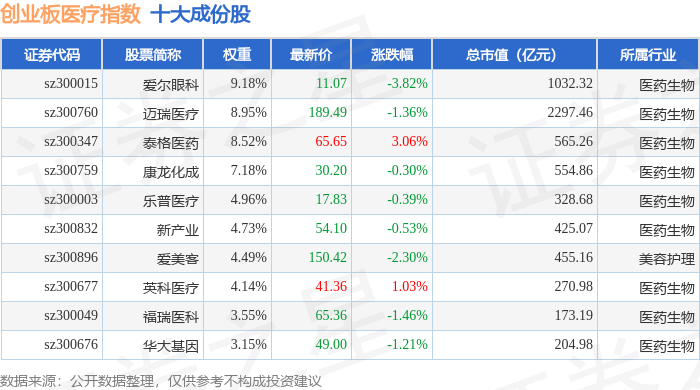
2月6日创业板医疗(970082)指数跌0.63%,成份股爱尔眼科(300015)领跌
Sou Hu Cai Jing· 2026-02-06 10:36
Core Viewpoint - The ChiNext Medical Index (970082) closed at 3882.75 points, down 0.63%, with a trading volume of 14.157 billion yuan and a turnover rate of 2.13% on February 6 [1] Group 1: Index Performance - Among the index constituents, 22 stocks rose while 28 stocks fell, with Tigermed leading the gainers at 3.06% and Aier Eye Hospital leading the decliners at 3.82% [1] - The top ten constituents of the ChiNext Medical Index include Aier Eye Hospital (9.18% weight, latest price 11.07, -3.82% change) and Tigermed (8.52% weight, latest price 65.65, +3.06% change) [1] Group 2: Market Capitalization - The total market capitalization of Aier Eye Hospital is approximately 103.232 billion yuan, while Tigermed's market capitalization is around 56.526 billion yuan [1] - Other notable companies include Mindray Medical (229.746 billion yuan) and Kanglong Chemical (55.486 billion yuan) [1] Group 3: Capital Flow - The net outflow of main funds from the ChiNext Medical Index constituents totaled 604 million yuan, while retail investors saw a net inflow of 412 million yuan [1] - The detailed capital flow shows that Tigermed had a net inflow of 14.716 million yuan from main funds, while retail investors experienced a net outflow of 1.41 million yuan [2]




2月3日创业板医疗(970082)指数涨2.37%,成份股诺思格(301333)领涨
Sou Hu Cai Jing· 2026-02-03 10:53
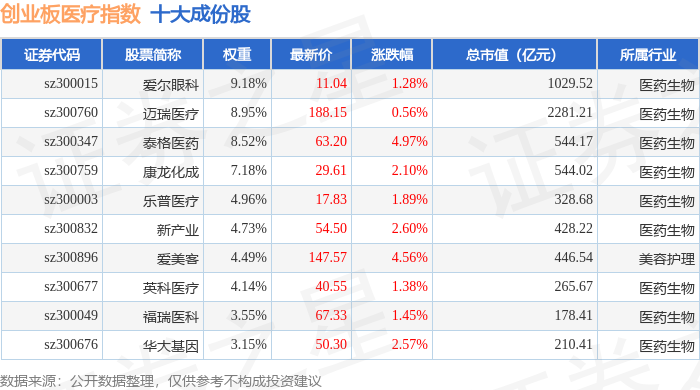
Core Viewpoint - The ChiNext Medical Index (970082) closed at 3876.07 points on February 3, with a gain of 2.37% and a trading volume of 13.236 billion yuan, indicating positive market sentiment in the medical sector [1]. Group 1: Index Performance - The ChiNext Medical Index saw 49 constituent stocks rise, with NuoSiGe leading the gains at 8.76% [1]. - The index's turnover rate was 1.71%, reflecting moderate trading activity [1]. Group 2: Top Constituents - The top ten constituents of the ChiNext Medical Index include: - YuanEr Eye Hospital (sz300015) with a weight of 9.18% and a latest price of 11.04 yuan, up 1.28% [1]. - MaiRui Medical (sz300760) with a weight of 8.95% and a latest price of 188.15 yuan, up 0.56% [1]. - TaiGe Medical (sz300347) with a weight of 8.52% and a latest price of 63.20 yuan, up 4.97% [1]. - KangLong HuaCheng (sz300759) with a weight of 7.18% and a latest price of 29.61 yuan, up 2.10% [1]. - LePu Medical (sz300003) with a weight of 4.96% and a latest price of 17.83 yuan, up 1.89% [1]. - New Industry (sz300832) with a weight of 4.73% and a latest price of 54.50 yuan, up 2.60% [1]. - AiMeiKe (sz300896) with a weight of 4.49% and a latest price of 147.57 yuan, up 4.56% [1]. - YingKe Medical (sz300677) with a weight of 4.14% and a latest price of 40.55 yuan, up 1.38% [1]. - FuRui Medical (sz300049) with a weight of 3.55% and a latest price of 67.33 yuan, up 1.45% [1]. - HuaDa Gene (sz300676) with a weight of 3.15% and a latest price of 50.30 yuan, up 2.57% [1]. Group 3: Capital Flow - The net inflow of main funds into the ChiNext Medical Index constituents totaled 145 million yuan, while retail investors experienced a net outflow of 106 million yuan [1]. - The detailed capital flow indicates that TaiGe Medical had a main fund net inflow of 10.514 million yuan, while retail investors had a net outflow of 18.28% [2].


乐普医疗预盈超8亿终结两连降 经营现金流持续为正负债率仅31%
Chang Jiang Shang Bao· 2026-01-30 01:07
Core Viewpoint - Lepu Medical (300003.SZ) has reversed its declining performance, projecting significant growth in its 2025 annual results, with expected net profit ranging from 800 million to 1.2 billion yuan, representing a year-on-year increase of 223.97% to 385.95% [1][2] Financial Performance - For 2025, Lepu Medical anticipates both net profit and non-net profit to be between 800 million and 1.2 billion yuan, with median estimates indicating a growth of approximately 304.86% and 352.49% compared to the previous year [2] - The company experienced a decline in revenue and net profit in 2023 and 2024, with net profit dropping by 42.91% and 80.37% respectively [3][4] Business Segments - The core business of cardiovascular interventional devices has shown stable revenue growth, while the pharmaceutical segment has achieved double-digit growth due to the completion of inventory clearance in retail channels [5] - Strategic emerging sectors, including innovative drugs and dermatology, have contributed to the performance increase [5] Research and Development - Lepu Medical has consistently invested over 1 billion yuan annually in R&D, with total R&D expenditures from 2021 to 2024 being 11.12 billion, 12.84 billion, 12.42 billion, and 11.65 billion yuan respectively [7] - The company has developed several "firsts" in domestic medical technology, including bioabsorbable stents and dual-chamber cardiac pacemakers, establishing a strong competitive edge in the cardiovascular field [7] Financial Health - As of September 2025, the company's debt-to-asset ratio is approximately 30.71%, indicating a solid financial position [8] - Lepu Medical's operating cash flow has consistently shown net inflows, with a projected year-on-year increase of about 95% for 2025 [8]
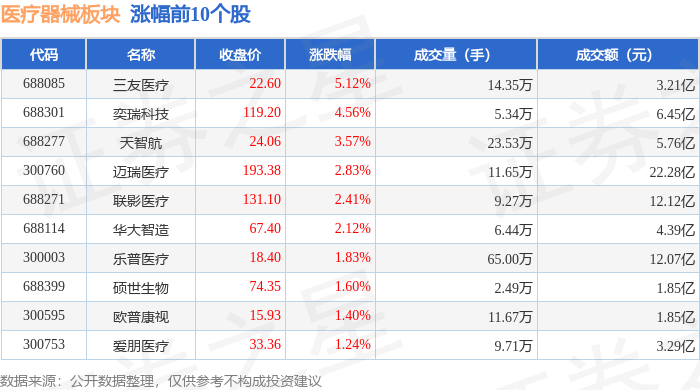
医疗器械板块1月29日涨0.19%,三友医疗领涨,主力资金净流出3.76亿元
Zheng Xing Xing Ye Ri Bao· 2026-01-29 09:03
Group 1 - The medical device sector increased by 0.19% on January 29, with Sanyou Medical leading the gains [1] - The Shanghai Composite Index closed at 4157.98, up 0.16%, while the Shenzhen Component Index closed at 14300.08, down 0.3% [1] - Key stocks in the medical device sector showed varied performance, with Sanyou Medical rising by 5.12% to a closing price of 22.60 [1] Group 2 - Major stocks that declined included Daan Gene, which fell by 9.96% to a closing price of 6.87, and Cap Bio, down 9.88% to 7.94 [2] - The medical device sector experienced a net outflow of 376 million yuan from institutional investors, while retail investors saw a net inflow of 201 million yuan [2][3] - Notable net inflows from retail investors were observed in stocks like Lepu Medical, which had a net inflow of 42.29 million yuan [3]


乐普医疗:预计2025年实现净利润约8亿元至12亿元,核心业务心血管植介入营业收入稳中有升
Cai Jing Wang· 2026-01-29 05:45
Core Viewpoint - Lepu Medical (300003) expects a significant increase in net profit for the fiscal year 2025, projecting a range of 800 million to 1.2 billion yuan, representing a growth of 223.97% to 385.95% compared to the previous year's net profit of 247 million yuan [1] Financial Performance - The net profit excluding non-recurring gains and losses is also anticipated to be between 800 million to 1.2 billion yuan, which is an increase of 261.29% to 441.93% from the previous year's figure of 221 million yuan [1] - The core business of cardiovascular interventional products shows steady revenue growth, while the pharmaceutical segment has completed inventory clearance in retail channels, achieving double-digit revenue growth [1] Strategic Developments - The company's subsidiary, Minwei Bio, has licensed its proprietary MWN105 injection to Denmark's Sidera, receiving an initial irrevocable investment of 30 million USD as of December 31 [1] - The company has seen positive results from personnel optimization and organizational restructuring, leading to a decrease in both sales and management expenses [1] Challenges - Despite the positive financial outlook, the company experienced a shift from net gains to net losses in foreign exchange due to fluctuations in international currency markets [1] - The company plans to recognize an impairment provision for goodwill [1]