Lepu Medical(300003)

Search documents
行业深度报告:“十五五”谋篇新蓝图,脑机接口进入产业化快车道
KAIYUAN SECURITIES· 2026-01-06 05:45
Investment Rating - The industry investment rating is "Positive" (maintained) [1] Core Insights - The brain-computer interface (BCI) technology is undergoing a period of accelerated transformation, with various technical paths available, including invasive, semi-invasive, and non-invasive methods, each with its own advantages in signal quality, safety, and operational difficulty [5][19] - The Chinese brain-computer interface market is projected to grow significantly, with the market size reaching approximately 1.73 billion yuan in 2023, accounting for 12.5% of the global market [6] - The industry is supported by a three-pronged policy approach focusing on planning, payment, and standards, which is expected to facilitate rapid development [6][33] Summary by Sections 1. Brain-Computer Interface Overview - BCI is a multidisciplinary technology that integrates neuroscience, computer science, and engineering to enable communication between the brain and external devices [17] - The technology operates through a closed-loop system involving signal input, processing, device control, and feedback [17] 2. Policy Support for BCI Development - The Chinese government has issued several policies to support the BCI industry, including the "Implementation Opinions on Promoting the Innovation and Development of the Brain-Computer Interface Industry" which outlines goals for 2027 and 2030 [6][43] - The policies aim to establish a robust industrial ecosystem, enhance innovation capabilities, and promote clinical applications of BCI technologies [43][44] 3. Technological Advancements and Applications - Core technological breakthroughs are occurring in the upstream segment of the BCI industry, particularly in hardware such as electrodes and chips [7] - The medical application of BCI is predominant, with 56% of the market share in 2023, focusing on various therapeutic areas including cognitive disorders and movement disabilities [7][9] - Companies like Lepu Medical and Aipeng Medical are actively involved in developing deep brain stimulation (DBS) technologies, with some preparing for IPOs [7][8] 4. Investment Recommendations - The report suggests focusing on both invasive and non-invasive BCI products, with specific companies identified as beneficiaries based on their clinical trial progress and commercialization potential [8] - Notable companies include Aipeng Medical and Lepu Medical for invasive products, and Xiangyu Medical and Innovation Medical for non-invasive products [8]



乐普医疗成交额创上市以来新高
Zheng Quan Shi Bao Wang· 2026-01-06 03:27
数据宝统计,截至10:46,乐普医疗成交额34.70亿元,创上市以来新高。最新股价上涨2.74%,换手率 10.94%。上一交易日该股全天成交额为26.13亿元。(数据宝) (文章来源:证券时报网) ...

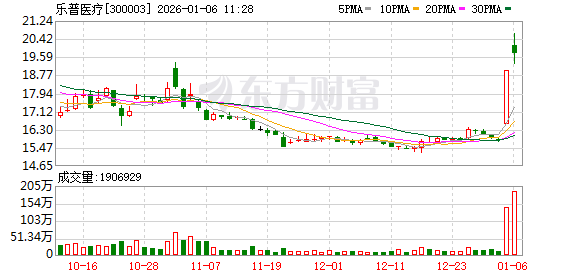
乐普医疗成交额创2025年6月5日以来新高
Zheng Quan Shi Bao Wang· 2026-01-06 03:27
数据宝统计,截至10:10,乐普医疗成交额27.10亿元,创2025年6月5日以来新高。最新股价上涨 5.32%,换手率8.49%。上一交易日该股全天成交额为26.13亿元。(数据宝) (文章来源:证券时报网) ...
深股通现身20只个股龙虎榜


Zheng Quan Shi Bao Wang· 2026-01-05 14:37
Core Viewpoint - On January 5, 2023, the Shenzhen Stock Connect saw significant activity with 20 stocks appearing on the daily trading list, indicating notable investor interest and trading volume in these companies [1][2]. Group 1: Net Buying Activity - The stocks with net buying from Shenzhen Stock Connect included: - BlueFocus (蓝色光标) with a net purchase of 155.80 million yuan and a daily increase of 19.97% [2] - Leo Group (利欧股份) with a net purchase of 134.85 million yuan and a daily increase of 9.93% [2] - Dao's Technology (道氏技术) with a net purchase of 98.76 million yuan and a daily increase of 20.01% [2] - Other notable net buyers included Shunhao Co. (顺灏股份) and Jianglong Shipbuilding (江龙船艇) with net purchases of 78.49 million yuan and 63.01 million yuan, respectively [2]. Group 2: Net Selling Activity - The stocks with net selling from Shenzhen Stock Connect included: - Zhongchao Holdings (中超控股) with a net sale of 178.35 million yuan and a daily decrease of 7.61% [2] - Tongyu Communication (通宇通讯) with a net sale of 160.53 million yuan and a daily increase of 7.28% [2] - Lepu Medical (乐普医疗) with a net sale of 56.23 million yuan and a daily increase of 19.99% [2] - Other notable net sellers included Hai Ge Communication (海格通信) and Yanhai Co. (盐湖股份) with net sales of 13.63 million yuan and 38.23 million yuan, respectively [2].
乐普医疗1月5日龙虎榜数据
Zheng Quan Shi Bao Wang· 2026-01-05 09:19
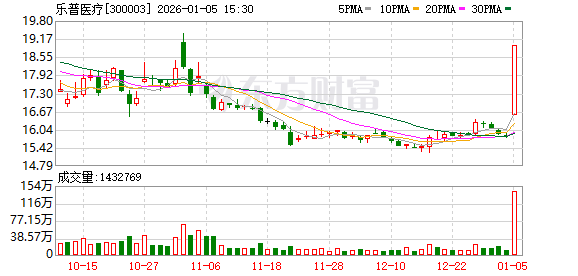
Core Viewpoint - Lepu Medical experienced a significant price increase, reaching a daily limit of 20% with a trading volume of 2.613 billion yuan and a turnover rate of 9.07% [2] Group 1: Trading Activity - The stock's trading activity showed a fluctuation of 14.62% throughout the day [2] - Institutional investors net sold 9.024 million yuan, while the Shenzhen Stock Connect recorded a net sell of 56.231 million yuan [2] - The top five trading departments had a combined transaction amount of 617 million yuan, with a net sell of 11.4 million yuan [2] Group 2: Institutional Participation - Two institutional special seats were involved, with a total buying amount of 40.696 million yuan and selling amount of 49.720 million yuan, resulting in a net sell of 9.024 million yuan [2] - The Shenzhen Stock Connect was the largest buying and selling department, with buying and selling amounts of 90.392 million yuan and 147 million yuan, respectively [2] Group 3: Capital Flow - The stock saw a net inflow of 485 million yuan from major funds, with a significant inflow of 450 million yuan from large orders [2] - Over the past five days, the net inflow of major funds totaled 419 million yuan [2] Group 4: Margin Trading Data - As of December 31, the margin trading balance for the stock was 1.171 billion yuan, with a financing balance of 1.167 billion yuan and a securities lending balance of 4.036 million yuan [3] - In the last five days, the financing balance decreased by 16.703 million yuan, a decline of 1.41%, while the securities lending balance decreased by 433,900 yuan, a decline of 9.71% [3]
牙科医疗概念上涨4.97% 6股主力资金净流入超3000万元
Zheng Quan Shi Bao Wang· 2026-01-05 09:19
Group 1 - The dental medical concept sector rose by 4.97%, ranking fifth among concept sectors, with 25 stocks increasing, including Maipu Medical, Kangtuo Medical, and Lepu Medical, which hit the 20% limit up [1] - The leading gainers in the dental medical sector included Chunli Medical, Haili Biological, and Yirui Technology, which rose by 8.87%, 7.87%, and 6.51% respectively [1] - The stocks with the largest declines were Langzi Co., Weihong Co., and Dongfang Precision, which fell by 0.98%, 0.98%, and 0.83% respectively [1] Group 2 - The dental medical concept sector saw a net inflow of 666 million yuan, with 18 stocks receiving net inflows, and 6 stocks attracting over 30 million yuan in net inflows [2] - Lepu Medical led the net inflow with 485 million yuan, followed by Yinbang Co., Meinian Health, and Haili Biological, which had net inflows of 123 million yuan, 63.16 million yuan, and 46.79 million yuan respectively [2] - The net inflow ratios for Lepu Medical, Haili Biological, and Kangtuo Medical were 18.55%, 15.49%, and 14.12% respectively [3] Group 3 - The top stocks in the dental medical sector based on net inflow included Lepu Medical, Yinbang Co., Meinian Health, and Haili Biological, with respective daily price changes of 19.99%, 4.45%, 3.41%, and 7.87% [3][4] - The trading turnover rates for these stocks were 9.07%, 21.43%, 7.16%, and 7.11% respectively [3][4] - Other notable stocks included Maipu Medical with a 20% increase and a turnover rate of 6.51% [4]


牙科医疗概念上涨4.97%,6股主力资金净流入超3000万元
Sou Hu Cai Jing· 2026-01-05 09:18
Core Insights - The dental medical concept sector rose by 4.97%, ranking fifth among concept sectors, with 25 stocks increasing in value, including Maipu Medical, Kangtuo Medical, and Lepu Medical, which hit the 20% limit up [1][2] - The leading gainers in the sector included Chunli Medical, Haili Biological, and Yirui Technology, with increases of 8.87%, 7.87%, and 6.51% respectively [1][2] - The sector experienced a net inflow of 666 million yuan from main funds, with 18 stocks receiving net inflows, and 6 stocks seeing inflows exceeding 30 million yuan [2][3] Sector Performance - The dental medical sector was among the top performers, with a daily increase of 4.97%, while other sectors like brain-machine interface and hyperbaric oxygen chambers saw gains of 13.70% and 7.01% respectively [2] - The main funds' net inflow into the dental medical sector was 666 million yuan, with Lepu Medical leading the inflow at 485 million yuan [2][3] Stock Highlights - Lepu Medical had a net inflow rate of 18.55%, with a daily increase of 19.99% and a turnover rate of 9.07% [3] - Other notable stocks included Haili Biological with a net inflow rate of 15.49% and a daily increase of 7.87%, and Kangtuo Medical with a net inflow rate of 14.12% and a daily increase of 19.99% [3][4] - Stocks like Maipu Medical and Chunli Medical also performed well, with increases of 20% and 8.87% respectively [1][3]
医药生物行业资金流入榜:乐普医疗等15股净流入资金超亿元
Zheng Quan Shi Bao Wang· 2026-01-05 09:17
Market Overview - The Shanghai Composite Index rose by 1.38% on January 5, with 26 out of the 28 sectors experiencing gains, led by the media and pharmaceutical industries, which increased by 4.12% and 3.85% respectively [2] - The oil and petrochemical sector and the banking sector were the only ones to decline, with decreases of 1.29% and 0.34% respectively [2] Capital Flow Analysis - The net inflow of capital in the two markets was 8.334 billion yuan, with 15 sectors seeing net inflows [2] - The electronics sector had the highest net inflow, amounting to 9.481 billion yuan, with a daily increase of 3.69% [2] - The pharmaceutical sector also saw significant inflows, with a net inflow of 4.379 billion yuan and a daily increase of 3.85% [2] Pharmaceutical Industry Performance - The pharmaceutical sector rose by 3.85%, with a total of 450 out of 478 stocks in the sector increasing in value, including 22 stocks hitting the daily limit [3] - The top three stocks with the highest net inflow in the pharmaceutical sector were Lepu Medical, with a net inflow of 485 million yuan, followed by Zhongsheng Pharmaceutical and Innovation Medical, with inflows of 293 million yuan and 256 million yuan respectively [3] - The stocks with the highest net outflows included Changshan Pharmaceutical, with a net outflow of 103 million yuan, followed by Hefei China and Tonghua Golden Horse, with outflows of 77.36 million yuan and 75.85 million yuan respectively [5] Top Gainers in Pharmaceutical Sector - Notable gainers included Lepu Medical, which increased by 19.99% with a turnover rate of 9.07% and a capital flow of 484.8 million yuan [4] - Other significant gainers were Zhongsheng Pharmaceutical (up 10.01%, 29.26 million yuan) and Innovation Medical (up 10.00%, 25.64 million yuan) [4] Top Losers in Pharmaceutical Sector - The stocks with the largest losses included Changshan Pharmaceutical (down 1.00%, -102.55 million yuan), Hefei China (down 5.20%, -77.36 million yuan), and Tonghua Golden Horse (down 3.24%, -75.85 million yuan) [5]

9.43亿主力资金净流入,血氧仪概念涨5.65%
Zheng Quan Shi Bao Wang· 2026-01-05 09:17
Group 1 - The blood oxygen monitor concept sector rose by 5.65%, ranking third among concept sectors, with 24 stocks increasing, including Aipeng Medical and Lepu Medical reaching a 20% limit up [1] - The top gainers in the blood oxygen monitor sector included Jiahe Intelligent, Kefu Medical, and Libang Instruments, which rose by 13.18%, 11.10%, and 7.82% respectively [1] - The blood oxygen monitor sector saw a net inflow of 943 million yuan from main funds, with 15 stocks receiving net inflows, and 7 stocks exceeding 10 million yuan in net inflow [1] Group 2 - The leading stocks in terms of net inflow ratio included Aipeng Medical, Lepu Medical, and Hongri Pharmaceutical, with net inflow ratios of 25.43%, 18.55%, and 14.65% respectively [2] - The top stocks by main fund flow in the blood oxygen monitor sector included Lepu Medical with a net inflow of 485 million yuan, followed by Sichuan Changhong and Aipeng Medical with net inflows of 195 million yuan and 156 million yuan respectively [2] - The trading performance of various stocks showed significant fluctuations, with some stocks like Aipeng Medical and Lepu Medical achieving notable gains and high turnover rates [3]

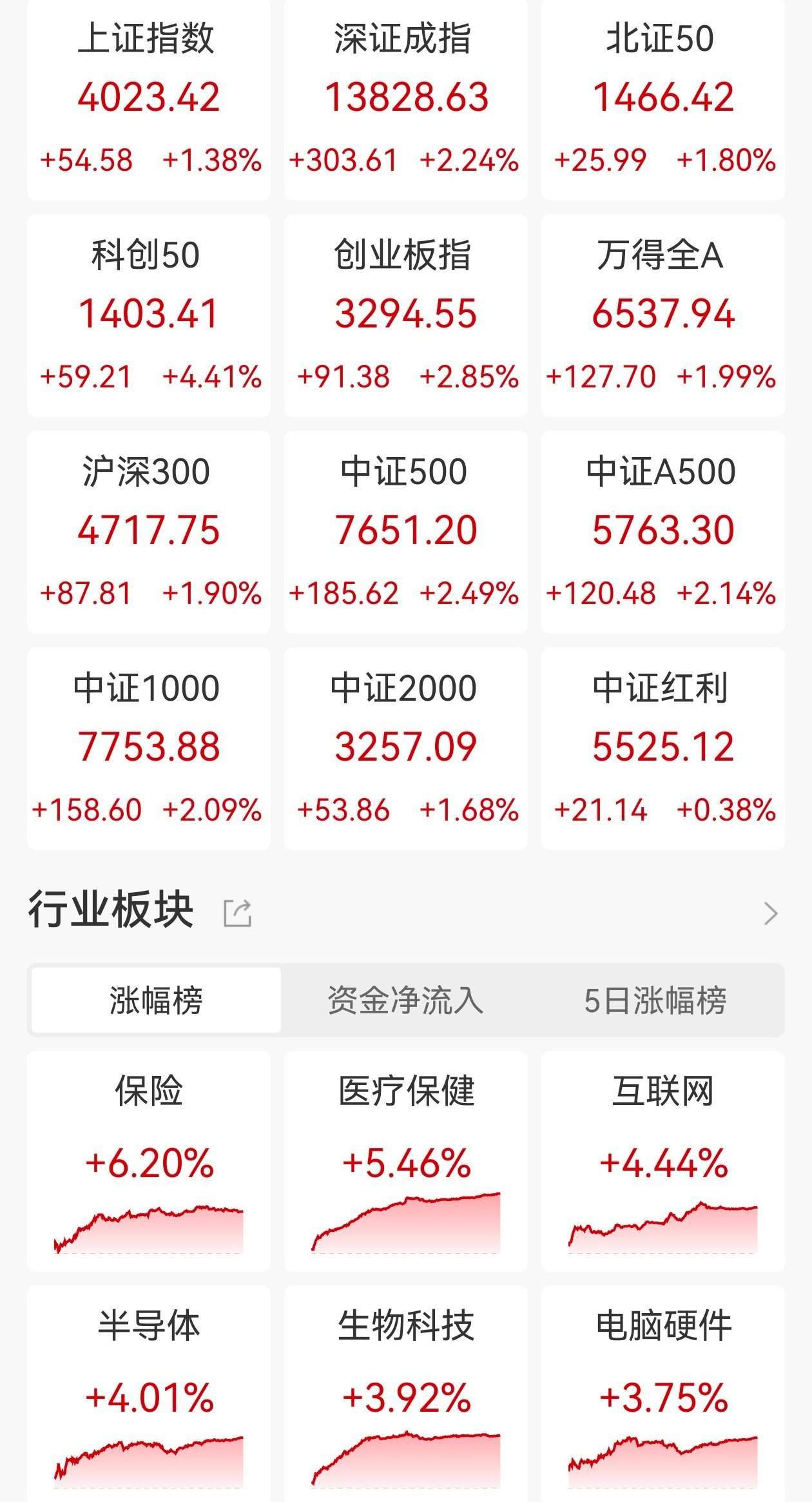
A股收评:三大指数集体大涨,沪指12连阳重回4000点,深证成指、创指涨超2%北证50涨1.8%,脑机接口涨停潮!近4200股上涨,成交2.57万亿放量5015亿
Ge Long Hui· 2026-01-05 08:48
盘面上,马斯克计划2026年大规模量产脑机接口设备,脑机接口板块掀涨停潮,道氏技术(300409)、三 博脑科及乐普医疗(300003)等20余股涨停;保险股大涨,新华保险(601336)涨超8%;医疗器械板块走 高,赛诺医疗等多股涨停;AI芯片、存储芯片板块拉升,普冉股份、恒烁股份涨停;重组蛋白、快手 概念、CRO、游戏及Sora概念等涨幅居前。另外,海南、免税板块逆市下跌,海汽集团(603069)、海南 发展领跌;旅游酒店板块走低,凯撒旅业跌近7%;铁路公路、电机及航空机场等板块跌幅居前。(格隆 汇) 格隆汇1月5日|A股2026年首个交易日开门红,三大指数均大幅上涨,沪指12连阳重回4000点,深证成 指;截至收盘,沪指涨1.38%报4023点,深证成指涨2.24%,创业板指涨2.85%。全市场成交额2.57万亿 元,较前一交易日增量5015亿元,近4200股上涨。 | 上证指数 深证成指 | 北证50 | | --- | --- | | 4023.42 13828.63 1466.42 | | | +54.58 +1.38% +303.61 +2.24% +25.99 +1.80% | | | 科创5 ...