WALVAX(300142)
Search documents
时隔17年,国家免疫规划将迎实质性扩容
Di Yi Cai Jing Zi Xun· 2025-09-11 15:31
Core Viewpoint - The announcement of HPV vaccines being included in the national immunization program is expected to positively impact the HPV vaccine market and related companies, which have been struggling with declining performance [1][3][4]. Group 1: Market Response - On September 11, HPV vaccine concept stocks in the A-share market saw a rise, with notable increases in companies such as Kangla Weishi (up 3.09%), Wantai Biological Pharmacy (up 2.69%), Zhifei Biological Products (up 1.98%), and Watson Bio (up 1.71%) [1]. - The National Health Commission's announcement regarding the introduction of HPV vaccination services for eligible girls and its inclusion in the national immunization plan is a significant development [1][2]. Group 2: Industry Challenges - HPV vaccine manufacturers are currently facing challenges due to declining sales and increased competition in the market, leading to a price war [3][4]. - The performance of HPV vaccine companies has been poor, with Wantai Biological reporting a revenue of 844 million yuan, down 38.25% year-on-year, and a net loss of 144 million yuan [4]. - Watson Bio's revenue was 1.154 billion yuan, down 19.47%, with a net profit decline of 74.69% [4]. - Zhifei Biological reported a revenue of 4.919 billion yuan, down 73.06%, and a net loss of 597 million yuan, a 126.72% decline [4][5]. Group 3: Potential for Growth - The global incidence of cervical cancer is rising, particularly among younger women in China, highlighting the need for effective HPV vaccination [6]. - The World Health Organization recommends that countries include HPV vaccination in their national immunization programs, prioritizing girls aged 9 to 14 [6]. - Currently, 143 out of 194 WHO member countries have included HPV vaccines in their national immunization plans, indicating a global trend towards increased vaccination [6]. - With the supply of HPV vaccines becoming sufficient and prices decreasing, the timing for including HPV vaccines in the national immunization program in China is considered ripe [7]. - The minimum price for HPV vaccines has dropped to 27.5 yuan per dose, significantly lower than initial prices, making it more accessible [7]. - If included in the national immunization program, HPV vaccines would likely see increased sales despite lower profit margins compared to local immunization programs [7].
HPV疫苗接种要免费了
第一财经· 2025-09-11 15:19
Core Viewpoint - The article discusses the recent announcement by the National Health Commission of China to include HPV vaccines in the national immunization program, which is expected to boost the performance of HPV vaccine manufacturers struggling with declining sales and profits [3][4]. Group 1: Market Performance of HPV Vaccine Companies - HPV vaccine stocks in the A-share market saw a rise, with notable increases in companies like Kangla Weishi (3.09%), Wantai Biological (2.69%), Zhifei Biological (1.98%), and Watson Bio (1.71%) [3]. - The HPV vaccine market in China has become increasingly competitive, leading to a price war and a decline in public willingness to get vaccinated, which has negatively impacted sales [6][7]. - For instance, Wantai Biological reported a revenue of 844 million yuan, down 38.25% year-on-year, and a net loss of 144 million yuan [7]. Watson Bio's revenue was 1.154 billion yuan, down 19.47%, with a net profit decline of 74.69% [7]. Zhifei Biological's revenue fell to 4.919 billion yuan, down 73.06%, with a net loss of 597 million yuan [7]. Group 2: HPV Vaccine Market Dynamics - The HPV vaccine market in China has seen a total of six listed vaccines, including three bivalent, one quadrivalent, and two nonavalent vaccines [5][6]. - The initial demand for HPV vaccines was high, but the market has cooled due to increased competition and limited public awareness and financial capability [6]. - The World Health Organization recommends that countries include HPV vaccination in their national immunization programs, prioritizing girls aged 9 to 14 [9]. As of the end of 2024, 143 out of 194 WHO member countries have included HPV vaccines in their national programs [9]. Group 3: Future Prospects of HPV Vaccines in China - The inclusion of HPV vaccines in the national immunization program is seen as timely due to sufficient supply and decreasing prices, with the lowest bid for HPV vaccines currently at 27.5 yuan per dose [11]. - Industry insiders suggest that the bivalent HPV vaccine is likely to be included in the national immunization program, which would stabilize prices and increase sales volume [11]. - Although profit margins may be lower under the national program, they could still be higher than those under local immunization programs, where competition is more intense [11].
HPV疫苗要纳入国家免疫规划!HPV疫苗股齐涨,厂商业绩能否止跌
Di Yi Cai Jing· 2025-09-11 13:29
Core Viewpoint - HPV vaccine manufacturers are currently facing performance declines, but the recent inclusion of HPV vaccines in the national immunization program may provide a potential boost to the industry [1][2]. Industry Overview - There are currently six HPV vaccines listed in China, including three bivalent, one quadrivalent, and two nonavalent vaccines [2]. - The HPV vaccination market in China has become competitive, with initial high demand now facing challenges due to increased competition, low public awareness, and limited payment capabilities [2]. Company Performance - WanTai Bio achieved revenue of 844 million yuan in the first half of the year, a year-on-year decline of 38.25%, with a net loss of 144 million yuan [3]. - Watson Bio reported revenue of 1.154 billion yuan, down 19.47%, and a net profit of 43.16 million yuan, down 74.69% [3]. - Zhifei Biological's revenue was 4.919 billion yuan, a decrease of 73.06%, with a net loss of 597 million yuan, reflecting a decline of 126.72% [3][4]. - Companies are facing challenges in sales, leading to asset impairment provisions, including a 76.3 million yuan impairment for bivalent HPV vaccine intangible assets by Watson Bio [3]. Market Demand and Health Impact - Cervical cancer is the fourth most common malignancy among women globally, with significant incidence and mortality rates in China, particularly among younger women [5]. - The World Health Organization recommends that countries include HPV vaccination in their national immunization programs, prioritizing girls aged 9 to 14 [5][6]. National Immunization Program Inclusion - As of the end of 2024, 143 out of 194 WHO member countries have included HPV vaccines in their national immunization programs, but China has not yet done so [6]. - Several regions in China are already offering free HPV vaccinations for eligible girls, indicating a growing trend towards public health initiatives [7]. - The current lowest price for HPV vaccines is 27.5 yuan per dose, significantly lower than initial prices, making it more accessible [7]. - If included in the national immunization program, bivalent HPV vaccines are expected to see increased sales, although profit margins may be lower compared to local immunization programs [7].
疫苗降到蜜雪冰城价,企业集体亏损
Jing Ji Guan Cha Bao· 2025-09-11 11:34
Core Insights - The vaccine industry is experiencing significant challenges, with many companies reporting substantial losses and declining revenues in 2025 [4][20][21] - Price wars and vaccine hesitancy are identified as major factors contributing to the industry's downturn [4][12][14] Financial Performance - In the first half of 2025, major vaccine companies like Zhifei Biological and Wantai Biological reported their first-ever half-year losses, with net profits dropping by 127% and 155% respectively [4][5] - Overall, vaccine revenue for listed companies in China decreased by 60% year-on-year, with net profits down by 113% [4] - Among 17 listed vaccine companies, only 6 reported profits, with the highest profit being 1.22 billion yuan from Chengda Biological [4] Market Dynamics - The top five vaccine companies by market capitalization are Wantai Biological, Zhifei Biological, CanSino, Kangtai Biological, and Watson Biological, with only CanSino showing a profit increase due to its innovative four-valent meningococcal vaccine [4][5] - A significant price drop in flu vaccines has been noted, with prices falling to as low as 5.5 yuan per dose, leading to intense competition [6][7][8] Price Wars - The price of various vaccines, including flu and HPV vaccines, has been driven down due to aggressive competition, with some prices dropping to a fraction of their previous levels [9][10][11] - Wantai Biological's entry into the nine-valent HPV vaccine market has intensified competition, leading to significant price reductions across the sector [9][10] Vaccine Hesitancy - Vaccine hesitancy has become a critical issue, particularly for non-mandatory vaccines, with many individuals expressing doubts about vaccine efficacy [14][15][16] - The overall vaccination rates for flu vaccines remain low in China, with annual rates below 4%, compared to over 50% in developed countries [16] Industry Outlook - The vaccine industry is facing a prolonged period of challenges, with experts predicting that the current downturn may last five to ten years unless significant changes occur in public perception and market dynamics [20][21] - The industry is expected to undergo consolidation, with weaker companies likely to be eliminated as competition intensifies [21]
疫苗降到蜜雪冰城价 企业集体亏损
Jing Ji Guan Cha Wang· 2025-09-11 07:55
Core Viewpoint - The vaccine industry in China is experiencing significant challenges, with many companies reporting substantial losses and a decline in revenue due to price wars, vaccine hesitancy, and intense competition [1][4][15]. Group 1: Financial Performance of Vaccine Companies - In the first half of 2025, major vaccine companies like Zhifei Biological and Wantai Biological reported their first-ever half-year losses, with net profits dropping by 127% and 155% respectively [1][3]. - Overall, the revenue of Chinese vaccine listed companies decreased by 60% year-on-year, and net profits fell by 113% in the first half of 2025 [1]. - Among the top five vaccine companies by market capitalization, only CanSino reported a year-on-year net profit increase, attributed to its innovative four-valent meningococcal vaccine [2][3]. Group 2: Price Wars and Market Dynamics - The price of flu vaccines has significantly dropped, with some prices reaching as low as 5.5 yuan per dose, leading to a price war that has affected various vaccine types including HPV and pneumonia vaccines [4][5]. - Wantai Biological's revenue from its main product, the bivalent HPV vaccine, fell by 38% to 8.44 billion yuan, marking its first loss since going public [5][8]. - The industry is facing a normalization of price competition, with companies engaging in various promotional strategies to capture market share, further compressing product pricing [8][15]. Group 3: Vaccine Hesitancy - Vaccine hesitancy has become a significant issue, with many individuals expressing doubts about vaccine efficacy, particularly for non-mandatory vaccines like HPV and flu vaccines [10][12]. - The average flu vaccine coverage in China remains below 4%, significantly lower than in developed countries where it can reach 50% [12]. - Factors contributing to vaccine hesitancy include dissatisfaction with COVID-19 vaccine outcomes, misinformation, and a lack of awareness regarding the importance of adult vaccinations [12][13]. Group 4: Future Outlook and Industry Challenges - The vaccine industry is expected to face prolonged challenges, with experts predicting that the current competitive landscape will lead to consolidation and potential elimination of weaker players [15][16]. - The market for adult vaccines is particularly underdeveloped, and significant efforts are needed to improve public awareness and acceptance [12][16]. - The industry consensus suggests that without substantial changes in public perception and a more robust adult vaccination framework, the market will continue to struggle [16].
今年起,HPV疫苗将能免费接种了
经济观察报· 2025-09-11 06:15
Core Viewpoint - The Chinese government has included the HPV vaccine in the national immunization program, allowing eligible girls to receive the vaccine for free starting this year [2][3]. Group 1: National Immunization Program Expansion - This marks the first expansion of the national immunization program in 18 years, with the HPV vaccine being prioritized for inclusion [2]. - Since 2007, the immunization program has maintained a structure of "fourteen vaccines for fifteen diseases," with no substantial additions in vaccine types over the years [2]. - As of 2024, 147 out of 194 WHO member countries have included the HPV vaccine in their immunization programs [2]. Group 2: HPV Vaccine and Cervical Cancer - HPV is a common virus primarily transmitted through sexual contact, with persistent infection of 14 high-risk HPV types being the main cause of cervical cancer [2]. - Vaccination can prevent at least 70% of cervical cancer cases, which is critical given the rising incidence and mortality rates of cervical cancer in China [2]. - In 2022, approximately 150,000 new cervical cancer cases and about 56,000 deaths were reported in China [2]. Group 3: Local Government Initiatives - Several local governments have already initiated free HPV vaccination programs for eligible girls, with Guangdong province being one of the earliest adopters since 2022 [3][4]. - The program in Guangdong requires eligible girls to meet specific criteria, including being under 14 years old and having no prior HPV vaccination [4]. - Over 17 provinces in China have implemented similar free vaccination projects, although the distribution of these programs is uneven, with fewer initiatives in central and northeastern regions compared to eastern and southern areas [4]. Group 4: Market Impact - Following the announcement of the HPV vaccine's inclusion in the immunization program, stock prices of several HPV vaccine manufacturers rose [5]. - WanTai BioPharmaceuticals saw a 2.52% increase in stock price, while Watson Bio and Zhifei Biological also experienced stock price increases of 1.22% and 1.71%, respectively [5].
今年起,HPV疫苗将能免费接种了
Jing Ji Guan Cha Wang· 2025-09-11 05:49
Group 1 - The Chinese government has expanded its national immunization program to include the HPV vaccine, allowing eligible individuals to receive it for free starting this year [2] - The inclusion of the HPV vaccine in the national immunization program is aimed at protecting women's health and is a significant change after 18 years of maintaining the previous immunization framework [2][3] - The HPV vaccine is known to prevent at least 70% of cervical cancer cases, which is crucial given the rising incidence and mortality rates of cervical cancer in China [2][3] Group 2 - Over 17 provinces in China have already implemented free HPV vaccination programs for eligible girls, with most following a model similar to that of Guangdong Province [4][5] - The distribution of these vaccination programs is uneven, with fewer initiatives in central, western, and northeastern regions compared to eastern and southern regions [5] - Following the announcement of the HPV vaccine's inclusion in the immunization program, stock prices of several HPV vaccine companies rose, indicating positive market sentiment [5]
沃森生物:公司将继续深入拓展海外销售合作渠道
Zheng Quan Ri Bao Zhi Sheng· 2025-09-02 13:10
Core Viewpoint - Watson Bio's subsidiary, Yuxi Watson Biotechnology Co., Ltd., has successfully completed its first export delivery of the 23-valent pneumococcal polysaccharide vaccine to El Salvador, providing significant support for pneumonia prevention among high-risk populations in the region [1] Group 1 - The vaccine supply to El Salvador marks a strategic expansion into international markets for the company [1] - The company aims to continue developing overseas sales channels to maintain high-quality growth in its international business [1]
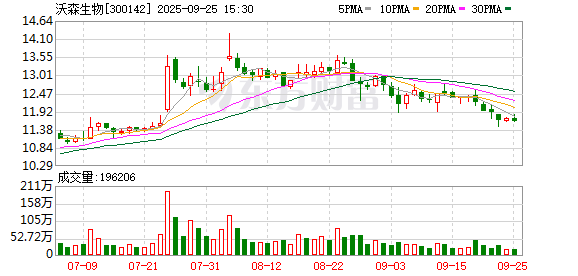
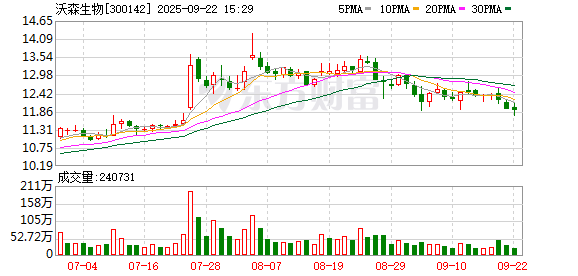
沃森生物股价连续3天下跌累计跌幅5.27%,鹏华基金旗下1只基金持65.99万股,浮亏损失46.85万元
Xin Lang Cai Jing· 2025-08-28 07:23
Company Overview - Watson Bio, established on January 16, 2001, is located in Kunming, Yunnan Province, and was listed on November 12, 2010. The company specializes in the research, production, and sales of vaccine products [1] - The revenue composition of Watson Bio includes: non-immunization planning vaccines 85.19%, technical services 7.13%, immunization planning vaccines 4.91%, intermediate products 2.14%, and others 0.63% [1] Stock Performance - On August 28, Watson Bio's stock price fell by 0.62%, closing at 12.75 yuan per share, with a trading volume of 791 million yuan and a turnover rate of 4.03%. The total market capitalization is 20.392 billion yuan [1] - The stock has experienced a continuous decline over three days, with a cumulative drop of 5.27% during this period [1] Fund Holdings - According to data from the top ten holdings of funds, one fund under Penghua Fund has a significant position in Watson Bio. The Biovaccine ETF (159657) increased its holdings by 10,400 shares in the second quarter, bringing the total to 659,900 shares, which accounts for 6.28% of the fund's net value, ranking as the fifth-largest holding [2] - The Biovaccine ETF (159657) was established on February 22, 2023, with a current size of 116 million yuan. Year-to-date returns are 12.56%, ranking 3081 out of 4222 in its category, while the one-year return is 28.8%, ranking 2952 out of 3776. Since inception, the fund has experienced a loss of 27.96% [2] Fund Manager Information - The fund manager of the Biovaccine ETF (159657) is Lin Song, who has been in the position for 2 years and 61 days. The total asset size of the fund is 1.316 billion yuan, with the best return during the tenure being 26.49% and the worst return being -12.68% [3]
沃森生物8月27日获融资买入1.11亿元,融资余额20.59亿元
Xin Lang Cai Jing· 2025-08-28 02:03
Core Viewpoint - Watson Bio experienced a decline of 3.82% in stock price on August 27, with a trading volume of 829 million yuan, indicating market volatility and investor sentiment concerns [1]. Financing and Margin Trading - On August 27, Watson Bio had a financing buy-in amount of 111 million yuan and a financing repayment of 121 million yuan, resulting in a net financing outflow of 10.14 million yuan [1]. - As of August 27, the total margin trading balance for Watson Bio was 2.067 billion yuan, with the financing balance at 2.059 billion yuan, accounting for 10.04% of the circulating market value, which is above the 50th percentile level over the past year [1]. - In terms of securities lending, Watson Bio repaid 8,500 shares and sold 14,500 shares on August 27, with a selling amount of 186,000 yuan, while the securities lending balance was 803,360 yuan, exceeding the 90th percentile level over the past year [1]. Company Performance - As of June 30, Watson Bio had 117,300 shareholders, an increase of 3.73% from the previous period, with an average of 13,268 circulating shares per shareholder, a decrease of 3.88% [2]. - For the first half of 2025, Watson Bio reported a revenue of 1.154 billion yuan, a year-on-year decrease of 19.47%, and a net profit attributable to shareholders of 43.16 million yuan, down 74.69% year-on-year [2]. - Since its A-share listing, Watson Bio has distributed a total of 403 million yuan in dividends, with 47.98 million yuan distributed over the past three years [2]. Shareholder Structure - As of June 30, 2025, the largest circulating shareholder of Watson Bio was E Fund's ChiNext ETF, holding 40.27 million shares, a decrease of 1.0618 million shares from the previous period [2]. - The third-largest circulating shareholder was the China National Securities Bio-Medical Index A, holding 26.98 million shares, down by 2.1952 million shares [2]. - The fifth-largest circulating shareholder was the Southern CSI 500 ETF, which increased its holdings by 3.1893 million shares to 23.81 million shares [2].