AAG(AAL)

Search documents
American Airlines: Riskiest Legacy U.S. Airline Stock, Avoid (NASDAQ:AAL)
Seeking Alpha· 2026-03-05 12:12
Group 1 - The article discusses the author's previous analysis of US-based airlines in 2018, highlighting potential winners and losers in the sector [1] - The author, Daniel Martins, is the founder of DM Martins Research, focusing on creating efficient, risk-balanced portfolios for growth [1] - DM Martins Research has been featured in over 2,000 articles and cited by major media outlets, indicating a strong reputation in investment analysis [1] Group 2 - Daniel Martins has extensive experience in equity research and investment management, having worked with notable firms such as FBR Capital Markets and Bridgewater Associates [1] - The firm employs a macro strategy hedge fund approach, utilizing return stacking for aggressive long-term capital appreciation [1] - DM Martins Research collaborates with other research entities, enhancing its analytical capabilities and insights [1]


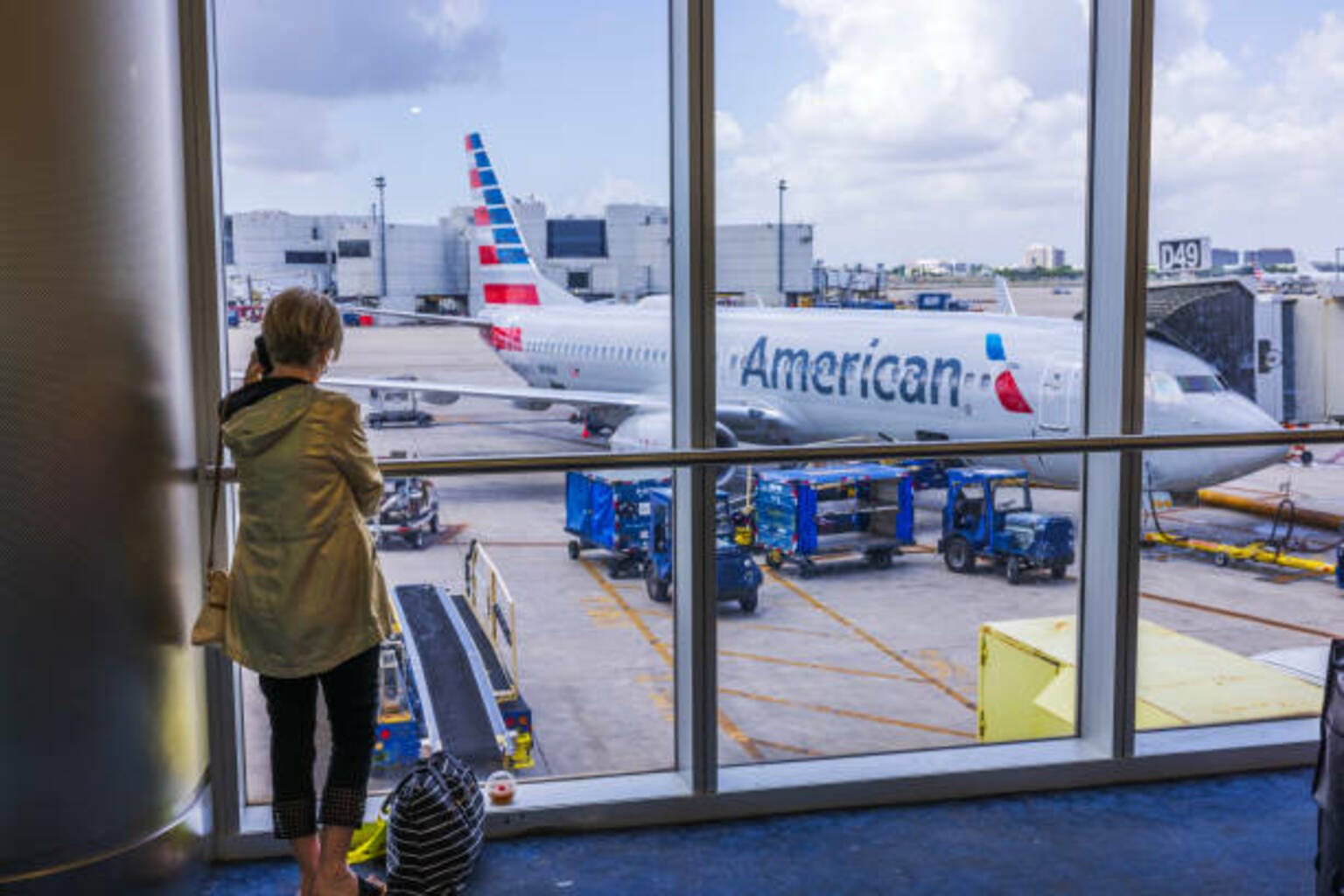
Airline share selloff eases as some flights leave Gulf amid Iran conflict
Reuters· 2026-03-04 09:56
Core Insights - A series of repatriation flights are scheduled to depart from the Middle East as governments work to bring back tens of thousands of stranded citizens [1] Industry Impact - The global airline industry is experiencing a significant selloff, indicating potential financial distress and market volatility [1]

Here are the U.S. airlines most vulnerable to rising fuel prices
MarketWatch· 2026-03-03 23:17
Core Insights - The article highlights the vulnerability of certain U.S. airlines to significant increases in jet fuel prices, indicating that these airlines may face greater financial strain compared to their competitors [1] Group 1: Airlines at Risk - Citi has identified a diverse range of U.S. airlines that are particularly susceptible to rising jet fuel costs, suggesting that not all airlines are equally affected [1] - The report emphasizes that airlines with higher operational costs and lower profit margins are more likely to struggle with increased fuel prices [1] - Specific airlines mentioned in the report may need to adjust their pricing strategies or operational efficiencies to mitigate the impact of fuel price hikes [1] Group 2: Market Implications - The potential for dramatic increases in jet fuel prices could lead to broader market implications, affecting airline stock performance and investor sentiment [1] - Airlines that are better positioned to absorb fuel cost increases may gain a competitive advantage in the market [1] - The analysis suggests that investors should closely monitor fuel price trends and their potential impact on airline profitability [1]

Airline, travel industries scramble with fallout from Middle Eastern conflict
Reuters· 2026-03-03 19:29
Airline and Travel Industry Impact - The airline and tourism industries are facing significant disruptions due to the escalating conflict in the Middle East, with over 21,300 flights canceled across major Gulf hubs, including Dubai, Doha, and Abu Dhabi [1] - Major Gulf airports remain closed or severely restricted, stranding tens of thousands of passengers and complicating long-haul flight operations between Europe and Asia [1] - The UAE government has initiated emergency evacuations, operating 60 flights in dedicated air corridors, with plans for more than 80 flights [1] Financial Implications - Airline stocks have fallen globally, with U.S. shares initially declining but later recovering slightly; the operational impact varies significantly among airlines based on their hedging strategies and cargo exposure [1] - Jet fuel prices have surged approximately 30% this year, threatening to increase operational costs for airlines, which have largely abandoned fuel hedging [1] - Delta Air Lines indicated that a one-cent increase in jet fuel prices per gallon adds about $40 million to its annual fuel bill, with a 10% increase potentially costing $1 billion by 2026 [1] Market Reactions - Demand for alternatives to Gulf airlines has surged, with increased bookings and ticket prices on routes such as Hong Kong to London [1] - Shares of major airlines in Europe, including Wizz Air, British Airways, Lufthansa, and Air France KLM, experienced declines between 5% to 8% [1] - Ryanair's CEO noted that the airline is hedged for the next 12 months, while other carriers like Qantas and Japan Airlines reported significant stock declines due to the oil price spike [1]

Why didn't US avert stock market Dow Jones, S&P 500 and Nasdaq crash today like UAE? Analysts insights, market outlook and what should investors do now
The Economic Times· 2026-03-03 18:39
Market Reaction - The Dow Jones Industrial Average fell 1.70%, dropping 831.86 points to 48,072.92, while the S&P 500 lost 1.61% to 6,771.14, marking its lowest level in over two months. The Nasdaq Composite declined 1.69% to 22,363.32, with the Dow at one point dropping more than 1,200 points [4][3][2] - The small-cap index fell 2.6%, and the CBOE Volatility Index rose to 27.30, its highest level in three months, indicating increased market fear [6][4] - Almost all sectors in the S&P 500 traded lower, with the index moving below its 100-day moving average [4] Oil Price Impact - Oil prices surged sharply, with Brent crude rising to $83.84 and US crude reaching $77.52, following Iran's threat to close the Strait of Hormuz, a critical route for global oil transport [7][4] - The increase in oil prices raised inflation fears, contributing to a rise in the 10-year Treasury yield, which touched 4.06% and briefly moved above 4.10% [7][4] Sector Performance - Airlines experienced significant declines due to rising fuel costs, with American Airlines dropping 2.4%, United Airlines falling 5.4%, and Delta Air Lines declining 4.3% [9][4] - Technology stocks also faced losses, with Nvidia losing between 1.7% and 2.2%, and MongoDB plunging 26.3% after issuing weak profit guidance [9][4] Global Market Trends - Global markets reacted negatively, with South Korea's Kospi dropping 7.2%, Japan's Nikkei 225 declining 3.1%, and Germany's DAX losing 3.9% [10][4] - Gasoline prices in the US rose to approximately $3.11 per gallon, while Bitcoin fell toward $67,000 and gold prices declined as the dollar strengthened [10][4] Analyst Insights - Analysts indicated that the primary driver of market movements was the spike in oil prices and concerns about sustained inflation. If oil prices approach $100 per barrel, inflation could rise further [11][4] - The increase in the 10-year Treasury yield and the spike in the CBOE Volatility Index signaled heightened market fear, with some strategists warning of a deeper correction if the Iran conflict persists [11][4] Investment Strategies - Market experts recommended that investors review their asset allocation and risk exposure, with some advising to hold cash due to volatility and wait for clarity on oil prices and Federal Reserve policy [12][4] - Others viewed the selloff as an opportunity to rebalance portfolios, suggesting reducing overweight positions in technology and increasing exposure to diversified sectors or emerging markets [12][4]

Americans in the Middle East Urged to Get Home. Where That Leaves U.S. Airlines.
Barrons· 2026-03-03 16:38
Core Viewpoint - The U.S. government is advising Americans stranded in the Middle East to return home using commercial means, highlighting the challenges involved in this process [1] Group 1 - The U.S. government's recommendation emphasizes the urgency for citizens to find commercial travel options to return home [1] - The situation for Americans in the Middle East is complicated, making the government's advice more difficult to follow [1]

US stock market Dow Jones, S&P 500 and Nasdaq crash today biggest losers and gainers: Here's complete list, Analysts insights, market outlook and what should investors do now
The Economic Times· 2026-03-03 16:35
Core Viewpoint - The US stock market experienced a significant downturn, with the Dow Jones, S&P 500, and Nasdaq all declining sharply due to rising oil prices and geopolitical tensions, particularly related to Iran and the Strait of Hormuz [1][17]. Market Performance - The Dow Jones Industrial Average fell by 1,048 points, or 2.1%, while the S&P 500 and Nasdaq Composite dropped by 2% and 2.1%, respectively [7][19]. - Declining stocks outnumbered advancing stocks by 14.21-to-1 on the NYSE and 8.21-to-1 on Nasdaq, indicating broad market weakness [13][19]. Biggest Losers - Airlines were heavily impacted, with United Airlines down about 5%, American Airlines down 4.4%, and Delta Air Lines down 4% due to increased fuel costs [2][11]. - Blackstone's shares fell by 7.7% following withdrawal pressures on its credit fund [2][12]. - MongoDB experienced a significant drop of 26.3% after forecasting profits below estimates [2][12]. Biggest Gainers - Target was a standout gainer, rising approximately 4.4% after reporting quarterly profits above expectations and providing a positive forecast [3][19]. - Defensive stocks showed stable trading as investors sought safety, although overall gainers were limited [3][19]. Oil Price Impact - Oil prices approached $100 per barrel, with Brent crude rising 7.5% to $83.58 and U.S. crude gaining 7.6% to $76.64, raising inflation concerns [8][9]. - Gasoline prices in the U.S. increased by 11 cents overnight to $3.11 per gallon, contributing to inflationary pressures [9][19]. Federal Reserve Outlook - Expectations for a Federal Reserve rate cut have shifted to September from July, with a potential 25-basis-point cut anticipated [14][19]. - Higher oil prices complicate policy decisions as inflation remains above target, influencing market sentiment [14][15]. Analyst Insights - Analysts are focusing on oil prices, inflation, and Federal Reserve policy, with concerns that sustained crude oil prices above $100 could delay interest rate cuts [15][19]. - Market volatility is expected to remain high, particularly in response to geopolitical developments and credit market fluctuations [15][16].


American Airlines to present at 2026 J.P. Morgan Industrials Conference
Globenewswire· 2026-03-03 16:00
Group 1 - American Airlines Group Inc. will present at the 2026 J.P. Morgan Industrials Conference on March 17 at 8:10 a.m. ET, with a live webcast available [1] - American Airlines operates more than 6,000 daily flights to over 350 destinations in more than 60 countries, serving over 200 million customers annually [2] - The airline celebrates its centennial year in 2026, marking a century of innovation and significant contributions to the aviation industry [3] Group 2 - American Airlines is a founding member of the oneworld alliance, which serves more than 900 destinations globally [3]

Why Is American Airlines Stock Down Premarket? Oil Spike Weighs on Airlines
Investing· 2026-03-03 12:49
Group 1: Brent Oil Futures - Brent oil futures have shown significant volatility in recent trading sessions, influenced by geopolitical tensions and supply chain disruptions [1] - Recent data indicates that Brent crude prices have fluctuated between $80 and $90 per barrel, reflecting market uncertainty [1] - Analysts predict that if tensions in key oil-producing regions escalate, prices could surge beyond the $90 mark [1] Group 2: American Airlines Group - American Airlines Group reported a revenue increase of 15% year-over-year, driven by a rise in passenger demand and ticket prices [1] - The company’s operating margin improved to 12%, up from 10% in the previous year, indicating better cost management and operational efficiency [1] - Future projections suggest that American Airlines may continue to benefit from a strong travel recovery, with expectations of further revenue growth in the upcoming quarters [1]

Global shares are mostly lower as investors focus on the Iran war's impact on energy supplies
ABC News· 2026-03-03 09:30
Market Overview - Global shares mostly declined due to concerns over energy supply threats from the Iran war [1] - U.S. futures also fell, with the S&P 500 down 1.5% and the Dow Jones Industrial Average down 1.6% [2] Regional Market Performance - In early European trading, France's CAC 40 dropped 2.2% to 8,207.10, Germany's DAX sank 2.9% to 23,935.62, and Britain's FTSE 100 declined 2.2% to 10,546.30 [2] - South Korea's Kospi plunged 7.2% to 5,791.91 as markets reopened after a holiday [2] - Japan's Nikkei 225 sank 3.1% to finish at 56,279.05, with concerns over oil supply impacting resource-poor countries [3] Oil Prices - Benchmark U.S. crude rose by $3.24 to $74.47 per barrel, while Brent crude increased by $3.56 to $81.30 per barrel [3] - Analysts noted that Japan has a sizable stockpile of oil lasting more than 200 days, mitigating immediate threats [4] Airline Industry Impact - Airline stocks, including American Airlines, United, and Delta, were among the biggest losers due to rising fuel costs and airport closures [5] - In Asia, ANA stock fell 3.3%, Japan Airlines dropped 6.4%, Korean Air declined 10.3%, and Qantas Airways lost 1.8% [6] Historical Context - Past military conflicts in the Middle East have not led to long-term declines in U.S. stocks, with significant oil price increases needed to cause sustained market impacts [7] - Historical data shows that energy shocks do not automatically derail equities unless they are severe and sustained [8]