
AAG(AAL)

Search documents
Price hikes, outlook cuts - What airlines are doing as fuel costs surge
Reuters· 2026-03-10 09:49
Core Viewpoint - The surge in jet fuel prices, driven by geopolitical tensions, has led airlines globally to increase ticket prices and revise their financial outlooks due to the significant impact on operating costs [1]. Airline Responses - **Air New Zealand**: Announced broad increases in ticket prices and suspended its fiscal 2026 earnings forecast due to volatility in jet fuel markets. Price hikes include NZ$10 ($6) for domestic routes, NZ$20 for short-haul international, and NZ$90 for long-haul flights, with potential for further changes if fuel costs remain high [1]. - **Cathay Pacific Airways**: Implemented additional flights to London and Zurich to address disrupted travel routes and maintained its fuel surcharge at $72.90 for flights between Hong Kong and Europe or North America [1]. - **Hong Kong Airlines**: Plans to raise fuel surcharges by up to 35.2%, with the highest increase on flights to the Maldives, Bangladesh, and Nepal, where charges will rise to 384 Hong Kong dollars ($49) from 284 Hong Kong dollars [1]. - **Qantas Airways**: Will increase fares on international routes for the week of March 9 and is considering adding capacity on existing Europe routes in the coming months [1]. - **SAS (Scandinavian Airlines)**: Implemented a temporary price adjustment in response to rising jet fuel prices [1]. - **Vietnam Airlines**: Requested government assistance to remove an environmental tax on jet fuel, citing a 70% surge in operating costs due to rising jet fuel prices [1].



'Airfares are likely to rise': Rising jet fuel costs send airline stocks reeling
Yahoo Finance· 2026-03-09 16:19
Core Viewpoint - Airline stocks experienced a significant sell-off due to concerns over shrinking profits from rising jet fuel costs, exacerbated by grounded flights and increasing crude oil prices [1][2]. Group 1: Impact of Oil Prices - Oil prices surpassed $110 per barrel for the first time since 2022, leading investors to anticipate the impact of $100-per-barrel oil on jet fuel costs, which constitute 20% to 25% of airlines' overall expenses [2]. - The cost of jet fuel has increased by as much as $1.75 per gallon recently, potentially resulting in major US airlines facing around $1.5 billion or more in quarterly fuel costs [3]. Group 2: Financial Implications for Airlines - Across the three largest US airlines, the increase in fuel costs could translate to nearly $5 billion in additional expenses [3]. - Airfares are expected to rise in the coming months, even if oil prices stabilize soon, as indicated by industry analysts [3]. Group 3: Operational Challenges - The ongoing conflict in the Middle East has grounded over 20,000 flights, leaving thousands of passengers stranded [4]. - US airlines have faced additional challenges this year, including major storms that have canceled thousands of flights [5]. Group 4: Stock Performance - Major US carriers, including Delta, American, and United, have seen their stock prices decline by 20% to 30% year-to-date, with Southwest, JetBlue, and Alaska airlines also down approximately 30% over the past month [6].


Airline Stocks Headed For A 'World Of Hurt' On Oil Spike: Peter Brandt
Benzinga· 2026-03-09 16:08
Core Viewpoint - The airline industry is facing significant pressure due to a sharp increase in oil prices, which have risen approximately 60% over the past month, reaching around $100 per barrel, impacting operational costs and profit forecasts for major airlines [2][4]. Group 1: Oil Price Impact - The spike in West Texas Intermediate crude oil prices is critical for airlines as jet fuel constitutes one of their highest variable costs [2]. - Airlines have limited ability to pass on increased fuel costs to consumers amid softening demand, which could lead to financial strain [2][4]. Group 2: Airline Stock Performance - American Airlines (AAL), Delta Air Lines (DAL), and United Airlines (UAL) are under pressure, with AAL being downgraded from Buy to Neutral by Rothschild & Co, and its price target reduced from $17 to $12.50 due to limited financial flexibility in a high-cost environment [4]. - Both DAL and UAL have experienced double-digit declines year-to-date, raising concerns about their earnings guidance for 2026, which was based on lower fuel cost assumptions [4]. Group 3: Future Outlook - If oil prices remain near or above $100, profit forecasts for DAL and UAL may need significant downward adjustments, although Delta's Monroe Energy refinery offers some protection that United lacks [5]. - Traders may view any strength in major U.S. airline stocks as an opportunity to de-risk rather than a signal to buy, indicating a cautious sentiment in the market [6].
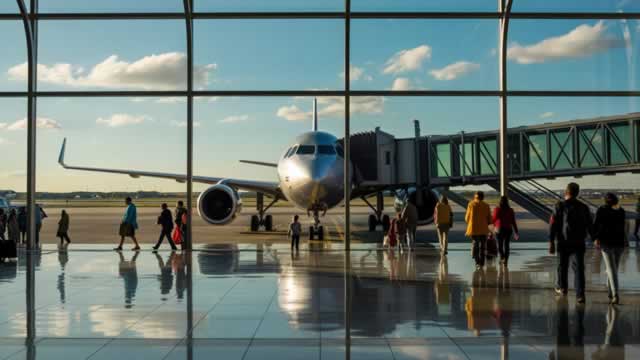
American Airlines Downgraded, Surging Jet Fuel Prices Create Threat
Investors· 2026-03-09 13:31
Core Viewpoint - The airline industry is facing an "existential threat" due to skyrocketing jet fuel prices, which have increased between 100% and 125%, significantly outpacing the 50% rise in oil prices this year [1][1][1] Airline Industry Impact - The ongoing conflict in the Middle East and rising oil prices have led to a significant decline in travel stocks, with American Airlines experiencing a downgrade and other airlines also facing substantial losses [1][1] - Deutsche Bank analyst Michael Linenberg highlighted that the widening gap between jet fuel prices and oil prices could force airlines to ground thousands of aircraft, particularly affecting financially weaker carriers [1][1][1] American Airlines Specifics - Rothschild & Co. Redburn downgraded American Airlines (AAL) from buy to neutral, citing disruptive pressures and material fuel cost inflation due to the Iran conflict [1][1] - The price target for AAL was maintained at $12.50, while United Airlines (UAL) saw its target cut by $15 to $110, and Delta Air Lines (DAL) had a minor reduction of $2 to $70 [1][1] Stock Performance - AAL stock fell nearly 4%, extending its year-to-date decline to over 27%, while DAL and UAL shares also dropped more than 3% [1][1] - Other airlines such as Alaska Airlines (ALK), Southwest, JetBlue (JBLU), and Allegiant Travel (ALGT) also experienced declines of around 3% [1][1]
Airline stocks dive as oil-price spike could trigger a tipping point for travelers
MarketWatch· 2026-03-09 12:17
Core Viewpoint - Airline stocks are experiencing a significant selloff due to concerns that travel demand will decline as the ongoing conflict in the Middle East drives crude oil prices above $100 per barrel [1] Industry Summary - The escalating conflict in the Middle East is contributing to rising crude oil prices, which have surpassed $100 a barrel [1] - The increase in oil prices is raising fears about a potential drop in travel demand, impacting airline stocks negatively [1]
American Airlines (AAL) Unveils $1B Expansion Plan for Miami International Airport
Yahoo Finance· 2026-03-09 11:47
Core Viewpoint - American Airlines Group Inc. is undertaking a $1 billion expansion plan at Miami International Airport, which is expected to enhance passenger experience and support local economic growth [1][2][3]. Group 1: Expansion Details - The expansion plan includes the construction of a reimagined Concourse D, featuring Gate D60, which will accommodate larger aircraft and is set to break ground in 2027 [1]. - The project aims to eliminate outside boarding and will introduce 17 new gates, improving passenger flow and comfort [2]. - The new facility will enhance international travel by providing direct access to the MIA customs hall from the third floor [2]. Group 2: Economic Impact - American Airlines accounts for over 60% of the traffic at Miami International Airport, supporting approximately 400 daily departures to 155 destinations [3]. - As the largest for-profit employer in Miami-Dade County, the airline's investment is anticipated to drive further local economic growth and business development [3]. Group 3: Company Overview - American Airlines operates as a network air carrier in the US, Latin America, the Atlantic, and the Pacific, with a mainline fleet of 1,013 aircraft [4].
The Middle East War Is Crushing This Group of Stocks
The Motley Fool· 2026-03-08 17:45
Core Viewpoint - The ongoing conflict in the Middle East is significantly impacting the stock market, particularly affecting airline stocks due to decreased travel demand and increased fuel costs [1]. Airline Industry Impact - Major airlines are experiencing a dual challenge: reduced travel demand and rising fuel prices, leading to a significant drop in stock prices [2]. - Southwest Airlines has seen a nearly 13% drop, Delta Airlines 15%, American Airlines 16.7%, and United Airlines 19.6% in stock value [3]. Flight Cancellations - Approximately 11,000 flights to and from the Middle East have been canceled, affecting over a million passengers, with major airports like Dubai, Abu Dhabi, and Hamad International closed [5]. Fuel Cost Increases - The price of Brent crude oil has increased by about $13 per barrel, rising from $72 to over $85 due to the conflict, impacting global petroleum transport [6]. - U.S. jet fuel prices surged from approximately $105 to $150 per barrel within five days, with fuel costs constituting 15% to 25% of a flight's total cost [7]. Future Outlook - There is uncertainty regarding the resolution of the conflict, with analysts suggesting that the situation may worsen, leading to prolonged challenges for airlines [10][11].


American Airlines (AAL) Wins Approval for Venezuela Flights
Yahoo Finance· 2026-03-08 15:45
Core Viewpoint - American Airlines Group Inc. (NASDAQ:AAL) is identified as one of the 10 most undervalued stocks to buy and hold for a decade, with recent developments indicating a potential for growth following the approval of flights to Venezuela [1]. Group 1: Regulatory Approval and Market Impact - The U.S. Transportation Department approved American Airlines' request to operate flights to Caracas and Maracaibo in Venezuela from Miami through its regional carrier Envoy, marking a significant regulatory change [1]. - This approval follows a decision by U.S. Transportation Secretary Sean Duffy to rescind a 2019 order that prohibited U.S. airlines from flying to Venezuela, indicating a shift in U.S. policy towards the country [1]. - The decision was influenced by discussions between President Donald Trump and Venezuela's acting President Delcy Rodríguez regarding U.S. flights to Venezuela [1]. Group 2: Resumption of Services - American Airlines plans to resume services to Venezuela for the first time in over six years, coinciding with significant political changes in the country [2]. - Prior to the approval, the U.S. Transportation Security Administration conducted a review of airport security procedures in Caracas, which was a necessary step for the resumption of flights [2]. Group 3: Company Overview - American Airlines Group Inc. provides passenger and cargo air transportation services across the United States, Latin America, the Atlantic, and the Pacific [3].
刚刚,伊朗总统发声!“绝不可能无条件投降”!特朗普:军工巨头同意扩产
券商中国· 2026-03-07 08:30
Group 1 - Iran launched five rounds of ballistic missiles towards Israel within seven hours, indicating an escalation in military actions [1][2] - The Iranian military conducted large-scale drone attacks on U.S. military bases in the UAE and Kuwait, as well as Israeli radar systems [2] - The conflict has led to a significant increase in aviation fuel prices, which surged by 15% in the past week, contributing to a bear market for U.S. airline stocks [7][8] Group 2 - The S&P Aerospace and Defense Index dropped over 4%, marking a decline of more than 22% from its recent peak, signaling a bearish trend in the aviation sector [1][7] - Major U.S. airlines, including American Airlines and United Airlines, experienced stock declines of over 5% and 3% respectively, with cumulative losses exceeding 14% for the week [7] - Analysts warn that ongoing conflict may lead to thousands of grounded aircraft and potential operational halts for financially weaker airlines [8]


Airlines in bear market as oil poses ‘existential’ threat
Yahoo Finance· 2026-03-06 21:13
Core Viewpoint - US airline stocks have entered a bear market due to rising fuel costs driven by the ongoing conflict in the Middle East, with the S&P Supercomposite Airlines Industry Index down over 22% from its recent peak [1][2]. Group 1: Market Impact - The S&P Supercomposite Airlines Industry Index closed down 4.1% on Friday, marking a six-day decline [1]. - The airline industry is experiencing a significant downturn, with a bear market defined by a decline of 20% or more from a peak [1]. - Analysts express concern that high fuel prices could persist as the conflict continues, posing an "existential threat" to airlines [2]. Group 2: Financial Implications - Jet fuel accounts for up to 30% of US airlines' operating costs, indicating substantial indirect exposure to rising fuel prices [5]. - Rothschild & Co. Redburn downgraded American Airlines Group Inc. to a hold-equivalent rating, anticipating losses for the carrier this year [6]. - Jefferies noted that a 5% change in fuel price estimates could impact Delta and United Airlines' earnings per share by 5% to 10%, while for American Airlines, it could represent a 35% impact [6]. Group 3: Operational Responses - Airlines may need to ground thousands of aircraft if fuel prices remain high, particularly affecting financially weaker carriers [3]. - US carriers are expected to raise ticket prices to mitigate fuel costs, with analysts suggesting that while profits may not be strong, losses could be contained [7]. - The US airline market is somewhat insulated from direct travel disruptions in the Middle East, which may help sustain demand [7]. Group 4: Broader Industry Effects - FedEx Corp. and United Parcel Service Inc., which rely on air-freight networks, also saw declines, indicating broader industry challenges [8]. - Operators of fuel-intensive cruise ships have also experienced a downturn in their stock performance [8].