American Express(AXP)

Search documents
Contributor: The weird bipartisan alliance to cap credit card rates is onto something
Yahoo Finance· 2026-01-26 11:11
Core Insights - The credit card market in the U.S. is dominated by a few large financial institutions, leading to high costs for consumers and businesses [1][3] - There is a growing national discussion on potential government interventions to lower credit card costs, including proposals for a 10% cap on fees [2] - The credit card industry is characterized by an oligopoly of major banks and a duopoly of processing networks, resulting in limited competition [3] Industry Dynamics - Major banks like JPMorgan Chase, Bank of America, American Express, Citigroup, and Capital One account for approximately 70% of all credit card transactions [3] - Visa and Mastercard process over 80% of these transactions, reinforcing their dominant position in the market [3] - The markup on credit card borrowing compared to benchmarks like the prime rate has increased to 16.4%, indicating rising costs for consumers [4] Impact on Small Businesses - Credit cards serve as a significant source of credit for small businesses, but the associated costs are becoming increasingly burdensome [5] - Merchant fees charged by Visa and Mastercard have nearly doubled in five years, reaching $111 billion in 2024, which are often passed on to consumers [5] - These fees rank among the highest costs for merchants, following real estate and labor expenses [5] Comparative Analysis - The cost of credit card transactions in the U.S. is significantly higher than in other industrialized countries, where competition and regulation are more favorable [6][7] - Consumer credit is also less expensive in other regions due to these factors, highlighting inefficiencies in the U.S. market [6][7]




Earnings, Tariffs and Other Key Things to Watch this Week
Yahoo Finance· 2026-01-25 18:00
Group 1: Corporate Earnings Insights - The earnings reports from Tesla, Microsoft, Meta, and Apple represent a critical test for technology sector leadership and AI infrastructure investment narratives [1][2] - Microsoft's Azure cloud growth and AI monetization through Copilot will be crucial for validating the AI infrastructure investment thesis [1] - Meta's results will assess whether Reality Labs losses are justified by metaverse progress while digital advertising continues to fund innovation [1] - Tesla's delivery numbers, automotive margins, and energy storage performance will be closely scrutinized amid ongoing questions about EV demand and autonomous driving timelines [1] - Apple's iPhone demand in China and services revenue growth will be particularly important given trade tensions [1] Group 2: Federal Reserve Meeting and Economic Context - The Federal Reserve meeting represents a critical juncture for policymakers to decide on interest rate adjustments amid persistent inflation concerns [3] - Chair Powell's press conference will provide insights into the Fed's policy trajectory and economic projections, influencing market expectations [3] - The timing of the Fed decision coinciding with major tech earnings creates a complex environment where monetary policy and corporate fundamentals will compete for market attention [3] Group 3: Trade Policy and Supply Chain Implications - President Trump's threat of 100% tariffs on Canadian goods marks a significant escalation in protectionist rhetoric, creating uncertainty for North American supply chains [4] - The potential impact of tariff threats on sectors with cross-border operations, such as automotive and aerospace, will be closely monitored [4] - Trump's speeches preceding major industrial earnings could amplify reactions if companies address trade policy impacts on their operations [4] Group 4: Industrial and Energy Sector Perspectives - Earnings from UnitedHealth, Boeing, General Motors, and UPS will provide insights into healthcare costs, aerospace manufacturing, automotive demand, and logistics activity [5][6] - The industrial earnings cluster will help assess business investment and capital spending resilience amid economic and trade policy uncertainties [6] - Earnings from Exxon and Chevron will offer perspectives on oil and gas markets, refining margins, and energy sector capital allocation amid volatile commodity prices [7] - Visa and Mastercard earnings will test payment network health and consumer spending resilience through transaction volume trends [7]




Trump's 10% Rate Cap: What Does it Mean for Capital One Stock?
The Motley Fool· 2026-01-25 12:00
Core Viewpoint - A proposed 10% cap on credit card interest rates could significantly impact major credit card issuers like Capital One Financial, JPMorgan Chase, and American Express [1] Group 1: Impact on Companies - The implementation of a 10% cap on credit card interest rates would affect Capital One Financial (COF), potentially altering its revenue model and profitability [1] - Other credit card issuers, including JPMorgan Chase (JPM) and American Express (AXP), would also face similar challenges in adjusting to the new interest rate cap [1]


1 Incredible Stock Warren Buffett Bought Over 30 Years Ago Is Up 150% in 3 Years, And It's About to Overtake Apple as Berkshire Hathaway's Largest Holding
The Motley Fool· 2026-01-25 10:45
Core Viewpoint - Berkshire Hathaway's investment strategy remains stable under new CEO Greg Abel, with a focus on long-term holdings, despite significant reductions in its Apple stake [1][2]. Group 1: Berkshire Hathaway's Investment Strategy - Warren Buffett's legacy includes a portfolio that may not see immediate changes, with some stocks potentially held indefinitely [1]. - Buffett has sold a substantial amount of equities, including a nearly three-quarters reduction in Berkshire's stake in Apple [2][5]. - The sale of Apple shares, combined with the rise of other holdings, could lead to a new top equity position for Berkshire for the first time since 2017 [3]. Group 2: Apple Investment Insights - Buffett's investment in Apple, exceeding $30 billion from 2016 to 2018, is considered one of his best, with the stake valued at approximately $174 billion by the end of 2023 [4]. - Despite the significant value of the Apple stake, Buffett has trimmed it due to concerns that the stock price has surpassed its intrinsic value [5]. - Apple shares currently trade at a P/E ratio of 33, with expected earnings growth slowing to about 11% per year, leading to perceptions of overvaluation [8]. Group 3: American Express as a Key Holding - American Express, despite its strong performance, remains a stable investment for Berkshire, with a current stake valued at about $54 billion, maintaining a consistent percentage of Berkshire's overall market cap [14]. - The forward P/E ratio for American Express is around 20, which is not considered excessive, and the company is successfully targeting high-end consumers [16]. - Strong product offerings and spending growth are expected to drive significant revenue and earnings growth for American Express, justifying its valuation and solidifying its position in Berkshire's portfolio [18].


35% of Warren Buffett's $309 Billion Berkshire Hathaway Portfolio Is Invested in These 5 Financial Stocks. Here's the Best of the Bunch for 2026.
Yahoo Finance· 2026-01-25 09:05
Core Viewpoint - Berkshire Hathaway's portfolio continues to reflect Warren Buffett's investment philosophy, despite the transition of CEO responsibilities to Greg Abel [1] Group 1: Portfolio Composition - 35% of Berkshire's $309 billion portfolio is invested in five financial stocks favored by Buffett [2] - American Express is the largest financial services holding, comprising 17.3% of the portfolio, and is expected to be maintained indefinitely [4] - Bank of America is the second-largest financial stock position, accounting for 9.6% of the portfolio [4] - Moody's ranks as the sixth-largest holding at 4.1% of the portfolio, appealing due to its risk management and credit rating services [5] - Chubb, a significant new position, makes up 3.1% of the portfolio, reflecting Buffett's understanding of the insurance business [6] - Visa accounts for approximately 0.9% of Berkshire's portfolio, aligning with Buffett's investment strategy [6] Group 2: Performance Comparison - The top five financial stocks in Berkshire's portfolio reflect diverse areas within the financial services sector [8] - American Express, Bank of America, and Chubb have shown similar performance over the last 12 months, with no single stock significantly outperforming the others [9]
X @Forbes
Forbes· 2026-01-23 21:35
RT Jeff Kauflin (@JeffKauflin)Brex + Discover gives Capital One much of what makes American Express so powerful: a payments network, cards, tech and scale. Capital One shares dropped 7% today on deal jitters—but the long-term strategic payoff could be substantial: https://t.co/AJ8qoKGpcc ...
BofA CEO Warns 10% Credit Card Cap Will Curb Spending
PYMNTS.com· 2026-01-22 20:14
Core Viewpoint - The proposed 10% credit card interest rate cap by President Trump is being questioned by Bank of America's CEO Brian Moynihan, who believes it could negatively impact consumer spending and credit availability [2][3]. Group 1: Impact on Consumer Spending and Credit Availability - Moynihan stated that implementing the cap would slow down consumer spending and limit credit availability, which may not align with the intended goals of the proposal [2][3]. - The banking industry argues that the cap would lead to a reduction in credit access, forcing consumers to seek less reliable and more expensive alternatives, such as payday loans [4]. Group 2: Industry Reactions - JPMorgan Chase CEO Jamie Dimon echoed Moynihan's concerns, suggesting that the cap could remove credit access for 80% of Americans, who rely on it as backup [5]. - Citigroup CEO Jane Fraser expressed skepticism about Congress supporting the 10% cap, indicating a broader industry consensus on the potential negative consequences of the proposal [5][6]. Group 3: Importance of Credit in the Labor Economy - Research indicates that a significant portion of low-wage workers, specifically those earning less than $25 an hour, rely heavily on credit, accounting for about 15% of U.S. consumer spending [6]. - The PYMNTS Intelligence report highlighted that 33.8% of workers in this low-wage cohort typically carry a revolving credit balance, compared to under 25% for the larger population [7].

Trump's Greenland 'framework,' Dimon's credit card cap rebuke, YouTube's AI slop plan and more in Morning Squawk
CNBC· 2026-01-22 13:21
Market Overview - Stock futures are higher, indicating a positive start for the trading day following a positive session for the three major averages [1] Federal Reserve and Political Developments - The Supreme Court showed skepticism towards the Trump administration's argument regarding the firing of Fed Governor Lisa Cook, suggesting her position may be secure [2] - Justice Brett Kavanaugh expressed concerns that allowing the president to fire Fed governors without judicial review could undermine the Federal Reserve's independence [3] Corporate Earnings and Projections - Procter & Gamble reported a modest earnings beat but missed revenue expectations, leading to a 1.5% decline in shares during premarket trading [7] - The company experienced a net income decrease compared to the previous year, despite a 1% increase in net sales, and lowered its fiscal 2026 outlook due to higher restructuring charges [8] - Intel's stock surged over 11% ahead of its earnings report, reaching its highest level since early 2022 [11] Industry Insights - JPMorgan Chase CEO Jamie Dimon criticized President Trump's proposal for a temporary 10% cap on credit card interest rates, labeling it an "economic disaster" [4] - Dimon also expressed discontent with Trump's immigration reform efforts, seeking more details on the implications of Immigration and Customs Enforcement raids [5] Technology and AI Developments - YouTube CEO Neal Mohan emphasized the platform's commitment to reducing "AI slop" and managing AI-generated content, highlighting the challenges in distinguishing real content from AI-generated material [9][10]

What CEOs Had To Say At Davos
Seeking Alpha· 2026-01-21 21:39
Core Insights - The article emphasizes the importance of identifying narrative trends in the financial market before they become mainstream, highlighting a macro-oriented and data-driven investment approach [1]. Group 1: Investment Philosophy - The company advocates for concentrated, asymmetrical, and high-conviction positions in investments, suggesting that successful investing often requires holding idiosyncratic positions [1]. - It stresses the significance of disciplined risk management, particularly the importance of position sizing over security selection [1]. Group 2: Market Trends - The article mentions a quest for "information alpha," which involves uncovering trends and insights that are not yet recognized by mainstream financial media [1]. - It references the political speeches at the World Economic Forum in Davos, indicating that these events may influence market sentiment and investment strategies [1].
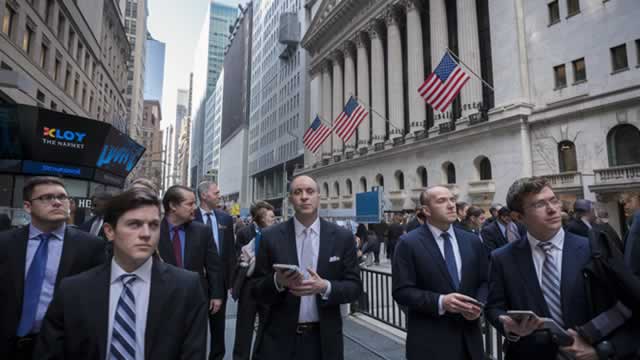
Trump says he has received calls from credit-card companies
Reuters· 2026-01-21 21:36
Core Viewpoint - U.S. President Donald Trump emphasized the need for credit-card companies to provide relief to consumers, reinforcing a proposal aimed at easing financial burdens on individuals [1] Group 1: Credit Card Companies - President Trump mentioned receiving calls from credit-card companies, indicating their willingness to consider consumer relief measures [1] - The proposal aims to encourage credit-card firms to adopt more consumer-friendly practices during challenging economic times [1]