
AstraZeneca(AZN)

Search documents
X @Bloomberg
Bloomberg· 2025-07-24 06:44
AstraZeneca’s experimental drug for a rare autoimmune disorder helped patients control their disease, the company says, boosting prospects for the potential blockbuster medicine https://t.co/EXIc325yfT ...

AZN Commits USD50B to US Manufacturing Expansion Amid Tariff Pressures
ZACKS· 2025-07-22 16:46
Core Insights - AstraZeneca (AZN) has announced a $50 billion investment plan in the United States, aimed for completion by 2030, which is expected to create skilled jobs and support advanced therapies development [1][7] - The investment aligns with AstraZeneca's strategy to enhance domestic production in response to tariff pressures, thereby aiming to lower healthcare costs in the U.S. [2] - A significant part of the investment includes a multi-billion-dollar manufacturing facility in Virginia, focusing on drug substances for weight management and metabolic therapies [3][7] Investment Details - The Virginia facility represents AstraZeneca's largest single investment in a facility to date and will utilize advanced technologies such as AI and automation [3] - The overall investment will also support the expansion of R&D and manufacturing hubs in various states, including Maryland, Massachusetts, Indiana, and Texas [8] - AstraZeneca aims to achieve $80 billion in total revenues by 2030, with 50% expected from the U.S. market, which currently accounts for 42% of its total revenues [9] Industry Context - The investment comes amid ongoing tariff threats from President Trump, which are pushing pharmaceutical companies to relocate production back to the U.S. [10] - Other pharmaceutical companies, such as Eli Lilly and Johnson & Johnson, have also announced significant investments in U.S. manufacturing, indicating a broader trend in the industry [11][12][14]


AstraZeneca to invest $50B in US to boost drug manufacturing and R&D
Proactiveinvestors NA· 2025-07-22 16:26
Company Overview - Proactive is a financial news publisher that provides fast, accessible, informative, and actionable business and finance news content to a global investment audience [2] - The company has a team of experienced and qualified news journalists who produce independent content [2] Market Focus - Proactive specializes in medium and small-cap markets while also covering blue-chip companies, commodities, and broader investment stories [3] - The news team delivers insights across various sectors including biotech and pharma, mining and natural resources, battery metals, oil and gas, crypto, and emerging digital and EV technologies [3] Technology Adoption - Proactive is recognized for its forward-looking approach and enthusiastic adoption of technology to enhance workflows [4] - The company utilizes automation and software tools, including generative AI, while ensuring that all content is edited and authored by humans [5]
X @Investopedia
Investopedia· 2025-07-22 13:30
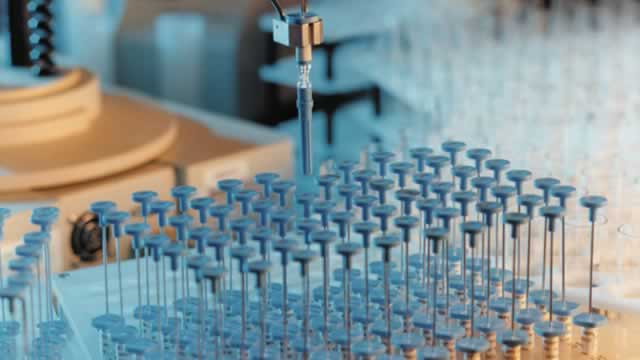
AstraZeneca said Tuesday it's planning to invest $50 billion in expanding its manufacturing and research presence in the U.S. by 2030, as worries about tariffs loom over the industry. https://t.co/MYmPLMR2Jq ...
半年480亿美元!创纪录授权交易背后,中国如何重塑全球制药版图?
Hua Er Jie Jian Wen· 2025-07-22 13:21
Group 1 - The core viewpoint is that China is emerging as a new source of pharmaceutical innovation, with Chinese pharmaceutical companies accounting for 32% of global drug licensing transactions in the first half of the year, totaling $48 billion [1][2] - Major pharmaceutical companies like AstraZeneca, Pfizer, and Merck are increasingly entering into early drug licensing agreements with Chinese biotech firms, with AstraZeneca alone expected to sign over $13.6 billion in agreements by mid-2025 [2][3] - The trend is driven by the impending patent expirations of blockbuster drugs, prompting multinational companies to seek external licensing as a cost-effective way to replenish their pipelines [3][4] Group 2 - Chinese pharmaceutical companies are actively seeking overseas expansion opportunities to alleviate funding shortages, particularly in light of a tightening capital environment in the biotech sector [4][5] - The return of overseas talent, improvements in the industry ecosystem, and advancements in technology and innovation capabilities are key factors driving the resurgence of China's biopharmaceutical industry [5] - Chinese biotech firms are gaining a global advantage in areas such as antibody-drug conjugates (ADCs) and bispecific antibodies (BsAbs), with these assets accounting for nearly one-third of outbound licensing transactions [5]

AstraZeneca to invest $50 billion in the U.S. as pharma tariffs weigh
CNBC· 2025-07-22 07:01
Core Insights - AstraZeneca plans to invest $50 billion in U.S. manufacturing and research capabilities by 2030, driven by U.S. trade tariffs [1] - The investment includes a new multi-billion dollar facility in Virginia for weight management and metabolic products, including an oral GLP-1 obesity pill [2] - The commitment aims to support AstraZeneca's goal of reaching $80 billion in annual revenue by 2030, with half expected from the U.S. market [3] Investment Details - The Virginia facility will be AstraZeneca's largest single manufacturing investment globally, utilizing AI, automation, and data analytics for production optimization [2] - The funding will also enhance research and development and cell therapy manufacturing across several states, creating tens of thousands of jobs [2] Market Position - AstraZeneca's CEO emphasized the company's belief in U.S. biopharmaceutical innovation and its strategic focus on the U.S. market, which accounted for over 40% of its annual revenues in 2024 [3] - The company previously announced a $3.5 billion investment in the U.S. shortly after the 2020 presidential election [4] - There are speculations about AstraZeneca potentially moving its listing from London to the U.S., which could impact the U.K.'s public markets [4]
阿斯利康(AZN.US)拟2030年前向美投资500亿美元,欧洲药企加速避关税布局
智通财经网· 2025-07-21 23:24
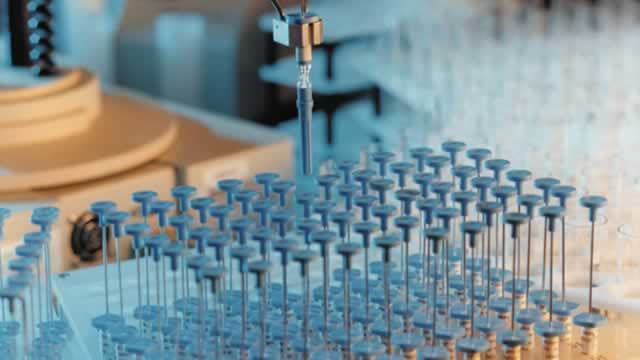
Core Viewpoint - AstraZeneca plans to invest $50 billion in the U.S. by 2030, responding to potential import drug tariffs and aiming to enhance local production and R&D capabilities [1] Group 1: Investment Plans - The investment will include the construction of a new chronic disease drug factory in Virginia, with a budget of $4 billion [1] - This new investment is an addition to AstraZeneca's previous commitment of $3.5 billion by the end of 2026 [1] - The company currently employs nearly 18,000 people in the U.S. [1] Group 2: Industry Trends - European pharmaceutical companies are increasing investments in the U.S. to mitigate tariff risks, with Novartis announcing a $23 billion infrastructure investment and Roche proposing a $50 billion investment [1] - Sanofi has also committed to investing at least $20 billion in the U.S. by 2030 [1] - AstraZeneca and other companies are forming a new supply chain model: "U.S. production for the U.S. market, European R&D, and Asian manufacturing" [1] Group 3: Regulatory Environment - AstraZeneca's CEO Pascal Soriot has urged U.S. policymakers to consider tax incentives instead of tariffs to attract local investments [2] - Soriot acknowledges the strategic need for countries to secure their drug supply chains, aligning with the vision promoted by the Trump administration [2] - The new tariff policy proposed by Trump, effective August 1, will implement floating tariffs, requiring companies to relocate production within a year or face tariffs up to 200% [2] Group 4: Corporate Strategy and Market Position - Under Soriot's leadership, AstraZeneca's market value has more than doubled, positioning the company among the top players in the global oncology market [2] - The company has established significant R&D pipelines in cardiovascular, renal, and metabolic diseases [2] - Recent strategic adjustments reflect a broader trend among multinational pharmaceutical companies responding to changing trade policies and a restructuring of the global pharmaceutical landscape [2]
AstraZeneca to invest $50B in US economy by 2030
Fox Business· 2025-07-21 22:15
British biopharmaceutical giant AstraZeneca plans to invest $50 billion in the U.S. by 2030, the company announced on Monday. The investment is expected to create tens of thousands of new, highly skilled direct and indirect jobs across the U.S., AstraZeneca said. The "cornerstone" of the investment is a proposed new multibillion-dollar manufacturing facility in Virginia that will produce drug substances for the company's weight management portfolio that includes oral GLP-1 medications. AstraZeneca said the ...
X @Bloomberg
Bloomberg· 2025-07-21 22:02
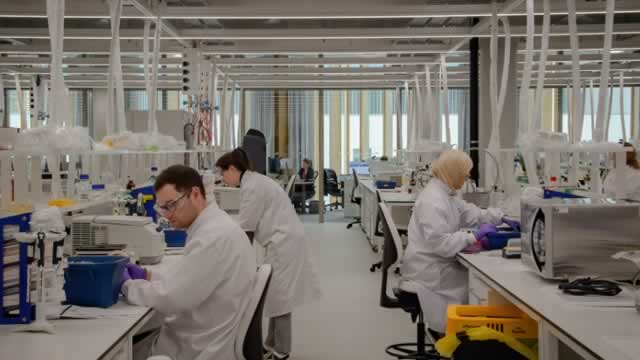
AstraZeneca plans to invest $50 billion in the US before 2030, ratcheting up spending in the country ahead of potential tariffs on imported medicines https://t.co/zu0W9NjXEu ...
以创新链聚合产业升级新动能
Jing Ji Ri Bao· 2025-07-18 21:59
Group 1 - The third China International Supply Chain Promotion Expo showcased an innovation chain area focused on intellectual property transformation, highlighting the full chain conversion path from basic research to market feedback [1][2] - The National Intellectual Property Administration set up a booth to display recent advancements in intellectual property protection and a platform for patent activation, facilitating real-time patent information queries and technology demand postings [2][3] - The technology contract transaction volume related to patents in China exceeded 990 billion yuan in 2024, indicating significant progress in patent commercialization and industrialization [2] Group 2 - Companies reported an increase in innovation willingness due to the improved intellectual property ecosystem in China, with specific examples from companies like Mita Vision and AstraZeneca, which are benefiting from enhanced patent protection [3] - The expo served as a platform for companies to find technology partners, with successful case studies presented, such as a high-precision navigation technology collaboration that led to applications in smart driving and bridge monitoring [4] - The China Academy of Sciences showcased a green hydrogen energy solution, emphasizing the integration of research and industry through patent licensing and joint research opportunities [4] Group 3 - China has implemented policies to attract foreign investment, creating a favorable environment for foreign companies to innovate and establish operations in the country [5] - Airbus highlighted its long-standing presence in China, emphasizing the importance of local partnerships and the efficient regulatory environment for aircraft manufacturing [6] - Honeywell expressed its commitment to deepening its presence in China, collaborating with over 100 universities and suppliers to enhance its supply chain [6] Group 4 - The expo addressed challenges in technology transfer, with organizations like WIPO providing resources to assist Chinese companies in expanding internationally [7] - The Shanghai Technology Exchange introduced a new financing model for biopharmaceutical companies, enabling them to leverage their research pipelines as assets for funding [7] - The China Goods Coding Center promoted the adoption of international product coding standards to enhance export compliance and supply chain resilience [8]

