
BlackRock(BLK)

Search documents
普华永道:2030年全球基金规模迈向200万亿美元,私募将贡献过半收入
Hua Er Jie Jian Wen· 2025-11-24 10:58
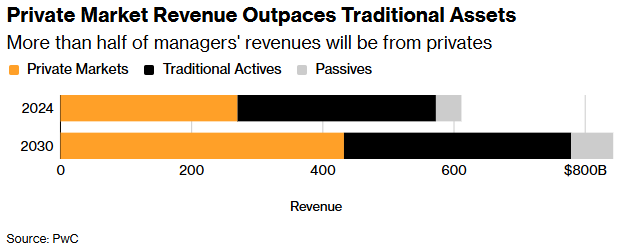
Core Insights - The global asset management industry is projected to grow from $139 trillion in 2024 to $200 trillion by 2030, with private equity becoming a significant revenue contributor, expected to account for over half of the industry's income within five years [1][2]. Group 1: Private Equity Market Growth - The private equity market is anticipated to generate $432 billion in revenue by 2030, surpassing the combined revenue of traditional active and passive investment products [1]. - Factors driving the rapid expansion of the private equity market include investor demand for higher returns, increased accessibility for retail investors, and a decline in public market IPOs [2][3]. Group 2: Traditional Asset Management Challenges - Despite the growth in asset size, the profitability of the asset management industry is under pressure, with 89% of firms experiencing profit challenges over the past five years [4]. - Profit margins have decreased by 19% since 2018 and are expected to decline by an additional 9% by 2030, primarily due to rising costs and the growth of low-fee passive funds [4]. - The rapid growth of passive funds is projected to increase from approximately $40 trillion to $70 trillion by 2030, further compressing overall fee levels in the industry [4]. Group 3: Strategic Shifts in the Industry - Companies are encouraged to innovate and restructure their business models to remain competitive, as the winners will be those that adapt quickly rather than those that simply accumulate assets [5].

Saudi Aramco weighs raising billions of dollars from its biggest disposals yet
The Economic Times· 2025-11-24 10:55
Core Viewpoint - Saudi Aramco is considering significant asset sales, including stakes in oil export and storage terminals, potentially raising over $10 billion as part of its strategy to free up cash for investments and support the Saudi economy [1][2][6]. Group 1: Asset Sales - The firm is weighing the sale of a stake in its oil export and storage terminals, with banks being asked to pitch for feasibility studies for these disposals [1][2]. - Aramco is exploring options to raise fresh equity from the asset sales and may consider a structure similar to a recent $11 billion lease transaction with BlackRock for the Jafurah gas project [2][6]. - The terminals business is viewed as a lucrative asset, and a formal sales process could begin as early as early next year [2][5]. Group 2: Market Context - Oil prices have dropped by approximately 20% this year, prompting Aramco to delay some projects and seek asset sales to generate cash for investments [6][8]. - The company is also considering selling part of its real estate portfolio, which is expected to be valued in the billions and attractive amid plans for increased foreign ownership in the kingdom [2][5]. Group 3: Economic Impact - As the world's largest oil exporter, Aramco plays a crucial role in the Saudi economy, with revenue from energy sales and substantial dividend payouts supporting the kingdom's economic transformation efforts [7][8]. - The company continues to invest in major projects like Jafurah, which is set to start production this year and reach full capacity by 2030 [7][8].


美国私募信贷市场暗含这一生意经,分析师:警惕潜在系统性风险
Di Yi Cai Jing· 2025-11-24 09:11
美国私募信贷市场此前在长期快速发展后曾多次爆雷。该行业的数据缺失及不透明问题也被放大在投资 者面前。当前,在华尔街,收购数据提供商,然后将私募信贷数据有偿提供给更多机构,正在逐渐成为 一些机构潜在的生意经。一些评级机构、大型金融机构已纷纷布局。 华尔街从这些暴雷事件中看到了提供私人市场数据的新生意。上个月,标普全球宣布计划以18亿美元收 购With Intelligence,成为最新一家斥资收购私人资产数据提供商的华尔街巨头。贝莱德于今年3月就斥 资32亿美元收购Preqin,MSCI于2023年以9亿美元收购Burgiss,晨星于2016年以2亿美元收购 PitchBook。 虽然私募市场近期暂时平静,但缺乏详细的业绩数据,加之与其他金融机构相关性越来越高,一些分析 师警示,美国私募信贷市场潜在的系统性风险仍不容小觑。 数据缺失暗含生意经 私募信贷,简言之就是资产管理公司充当银行的角色给企业放贷。和银行贷款资金主要来源于客户存款 不同,私募信贷公司的资金来源于养老基金、保险公司及高净值个人等私人投资者。 2008年全球金融危机后,银行业的监管标准大幅提高,使得美欧银行业对实体经济的信贷投放量大幅下 降,但贷 ...


普华永道预测:2030年私募市场将贡献财富管理行业过半收入
Zhi Tong Cai Jing· 2025-11-24 08:20
Core Insights - The private equity market is projected to generate over half of the wealth management industry's revenue by 2030, driven by increasing competition in private debt, equity, and infrastructure sectors [1][3] - PwC's report indicates that by 2030, the asset and wealth management industry will derive approximately $432 billion in revenue from private assets, surpassing the combined revenue of traditional active and passive investment products [1] - Traditional fund companies are increasingly acquiring or partnering with private market firms to strengthen their positions in the crowded private equity market [1] Industry Trends - The asset management industry is facing continuous pressure on fees from traditional stocks, bonds, money markets, and multi-asset funds, with nearly 60% of surveyed institutional investors indicating they might switch managers due to cost concerns [3] - Despite high costs, both active and passive management fees are expected to decline, as traditional cost-cutting measures have had limited effectiveness [3] - The integration of technology, particularly artificial intelligence and automation, is seen as a crucial step for asset management firms to transform their business models and enhance resilience by 2030 [3]

13万亿美金巨头,正酝酿一场金融革命
虎嗅APP· 2025-11-23 23:56
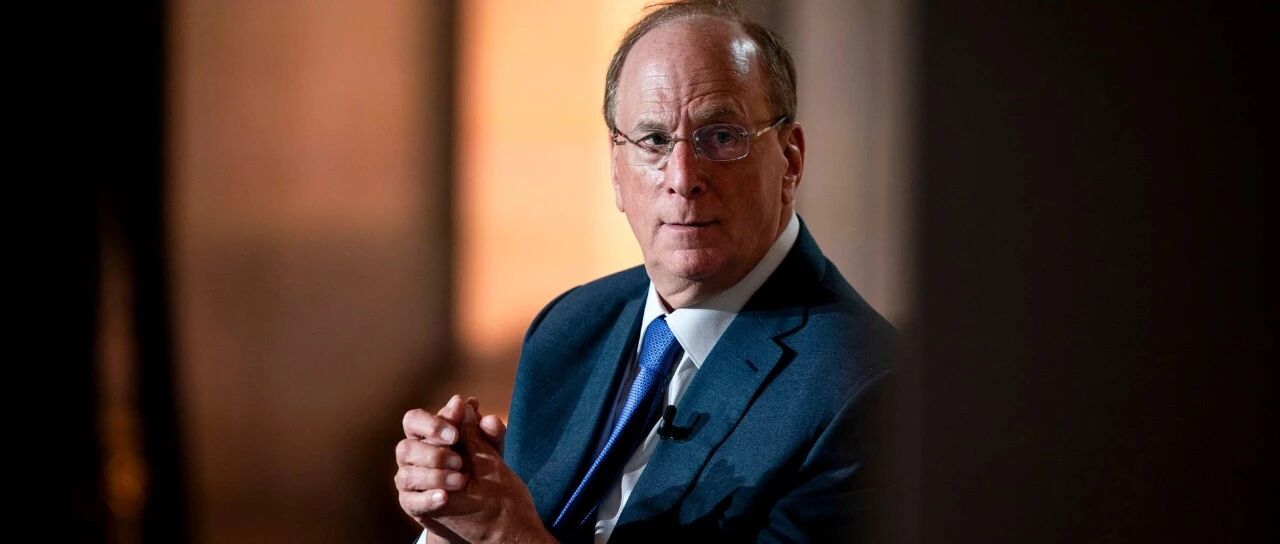
Core Viewpoint - BlackRock has achieved a record high in assets under management (AUM) of $13.46 trillion, a 17% year-over-year increase, with its iShares ETF platform surpassing $5 trillion in assets, maintaining its leading position in the ETF market [2][3]. Group 1: BlackRock's Crypto Asset Strategy - BlackRock's Bitcoin ETF (iShares Bitcoin Trust, IBIT) has surpassed $100 billion, making it the fastest ETF to reach this milestone and the most profitable product for the company [3][18]. - The company holds approximately 800,000 Bitcoins, making it one of the largest institutional holders of Bitcoin, with a market value of around $100 billion [18]. - BlackRock is also expanding into Ethereum ETFs, which have reached $17 billion in assets [3]. Group 2: Tokenization Ambitions - BlackRock aims to tokenize all its financial assets using blockchain technology, having already tokenized a money market fund called the BUIDL Fund, which has reached $2.8 billion in size [5][6]. - CEO Larry Fink stated that tokenization could be a crucial factor in the evolution of the global financial system, allowing seamless conversion between cash, stocks, and bonds without intermediaries [6][19]. - The company is planning to accelerate the tokenization of its $5.3 trillion ETF assets, integrating them into digital wallets [6][38]. Group 3: Historical Context and Competitive Landscape - BlackRock's shift towards crypto assets began in 2020, influenced by a global trust crisis in the monetary system and increasing demand for Bitcoin as a hedge against inflation [24][25]. - The company has strategically positioned itself in the crypto space, contrasting with competitors like Vanguard, which has maintained a cautious stance towards crypto assets [22][34]. - BlackRock's proactive approach has allowed it to capture significant market share in the crypto asset space, particularly in Bitcoin ETFs, which have become a major revenue source for the firm [34][44]. Group 4: Future Implications of Tokenization - The potential for tokenization to reshape the financial landscape is significant, as it could lower investment barriers and enhance liquidity for traditionally illiquid assets [42][43]. - Tokenization may lead to a transformation in how financial transactions are conducted, reducing costs and increasing efficiency through smart contracts and blockchain technology [43][44]. - However, the transition to a fully tokenized financial system will be gradual, facing regulatory, technological, and market acceptance challenges [50].
13万亿美金巨头,正酝酿一场金融革命
Hu Xiu· 2025-11-23 23:41
Core Insights - BlackRock, the world's largest asset management company, reported a record AUM of $13.46 trillion for Q3 2025, a 17% year-over-year increase, with its iShares ETF platform surpassing $5 trillion in assets [1][3] - The company's aggressive expansion into the cryptocurrency sector, particularly with its Bitcoin ETF (iShares Bitcoin Trust, IBIT) surpassing $100 billion in assets, positions BlackRock as a leading institutional player in the crypto market [3][17] - BlackRock aims to tokenize its financial assets using blockchain technology, with the BUIDL fund already reaching $2.8 billion, indicating a strategic shift towards digital asset integration [4][41] Group 1: BlackRock's Financial Performance - BlackRock's AUM reached $13.46 trillion, marking a historical high and a 17% increase year-over-year [1] - The iShares ETF platform's assets exceeded $5 trillion, maintaining its leadership in the ETF market [1][3] Group 2: Cryptocurrency Strategy - BlackRock's Bitcoin ETF (IBIT) became the fastest ETF to reach $100 billion in assets, making it the company's most profitable product [3][17] - The firm holds approximately 800,000 Bitcoins, making it one of the largest institutional holders of Bitcoin [3][17] - BlackRock's Ethereum ETF has also gained traction, reaching $17 billion in assets [3] Group 3: Tokenization Initiatives - BlackRock is actively pursuing the tokenization of its financial products, with the BUIDL fund being a significant step, currently valued at $2.8 billion [4][41] - CEO Larry Fink emphasized that tokenization could revolutionize the global financial system, allowing seamless asset conversion without intermediaries [4][41] - The company plans to digitize a significant portion of its $5.3 trillion ETF assets, enhancing liquidity and accessibility for investors [4][41] Group 4: Market Context and Competitors - BlackRock's shift towards cryptocurrency and tokenization comes amid increasing competition from firms like Vanguard, which has historically resisted crypto investments [23][38] - The firm’s proactive stance on crypto contrasts with competitors who remain skeptical or passive regarding digital assets [18][19] - BlackRock's strategic moves in the crypto space have catalyzed a broader institutional acceptance of cryptocurrencies, influencing market dynamics [16][17]
风口下的RWA:万亿市场盛宴,还是泡沫?
Sou Hu Cai Jing· 2025-11-23 12:01
Core Insights - The rise of Real World Assets (RWA) is transforming the financial landscape by tokenizing physical assets like real estate and art on blockchain, creating a new market for digital securities [1][2] - Despite the impressive growth in RWA market size, challenges such as liquidity issues and regulatory constraints remain significant hurdles [3][6] Group 1: Definition and Market Overview - RWA refers to the tokenization of tangible assets, allowing them to be traded on blockchain, which revolutionizes asset liquidity and trading [2] - The market for tokenized non-liquid assets is projected to reach $16 trillion by 2030, representing nearly 10% of global GDP [2] - As of mid-2025, approximately $24 to $25 billion of RWA has been successfully migrated to blockchain, a significant increase from under $5 billion in early 2023 [3] Group 2: Market Dynamics and Challenges - The RWA market is dominated by private credit and tokenized U.S. Treasury bonds, with BlackRock's BUIDL token valued at $2.42 billion and Ondo Finance's OUSG token at $1.76 billion, together accounting for nearly 20% of the market [3] - Despite high market valuations, RWA assets often serve as "on-chain savings accounts" for institutional and high-net-worth investors, leading to low trading activity [3][6] - Liquidity issues are prevalent, with tokenized real estate and art facing severe trading challenges, often resulting in significant price discrepancies [6][8] Group 3: Driving Factors Behind RWA Popularity - The disparity in yields between decentralized finance (DeFi) protocols and U.S. Treasury bonds has driven capital towards the latter, enhancing the appeal of tokenized bonds [5] - Traditional financial institutions are increasingly entering the RWA space, providing legitimacy and support for the market [5] - RWA offers democratized investment opportunities, allowing smaller investors to access high-value assets that were previously out of reach [5] Group 4: Structural Barriers to RWA Development - Regulatory challenges exist as many RWA tokens are classified as securities, limiting market participation due to compliance requirements [7] - The lack of a unified trading platform leads to fragmented liquidity, making price discovery inefficient and increasing transaction costs [7] - The unique nature of each RWA asset complicates valuation, creating significant bid-ask spreads and hindering market participation [8] Group 5: Future Pathways for RWA - A hybrid market structure combining centralized and decentralized platforms may provide a solution to current challenges, allowing for compliant issuance and trading [9] - Utilizing collateralized lending models can enhance liquidity for RWA holders without necessitating asset sales [9] - Establishing standardized asset disclosures and valuation frameworks will help reduce information asymmetry and improve market efficiency [9][10]
4 Dividend Stocks to Buy With $5,000 and Hold Forever
The Motley Fool· 2025-11-23 08:14
Core Insights - The article emphasizes the potential of dividend stocks as a source of passive income for investors, highlighting their ability to provide regular income and contribute significantly to overall stock market returns [1][2]. Dividend Stocks Performance - Research indicates that dividends have accounted for 85% of the cumulative return of the S&P 500 since 1960, primarily through reinvested dividends [3]. - Dividend-paying companies have outperformed non-dividend payers over a 50-year period, with average returns of 9.2% compared to 4.3% [4]. - Companies that consistently grow their dividends have achieved annualized returns of 10.2% with lower volatility [4]. Company Profiles - **BlackRock (BLK)**: The world's largest asset manager with a market cap of $166 billion and a dividend yield of 2.04%. BlackRock has raised its dividend for 16 consecutive years, benefiting from long-term trends like growing asset prices and rising 401(k) contributions [6][9]. - **Chubb (CB)**: A leading global insurer with a market cap of $117 billion and a dividend yield of 1.26%. Chubb has increased its dividend payout for 32 consecutive years, showcasing its strong business model and capital management [10][13]. - **S&P Global (SPGI)**: A major player in credit ratings with a market cap of $149 billion and a dividend yield of 0.77%. S&P Global has raised its dividend for over 53 years and is well-positioned to benefit from rising global debt issuance [14][17]. - **Ares Capital Corporation (ARCC)**: The largest business development corporation in the U.S. with a market cap of $14 billion and a high dividend yield of 9.68%. Ares Capital has a stable portfolio and has been lending to middle-market companies for over two decades [18][22].



BlackRock CEO Larry Fink Says New York Is Losing Its Edge as 'Other States Are More Attractive Now' — Housing Costs, Crime and Education Have People Rattled
Yahoo Finance· 2025-11-22 16:46
Core Insights - New York City may be losing its competitive edge, as suggested by BlackRock CEO Larry Fink, who noted an increasing number of employees considering relocation due to concerns over housing costs, crime, and education [2][3] - Fink's comments reflect a broader sentiment that other states are becoming more attractive for businesses and individuals, raising questions about New York's future [2][3] Economic and Business Environment - New York has experienced a significant decline in drugstores, losing nearly 40% over the past decade, with 10% of those closures occurring in 2024 alone [3] - Major retailers like Walgreens, CVS, and Rite Aid have downsized operations, attributing their decisions to theft and rising operational costs [4] - Foot Locker has announced plans to relocate its headquarters to another state to reduce expenses, indicating a trend of companies moving to lower-cost regions [4] Resident Sentiment - A survey by the Citizens Budget Commission revealed that 76% of New Yorkers consider affordability a "very important" reason for potentially leaving the city, with safety concerns also being significant [5] - The issues of housing costs, crime, and education are central pain points for residents, aligning with the concerns raised by Fink [5]
Bitcoin ETFs Hit Record $11.5 Billion Volume as Most Investors Slip Into Losses
Yahoo Finance· 2025-11-22 11:08
Core Insights - US spot Bitcoin exchange-traded funds (ETFs) experienced their busiest trading session ever, with a combined trading volume of $11.5 billion, despite many investors facing losses due to a recent decline in Bitcoin prices [3][4][9] Trading Activity - The surge in trading activity indicates a market adjustment following a selloff, characterized by high turnover during periods of market stress [2][4] - BlackRock's IBIT ETF led the trading volume with $8 billion, representing over 69% of all spot Bitcoin ETF trading for the day, although it still recorded $122 million in outflows [6][7] - Other Bitcoin ETFs, particularly Fidelity's FBTC, saw net inflows of more than $238 million, despite the overall sector facing net outflows exceeding $3.5 billion for the month [7][8] Investor Sentiment - The average purchase price for spot Bitcoin ETF inflows was $91,725, and Bitcoin's recent drop below this level has resulted in unrealized losses for most holders [8] - Bitcoin's price fell approximately 12% this week, reaching a low of $80,000 before recovering to $84,431, reflecting a broader risk-off sentiment in the digital asset market [9]