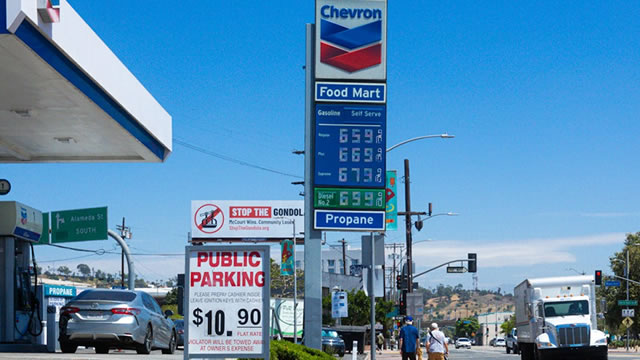
Chevron(CVX)

Search documents
Chevron, Kimberly-Clark Among 16 Companies To Kick Off 2026 With Annual Dividend Increases In January
Seeking Alpha· 2025-12-27 03:35
Core Insights - The article emphasizes the effectiveness of investing in dividend growth stocks and reinvesting dividends as a strategy for long-term wealth growth [1] Group 1: Investment Strategy - The individual investor has explored various investment styles over 25 years, concluding that dividend growth stocks are a reliable method for wealth accumulation [1] - The investor operates a blog focused on S&P Dividend Aristocrats and other dividend growth stocks, indicating a commitment to sharing knowledge in this investment area [1]


3 Dividend Stocks to Buy to Create the Gift That Keeps on Giving
The Motley Fool· 2025-12-27 00:29
Core Insights - The article emphasizes the importance of reliable dividend stocks as a means for investors to secure a growing income throughout the year, suggesting that even growth-oriented investors should consider adding dividend-paying stocks to their portfolios [2]. Company Summaries PepsiCo - PepsiCo is highlighted as a strong dividend stock with a forward-looking dividend yield of nearly 4%, despite recent stock underperformance [6][7]. - The company has faced rising costs due to inflation, impacting profits, but is expected to see sales growth accelerate to 3.6% in the coming year, which could lead to faster earnings growth [9]. - PepsiCo's recent acquisitions, such as the prebiotic soda brand Poppi, are part of its strategy to enhance its brand portfolio and market relevance [8]. Chevron - Chevron is presented as a major player in the oil industry, with a reported revenue of $203 billion and a net income of nearly $18 billion last year, indicating strong financial health [12]. - The company can maintain its dividend and capital expenditures even if oil prices drop to $50 per barrel, showcasing its cost-effective operations [12]. - Chevron has a track record of 38 years of uninterrupted annual dividend growth, with a forward-looking yield of just under 4.6% [13]. Brookfield Asset Management - Brookfield Asset Management is noted for its diverse investment portfolio, including infrastructure, renewable energy, and private equity, which positions it well for future growth [15]. - The company manages over $1 trillion in assets and has a target revenue growth of 15% to 20%, supporting its dividend growth [16]. - With a current dividend yield of 3.27% and a payout ratio of approximately 90%, shareholders can expect their dividend income to grow in line with the company's revenue growth [17].



The Zacks Analyst Blog AbbVie, The Coca-Cola, Chevron, ImmuCell and Precipio
ZACKS· 2025-12-26 07:56
Core Insights - The Zacks Equity Research team has highlighted several stocks, including AbbVie Inc., The Coca-Cola Co., Chevron Corp., ImmuCell Corp., and Precipio, Inc., in their Analyst Blog [1][2]. AbbVie Inc. (ABBV) - AbbVie has outperformed the Zacks Large Cap Pharmaceuticals industry over the past year, with a share price increase of +31.6% compared to the industry’s +19.5% [4]. - The company has successfully managed the loss of exclusivity for Humira by launching new immunology drugs, Skyrizi and Rinvoq, which are performing well and expected to support revenue growth [4][5]. - AbbVie is returning to robust revenue growth in 2025, following the U.S. Humira loss of exclusivity, and has been actively acquiring companies to enhance its early-stage pipeline [5]. The Coca-Cola Co. (KO) - Coca-Cola's shares have outperformed the Zacks Beverages - Soft Drinks industry over the past year, with a gain of +14.5% compared to +10.5% for the industry [6]. - The company's performance is attributed to solid organic revenue growth, effective pricing strategies, and gains in global market share within the non-alcoholic ready-to-drink category [6][7]. - Ongoing innovation and digital transformation efforts are enhancing Coca-Cola's competitive edge, although the company faces challenges such as soft volumes in key regions and currency headwinds [7][8]. Chevron Corp. (CVX) - Chevron's shares have increased by +9.5% over the past year, while the Zacks Oil and Gas - Integrated - International industry has gained +16% [9]. - The acquisition of Hess has significantly improved Chevron's growth outlook by adding high-quality assets in regions like Guyana and the Gulf of Mexico [9]. - The Permian Basin remains a key asset for Chevron, driving consistent growth, although challenges such as lower crude realizations and regulatory issues in California temper optimism [10]. ImmuCell Corp. (ICCC) - ImmuCell has outperformed the Zacks Medical - Products industry with a share price increase of +26.3% compared to +1% for the industry [11]. - The company’s First Defense franchise leads the market in calf scours prevention, with Tri-Shield accounting for 70% of volume and a 48% market share [11][12]. - ImmuCell has resolved operational bottlenecks, restoring capacity to $30 million in annual sales, with TTM revenues of $27.8 million, reflecting a 16% year-over-year increase [12][13]. Precipio, Inc. (PRPO) - Precipio's shares have surged by +361.2% over the past year, significantly outperforming the Zacks Medical Info Systems industry, which saw a decline of -1.3% [14]. - The company is moving towards self-funded growth, driven by its Pathology Services division, which is experiencing steady organic growth and rising margins [14][15]. - Precipio has improved profitability and cash flow, although it faces risks related to liquidity and regulatory uncertainties [15][16].




雪佛龙关注阿尔及利亚海上油气 潜力评估与勘探研究加速推进
Shang Wu Bu Wang Zhan· 2025-12-26 05:30
Core Viewpoint - Algeria is shifting its focus from land-based oil and gas development to offshore exploration, with significant interest from international energy companies like Chevron, indicating a positive outlook for the sector [1] Group 1: Offshore Exploration - Algeria's offshore oil and gas potential is being actively explored, with Chevron showing strong interest, which reflects the positive sentiment of international energy firms towards this sector [1] - The Algerian National Agency for Oil and Gas Resources (Alnaft) confirms that this interest is based on actual exploration possibilities rather than mere concepts [1] Group 2: Strategic Developments - Algeria is adopting a cautious approach, having commissioned international companies like SLB to conduct offshore subsurface studies [1] - A two-year research agreement worth $100 million has been signed with Chevron, with results expected by 2028 [1] - International bidding for offshore blocks will not commence until the research results are available [1] Group 3: Investment Landscape - Algeria's offshore mining area covers 131,000 square kilometers, indicating significant potential [1] - The new hydrocarbon law has attracted over $600 million in exploration investments for the 2024 bidding round, showcasing the country's ongoing appeal to foreign capital in the oil and gas sector [1]
Japan's Eneos leads bids for Chevron's Singapore oil refinery stake, Bloomberg News reports
Reuters· 2025-12-24 05:29
Group 1 - Eneos, Japan's top oil refiner, is leading the competition to acquire Chevron's stake in a Singapore refinery [1] - The deal is reportedly nearing completion, although there may be potential delays [1]
油价暴跌!巨头盈利却超210亿,降本增效的秘密武器是什么
Jin Rong Jie· 2025-12-23 10:27
Group 1: Industry Overview - Recent decline in international oil prices due to oversupply expectations and geopolitical changes has created operational pressure on the global oil and gas industry [1] - Nearly half of the surveyed oil executives believe their companies' operational outlook has worsened compared to last year, with some reporting that falling oil prices have led to losses on certain wells [1] Group 2: Company Performance - ExxonMobil reported a net profit of $7.54 billion in Q3, a 12.4% year-on-year decline, but with revenues reaching $85.3 billion, showcasing resilience despite a more than 20% drop in international oil prices [1] - The combined net profit of ExxonMobil, Chevron, Shell, and TotalEnergies exceeded $21 billion in Q3, highlighting strong performance amid challenging market conditions [1] - Chevron's Q3 global oil and gas production reached 4.09 million barrels of oil equivalent per day, a 21% year-on-year increase, with U.S. production hitting a record high of 2.04 million barrels per day [2] Group 3: Cost Management and Efficiency - ExxonMobil achieved structural cost savings of $2.2 billion in Q3 through automation upgrades, supply chain optimization, and operational innovations, with total savings exceeding $14 billion since 2019 [2] - The company's breakeven point has decreased by $10 to $15 per barrel compared to five years ago, now standing at $40 to $42 per barrel, allowing for profitability even if oil prices drop to $60 per barrel [2] Group 4: Market Outlook - Industry executives expect oil prices to remain under pressure in the short term, with the U.S. Energy Information Administration projecting further declines in average prices for Brent and West Texas Intermediate crude by 2026 [3] - Despite short-term challenges, there is a relatively optimistic long-term outlook for the crude oil market among industry insiders [3]

1 Big Reason to Avoid Energy Stocks in 2026
The Motley Fool· 2025-12-23 04:05
Core Viewpoint - A growing global oil glut is leading to declining oil prices and negatively impacting energy stocks, suggesting investors reconsider their positions in this sector as they approach the new year [1]. Oil Supply and Prices - There are currently 1.4 billion barrels of oil in transit or storage, which is 24% higher than the average for this time of year from 2016 to 2024 [2]. - West Texas Intermediate oil is trading at approximately $57 per barrel, down $15 from the start of the year, while Brent oil is priced around $60 per barrel, also down $15 from early 2025 [3]. - The average price of gasoline in the U.S. has fallen below $2.90, marking the lowest level since the COVID-19 pandemic [4]. Impact on Energy Stocks - Energy stocks are experiencing downward pressure due to falling oil prices, with Chevron's share price down 9% since early September [5]. - ExxonMobil has shown slightly better resilience but is also trending lower, while ConocoPhillips has decreased about 9% since early September [7]. - Occidental Petroleum is down 20% for the year, and Marathon Petroleum has dropped 16% over the past month [8]. Future Outlook - Analysts predict that the global oil oversupply will continue into 2026, with the International Energy Agency forecasting a supply-demand mismatch of over 3.8 million barrels per day [11]. - The U.S. Energy Information Administration anticipates that rising inventories will exert downward pressure on oil prices, projecting Brent oil to fall to $55 in the first quarter of 2026 [12]. Industry Adjustments - Major oil companies are responding to the downturn by reducing their workforces, with ExxonMobil announcing 2,000 job cuts as part of a restructuring plan [15]. - Other companies, including ConocoPhillips and Chevron, are also implementing layoffs [15]. Economic Implications - Lower oil prices can stimulate economic growth globally, except in countries heavily reliant on oil exports, which negatively affects oil companies and their shareholders [17]. - The relationship between oil prices and supply is complex, as lower prices can lead to reduced production and investment, eventually decreasing supply while increasing demand [18].


Permian Operations to Drive Resilience for These 3 Oil Stocks in 2026
ZACKS· 2025-12-22 15:01
Core Insights - The Permian Basin is the most productive oil and gas region in the U.S., significantly contributing to the country's energy supply and economic stability [1][3] - Advanced drilling techniques have made operations in the Permian economically viable, even in low oil price environments, making it attractive for upstream players [2][5] Production Projections - The U.S. crude oil production is projected to increase by 1.9 million barrels per day from 2020 to 2024, with 93% of this production coming from just 10 counties in Texas and New Mexico, all located in the Permian Basin [3] - The EIA forecasts that Permian crude oil production will reach 6.56 million barrels per day in 2026, surpassing the estimated 6.54 million barrels per day for 2023 and 6.28 million barrels per day for 2024 [4] Price and Cost Dynamics - Despite expectations of declining oil prices, with the EIA projecting an average price of $51.42 per barrel for next year compared to $65.32 per barrel this year, production in the Permian is expected to rise due to low operating costs [5][10] - Companies operating in the Permian, such as Diamondback Energy, ExxonMobil, and Chevron, have low breakeven prices, allowing them to remain profitable even if oil prices fall to $50 per barrel [7][10] Company-Specific Insights - Diamondback Energy has a significant presence in the Permian with approximately 9,600 gross drilling locations, which are economically viable even at lower oil prices [7] - ExxonMobil is enhancing its production capabilities in the Permian through advanced technologies and strategic acquisitions, such as Pioneer Natural Resources, which is expected to contribute to long-term growth [8] - Chevron has a strong operational footprint in the Permian, managing to increase production while reducing capital expenditures through advanced drilling techniques [9][11]
石油市场周报:壁垒后的原油 -委内瑞拉与俄罗斯-Oil Markets Weekly_ Barrels behind barriers—Venezuela and Russia
2025-12-22 14:29
Summary of Key Points from the Conference Call Industry Overview - The conference call primarily discusses the oil markets, focusing on Venezuela and Russia, and the implications of U.S. sanctions on their oil exports [1][2][3]. Core Insights and Arguments - **Sanctions on Venezuela**: The recent drop in WTI oil prices to $55/bbl has prompted the Trump administration to consider enforcing sanctions on Venezuelan oil exports. The administration may monitor Venezuelan tankers or implement stricter sanctions, but the extent of enforcement remains uncertain [1][2][4]. - **Quantitative Impact of Sanctions**: The term "sanctioned" in Trump's statement limits the blockade's impact to approximately 0.4 million barrels per day (mbd) of Venezuela's heavy crude exports and 0.1 mbd of product exports, primarily fuel oil [1][5]. - **U.S. Military Presence**: An increased U.S. military presence in the Caribbean is noted, which may influence oil futures and suggests a potential political transition in Venezuela [1][7]. - **Russian Oil Exports**: Despite sanctions, Russian crude exports are estimated at around 3.5 mbd in December, only slightly below previous highs. Product exports have also recovered to approximately 2.1 mbd, supported by refinery throughput of 5.3–5.4 mbd [1][21]. - **Sanctions' Effect on Trading Structures**: Sanctions have altered trading structures rather than significantly reducing export volumes. Exports are being rerouted through new intermediaries, which increases transaction costs and clearance times [1][22][28]. - **Economic Pressure on Russia**: Russia's upstream sector is experiencing declining gross profits, dropping from about $57/bbl at the start of 2025 to below $30/bbl now. This trend may have more significant long-term implications than the sanctions themselves [1][34]. Additional Important Insights - **Potential for Venezuelan Production Recovery**: In a post-Maduro scenario, production could initially drop by up to 50% due to operational disruptions but may rebound to around 1.2 mbd within months if political stability is restored [1][11][16]. - **Investment Opportunities**: The return of former partners, including Chinese companies, could lead to increased production levels in Venezuela, contingent on political changes and new investments [1][15]. - **Long-term Outlook**: The oil supply and demand balance for 2025 and beyond indicates a potential increase in global oil supply, with Venezuela representing a significant upside risk if political conditions improve [1][37][38]. This summary encapsulates the critical points discussed in the conference call, highlighting the current state of the oil markets concerning Venezuela and Russia, the implications of U.S. sanctions, and potential future developments in the industry.
Chevron Keeps Venezuelan Oil Flowing Despite Rising U.S. Pressure
ZACKS· 2025-12-22 14:01
Core Insights - Chevron Corporation (CVX) continues to operate in Venezuela, successfully loading shipments despite U.S. sanctions and geopolitical tensions [1][2][3] - The company has a U.S. license allowing it to extract and export crude oil from Venezuela, which has some of the largest oil reserves globally [2][6] - Venezuela's crude oil production has significantly declined, with output estimated at 860,000 barrels per day in November, down from over 1 million barrels per day in September [4][9] Chevron's Operations - CVX has loaded cargo onto the vessels Searuby and Minerva Astra, with one shipment set to export 1 million barrels of crude oil [1][9] - The company maintains compliance with U.S. regulations and sanctions, allowing it to continue operations without legal repercussions [6][12] - CVX's ability to navigate international regulations has enabled it to maintain a foothold in Venezuela's oil industry, unlike other companies facing stricter sanctions [7][12] Venezuela's Oil Industry Challenges - Venezuela's oil production is hindered by aging infrastructure, financial difficulties, and a lack of foreign investment [4][16] - U.S. sanctions have significantly impacted Venezuela's ability to sell oil internationally, contributing to the production decline [5][10] - The activation of a U.S. naval blockade has further complicated Venezuela's oil exports, forcing many tankers to avoid Venezuelan waters [10][11] Future Outlook - Despite current challenges, there is potential for recovery in Venezuela's oil industry if international investment can be attracted and sanctions circumvented [16][17] - CVX's strategic approach may serve as a model for other companies looking to engage with Venezuela's oil sector [15][17]