
油气勘探开发

Search documents
印度石油天然气:此次与历史不同
citic securities· 2026-03-24 05:59
Investment Rating - The report indicates a cautious outlook for the Indian Oil and Natural Gas Corporation (ONGC) due to historical burdens and recent policy changes, but highlights potential catalysts for growth in the near term [2][4]. Core Insights - ONGC has been the worst-performing upstream oil and gas stock globally since the Russia-Ukraine conflict, primarily due to investor concerns over a new windfall tax policy and historical subsidy burdens [2][3]. - The new oilfield law passed by the Indian Parliament aims to improve the business environment and provide stability for exploration and development contracts, which may alleviate investor concerns regarding government intervention [4]. - Upcoming production from new gas fields is expected to increase natural gas output by 15% within the next 3-4 months, which could serve as a catalyst for stock price appreciation [2][5]. Summary by Sections Historical Burden - ONGC's stock has returned -5% this month, contrasting with a median gain of 13% for global upstream oil and gas stocks since the Gulf War [3]. - Historical subsidy burdens and the impact of windfall taxes during high oil prices have prevented ONGC from fully capitalizing on oil price increases, leading to a current stock price that implies a 40% discount to spot oil prices [3]. New Legislation and Government Commitment - The oilfield law amendment promises not to unilaterally alter lease conditions that could harm lessees, which is a significant shift from past practices [4]. - The Indian Oil Minister has publicly acknowledged that windfall taxes have undermined investor confidence and emphasized that the new law makes it difficult for the government to impose such taxes [4]. Catalysts for Growth - The anticipated increase in gas prices by over 50% starting April 1, linked to the Indian crude oil basket price, is expected to boost investor confidence in ONGC's earnings potential [5]. - The ramp-up in production from new gas fields in the second half of FY26 is identified as a key catalyst for stock price movement [6].
广汇能源20260309
2026-03-10 10:17
Summary of Guanghui Energy Conference Call Company Overview - **Company**: Guanghui Energy - **Date**: March 9, 2026 Key Points Industry and Market Dynamics - **LNG Pricing Mechanism**: Long-term contracts for LNG are linked to a mix of Brent crude oil (3-month average) and Henry Hub (10-day spot price), resulting in a lag in cost transmission from short-term oil price fluctuations. Current international sales cost is approximately $9 per million British thermal units (MMBtu), indicating strong competitiveness [2][3][4] - **Coal Chemical Sector**: The coal chemical segment is advancing through technological upgrades and new projects, with expectations to stabilize ethylene glycol production at 400,000 tons by 2026. The capacity for quality coal is projected to increase from 3.7 million tons to 5.1 million tons, and coal-to-oil production is expected to exceed 1.2 million tons [2][6] - **Coal Production Goals**: The target for raw coal production in 2026 is over 65 million tons, with external sales of 59 million tons. The eastern mining area has received "priority development" approval, with production expected to be released starting in 2027, supporting the goal of 100 million tons in sales during the 14th Five-Year Plan [2][8] Financial Performance and Projections - **Profit Forecast**: The company anticipates a net profit range of 1.32 to 1.47 billion yuan for 2025, with a clear dividend policy stating that cumulative dividends from 2025 to 2027 will not be less than 90% of the average annual net profit, translating to approximately 30% per year [2][14][15] Operational Insights - **LNG Supply Strategy**: The company has a 10-year LNG supply contract with Total, starting in 2020 and ending in 2030, with an annual delivery of 12 ships, totaling approximately 700,000 to 800,000 tons. The pricing mechanism is designed to stabilize supply despite geopolitical tensions affecting international gas prices [3][4] - **Coal Chemical Product Pricing**: Recent price rebounds in coal chemical products include methanol rising from 1,300 yuan to over 1,900 yuan per ton, and coal-to-oil products expected to exceed 3,000 yuan per ton. The company maintains a competitive cost structure due to its own coal supply [2][6] Exploration and Development - **Kazakhstan Oil and Gas Exploration**: The exploration at the Zaisan oil and gas field in Kazakhstan has exceeded expectations, with plans to transition from exploration to production by 2026, aiming for an annual output of 3 million tons during the 14th Five-Year Plan [2][10][11] Additional Considerations - **Market Adaptability**: The company has maintained flexibility in its sales strategy, shifting focus between domestic and international markets based on price competitiveness. The current cost structure remains stable, with profitability largely dependent on spot market prices [3][5] - **Future Projects**: Ongoing projects in coal chemical production are expected to be completed by the end of 2028, with significant capital expenditures anticipated in 2027, 2028, and 2029 [6][13] This summary encapsulates the essential insights from Guanghui Energy's conference call, highlighting the company's strategic positioning, financial outlook, and operational developments within the energy sector.

向新而行︱向海图强 1500米深海建成40层楼高、超5万吨的海上巨构 蕴藏中国的能源底气!
国家能源局· 2026-03-06 08:47
Core Viewpoint - The article emphasizes the importance of energy transformation as a strategic precursor to productivity advancement, highlighting the need to cultivate energy technologies and related industries as new growth points for industrial upgrading in China [2]. Group 1: Deepwater Oil and Gas Exploration - In the past decade, nearly 60% of the 100 largest newly discovered oil and gas fields globally are deepwater fields [4]. - "Deep Sea One" is China's first complete large-scale deepwater project, with a total weight exceeding 50,000 tons and a height equivalent to a 40-story building [8]. - The "Deep Sea One" gas field has proven natural gas reserves exceeding 150 billion cubic meters, with the first phase of development targeting 103.1 billion cubic meters at an average water depth of 1,500 meters [7][12]. Group 2: Technological Innovations - The "Deep Sea One" energy station is the world's first 100,000-ton ultra-deepwater semi-submersible production and storage platform, utilizing three world-first technologies and 13 domestic-first technologies [10]. - All equipment for "Deep Sea One" is custom-designed for the extreme conditions of deepwater environments, ensuring decades of maintenance-free operation and a fatigue life of over 150 years [10]. Group 3: Energy Transition and Hydrogen Production - Hydrogen energy is recognized as the "ultimate energy of the 21st century," playing a crucial role in the global energy structure transformation [14]. - The first factory-scale seawater direct hydrogen production research project in China began trial operations in Qingdao, Shandong, in December 2024, marking a significant step in developing marine energy productivity [14].


未知机构:长江策略外交部明确保障能源安全全产业链投资机遇务必重视-20260304
未知机构· 2026-03-04 02:50
Summary of Key Points from the Conference Call Industry Overview - The focus is on the energy sector, particularly in the context of China's commitment to energy security as a national strategic priority [1][3]. Core Insights and Arguments - The Ministry of Foreign Affairs has made a clear statement regarding the assurance of energy security, indicating that energy self-sufficiency has become a core national strategy amid ongoing geopolitical tensions [1][3]. - The recent policy direction is expected to lead to a systematic reassessment of the strategic value of the entire energy supply chain, with two main lines of focus and a dual-driven approach [2][4]. Main Line One: Traditional Energy Supply and Upstream Resource Price Increases 1. **Oil and Gas Exploration**: Rising oil prices are beneficial for upstream sectors, with major oil companies ("Three Barrel Oil") maintaining high capital expenditures to ensure energy security, which in turn benefits oil service companies [4]. 2. **Coal and Coal Chemical Industry**: Coal is viewed as a stabilizing force for energy security, with positive demand expectations. Any disruptions in international methanol imports are likely to boost domestic coal chemical demand [4]. 3. **Natural Gas Industry Chain**: The increase in international gas prices is improving upstream profitability, while pipeline construction is driving equipment demand across the entire supply chain from gas sourcing to distribution [4]. Main Line Two: Energy Transition and Self-Sufficiency Creating New Competitive Advantages 1. **Nuclear Power**: Recognized as a stable and reliable baseload energy source, the implementation of small reactor policies is opening new market opportunities [4]. 2. **Energy Storage and Smart Grid**: The urgency for energy self-sufficiency is heightened by geopolitical conflicts, emphasizing the need for advancements in energy storage and grid technology [5]. 3. **Grid and Distribution**: The acceleration of new power system construction highlights the critical value of connecting new energy sources with demand [5]. 4. **Hydrogen Energy**: Green hydrogen and green ammonia/methanol are seen as long-term pathways for import substitution, with accelerated applications in heavy-duty vehicles [5]. Additional Important Insights - The policy direction is clear, and the benefits across the entire energy supply chain are evident. The landscape of China's energy security is undergoing systematic reconstruction, suggesting a proactive investment approach is advisable during the current valuation window [5].
美国为何对东地中海地区兴趣增长
Xin Lang Cai Jing· 2026-02-25 06:37
Group 1 - The core viewpoint of the articles highlights the strategic importance of Greece as a key player in the Eastern Mediterranean, particularly in the context of U.S. military and energy interests amid geopolitical tensions [1][2][10] - The U.S. is enhancing its military presence in Greece, deploying the largest aircraft carrier, the "Ford," and establishing a dual-carrier presence in the Middle East to exert pressure on Iran [1][2] - Greece is positioning itself as a southern gateway for U.S. liquefied natural gas (LNG) into Europe, especially as the EU plans to ban Russian gas imports by 2027 [2][10] Group 2 - The U.S. aims to create a stable and reliable strategic hub in the Eastern Mediterranean, leveraging Greece's geographical advantages and upgraded LNG infrastructure [2][3] - Greece's energy minister has been actively promoting closer ties with the U.S. since taking office in 2025, emphasizing energy cooperation as a cornerstone of transatlantic relations [2][5] - The U.S. is exploring a tripartite shipbuilding agreement with Greece and South Korea, focusing on defense industrial collaboration, although Greece's capacity for advanced military shipbuilding is questioned [4][5] Group 3 - Greece's strategic ports, such as Alexandroupolis and Elefsina, are becoming focal points for U.S. investment and military operations, enhancing U.S. influence in the region [3][5] - The U.S. has established access to four major military bases in Greece, reflecting the deepening defense cooperation between the two nations [5][6] - The historical context of U.S.-Greece relations shows a complex interplay of support and skepticism, with some segments of the Greek population maintaining a cautious view of U.S. involvement [6][8] Group 4 - The Eastern Mediterranean is characterized by a strategic triangle involving Greece, Israel, and Cyprus, aimed at counterbalancing Turkey's influence in the region [8][9] - The U.S. has enacted legislation to strengthen its partnerships with Greece, Israel, and Cyprus, promoting military cooperation and regional stability [9][10] - American companies are actively engaging in energy exploration in Greek waters, marking a significant re-entry into offshore oil and gas activities [10][11] Group 5 - The U.S. strategy in the Eastern Mediterranean is driven by a desire to establish a diversified energy supply network for Europe, reducing reliance on Russia and Iran [10][11] - Challenges remain regarding the technical and economic feasibility of large-scale energy projects, including high costs and regional conflicts that could disrupt cooperation [11]
情满中国年丨增进民生福祉 托起百姓幸福生活
Yang Guang Wang· 2026-02-19 02:00
Group 1 - The core message emphasizes the importance of ensuring sufficient supply of essential goods during the Spring Festival to guarantee a joyful celebration for the public [1][4] - The New Fa Di Agricultural Products Wholesale Market in Beijing plays a crucial role in supplying vegetables and fruits, with daily vegetable supply reaching approximately 23,000 tons and fruit supply around 14,000 tons during the festival [1] - The market has implemented a live-streaming sales model, significantly increasing the efficiency of order fulfillment, with merchants reporting up to 1,500 orders per day [1][2] Group 2 - The Ministry of Commerce is actively guiding key commercial enterprises to maintain normal operations during the holiday, ensuring the supply of daily necessities [4] - The Dalian Dazhong Food Market in Shenyang offers over 5,000 types of products, with a focus on fresh goods and strict food safety standards, including daily sampling tests for fruits and vegetables [4] - The Tarim Oilfield has supplied over 390 billion cubic meters of gas through the West-to-East Gas Transmission project, benefiting nearly 500 million residents along the pipeline [6]
伍德赛德发布年度储量报告
Xin Lang Cai Jing· 2026-02-16 22:32
Core Insights - As of the end of 2025, the remaining proven (1P) reserves are estimated to be 1.8821 billion barrels of oil equivalent [1] - The remaining proven plus probable (2P) reserves amount to 2.9995 billion barrels of oil equivalent [1] - The remaining contingent resources (2C) are estimated at 5.7957 billion barrels of oil equivalent [1]
大力提升油气勘探开发力度“七年行动计划”圆满收官 2025年油气储量产量均创历史新高
Ren Min Ri Bao Hai Wai Ban· 2026-02-15 01:40
Core Insights - The National Energy Administration of China announced significant achievements in oil and gas exploration and development, marking the successful completion of the "Seven-Year Action Plan" with record high reserves and production levels [1][2] Group 1: Production Achievements - By 2025, domestic crude oil production is projected to reach 216 million tons, a historical high, while natural gas production is expected to exceed 260 billion cubic meters, with equivalent production surpassing 200 million tons for the first time [1] - The Daqing and Shengli oil fields have focused on meticulous management and enhanced recovery rates, leading to sustained high production levels, with shale oil output exceeding 8.5 million tons [1] - The Bohai Sea oil field remains the largest crude oil production base in China, contributing over 60% of the national marine crude oil production increase [1] Group 2: Regional Contributions - The Ordos Basin's oil and gas equivalent production has surpassed 100 million tons, with crude oil production stabilizing at 38 million tons for two consecutive years and natural gas production nearing 80 billion cubic meters [2] - The Sichuan Basin's natural gas output has exceeded 80 billion cubic meters, accounting for over 40% of the national increase, with shale gas production around 27 billion cubic meters [2] - Marine crude oil production has surpassed 66 million tons, with natural gas production around 30 billion cubic meters, highlighting the growing significance of offshore energy resources [2] Group 3: Deep Earth Exploration - The oil and gas industry has made significant progress in deep earth exploration, with the implementation of the "Deep Earth Science Exploration" initiative [2] - Notable achievements include the successful drilling of the Tazhong 1 well in the Tarim Basin, reaching a depth of 10,910 meters, marking the first discovery of oil and gas at depths exceeding 10,000 meters [2] - The Sichuan Basin's deep exploration efforts have also set a global record for the largest diameter wellbore at depths over 10,000 meters [2]

2025年油气储量产量均创历史新高
Ren Min Ri Bao· 2026-02-14 21:15
Core Insights - The National Energy Administration of China announced significant achievements in oil and gas exploration and development for 2025, marking the successful completion of the "Seven-Year Action Plan" aimed at enhancing oil and gas exploration efforts [2][3] Group 1: Oil Production - Domestic crude oil production is projected to reach 216 million tons in 2025, setting a historical record [2] - The Bohai Sea oilfield continues to be the largest crude oil production base in the country, contributing over 60% of the national offshore crude oil production increase [2] - The Daqing and Shengli oilfields are focusing on meticulous management of oil reservoirs and improving recovery rates, achieving long-term stable production [2] Group 2: Natural Gas Production - Natural gas production is expected to exceed 260 billion cubic meters, with equivalent production surpassing 200 million tons for the first time [2] - The Ordos Basin, Sichuan Basin, and offshore areas are experiencing rapid growth in natural gas production, with unconventional gas accounting for 42% of total production [2] - The Sichuan Basin's natural gas production has surpassed 80 billion cubic meters, contributing over 40% of the national increase, with shale gas production around 27 billion cubic meters [3] Group 3: Exploration Achievements - From 2019 to 2025, over 10 billion tons of proven oil and gas geological reserves have been added, reinforcing the foundation for sustained production [2] - The oil and gas industry is advancing the "Deep Earth Exploration" national strategy, achieving significant progress with record-breaking deep wells [3] - Notable achievements include the successful drilling of the Tazhong 1 well in the Tarim Basin, reaching a depth of 10,910 meters, and the deployment of the deep well in the Sichuan Basin, which has set a record for the largest diameter deep well globally [3]
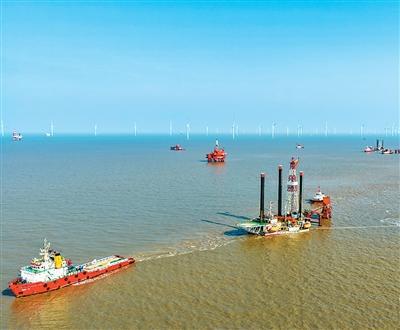
科研深度赋能产业,发展活力更充沛
Qi Lu Wan Bao· 2026-02-13 15:32
Core Viewpoint - The company is focusing on high-quality development through technological innovation and collaboration, aiming to enhance its natural gas and oil exploration capabilities by 2025 [1][6]. Group 1: Technological Innovation and Development - The company plans to implement ten major projects during the "14th Five-Year Plan" period, establishing ten "technology-industry integration innovation teams" to drive systematic engineering efforts [1][2]. - A comprehensive innovation system supports the transition of scientific achievements from laboratories to production lines, enhancing productivity [2][3]. - The company has established 19 provincial and ministerial-level key laboratories and research centers, ranking among the top in innovation metrics within the China Petroleum & Chemical Corporation [2][3]. Group 2: Collaborative Efforts and Resource Sharing - The company is advancing nine major project clusters in collaboration with the China Petroleum & Chemical Corporation, focusing on resource sharing and complementary advantages [3][4]. - An open research system is being developed, emphasizing collaboration with top institutions and forming innovation alliances to tackle key challenges in oil and gas exploration [3][4]. Group 3: Field Innovations and Achievements - The company has developed high-density seismic acquisition technology and proprietary seismic imaging software, significantly improving exploration capabilities [4][5]. - Innovative techniques in low-permeability oil reservoirs have led to an increase of over 150,000 tons of oil through advanced water injection methods [4][5]. - The company has reported a total of 105.2 billion tons of shale oil resources, with 14 million tons confirmed as the first batch of shale oil reserves in the country [4][5]. Group 4: Strategic Alignment with National Goals - The company aligns its technological innovations with national strategic needs, actively participating in national-level research projects and securing funding for significant initiatives [6][7]. - Over the past five years, the company has implemented more than 1,800 research projects, achieving multiple breakthroughs and maintaining a consistent upward trend in oil and gas production [8]. Group 5: Talent Development and Ecosystem Building - The company emphasizes the importance of talent cultivation and ecosystem development, establishing mechanisms to nurture technology leaders through major projects [7][8]. - The company has received numerous awards for its innovations, including gold and silver medals at international invention exhibitions, reflecting its commitment to technological advancement [8].