Heineken(HEINY)

Search documents
Heineken: Shares Still Cheap Amid Ongoing Demand Concerns (OTCMKTS:HEINY)
Seeking Alpha· 2026-03-13 18:57
Core Viewpoint - The current market environment is characterized by uncertainty, leading to a focus on large-cap consumer staples, with Heineken N.V. identified as a favorable long-term investment option due to its potential for sustainable high-quality earnings [1]. Company Summary - Heineken N.V. is highlighted as a strong candidate for long-term investment, particularly appealing to those seeking stocks that can consistently deliver high-quality earnings [1]. Investment Strategy - The investment approach emphasized is a long-term, buy-and-hold strategy, particularly favoring stocks in the dividend and income sector [1].

HEINY vs. SAM: Which Stock Is the Better Value Option?
ZACKS· 2026-03-13 16:41
Core Viewpoint - Investors in the Beverages - Alcohol sector should consider Heineken NV (HEINY) as a potentially undervalued stock compared to Boston Beer (SAM) [1] Valuation Metrics - Heineken NV has a Zacks Rank of 2 (Buy), indicating a stronger earnings outlook compared to Boston Beer, which has a Zacks Rank of 4 (Sell) [3] - HEINY has a forward P/E ratio of 12.61, significantly lower than SAM's forward P/E of 22.73, suggesting HEINY may be undervalued [5] - HEINY's PEG ratio is 1.39, while SAM's PEG ratio is 2.50, indicating HEINY's expected EPS growth is more favorable [5] - HEINY's P/B ratio is 1.95, compared to SAM's P/B of 2.84, further supporting the notion that HEINY is undervalued [6] - Based on these metrics, HEINY holds a Value grade of B, while SAM has a Value grade of C, indicating HEINY is the superior value option [6] Earnings Outlook - HEINY is currently experiencing an improving earnings outlook, which enhances its attractiveness in the investment landscape [7]
渣打首次亮相F1喜力中国大奖赛
Zhong Guo Jin Rong Xin Xi Wang· 2026-03-13 12:50
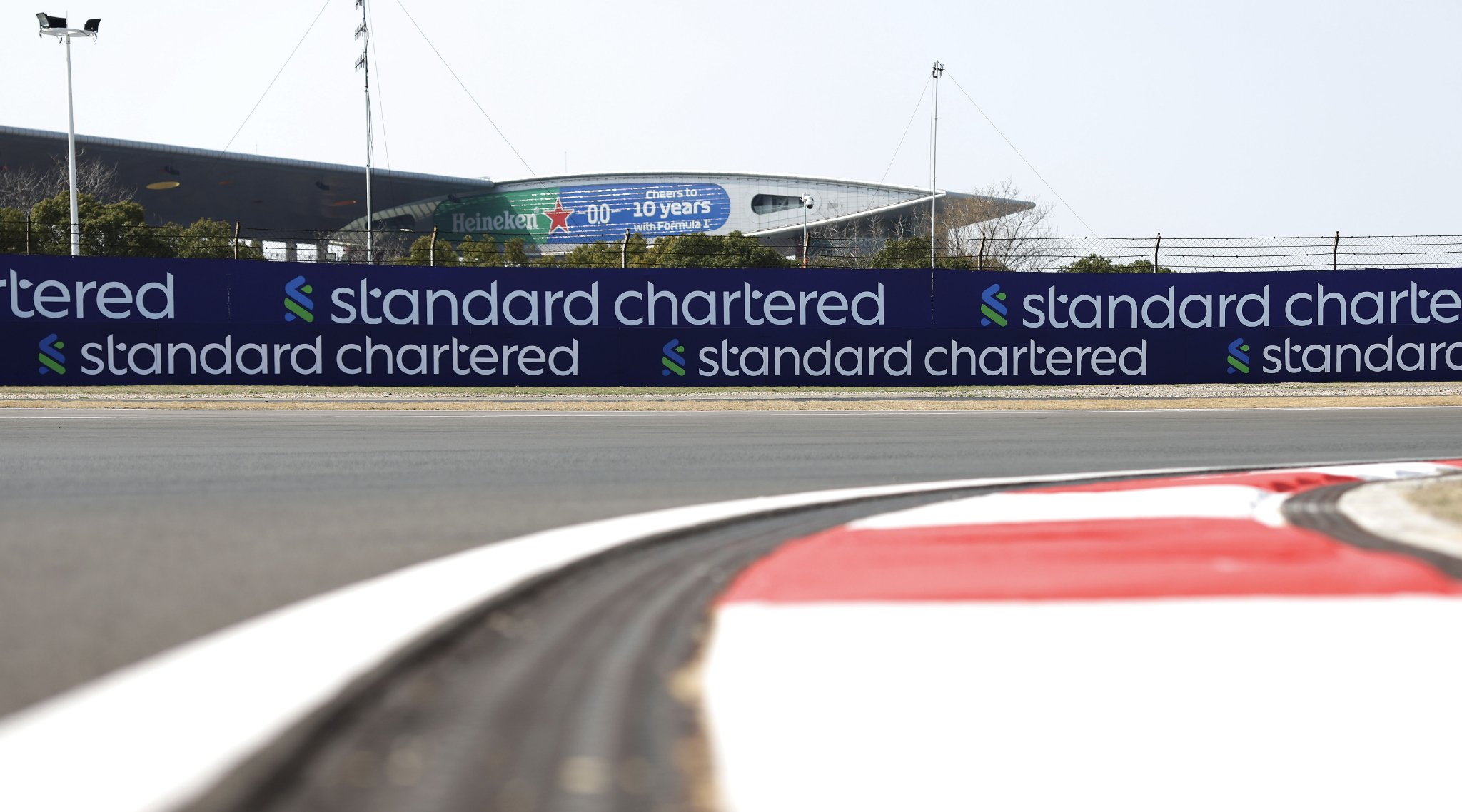
Core Insights - Standard Chartered Group officially debuted as a partner at the 2026 Formula 1 Heineken Chinese Grand Prix, marking the launch of its long-term global partnership with F1 in China, a key strategic market [1][6] Group 1: Partnership and Brand Engagement - As F1's official wealth management and corporate investment banking partner, Standard Chartered showcased its brand at the Shanghai International Circuit, enhancing brand interaction through exclusive customer experience activities [1][6] - The partnership with F1 Academy supports the inaugural race of the all-female series in Shanghai, aiming to promote the participation and visibility of young female drivers throughout the season [3][10] Group 2: Commitment to the Chinese Market - The launch of the global brand partnership in Shanghai highlights Standard Chartered's long-term commitment and investment in the Chinese market, which remains the largest contributor to the group's network income [3][11] - In the corporate and investment banking sector, Standard Chartered's China-ASEAN corridor business grew by 20% year-on-year, while the China-Africa corridor saw a 25% increase [11] - The bank has opened four new priority private banking centers in Shanghai, Beijing, Hangzhou, and Shenzhen, with plans for more, reflecting its ongoing expansion in wealth management [11] Group 3: Strategic Statements from Executives - The CEO of Corporate and Investment Banking expressed pride in the partnership with F1, emphasizing Standard Chartered's role as a "super connector" in facilitating cross-border growth opportunities [4][11] - The CEO of Wealth Management and Retail Banking highlighted China's strategic importance and the bank's commitment to providing diversified wealth management solutions, showcasing the advantages of their partnership with F1 [5][11] - The President and Vice Chairman of Standard Chartered China noted the bank's nearly 170-year presence in Shanghai, aligning the values of innovation and resilience represented by F1 with China's unique position in global trade and investment [5][11]
2026喜力格子旗嘉年华启动 市民游客感受赛车运动激情与魅力 四大地标联动 全城都是舞台
Jie Fang Ri Bao· 2026-03-09 01:33
Group 1 - The 2026 Formula 1 Heineken Chinese Grand Prix will take place from March 13 to 15 at the Shanghai International Circuit, marking a significant event in the city's spring cultural and tourism season [1] - The "Heineken Checkered Flag Carnival" features a multi-point connection model, linking four major landmarks: Xuhui Waterfront, Jiading Circuit, Hongkou North Bund, and Baoshan Riverside, creating an immersive racing experience for citizens and tourists [1] - The Xuhui Waterfront and Baoshan Riverside venues have opened, offering a comprehensive immersive racing culture experience, including live broadcasts, themed exhibitions, stage performances, interactive games, and commercial displays [1] Group 2 - The event introduces a themed custom cruise, making the Huangpu River a scenic link between the Xuhui Riverside and Hongkou North Bund venues, effectively turning the city into a vast stage for the carnival [2] - A "Super Driver's License" booklet featuring a Q-version image of China's first F1 driver Zhou Guanyu has been launched, connecting the four venues and ten premium commercial districts, providing visitors with various benefits [2] - During the event, holders of the "Super Driver's License" can complete unique check-in tasks and enjoy over 150 benefits in dining, retail, and entertainment across 22 commercial districts [2]
No Last Orders: Heineken Taps Award-Winning Filmmaker to Tell the True Story of 26 Locals Who Refused to Lose Their Last Pub
Globenewswire· 2026-03-02 13:15
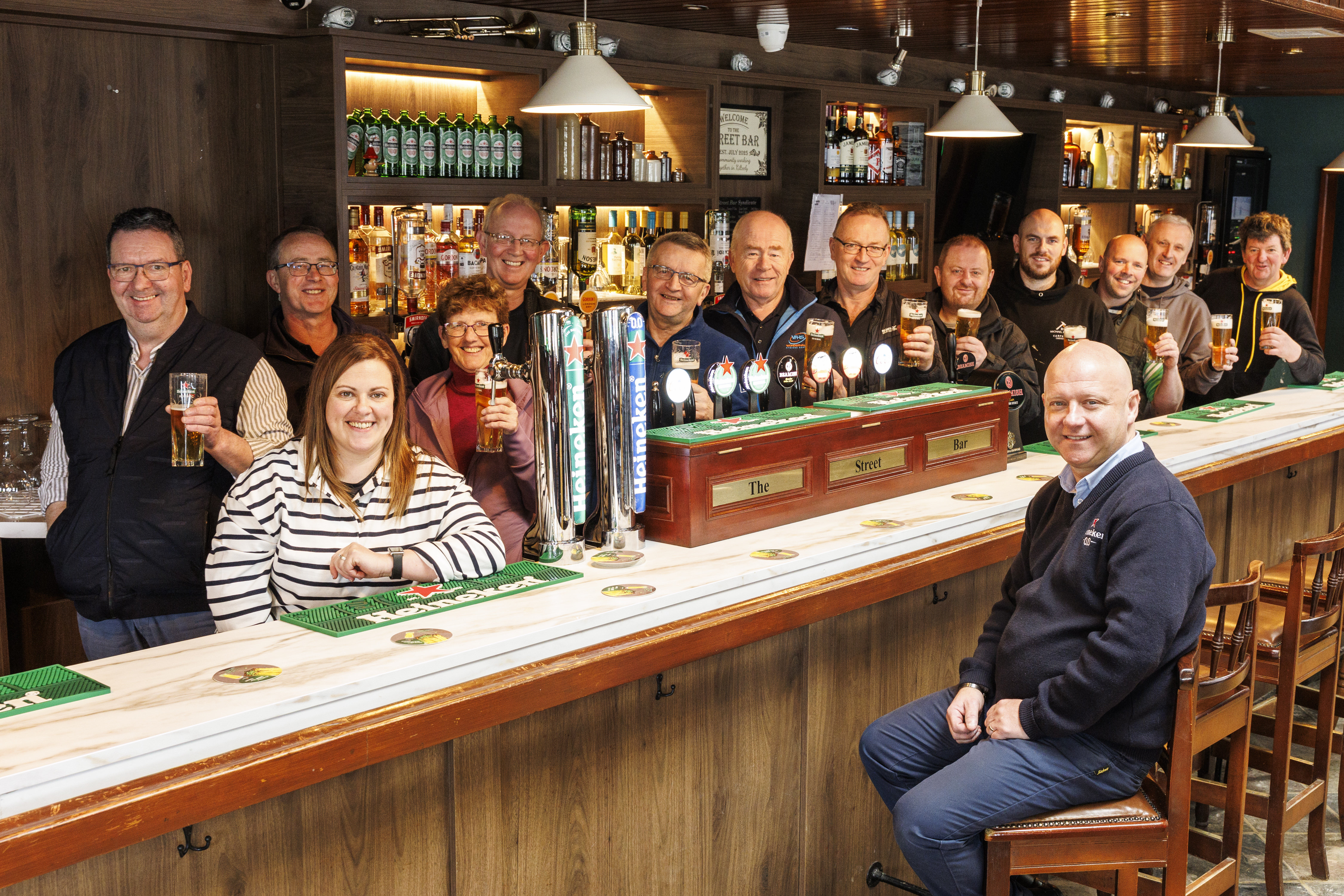
Core Insights - The documentary "The Pub That Refused To Die" highlights the story of 26 residents from Kilteely, Ireland, who united to save their local pub, showcasing a broader issue of pub closures across the UK and Ireland [2][5][12] Company Involvement - Heineken provided support to the Kilteely pub by offering business advice, training, and resources, and is launching a new online resource hub to assist other communities in preserving their local pubs [8][15][17] - The documentary was directed by Gar O'Rourke, an award-winning filmmaker, emphasizing Heineken's commitment to community and pub culture [5][11][17] Industry Context - Pubs are closing at an alarming rate, with an estimated 2,100 closures in Ireland from 2005 to 2025, and 375 closures in the UK in 2025 alone, highlighting the importance of these social spaces [12][13] - Sociologists regard pubs as essential "third places" for community connection, and their disappearance leads to increased feelings of isolation [13][14] Community Response - Local communities in the UK and Ireland are increasingly taking action to save at-risk pubs by forming cooperatives and pooling resources, indicating a renewed belief in the value of local pubs [14] - The success of the Street Bar in Kilteely serves as a model for other communities, demonstrating that collective action can revitalize local social hubs [16]
Beer Stocks are Breaking Out (BUD, HEINY, CABGY)
ZACKS· 2026-02-27 18:35
Core Thesis - Select beer stocks are gaining momentum due to improving fundamentals, reasonable valuations, and strong price momentum, with Heineken, AnheuserBusch InBev, and Carlsberg being key players [1][16] Earnings Growth and Valuation - Earnings per share are growing in the teens while revenue expands at single-digit rates, indicating margin expansion and capital return [3][9] - Mature global beverage companies are trading at mid-teens forward P/E multiples, significantly below the S&P 500's approximately 21x, suggesting potential for re-rating [3] Market Sentiment and Ownership Dynamics - Alcohol stocks have been de-rated due to concerns over GLP-1 drugs, sobriety trends, cannabis substitution, and slowing consumption, leading to a "secular decline" narrative [5] - Current expectations may have been overly pessimistic, and as these companies pivot, incremental buying is having a significant impact on stock prices [6] Earnings Revisions and Momentum - Earnings estimates for Heineken have increased by 5.3% for the current year and 4.6% for next year, indicating growing confidence in durable margin gains [11] - All three stocks are showing constructive technical setups, reflecting institutional accumulation and suggesting that momentum may precede broad earnings upgrades [12] Investment Considerations - The combination of under ownership, improving fundamentals, margin expansion, and reasonable valuations creates a favorable environment for sustained momentum [16] - Heineken, AnheuserBusch InBev, and Carlsberg represent compelling investment opportunities due to their stable global franchises and potential for continued multiple expansion from a low base [17]

HEINEKEN appoints new Chief Digital & Technology Officer
Globenewswire· 2026-02-26 07:00
Core Insights - Heineken N.V. has appointed Romain Apert as the new Chief Digital & Technology Officer, effective May 15, 2026, succeeding Ronald den Elzen who is retiring after 31 years with the company [1][6] Group 1: Leadership Transition - Romain Apert brings over two decades of experience from Mars, where he held global CIO positions and led significant digital transformation initiatives [2] - Ronald den Elzen has been instrumental in establishing digital capabilities at Heineken since March 2020, serving as the first Chief Digital & Technology Officer [5] Group 2: Strategic Focus - Romain Apert will work closely with the Executive Team to advance Heineken's EverGreen 2030 strategy, focusing on the deployment of the company's Digital Backbone and leveraging data and AI for value creation [3] - The transition aims to build on the strong foundations laid by Ronald den Elzen, enhancing Heineken's ambition to be the 'Best Connected Brewer' [5] Group 3: Company Overview - Heineken is a leading global beer company with a diverse portfolio of over 340 brands, employing more than 87,000 people across more than 70 countries [8]

Market Disruption: Alcohol Giants Lose $830B as Gen Z Pulls Back, While AI “Scare Trade” Rattles Software and Wealth Sectors
Stock Market News· 2026-02-22 02:08
Alcohol Industry - The global alcohol industry has experienced a "structural change," resulting in a loss of $830 billion in market value since 2021, which is a 46% decline from its peak in June 2021 [2][7] - The downturn is particularly significant among Gen Z consumers, with 21.5% of legal-age adults in this group not consuming alcohol at all, and 39% drinking only occasionally [3] - The rise of the "sober curious" movement and the popularity of GLP-1 weight-loss drugs are contributing to this shift, leading major companies like Diageo and Pernod Ricard to see their shares drop to decade lows [3][7] - Non-alcoholic beverage sales have surged by 30% last year, prompting traditional alcohol brands to adapt their long-term business strategies [7] Software and Services Sector - The U.S. software and services sectors have lost approximately $2 trillion in value since October, driven by an "AI Scare Trade" where investors are selling firms perceived as vulnerable to automation [4][7] - Companies like Salesforce, Adobe, and Intuit have seen significant declines in their stock prices, with Salesforce dropping 30% in 2026 and Adobe and Intuit falling 25% and 40% respectively [4][5] - The launch of advanced AI tools has intensified market panic, leading to indiscriminate selloffs in sectors like legal services and insurance brokerage [5] Wealth Management Sector - The wealth management sector has been impacted by the introduction of AI-enabled tools, such as Altruist's "Hazel," causing significant stock declines for firms like Raymond James Financial and Charles Schwab [6][7] - Analysts suggest that the selloff reflects fears of massive fee compression and a permanent shift in market share away from traditional advisors due to AI applications [6] Broader Market Trends - The market sentiment has shifted from "buying AI winners" to "fleeing AI losers," affecting various sectors including private credit and real estate brokerage [7] - Real estate and private credit markets are also facing challenges, with companies like CBRE Group experiencing a 16% drop in valuation as investors question the future of human-led services [8] - Alternative asset managers like Blackstone and KKR have seen declines between 13% and 24% this year due to concerns over their exposure to the struggling software sector [8]
Heineken (HEINY) Upgraded to Buy: What Does It Mean for the Stock?
ZACKS· 2026-02-19 18:01
Core Viewpoint - Heineken NV has been upgraded to a Zacks Rank 2 (Buy), indicating a positive trend in earnings estimates which is a significant factor influencing stock prices [1][3]. Earnings Estimates and Stock Price Impact - The Zacks rating system reflects changes in earnings estimates, which are strongly correlated with near-term stock price movements [4][6]. - Institutional investors utilize earnings estimates to determine the fair value of stocks, leading to price movements based on their buying or selling activities [4]. Business Outlook - The upgrade in Heineken's rating suggests an improvement in the company's underlying business, which could lead to an increase in stock price as investors respond positively [5][10]. - For the fiscal year ending December 2026, Heineken is expected to earn $3.19 per share, with a 5.5% increase in the Zacks Consensus Estimate over the past three months [8]. Zacks Rank System - The Zacks Rank system classifies stocks into five groups based on earnings estimates, with a strong historical performance, particularly for Zacks Rank 1 stocks which have averaged a +25% annual return since 1988 [7][9]. - Heineken's upgrade to Zacks Rank 2 places it in the top 20% of Zacks-covered stocks, indicating a strong potential for market-beating returns in the near term [10].
Heineken: Execution And Strategic Discipline Support The Equity Story
Seeking Alpha· 2026-02-19 09:38
Core Viewpoint - Heineken N.V.'s shares are experiencing a rally after a prolonged period of underperformance, indicating potential for further upside in the stock price [1]. Group 1: Company Performance - The recent momentum in Heineken's shares is seen as encouraging, suggesting that the company may be on a path to recovery [1]. - The company has garnered support from buy-side hedge professionals who are conducting fundamental, income-oriented, long-term analysis across global developed markets [1].