Inditex(IDEXY)

Search documents
美妆行业:周度市场观察-20250927
Ai Rui Zi Xun· 2025-09-27 09:16
Investment Rating - The report does not explicitly provide an investment rating for the beauty industry Core Insights - The beauty industry is experiencing a significant transformation driven by consumer preferences for high-quality, effective products and the integration of technology in skincare and cosmetics [4][6][10] Industry Trends - The high-end fragrance segment is witnessing robust growth, with the Chinese perfume market projected to reach 24.9 billion yuan by 2025 and exceed 33.9 billion yuan by 2028, reflecting a compound annual growth rate of 8% [4] - Domestic beauty brands are focusing on scientific innovation, market segmentation, and globalization to enhance competitiveness [6][7] - The integration of medical aesthetics and beauty is becoming a trend, with a projected annual growth rate of 10%-15% for the medical aesthetics market from 2024 to 2027 [10] - The beauty market is seeing a shift towards multi-brand strategies, with companies like Proya and Shiseido leading the way [6][11] Market Environment - Douyin e-commerce is revitalizing the perception of "Chinese good ingredients," enhancing consumer trust in domestic skincare products through educational campaigns [4] - The domestic beauty market grew by 3.1% in the first half of 2025, with significant performance disparities among companies [6] - The trend of "reverse export" to South Korea is emerging, as domestic brands seek to penetrate the Korean market through differentiated product offerings [6] Top Brand Dynamics - Proya leads the domestic beauty market with a revenue of 5.36 billion yuan, followed closely by other major players [11] - The report highlights the rise of makeup artist brands, with Unilever investing in Hung Vanngo Beauty, indicating a growing interest in professional makeup lines [13] - L'Oréal is accelerating its presence in the fragrance market with the launch of high-end perfumes, reflecting a strategic shift towards premium products [14] - The beauty industry is witnessing a surge in e-commerce, with platforms like JD.com reporting double-digit growth in beauty sales [18]


快时尚巨头,为何扎堆做美妆?
Hu Xiu· 2025-09-26 10:29
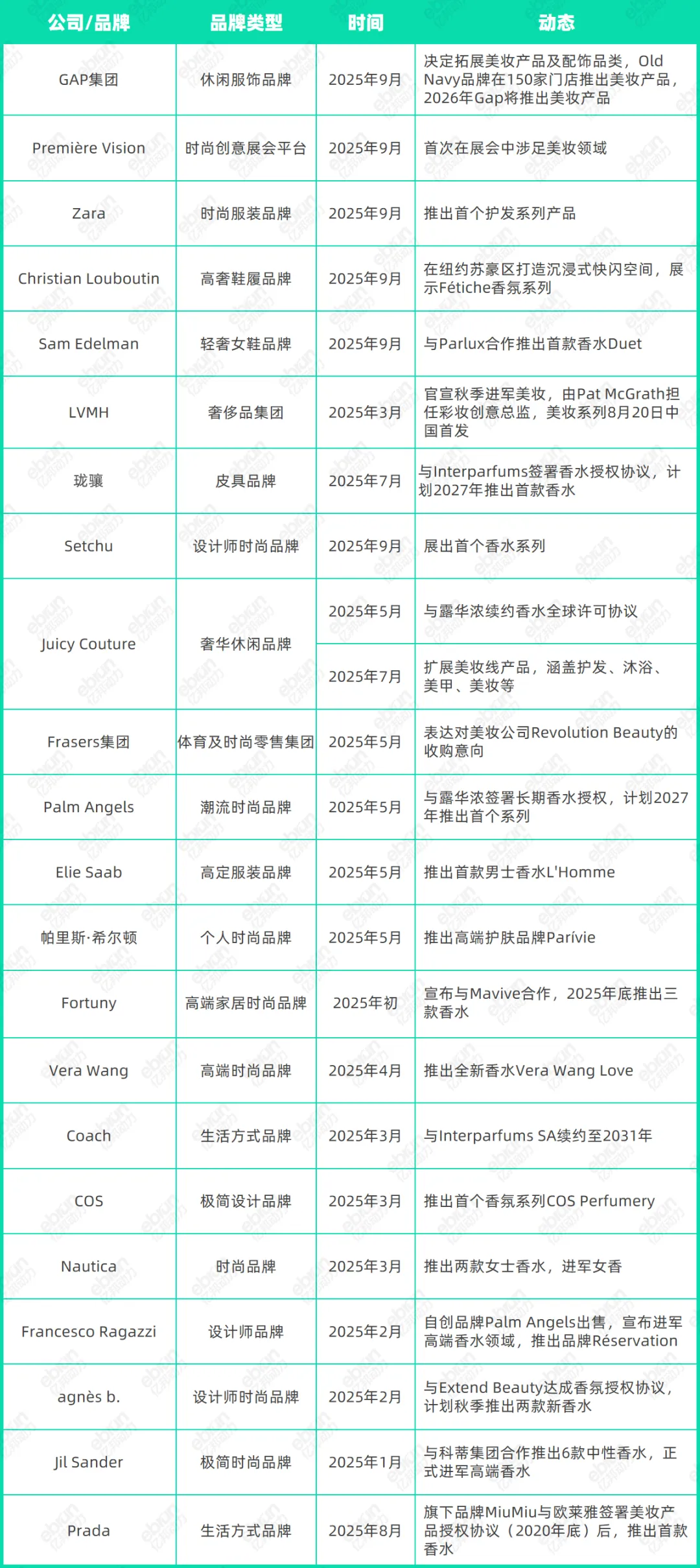
Core Viewpoint - The fashion industry is increasingly venturing into the beauty sector as a response to declining sales, with several major brands launching beauty products to explore new growth opportunities [3][10][46]. Group 1: Fashion Brands Entering Beauty - In September 2025, major fashion brands like Gap, Zara, and H&M announced significant moves into the beauty industry, indicating a trend among fashion companies to diversify their product offerings [5][16]. - Gap Group plans to launch beauty products in 150 Old Navy stores, with some featuring beauty consultants, aiming to leverage its financial stability for growth [12][10]. - Zara has introduced its first hair care line, including shampoo and conditioner, marking its entry into the hair care segment after previously launching cosmetics and fragrances [15][14]. Group 2: Performance of Fashion Brands - Gap Group reported a 4.85% increase in net sales for Q2 2024, ending a three-year decline, but the growth rate has slowed significantly compared to previous years [7][10]. - Zara's parent company, Inditex, experienced a modest 1.6% sales growth in H1 2025, with Zara itself showing the slowest growth in five years at 0.9% [13][14]. - H&M's net sales fell by 1.87% in the same period, with a notable decline in net profit, indicating a downward trend for the brand [16][17]. Group 3: LVMH's Beauty Strategy - LVMH launched its own beauty brand in 2025, with a focus on luxury makeup products, including 55 lipstick shades, aiming to enhance its beauty segment's profitability [32][33]. - Despite the launch, LVMH's overall sales and profits saw significant declines in H1 2025, with a 4.48% drop in net sales and a 21.59% decrease in net profit [34][35]. - The beauty segment's operating profit margin remains lower than the group's average, highlighting challenges in achieving profitability through self-created beauty brands [39][40]. Group 4: Designer Brands and Fragrance - Designer brands are increasingly entering the fragrance market, with several launching new perfume lines in collaboration with established fragrance companies [20][22]. - The trend reflects a broader strategy among fashion brands to transform into lifestyle brands, leveraging their design expertise while outsourcing production and distribution to fragrance giants [22][24]. - Notably, Christian Louboutin's fragrance line, managed by Puig, has faced challenges, with its makeup segment experiencing a decline in sales [30][28]. Group 5: Market Outlook and Challenges - The collective move into beauty by fashion brands raises questions about the sustainability of this strategy amid economic downturns [46]. - The beauty market's appeal remains strong, but the success of these ventures will depend on the brands' ability to adapt and innovate in a competitive landscape [46].



Inditex集团2025年上半年销售额同比增长1.6%至184亿欧元
Cai Jing Wang· 2025-09-12 05:09
Core Insights - Inditex reported a 1.6% year-on-year increase in sales for the first half of fiscal year 2025, reaching €18.4 billion [1] - Gross profit grew by 1.5% to €10.7 billion, with a gross margin of 58.3% [1] - Operating expenses increased by 2.2%, while EBITDA rose by 1.5% to €5.1 billion [1] - The company opened new stores in 35 markets during the first half of 2025, bringing the total number of stores to 5,528 by the end of the half-year [1]
Zara owner Inditex reports better start to autumn sales, boosting shares
Yahoo Finance· 2025-09-10 15:28
Core Viewpoint - Inditex, the owner of Zara, reported a positive start to its autumn sales, with a 9% increase in currency-adjusted sales from August 1 to September 8, indicating a recovery from earlier slower growth rates [1][2]. Sales Performance - Sales for the second quarter ending July 31 were 10.08 billion euros ($11.81 billion), falling short of the expected 10.26 billion euros [2]. - The sales growth for the first half was 5.1%, which improved to 9% in the early part of the third quarter [1][2]. Currency Impact - A weaker U.S. dollar is expected to erode sales by 4% in 2025, a revision from the previously anticipated 3% impact [3]. - The dollar's weakness affects U.S. sales, Inditex's second-largest market, making them less valuable in euro terms [3]. Market Environment - The CEO noted that the first half of the year showed solid performance despite a "complex market environment," and emphasized the importance of the second half for sales growth [4]. - Analysts have expressed concerns about the uncertain consumer environment, which poses challenges for clothing retailers [4]. Gross Margin - Inditex maintained a gross margin of 58.3% for the first half, consistent with the previous year, reflecting the company's ability to navigate a challenging market [5]. Investor Sentiment - Shares in Inditex have declined this year as investors react to a slowdown in sales growth after four years of double-digit annual increases [6]. - The slowing sales growth has raised questions about demand for Zara clothing and the company's ability to raise prices in the U.S. market [7].
Inditex's Financial Performance in the Fast Fashion Industry
Financial Modeling Prep· 2025-09-10 15:00
Core Insights - Inditex, a major player in the fast fashion industry, owns brands like Zara and is known for its rapid trend adaptation [1] - The company reported earnings per share (EPS) of $0.14, below the estimated $0.22, while revenue reached approximately $11.83 billion, exceeding the estimated $10.25 billion [2][6] - Recent performance indicates challenges in the fast fashion sector, particularly due to cautious consumer behavior in key markets like the U.S., although there was an acceleration in sales growth in August [3] Financial Metrics - Inditex has a price-to-earnings (P/E) ratio of 11.34, a price-to-sales ratio of 1.72, and an enterprise value to sales ratio of 1.71, reflecting market valuation relative to sales [4] - The company maintains a strong financial position with an earnings yield of 8.82%, a debt-to-equity ratio of 0.31, and a current ratio of 1.35, indicating good liquidity and low debt levels [5][6]
Industria de Diseno Textil (IDEXY) Quarterly Earnings Overview
Financial Modeling Prep· 2025-09-09 18:00
Core Viewpoint - IDEXY is a prominent player in the fast fashion industry with a strong market presence and innovative business model, set to release quarterly earnings on September 10, 2025, with estimated earnings per share of $0.21 and projected revenue of approximately $10.26 billion [1][6] Financial Metrics - The company's price-to-earnings (P/E) ratio is 11.40, indicating investor confidence as they are willing to pay $11.40 for every dollar of earnings [2][6] - IDEXY's price-to-sales ratio stands at 1.73, reflecting a reasonable market valuation relative to its sales [2] - The enterprise value to sales ratio is 1.72, suggesting that the company's total value aligns well with its sales performance [3] - An earnings yield of 8.78% demonstrates IDEXY's strong ability to generate earnings from investments, appealing to growth-focused investors [3] Financial Health - The debt-to-equity ratio is 0.31, indicating a low level of debt compared to equity, which enhances the company's stability [4][6] - A current ratio of 1.35 shows that IDEXY has sufficient liquidity to cover its short-term liabilities, ensuring operational efficiency [4] Growth Potential - IDEXY is considered a promising growth stock due to its favorable growth score and top Zacks Rank, positioning the company to capture market attention and deliver strong financial growth [5]
3 Reasons Why Industria de Diseno Textil (IDEXY) Is a Great Growth Stock
ZACKS· 2025-08-22 17:46
Core Viewpoint - Growth investors are attracted to stocks with above-average financial growth, but identifying such stocks can be challenging due to inherent risks and volatility [1] Group 1: Company Overview - Industria de Diseno Textil SA (IDEXY) is currently recommended as a growth stock based on its favorable Growth Score and top Zacks Rank [2] - The company has a historical EPS growth rate of 30.6%, with projected EPS growth of 37.3% this year, significantly outperforming the industry average of 3.2% [4] Group 2: Financial Metrics - The year-over-year cash flow growth for Industria de Diseno Textil is 7.1%, compared to the industry average of -1.1% [5] - The company's annualized cash flow growth rate over the past 3-5 years is 6.2%, slightly above the industry average of 5.9% [6] Group 3: Earnings Estimates - There has been a positive trend in earnings estimate revisions for Industria de Diseno Textil, with the Zacks Consensus Estimate for the current year increasing by 25.6% over the past month [7] - The company has earned a Growth Score of A and a Zacks Rank of 2 due to these positive earnings estimate revisions, positioning it well for potential outperformance [9]
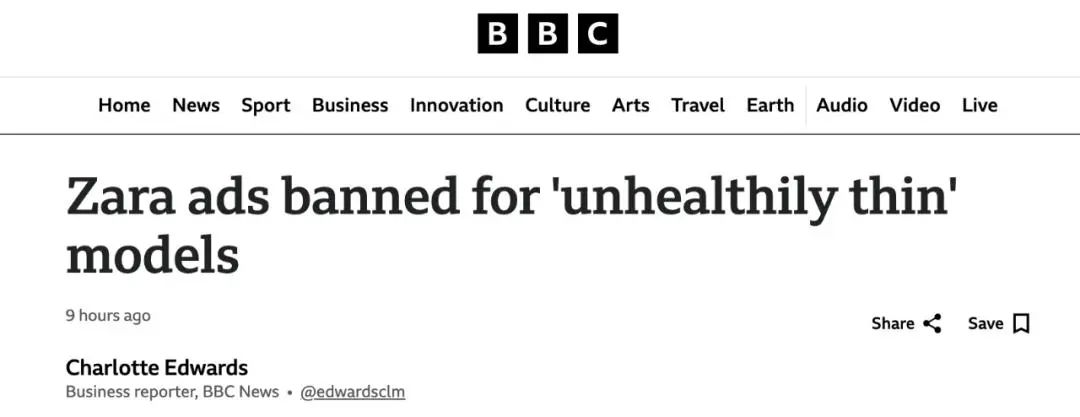
“面容憔悴、锁骨突出”,Zara广告因模特“瘦得不健康”被禁播并下架,公司回应:她们状况良好,有医疗证明
新浪财经· 2025-08-07 09:29
Group 1: Advertising Controversy - Zara's advertisements featuring models deemed "unhealthily thin" have been banned in the UK, sparking discussions on fashion standards and health [2][4][5] - The UK Advertising Standards Authority (ASA) ruled that the images exaggerated the models' thinness through lighting and styling, promoting an unhealthy aesthetic [4][5] - Zara has removed the controversial images and stated that the models were in good health during the shoot, with only minor adjustments made to the images [8] Group 2: Financial Performance - Inditex, Zara's parent company, reported a 1.5% year-on-year revenue increase to €8.27 billion for Q1 2025, which was below analyst expectations, leading to a stock price drop of over 6% [11] - The company's net profit for the same period was €1.305 billion, a slight increase from €1.299 billion in Q1 2024, but overall performance showed signs of decline [11] - Inventory levels increased by 6.3% to €3.791 billion, outpacing revenue growth, indicating potential issues in sales performance [11][13]

“面容憔悴、锁骨突出”,Zara广告因模特“瘦得不健康”被禁播并下架,公司回应:她们状况良好,有医疗证明
Mei Ri Jing Ji Xin Wen· 2025-08-07 06:16
Group 1: Advertising Controversy - Zara's advertisements featuring models deemed "unhealthily thin" have been banned in the UK, leading to discussions about fashion standards and health [1][2] - The UK Advertising Standards Authority (ASA) ruled that the images exaggerated the models' thinness through lighting and styling, raising concerns about promoting unhealthy aesthetics [2] - Zara has removed the controversial images and stated that the models were in good health during the shoot, although this response did not quell the ongoing debate about unhealthy beauty standards in the fashion industry [6] Group 2: Financial Performance - Inditex, Zara's parent company, reported disappointing first-quarter results for fiscal year 2025, with revenue growth of only 1.5% to €8.27 billion and net profit growth of 0.8% to €1.3 billion, both below analyst expectations [7][8] - The company's inventory increased by 6.3% to €3.79 billion, outpacing revenue growth, which raises concerns about potential overstock issues [9] - Sales growth for Inditex's spring/summer collection has shown signs of fatigue, with a mere 6% increase in sales from May 1 to June 9, compared to a 12% increase in the same period last year [10]
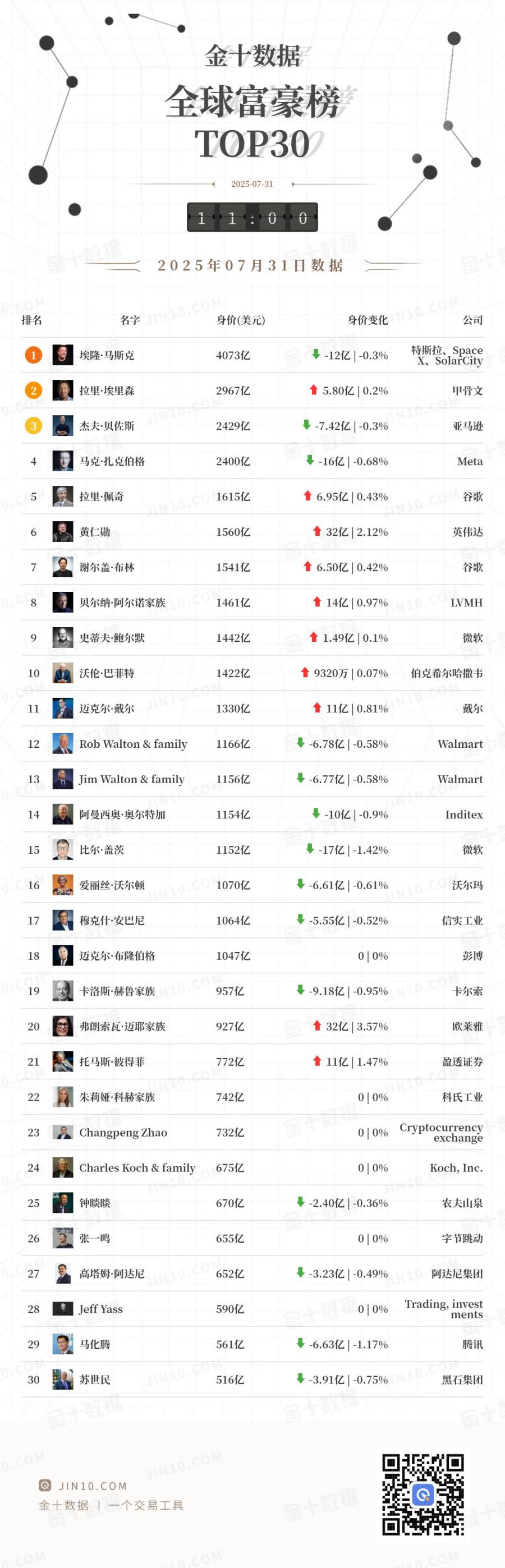
金十图示:2025年07月31日(周四)全球富豪榜





news flash· 2025-07-31 03:04
Group 1 - Elon Musk remains the richest person with a net worth of $407.3 billion, experiencing a decrease of $1.2 billion or 0.3% [1] - Larry Ellison ranks second with a net worth of $296.7 billion, increasing by $1.58 billion or 0.2% [1] - Jeff Bezos is third with a net worth of $242.9 billion, down by $7.42 billion or 0.3% [1] - Mark Zuckerberg's net worth is $240 billion, decreasing by $1.6 billion or 0.68% [1] - Larry Page has a net worth of $161.5 billion, increasing by $6.95 billion or 0.43% [1] Group 2 - Nvidia's CEO Jensen Huang has a net worth of $156 billion, increasing by $3.2 billion or 2.12% [1] - Sergey Brin, co-founder of Google, has a net worth of $154.1 billion, increasing by $650 million or 0.42% [1] - Bernard Arnault's family has a net worth of $146.1 billion, increasing by $1.4 billion or 0.97% [1] - Steve Ballmer, former CEO of Microsoft, has a net worth of $144.2 billion, increasing by $149 million or 0.1% [1] - Warren Buffett's net worth is $142.2 billion, increasing by $9.32 million or 0.07% [1] Group 3 - Michael Dell has a net worth of $133 billion, increasing by $1.1 billion or 0.81% [1] - Rob Walton and family have a net worth of $116.6 billion, decreasing by $6.78 billion or 0.58% [3] - Jim Walton and family have a net worth of $115.6 billion, decreasing by $6.77 billion or 0.58% [3] - Amancio Ortega has a net worth of $115.4 billion, decreasing by $1 billion or 0.9% [3] - Bill Gates has a net worth of $115.2 billion, decreasing by $1.7 billion or 1.42% [3]