Gartner(IT)

Search documents
monday.com Named a Leader in the 2025 Gartner® Magic Quadrant™ for Collaborative Work Management for the Third Consecutive Year
Businesswire· 2025-10-31 16:23
Core Insights - monday.com has been recognized as a Leader in the 2025 Gartner® Magic Quadrant™ for Collaborative Work Management (CWM) for the third consecutive year [1] - In the 2025 report, monday.com was positioned furthest for both Completeness of Vision and Ability to Execute among all evaluated vendors, marking the first time it achieved this position on both axes [1] Company Performance - The recognition reflects monday.com's strong performance and strategic vision in the collaborative work management sector [1] - The company has demonstrated consistent growth and innovation, contributing to its leadership status in the industry [1]


Gartner Set to Report Q3 Earnings: What's in the Offing?
ZACKS· 2025-10-30 18:26
Core Insights - Gartner Inc. is set to release its third-quarter 2025 results on November 4, before market open, with a strong earnings surprise history, averaging 21.3% over the last four quarters [1][4]. Revenue Expectations - The Zacks Consensus Estimate for Gartner's Q3 2025 revenue is $1.5 billion, reflecting a 2.3% increase from the same quarter last year [2][10]. - The Business and Technology Insights segment is expected to generate $1.3 billion in revenue, indicating a 3.1% year-over-year growth, driven by high-demand topics such as AI [2][10]. Segment Performance - Consulting revenues are projected at $133 million, representing a 13.1% decline from the previous year [3][10]. - Conference revenues are estimated at $77 million, suggesting a significant drop of 69.3% compared to the prior-year quarter [3][10]. Earnings Projections - The consensus estimate for earnings per share (EPS) is $2.41, indicating a year-over-year decrease of 3.6% [3][10]. - Gartner currently has an Earnings ESP of -4.07% and a Zacks Rank of 3, suggesting that an earnings beat is not anticipated this quarter [4].

Nvidia’s Path to $5 Trillion and Beyond
Investing· 2025-10-30 13:05
Core Insights - The article focuses on the market analysis of NVIDIA Corporation, highlighting its performance and potential investment opportunities in the context of the broader technology sector [1] Group 1: Company Performance - NVIDIA has shown significant growth in revenue, with a reported increase of 50% year-over-year, reaching $7.1 billion in the last quarter [1] - The company's net income also surged, reflecting a 60% increase compared to the previous year, amounting to $2.5 billion [1] - NVIDIA's strong performance is attributed to its leadership in the graphics processing unit (GPU) market and the growing demand for AI and machine learning applications [1] Group 2: Market Trends - The technology sector is experiencing a robust demand for high-performance computing, driven by advancements in AI and data analytics [1] - NVIDIA's market share in the GPU segment has expanded, with a reported 80% share in the discrete GPU market [1] - The overall market for AI-related hardware is projected to grow significantly, with estimates suggesting a compound annual growth rate (CAGR) of 25% over the next five years [1]


Gartner (IT) Declined Despite Good Results
Yahoo Finance· 2025-10-28 12:20
Core Insights - Renaissance Investment Management's Q3 2025 "Large Cap Growth Strategy" underperformed compared to the Russell 1000 Growth and S&P 500 despite overall stock market gains [1] - Gartner, Inc. (NYSE:IT) was identified as the largest detractor from the portfolio performance in Q3 2025, with significant declines in its stock value over the past year [2][3] Performance Summary - The S&P 500 reached all-time highs in September, with a quarterly return of 8.1%, while the Russell 1000 Growth returned 10.5% [1] - Gartner, Inc. experienced a one-month return of -2.77% and a 52-week decline of 50.68%, closing at $255.58 per share with a market capitalization of $19.357 billion on October 27, 2025 [2] Company Analysis - Gartner, Inc. reported Q3 results that exceeded expectations, but its Contract Value (CV) revenue growth moderated more than anticipated due to a challenging sales environment influenced by tariffs and federal government expenditure delays [3] - Concerns are rising regarding the impact of Generative AI on Gartner's proprietary technology research and its potential to disintermediate the company's value [3] Hedge Fund Interest - Gartner, Inc. was held by 45 hedge fund portfolios at the end of Q2 2025, a decrease from 51 in the previous quarter, indicating a decline in popularity among hedge funds [4]
Gartner大幅提升数据中心支出预测
半导体行业观察· 2025-10-28 01:07
Core Insights - The article discusses the significant increase in global IT spending driven by the surge in investments in AI technologies, particularly in GenAI hardware and software [2][5] - Gartner predicts that global IT spending will exceed $6 trillion by 2026, marking a substantial increase from previous forecasts [2][5] IT Spending Forecasts - Data Center Systems spending is projected to reach $489.5 billion in 2025, with a growth rate of 46.8%, and $582.4 billion in 2026, with a growth rate of 19% [3] - Enterprise Software spending is expected to grow from $1,244.3 billion in 2025 to $1,433.0 billion in 2026, reflecting a growth rate of 15.2% [3] - IT Services spending is forecasted to increase from $1,719.3 billion in 2025 to $1,869.3 billion in 2026, with an 8.7% growth rate [3] - Overall IT spending is anticipated to grow from $5,540.4 billion in 2025 to $6,084.1 billion in 2026, indicating a growth rate of 0.8% [3] Historical Context and Trends - Data Center Systems spending in 2024 is expected to reach $333.4 billion, nearly double the pre-pandemic levels, with a 40.3% increase from 2023 [7] - The growth rates for Data Center Systems spending are significantly higher than global GDP growth rates, highlighting the impact of GenAI and other factors [7][10] - Core IT spending, which includes Data Center Systems, Enterprise Software, and IT Services, tends to grow faster than overall IT spending, which includes telecommunications and devices [12] Inflation Impact - Adjusting for inflation, the cumulative effect from 2022 to 2026 adds $10.31 billion to the spending figures, indicating that the apparent growth may be influenced by inflation [10] - Even with inflation adjustments, the increase in Data Center Systems spending from 2019 to 2026 is projected to be 2.55 times, showcasing substantial growth [10]

数据中心,涨疯了
半导体芯闻· 2025-10-27 10:45
Core Insights - The article discusses the significant increase in AI-related spending, particularly in data center systems and enterprise software, driven by the GenAI trend and inflationary pressures [1][2][5][7]. IT Spending Forecasts - Gartner predicts that global IT spending will exceed $6 trillion by 2026, with a notable increase in spending on data center systems, enterprise software, IT services, devices, and communications services [2][5]. - The projected IT spending for 2025 is $5.54 trillion, reflecting a 10% growth from 2024, and aligns closely with earlier forecasts for 2026 [5][11]. Data Center Systems - Data center systems spending is expected to reach $489.45 billion in 2025, growing by 46.8%, and $582.45 billion in 2026, with a growth rate of 19% [2][7]. - The spending for data center systems in 2024 is projected to be $333.4 billion, which is double the pre-pandemic levels, indicating a 40.3% increase from 2023 [7][9]. Enterprise Software and IT Services - Enterprise software spending is forecasted to grow from $1.24 trillion in 2025 to $1.43 trillion in 2026, with growth rates of 11.9% and 15.2% respectively [2][4]. - IT services spending is expected to increase from $1.72 trillion in 2025 to $1.87 trillion in 2026, with growth rates of 6.5% and 8.7% [2][4]. Inflation Impact - The article highlights that inflation has a significant cumulative effect on spending, with adjustments showing that the apparent increase in spending may be less than it seems when accounting for inflation [9][11]. - Even after adjusting for inflation, the increase in data center systems spending from 2019 to 2026 is projected to be 2.55 times, indicating robust growth despite inflationary pressures [9][11].

Pega Named a Leader in Gartner® Magic Quadrant™ and Recognized in Critical Capabilities Report for Business Orchestration and Automation Technology
Businesswire· 2025-10-24 15:19
Core Insights - Pegasystems Inc. has been named a Leader in the Gartner Magic Quadrant for Business Orchestration and Automation Technology [1] - The company received recognition for its Completeness of Vision and Ability to Execute [1] - Pegasystems achieved the highest scores for two Critical Capabilities use cases: Case Management [1]

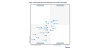
Pure Storage Named a Leader in the 2025 Gartner® Magic Quadrant™ for Infrastructure Platform Consumption Services
Prnewswire· 2025-10-24 15:07
Core Insights - Pure Storage has been recognized as a Leader in the 2025 Gartner Magic Quadrant for Infrastructure Platform Consumption Services, marking a significant achievement in the industry [1][5]. Group 1: Market Definition and Purpose - The Infrastructure Platform Consumption Services (IPCS) market is defined as a consumption-based, as-a-service offering for mission-critical infrastructure, including storage, compute, and network services [2]. - The primary purpose of IPCS is to provide a platform-services-based infrastructure that supports hybrid-cloud environments, focusing on SLA-based outcomes that enhance cost optimization, productivity, sustainability, and cyber resilience [3]. Group 2: Product Features and Innovations - The Pure Storage platform offers a unified architecture that ensures end-to-end data control, automation, and cyber resilience, facilitating data mobility and consistency across various infrastructures [4]. - The Evergreen//One model provides flexible consumption options, allowing customers to scale usage without penalties and adapt pricing to actual usage, enhancing financial flexibility [6]. - The platform's intelligent control plane automates data provisioning and management, supporting AI initiatives by ensuring data security and accessibility [6]. Group 3: Industry Recognition and Partnerships - Pure Storage's recognition in two Gartner Magic Quadrant reports in 2025 underscores its unmatched agility and risk reduction capabilities across on-premises, public cloud, and hybrid environments [5]. - The extensive partner ecosystem includes major companies such as AWS, Cisco, Microsoft Azure, and NVIDIA, enhancing the platform's capabilities in hybrid cloud, AI, and data center modernization [6].


Logiwa's AI-Powered Platform Recognized in 2025 Gartner® Report for Slashing 3PL Client Onboarding from Months to Weeks
PRWEB· 2025-10-23 11:00
Core Insights - Logiwa IO's inclusion in the Gartner Midmarket Context Magic Quadrant highlights its effectiveness in eliminating implementation bottlenecks for third-party logistics providers (3PLs), which can lead to millions in lost revenue opportunities [1][2][4] Group 1: Implementation and Onboarding - The traditional warehouse management systems (WMS) require up to six months for implementation, which delays a 3PL's ability to compete for new business [2][3] - Logiwa IO reduces onboarding time to days, allowing 3PLs to capture time-sensitive contracts that competitors may miss [3][8] - Standardized configurations in Logiwa IO cut implementation timelines from months to weeks, enabling faster capture of opportunities [8][9] Group 2: Technological Advantages - Logiwa IO incorporates AI-driven optimization for storage and routing, enhancing operational efficiency from day one [8][9] - The platform supports multitenant operations, maximizing warehouse density and allowing enterprise customers to expand networks significantly [8][9] - Logiwa IO enables 3PLs to onboard clients 90% faster than industry averages, transforming implementation speed into a competitive advantage [9] Group 3: Market Context - The 3PL market is undergoing a shift where speed to onboarding is directly correlated with speed to revenue [2] - Logiwa's technology advantage is evident in operations like ShipCube, eShipper+, and Left Brain Logistics, which are winning competitive deals [2][3] - Gartner's report emphasizes Logiwa's focus on improving time to launch and supporting multitenant operations [4]

Cash Machine Trading Cheap – Gartner Stock Set To Run?
Forbes· 2025-10-22 14:50
Core Perspective - Gartner (IT) stock is expanding, generating cash, and is currently undervalued compared to its historical highs [1] Financial Performance - Gartner has a free cash flow yield of 7.6%, indicating strong cash generation capabilities [5] - The company experienced a revenue growth of 5.9% over the last 12 months, suggesting an increase in cash reserves [5] - The stock is trading at a significant valuation discount, currently 34% lower than its 3-month high, 52% below its 1-year high, and 52% below its 2-year high [5] Investment Strategy - The average forward returns for Gartner's stock are projected at 25.7% for 6 months and 57.9% for 12 months, with a win rate of over 70% for both periods [6]