Merck(MRK)
Search documents
定价499元,不到进口一半!国产九价HPV疫苗价格公布
21世纪经济报道· 2025-07-09 08:21
Core Viewpoint - The introduction of the domestic nine-valent HPV vaccine "Xinkening®9" at a price of 499 yuan per dose intensifies competition in the HPV vaccine market, prompting a potential price war among manufacturers [1][8]. Market Expansion - The global coverage rate for the first dose of the HPV vaccine among girls is projected to reach 27% by 2024, while the coverage rate for women aged 9 to 45 in China is only 10.15%, showing significant room for growth compared to the global average and the 67% coverage in Western countries [5][6]. Market Challenges - Expanding market space is a major challenge for all companies involved in HPV vaccine development. Companies are actively seeking to open up the market, with the approval of new indications for the "Jiadaxiu9" vaccine, which is now the first and only nine-valent HPV vaccine approved for both males and females in China [7][8]. Competitive Landscape - Domestic HPV vaccine manufacturers are shifting focus to price competition after missing the first-mover advantage. However, raising public awareness and vaccination rates is seen as a more effective strategy than price cuts [9][10]. Vaccine Efficacy Evidence - Real-world studies have shown significant reductions in HPV infection rates and cervical cancer cases due to vaccination, with a Scottish study indicating a 90% decrease in HPV infections since the vaccine's introduction in 2008 [11][12]. Conclusion - The competition in the HPV vaccine market is expected to evolve, with data on vaccine efficacy becoming a crucial factor in establishing trust and market presence for new entrants [12].
全球药企压力山大:未来几年将迎来“专利到期潮”
Hua Er Jie Jian Wen· 2025-07-09 06:36
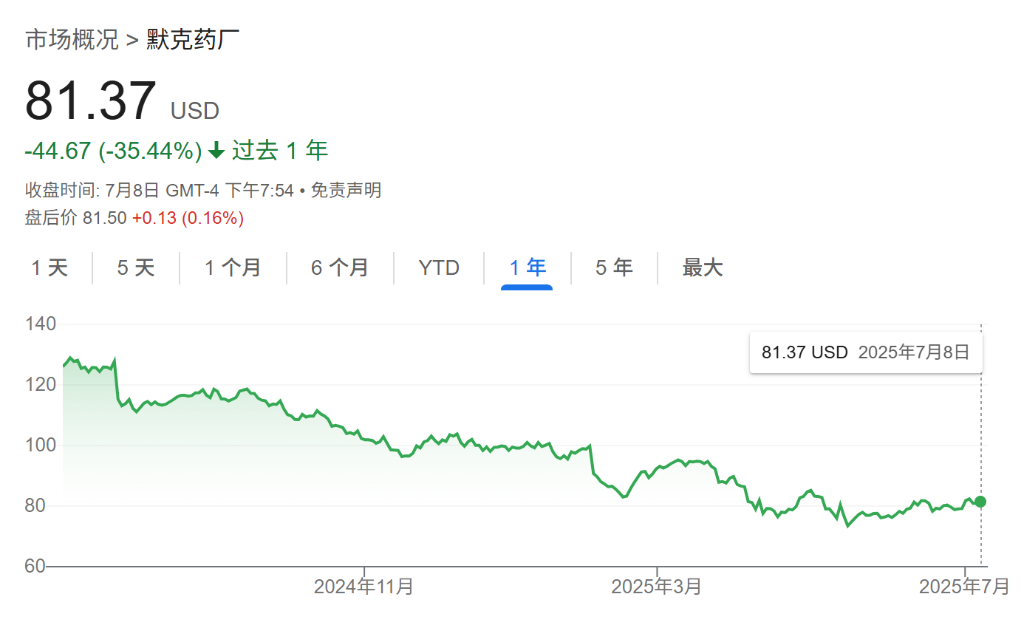
Core Insights - The pharmaceutical industry is facing its most severe "patent cliff" in a decade, with drugs worth approximately $180 billion in annual revenue set to lose patent protection in 2027 and 2028, impacting nearly 12% of the global market [1][6] - Major companies like Bristol-Myers Squibb, Pfizer, and Merck are expected to be significantly affected by this wave of patent expirations [1] - The current funding model for drug innovation is under scrutiny, as high innovation costs contrast with low replication costs, leading to substantial revenue losses for original drug manufacturers once patents expire [1][6] Patent Expiration Impact - Merck's Keytruda, a leading cancer drug, generated $29.5 billion in sales last year but will lose patent protection in 2028, contributing to a 35% decline in Merck's stock price over the past year [2][6] - Analysts highlight that Merck faces a "huge revenue gap" that cannot be filled by a single drug, prompting the need for accelerated growth strategies through mergers and acquisitions [5][6] Mergers and Acquisitions Strategy - Pharmaceutical companies are increasingly resorting to acquisitions to fill their product pipelines, with an estimated $1.3 trillion available for mergers [7] - Merck is reportedly close to acquiring London-based Verona Pharma for $10 billion as a strategic move to address the Keytruda patent cliff [7] - The political environment poses challenges, with concerns over regulatory scrutiny and potential tariffs impacting merger activities [7] Focus on Chinese Assets - Unlike previous patent cliffs, companies are now looking towards China for acquisition targets, often purchasing early-stage drug rights outside China for later trials [8][9] - The value of licensing deals between Chinese companies and Western partners has reached $35 billion this year, indicating a growing interest in the Chinese biotech sector [9] Patent Extension Strategies - Companies are also employing strategies to extend existing drug patent protections, exemplified by AbbVie's Humira, which has created a "patent thicket" to delay expiration until 2034 [10] - However, such strategies are facing increased political scrutiny, with calls for legislation to combat patent manipulation [10] Biological Drugs and Market Dynamics - The upcoming patent expirations are primarily for biologics, which are more challenging to replicate than traditional drugs, potentially leading to a less steep decline in prices [11] - The FDA is accelerating the approval process for biosimilars, which may change the market dynamics for companies like Merck [11]
默克接近收购呼吸系统药企Verona 交易估值100亿美元
news flash· 2025-07-09 05:43
智通财经7月9日电,三位知情人士称,Merck(默克)将以每股美国存托股票107美元的价格收购 Verona,这一报价较Verona周二收盘价溢价23%。此次收购对Verona的估值约为100亿美元,交易最快可 能周三宣布。 默克接近收购呼吸系统药企Verona 交易估值100亿美元 ...
X @Bloomberg
Bloomberg· 2025-07-09 05:30
Merck is closing in on an approximately $10 billion deal to acquire respiratory drugmaker Verona Pharma, the Financial Times reports https://t.co/M1uekdxh0f ...
默沙东接近达成以100亿美元的价格收购呼吸系统药物制造商Verona的交易
news flash· 2025-07-09 04:59
默沙东接近达成以100亿美元的价格收购呼吸系统药物制造商Verona的交易。 ...
竞争加剧,默沙东九价凭4亿全球接种剂次筑牢信任
Xin Hua Wang· 2025-07-09 03:56
Group 1 - HPV infection is a significant global public health issue, and the HPV vaccine is a crucial component of public health systems, especially with the promotion of strategies like the "Global Strategy to Accelerate the Elimination of Cervical Cancer" and "Healthy China Strategy" [1] - The introduction of domestic nine-valent HPV vaccines has sparked discussions on how to choose the best vaccine, highlighting the decision-making challenges faced by consumers [1] - Merck holds a leading position in the HPV vaccine market with its Gardasil®9, the only nine-valent vaccine approved for preventing cervical cancer caused by seven high-risk HPV types, and it is also the first and only nine-valent HPV vaccine approved for both males and females in China [1] Group 2 - Merck has a long history in vaccine development, having established itself as a key player in the global vaccine field since its founding in 1891, with significant contributions such as the transfer of hepatitis B vaccine technology to China [2] - The development of the HPV vaccine by Merck is rooted in a commitment to preventive medicine, emphasizing the importance of long-term efforts to ensure the vaccine's effectiveness over time [2] - The research and development of the HPV vaccine also benefited from Chinese scientific advancements, particularly the breakthroughs achieved by Chinese scientist Dr. Zhou Jian in the 1990s [2] Group 3 - As of May 2025, Merck's nine-valent HPV vaccine has been administered over 400 million doses globally, covering 112 countries, and has protected over 33 million eligible women in China since its approval in 2018 [3] - Long-term monitoring in countries like Australia has shown significant reductions in the incidence of HPV-related diseases following the implementation of vaccination programs, reinforcing the vaccine's effectiveness [3] - The stability of safety and efficacy data across different regions and time periods is a critical factor for healthcare providers and parents when choosing vaccines [3] Group 4 - Merck's Gardasil®9 utilizes a more mature yeast expression system, which enhances immunogenicity and reduces contamination risks, providing dual assurance of safety and efficacy [4] - The HPV vaccine market is transitioning from a "single supply" to "multiple competition," with Merck leveraging its extensive clinical data and global experience to offer reliable options for diverse consumer needs [4]
默沙东要慌了?九价HPV疫苗价格暴降60%!
Xin Lang Cai Jing· 2025-07-08 16:42
Core Viewpoint - WanTai Biologics has officially launched its nine-valent HPV vaccine "Xinkening®9" at a price of 499 yuan per dose, significantly undercutting the imported vaccine price and marking the end of the "high-price era" for HPV vaccines in China [1][6]. Pricing and Market Impact - The imported nine-valent HPV vaccine "Gardasil 9" is priced at approximately 1318 yuan per dose, with a total cost of nearly 4000 yuan for three doses, while "Xinkening®9" costs about 1497 yuan for three doses [1]. - "Xinkening®9" is the only HPV vaccine approved for a two-dose regimen for ages 9-17, reducing the cost for this age group to 998 yuan, thereby enhancing accessibility and compliance [1]. Historical Context and Market Dynamics - Prior to the launch of "Xinkening®9", the nine-valent HPV vaccine market in China was monopolized by Merck's "Gardasil 9," which faced a dramatic shift from high demand and scarcity to excess inventory [2]. - In 2023, the batch issuance of "Gardasil 9" reached 36.55 million doses, a year-on-year increase of 136.16%, making Merck the highest-grossing multinational pharmaceutical company in China that year [2]. Sales Performance and Challenges - Merck's global sales of the HPV vaccine in 2024 were $8.583 billion, a 3% decline year-on-year, primarily due to weak performance in the Chinese market [3]. - To address high inventory levels, Merck announced a suspension of supply to China starting in early 2025, expected to last until at least mid-2025 [3]. Financial Performance of WanTai Biologics - WanTai Biologics reported a 59.25% year-on-year decline in revenue for 2024, totaling 2.245 billion yuan, with a net profit drop of 91.49% to 106 million yuan [3]. - The company faced significant challenges due to a price collapse in its two-valent vaccine, leading to a drastic reduction in government procurement prices [3]. Market Potential and Future Outlook - The potential market for HPV vaccines in China is substantial, with 70%-80% of the 300 million women aged 9-45 yet to be vaccinated [4]. - National Investment Securities predicts that WanTai's nine-valent HPV vaccine could reach a sales peak of 22.8 billion yuan, with projected revenues of 3.17 billion yuan, 11.4 billion yuan, and 28.63 billion yuan for 2025-2027 [4]. Competitive Landscape - Several domestic pharmaceutical companies are in the late clinical stages of developing their own nine-valent HPV vaccines, creating a competitive environment for WanTai [5]. - WanTai has initiated a Phase III clinical trial for a male indication, but competitors like Kanglaite have already started their trials earlier [5]. International Expansion - WanTai aims to become a leading global vaccine supplier by 2030, with plans to have 3 to 5 WHO pre-qualified products [5]. - Competitors are also pursuing international markets, with Kanglaite planning to submit for approval in Indonesia and Ruike Biologics exploring the Middle East [5]. Industry Trends - The World Health Organization has warned that global HPV vaccine supply may exceed demand from 2025 to 2030, potentially leading to a price war and industry reshuffling [5]. - The WHO's recommendation for a single-dose HPV vaccination regimen could further intensify market competition [5].
Merck & Co.: A Pharma Titan At A Discount
Seeking Alpha· 2025-07-07 16:48
Core Insights - The article introduces Arav Shah as a new contributing analyst for Seeking Alpha, highlighting the opportunity for others to share investment ideas and get published [1]. Group 1 - Arav Shah is a second-year finance student at Northeastern University with a long-standing passion for investment, having started at the age of 14 [2]. - Shah is committed to deepening his knowledge in finance and aims to become an expert in the field [2]. Group 2 - The article includes a disclosure stating that the author has no current stock or derivative positions in the companies mentioned but may initiate a long position in MRK within the next 72 hours [3]. - Seeking Alpha emphasizes that past performance does not guarantee future results and that no specific investment recommendations are provided [4].
US Large Cap Pharmaceuticals_ Mid-Year State Of Play
2025-07-07 00:51
Summary of US Large Cap Pharmaceuticals: Mid-Year State Of Play Industry Overview - The report focuses on the US Large Cap Pharmaceuticals sector, analyzing key companies such as ABBV, LLY, JNJ, MRK, BMY, and PFE [6][5][32]. Core Insights and Arguments 1. **Revenue Growth and Stability**: Projected revenues from growth/stable products for 2025-2030 are as follows: ABBV at $10.39 billion, LLY at $3.06 billion, JNJ at $1.68 billion, MRK at $1.37 billion, BMY at $0.60 billion, and PFE at $0.54 billion [5]. 2. **Patent Cliff Exposure**: The number of years to the next major patent cliff varies, with ABBV and MRK at 3.5 years, while LLY and JNJ face longer timelines [5]. 3. **Market Sentiment**: The report indicates a "Launch Trade" momentum, with high investor psychology impacting stock performance, particularly for ABBV and GILD as popular longs, while MRK is viewed as a funding underweight [6]. 4. **Macro Environment**: A friendlier US macro backdrop with diminished recession risks and benign inflation data is noted, which could complicate the case for large-cap biopharma relative to other sectors [6]. 5. **Drug Pricing Uncertainty**: Ongoing debates regarding drug pricing and potential implementation of Most Favored Nation (MFN) pricing are highlighted as significant uncertainties affecting investor sentiment [6]. 6. **Key Catalysts for 2H25**: Important upcoming catalysts include LLY's ATTAIN-1 data for an oral obesity pill, BMY's ADEPT-2 Phase 3 data for Alzheimer's treatment, and MRK's CADENCE trial outcomes [6]. Additional Important Considerations 1. **Tariff Implications**: The report discusses potential tariffs on pharmaceuticals, with an expected starting rate of 25% on transfer pricing, potentially dropping to around 10% based on negotiations [6]. 2. **Investor Positioning**: The healthcare sector is experiencing a positioning cleanse, with Medtech favored over large-cap biopharma [6]. 3. **Earnings Setup**: Investor sentiment is more comfortable with ABBV, PFE, and LLY, while concerns are raised regarding BMY's performance [6]. 4. **Government Exposure**: The report notes that government end-market exposure varies significantly among companies, with LLY and MRK having over 35% exposure to Medicare/Medicaid revenues [5]. Conclusion The US Large Cap Pharmaceuticals sector is navigating a complex landscape characterized by macroeconomic factors, regulatory uncertainties, and evolving investor sentiment. Key companies are positioned differently based on their revenue growth potential, patent cliff exposure, and government market dependencies. The upcoming catalysts and tariff implications will be critical in shaping the sector's performance in the second half of 2025.
MRK Pins Hopes on New PAH Drug Winrevair Amid Looming Keytruda LOE
ZACKS· 2025-07-03 13:31
Core Insights - Merck's Keytruda, a PD-L1 inhibitor, is the primary revenue source, contributing approximately 50% of pharmaceutical sales and driving top-line growth [1] - The company is heavily reliant on Keytruda, which is set to lose exclusivity in 2028, prompting strategies for long-term growth [2][3] - Merck is developing a subcutaneous formulation of Keytruda and diversifying its product lineup, particularly in non-oncology areas [3] Winrevair Development - Merck is optimistic about Winrevair, a newly launched pulmonary arterial hypertension (PAH) drug, to enhance revenue post-Keytruda exclusivity [4] - Winrevair received FDA approval in March 2024 based on the STELLAR study, with EU approval following in August 2024 [4] - The drug has shown significant efficacy in late-stage studies, leading to early stoppages due to overwhelming results [6][8] Regulatory Updates - The FDA has accepted Merck's supplemental biologics license application (sBLA) for Winrevair, with a decision expected on October 25, 2025 [7][10] - The ZENITH study demonstrated a meaningful reduction in morbidity or mortality events, supporting the drug's efficacy [6] Financial Performance - Winrevair generated $280 million in sales in Q1 2025, with expectations for increased revenue following a successful label update [11] - Merck's shares have decreased by 17.1% year-to-date, contrasting with a 0.6% decline in the industry [15] - The company's price/earnings ratio is currently 8.84, lower than the industry average of 15.05, indicating attractive valuation [16] Market Competition - Winrevair faces strong competition in the PAH market from United Therapeutics and Johnson & Johnson, which have established products and significant sales [11][12]