NIKE(NKE)

Search documents
X @The Wall Street Journal
The Wall Street Journal· 2025-11-10 12:52
Tall running shoes, faster innovation: Inside Elliott Hill’s push to turn around Nike https://t.co/gQJPtHheUd ...

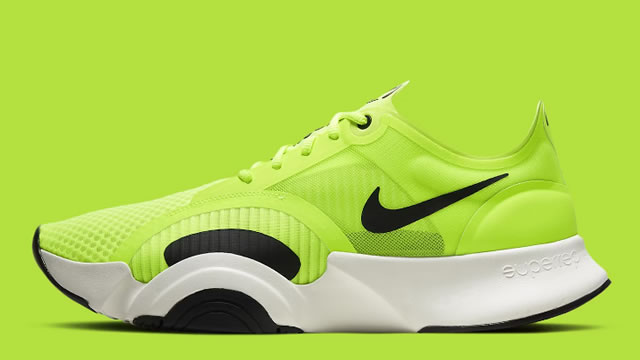
Can the Tallest Running Shoe Out There Chart the Path for Nike's Comeback?
WSJ· 2025-11-10 10:30
Core Insights - CEO Elliott Hill is focused on reviving declining sales through accelerated innovation development, particularly with the introduction of the uber-cushioned Vomero Premium [1] Group 1 - The company is experiencing flagging sales, prompting a strategic shift towards innovation [1] - The Vomero Premium is highlighted as a key product in the company's innovation strategy [1]

进博会观察丨鞋服馆里的黑科技
Jing Ji Guan Cha Wang· 2025-11-09 09:11
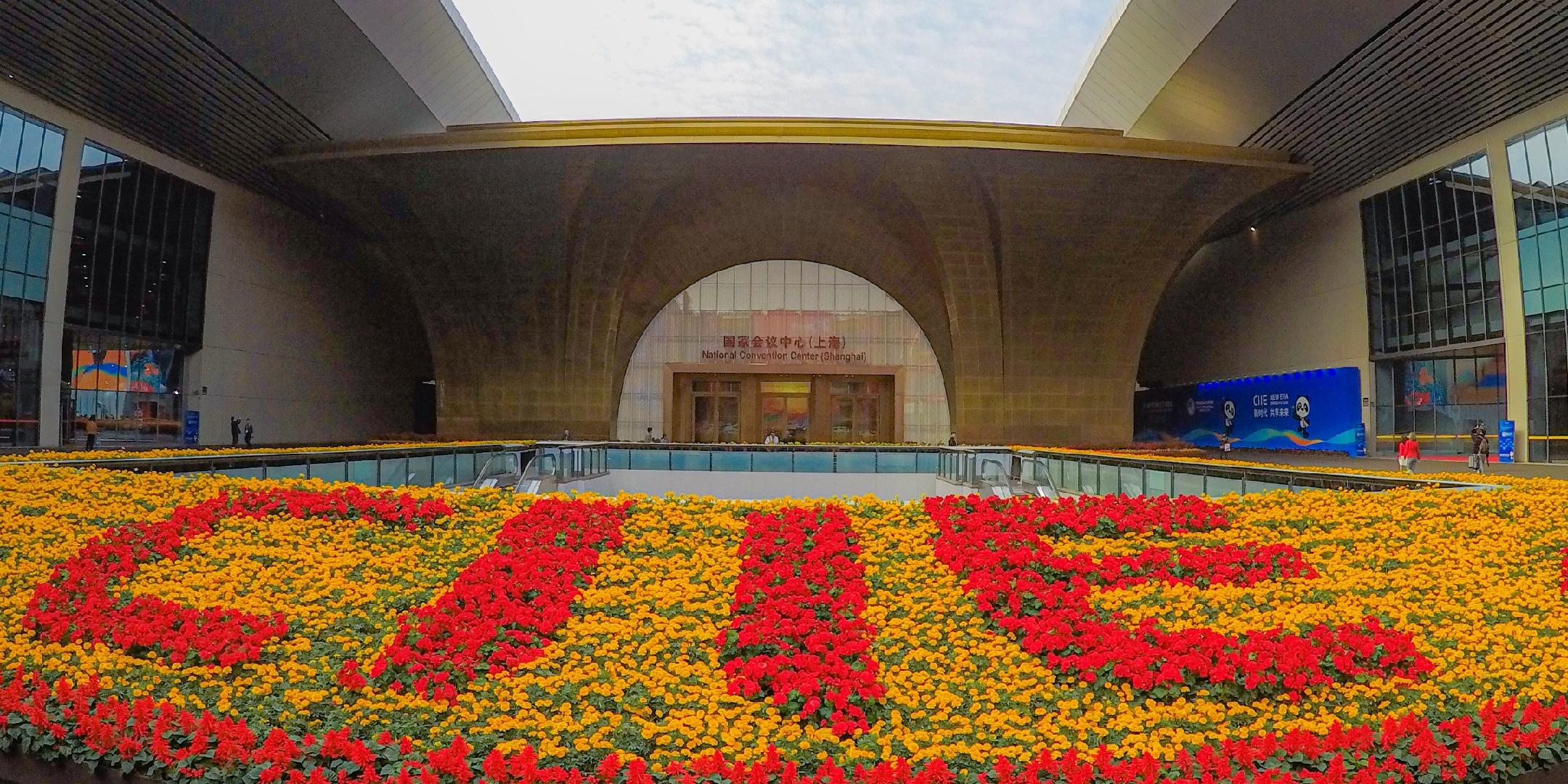
Group 1 - The competition in sportswear has evolved from fabric and design to human science and materials engineering, with the China International Import Expo (CIIE) serving as a platform for brands to showcase their R&D capabilities [2] - Nike launched its neuroscience-based footwear product, Nike Mind, which utilizes 22 independent foam balls in the sole to activate foot sensory receptors, enhancing athletes' focus and presence [2] - Research conducted by Nike's neuroscience team showed that wearing Nike Mind before competitions significantly increased alpha brain wave activity related to focus and relaxation, with the product expected to launch in January 2026 [2] Group 2 - The winter coat market faces challenges with down jackets being warm but ineffective in humid conditions, while traditional cotton jackets are lightweight but lose insulation quickly [3] - Uniqlo introduced a new air cotton jacket that uses hollow fibers to create stable air pockets, providing warmth comparable to down jackets while maintaining performance in 80% humidity and being machine washable [3] - Adidas showcased the 2026 World Cup jerseys for Germany, Argentina, Spain, and Italy, featuring CLIMACOOL technology for optimized breathability and comfort in varying climates [3] Group 3 - The luxury brand Kering set up an immersive experience at its booth with Apple Vision Pro headsets, allowing viewers to experience fashion shows they could not attend, featuring the first ready-to-wear collection designed by Pierpaolo Piccioli since his appointment [3]
运动巨头争锋,谁能在中国市场跑得更快?
第一财经· 2025-11-08 13:19
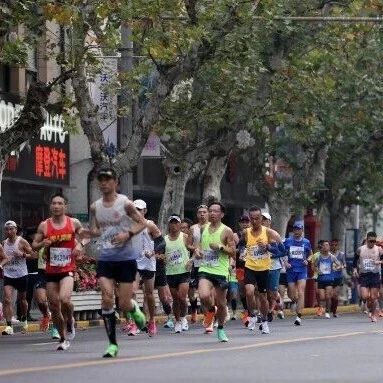
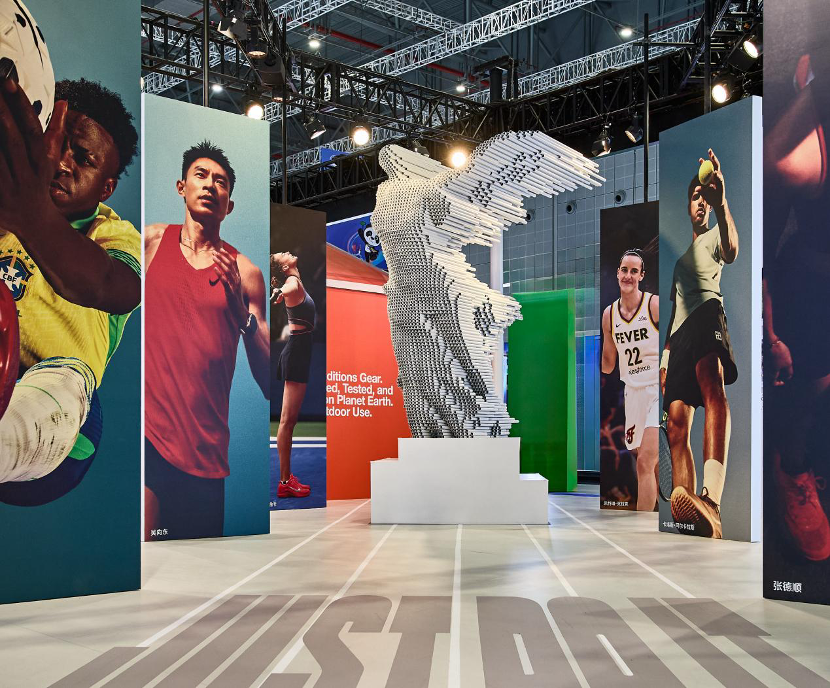
Core Insights - The article highlights the competitive landscape of the sportswear industry at the ongoing China International Import Expo (CIIE), emphasizing the growing demand for sports apparel driven by China's fitness initiatives and consumer interest in sports [3][15]. Market Demand and Competition - China has a massive market for sportswear, with over 300 million people participating in fitness activities weekly, which is comparable to the total population of the United States [5][6]. - The majority of fitness participants are casual enthusiasts rather than professional athletes, indicating a broad consumer base for sportswear brands [5]. Company Performance and Strategies - ASICS reported a net sales figure of 4.88 billion yuan in China for 2024, marking a nearly 30% growth, with a 21.5% year-on-year increase in the first quarter of 2025 [7]. - Lululemon achieved a 25% revenue growth in the Chinese market in the second quarter and opened its 165th store in the region, indicating rapid expansion [7][8]. - Nike, participating in CIIE for the sixth year, showcased its commitment to the Chinese market through innovative installations and a focus on athlete-centered product development [8][9]. Local Innovation and Global Impact - Lululemon's experience in China has influenced its global retail strategies, leading to larger store formats to enhance customer experience [12][13]. - Nike established its first creative production center outside the U.S. in Shanghai, emphasizing local research and development to better understand Chinese athletes' needs [13][14]. - Adidas has localized over 60% of its products designed for the Chinese market, reflecting a trend of reverse purchasing where local designs gain international recognition [14]. Consumer Trends - A report by Lululemon and Tsinghua University indicates that 68% of respondents believe exercise enhances happiness, showcasing a growing trend of associating physical activity with well-being [14].
本届进博会美国企业参展面积超过5万平方米 连续七年位列第一 “期待和决心”:中国就是“确定性”
Jie Fang Ri Bao· 2025-11-08 02:08
Core Insights - The participation of American companies at the China International Import Expo (CIIE) reflects a strong commitment to the Chinese market, with over 50,000 square meters of exhibition space, marking the seventh consecutive year of leading participation [1][2] - American businesses view the CIIE as a platform for certainty amidst global trade uncertainties, emphasizing the importance of the Chinese market as a growth engine [1][3] Group 1: Market Participation - The American Food and Agriculture Pavilion, organized by the Shanghai American Chamber of Commerce and the U.S. Department of Agriculture, features 19 exhibitors and spans 350 square meters, both record numbers for the event [1][2] - Dynamite, a U.S. pet food brand, signed agreements totaling $5.8 million during the expo, showcasing the potential for significant business transactions [2] Group 2: Market Dynamics - The CIIE provides certainty in three dimensions: the vast Chinese consumer market, the efficiency of the expo as a platform, and the consistent open signals from China, evidenced by the eight-year history of the event [3] - American companies are actively seeking new opportunities in China, with expectations for increased transaction volumes compared to previous years, which were $500 million and $700 million in the last two years [2] Group 3: Company Initiatives - Nike announced the opening of its first creative production center outside the U.S. in Shanghai, aimed at enhancing connections with Chinese consumers and supporting local sports culture [6] - Estée Lauder introduced over ten new products at the expo and secured a procurement intention order worth $480 million on the opening day, indicating strong market interest [6][7] Group 4: Long-term Commitment - American companies are not only focused on immediate sales but are also making long-term strategic investments in the Chinese market, recognizing its purchasing power and growing innovation capabilities [7]

耐克第六度亮相进博会:用运动精神和创新科技引领运动未来
Zheng Quan Ri Bao Wang· 2025-11-07 13:46
Core Insights - Nike continues to showcase its commitment to the Chinese market by participating in the 8th China International Import Expo for the sixth consecutive year, emphasizing the theme of "Victory" which is rooted in the brand's identity [1][2] - The company has launched the ICON. Shanghai creative production center, reflecting its confidence in the Chinese market and its long-term commitment to deepening its presence in China [2] - Nike's integration of its innovation, design, and product teams across its three major brands—Nike, Jordan, and Converse—aims to create a new athlete-centric innovation engine [2][3] Company Strategy - Nike's strategy focuses on listening to athletes' needs and understanding their desire for victory, which drives the company's actions and innovations [2] - The company has been a witness to the growth of China's sports industry since its entry in 1981, maintaining a philosophy of prioritizing athletes and providing inspiration and innovation [2] Brand Messaging - The "Just Do It" slogan is highlighted as a personal declaration for athletes, representing focus, perseverance, and the courage to challenge oneself [3] - Nike aims to deepen collaborations with various sectors to promote sports through innovative content creation and dissemination, especially during major domestic and international sports events [3]
来!体验“更懂你”的智慧生活
Ke Ji Ri Bao· 2025-11-07 08:31
Group 1: Innovative Products at the Expo - A skin detection device developed by L'Oréal can analyze 45 skin issues and generate a personal skin report based on user data and habits, trained on 355,000 consumer data sets [1] - Nike showcased an air-adjustable jacket that allows users to switch between different warmth levels without changing clothes, tested for over 380 hours in various sports scenarios [2] - A weight loss wristband from Yuefan Medical Technology uses electrical pulses to stimulate the brain's satiety center, leading to significant weight and BMI reduction in users [2] Group 2: Trends in Consumer Products - The introduction of these products reflects a trend towards smart and personalized consumer solutions, indicating a future where products are increasingly tailored to individual needs [3] - The slow-wave sleep machine from Shanghai Ainas Technology can enhance sleep quality by emitting charged particles at a frequency matching deep sleep brain waves, significantly improving upon previous models [3]

耐克大中华区创意制作中心ICON.上海启用
Bei Jing Shang Bao· 2025-11-07 07:59
Core Insights - Nike showcased its commitment to the Chinese market during the 8th China International Import Expo by highlighting the achievements of Chinese athletes and the "Just Do It" spirit [1] - The company announced the opening of its creative production center, ICON. Shanghai, emphasizing its long-term dedication to the Chinese market [1] - Nike's integration of innovation and design teams across its brands (Nike, Jordan, and Converse) aims to create a new athlete-centric innovation engine [1] Group 1 - Nike's participation in the expo featured leading technologies and innovative products across multiple sports sectors [1] - The CEO of Nike Greater China expressed the company's commitment to understanding and meeting the needs of athletes [1] - Nike has been involved in the growth of China's sports industry for over 40 years and aims to continue supporting its development [1]
3 Cash-Producing Stocks We Keep Off Our Radar
Yahoo Finance· 2025-11-07 04:36
Core Insights - Companies generating cash are not necessarily good investments if they fail to reinvest wisely, which can limit their growth potential [1] Group 1: Nike (NKE) - Nike has a trailing 12-month free cash flow margin of 6.5% and is a major player in athletic footwear and apparel [2] - The stock is currently trading at $61.93 per share, with a forward P/E ratio of 32.9 [4] Group 2: DistributionNOW (DNOW) - DistributionNOW has a trailing 12-month free cash flow margin of 7.3% and provides supply chain solutions for energy and industrial markets [5] - The stock price is $13.57, reflecting a valuation ratio of 32.7x forward EV-to-EBITDA [7] Group 3: General Motors (GM) - General Motors has a trailing 12-month free cash flow margin of 7.9% and offers a variety of vehicle brands [8] - The stock trades at $69.03 per share, with a forward P/E ratio of 6.3 [13] - Recent performance indicators show muted revenue growth of 2.5% annually over the last two years, suggesting demand issues [10] - Future growth is projected to be soft, with Wall Street estimates indicating only 3.7% growth [11] - The company faces challenges with a projected sales decline of 1.4% over the next year and high production costs reflected in a gross margin of 12% [12]


为了让你“跑”起来,耐克使出了浑身力气
36氪未来消费· 2025-11-07 04:06
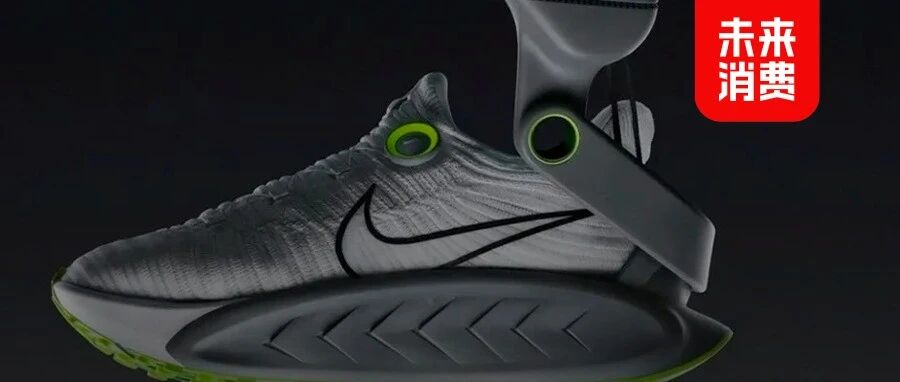
Core Insights - The article discusses Nike's ambitious Project Amplify, a functional power shoe system designed for running and walking, which aims to enhance user performance and comfort [4][11] - The innovation reflects a shift in the sports industry from purely performance-driven products to those that also consider emotional value and user experience [10][20] Product Overview - Project Amplify consists of two main components: a mechanical leg system with motors and a carbon fiber-embedded running shoe, which can be used with or without the power system [6][8] - Currently, the product is in the experimental stage, with limitations such as a battery life of only 30 minutes and a limited number of compatible shoe styles [8] Market Context - The running shoe market has seen intense competition focused on speed and performance, with brands like Nike previously pushing the boundaries of technology to achieve record-breaking results [9][10] - The article highlights a transition in consumer expectations, where the demand for innovative technology is now coupled with a desire for products that enhance overall well-being and usability [10][12] Innovation Strategy - Nike's innovation team allocates 20% of their efforts to developing concepts that may never reach the market, akin to "moonshot" projects typical in Silicon Valley [15] - The article emphasizes that these innovations must ultimately translate into measurable commercial returns, contrasting with the more forgiving valuation logic of tech companies [15][18] Structural Innovation - Structural innovation is defined as advancements that fundamentally enhance product performance and can be applied across various categories, exemplified by technologies like Nike's AIR and Adidas' BOOST [18][19] - The article suggests that the definition of structural innovation is evolving, with a focus on adaptability to individual user needs, as seen in Project Amplify's design [20][21]