PepsiCo(PEP)

Search documents
健康营养・价值共鸣・产品组合聚焦 —— 食饮企业竞争护城河三大支柱
科尔尼管理咨询· 2025-11-04 09:40
Core Insights - The three core pillars for food and beverage companies to build competitive advantages are health nutrition, value resonance, and product portfolio focus. However, only by quickly responding to changes in consumer expectations can these advantages translate into sustained growth [1] Consumer Behavior Gap - There is a significant gap between consumer claims and actual purchasing behavior. While 68% of consumers express support for brand values, quality and price remain the primary decision factors in actual purchases. This discrepancy highlights a deep-seated contradiction where consumers are aware of health and value-driven diets but still exhibit strong behavioral inertia [4][3] Health Nutrition as a Foundation - Health nutrition has become a non-negotiable requirement. Reducing sugar, salt, and fat is now merely the entry ticket for market competition. The real challenge lies in achieving nutritional upgrades without sacrificing taste. Leading companies are adopting a dual strategy of maintaining classic product flavors while introducing healthier versions [7][6] Value Resonance for Differentiation - Brand differentiation and the ability to command a premium price stem from the resonance between brand values and consumer values. Emotional connections with consumers are key to establishing commercial advantages, attracting new customers, and enhancing loyalty [10][11] Product Portfolio Focus - Simplifying formulations and product lines is essential for reinforcing consumer trust and reducing costs. A streamlined product portfolio allows companies to optimize resource allocation and focus on areas where they have a competitive edge, thus enhancing operational efficiency [15][16] Continuous Restructuring - Continuous innovation and restructuring are crucial as consumer expectations evolve. Nutritional formula upgrades are necessary to solidify market positions and protect brand assets. Companies must act decisively to capture early signals of changing consumer demands [18][17]


PepsiCo, Griffith Foods, and Milhão Launch Direct Farmer Incentive Pilot Program in Brazil's Cerrado Region to Advance Regenerative Agriculture
Prnewswire· 2025-11-03 13:30
Core Insights - PepsiCo, in collaboration with Griffith Foods and Milhão, has launched a direct farmer incentive pilot program aimed at promoting regenerative agriculture in Brazil's Cerrado region, which is crucial for global food security [1][2][3] Group 1: Program Details - The pilot program employs a hybrid "Payment for Practice and Payment for Outcomes" model, compensating farmers for adopting regenerative practices such as composting and reducing chemical fertilizer use [3][5] - The initiative will initially cover 7,000 acres, with plans to expand to 30,000 acres, representing PepsiCo's total corn sourcing volume in the region by year three, with a total investment of $1 million [3][5] - The program aims to address financial risks faced by farmers transitioning to sustainable practices, thereby improving soil health and reducing greenhouse gas emissions [3][4] Group 2: Strategic Importance - The Cerrado region is responsible for over 60% of Brazil's soybeans and significant corn production, making it a vital agricultural area facing threats from deforestation and climate stress [2][5] - This initiative is positioned as a potential blueprint for industry-wide transformation, encouraging collaboration among competitors to drive systemic change in agriculture [4][5] Group 3: Long-term Goals - PepsiCo aims to promote regenerative agriculture practices across 10 million acres by 2030, contributing to climate resilience and sustainable food systems [5][6]

Warren Buffett's Investing Rules -- Simplified for New Stock Investors
Yahoo Finance· 2025-11-03 09:10
Core Insights - The article emphasizes the importance of investing in companies with a strong history of dividend growth, particularly those classified as Dividend Kings, which have increased dividends for at least 50 consecutive years [1][2] Investment Strategy - A good company is often defined by its ability to pay and grow dividends over time, aligning with Benjamin Graham's advice to focus on long-term dividend payers [2] - Warren Buffett's investment philosophy suggests buying good companies at attractive prices and holding them for the long term, which is a strategy that can be adapted by individual investors [3][11] Investment Approach - For passive investors, buying an S&P 500 index fund and consistently adding to it is recommended as a sound strategy, allowing for dollar-cost averaging [4] - Berkshire Hathaway serves as an example of a successful investment vehicle, owning a diverse range of companies and demonstrating strong long-term performance [5] Stock Selection Criteria - Investors should focus on companies with understandable business models and long-term growth potential, supported by thorough analysis of quarterly earnings and annual reports [7] - Stocks with historically high dividend yields are often attractively priced, making them a good focus for long-term dividend investors [8] - Traditional valuation metrics such as price-to-sales and price-to-book ratios should be used to confirm the attractiveness of a stock's price relative to its dividend yield [9][10] Long-Term Investment Philosophy - Holding investments for the long term is crucial, as it allows investors to benefit from the growth of the companies they own, exemplified by companies like PepsiCo [11] - Investors are advised to limit their stock purchases to a small number, ideally 20 or fewer, to maintain focus and avoid overtrading [12][13]

这些大公司首席执行官的共识:与孤独为伍
财富FORTUNE· 2025-11-02 13:07
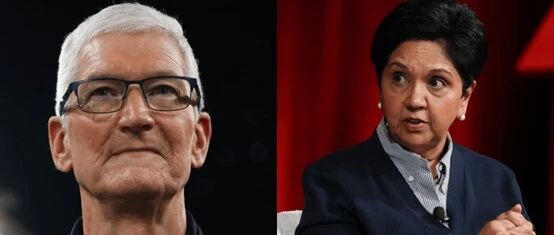
Core Viewpoint - The article discusses the psychological toll of being a CEO, highlighting the loneliness and isolation that many top executives experience in their roles, with significant percentages considering resignation due to these feelings [1][2][7]. Group 1: Executive Loneliness - Many industry leaders, including those from Airbnb, UPS, PepsiCo, and Apple, openly discuss the loneliness associated with their positions [1][2][7]. - A Harvard Medical School professor noted that at least 40% of executives are contemplating resignation due to feelings of exhaustion and isolation [1]. - A Deloitte study from 2022 found that approximately 70% of top management leaders are seriously considering leaving their positions to seek better support for their mental health [1]. Group 2: Coping Mechanisms - Executives are increasingly focusing on improving their mental health outside of work, with some attending retreats or seeking community support [2][15]. - Blake Mycoskie, founder of Toms, and Seth Berkowitz, CEO of Insomnia Cookies, emphasize the importance of mental health and the challenges of the CEO role [2][15]. - Indra Nooyi, former CEO of PepsiCo, described her feelings of isolation and the difficulty of finding someone to confide in about her challenges [10][11]. Group 3: Personal Experiences - Brian Chesky, co-founder and CEO of Airbnb, shared his personal struggles with loneliness after reaching the top of the company [7]. - Carol Tomé, CEO of UPS, initially underestimated the loneliness of her role but later acknowledged its reality [13]. - Tim Cook, CEO of Apple, recognized the solitude that comes with leadership and the importance of surrounding oneself with intelligent individuals [14].


2 Undervalued, High-Quality Companies to Buy Now and Hold Forever
Yahoo Finance· 2025-11-02 09:10
Group 1 - Two of the world's largest consumer staples companies, Coca-Cola and PepsiCo, are currently attractively priced and are both Dividend Kings, indicating their strong business resilience [2][9] - Coca-Cola, with a market cap of approximately $300 billion, is the leading non-alcoholic beverage maker globally, known for its iconic brands and extensive distribution [3] - Coca-Cola has a long history of annual dividend increases, with over six decades of consistent growth, making it the second longest Dividend King in the consumer staples sector [4] Group 2 - The stock of Coca-Cola is currently undervalued, with its price-to-earnings and price-to-book value ratios below their five-year averages, despite a 2.9% dividend yield that is average for the stock [6][7] - PepsiCo, another major player in the consumer staples sector, offers a more diversified business model, including beverages, snacks, and packaged foods, making it a strong competitor to Coca-Cola [8]
These Reliable Payers Could Deliver a 5% Yield With Minimal Risk
Yahoo Finance· 2025-11-01 17:41
Group 1 - Enbridge operates in the midstream energy sector, owning infrastructure assets like pipelines that transport oil and natural gas, characterized as a toll-taker business [2][3] - Enbridge has a reliable cash flow, allowing it to increase its dividend annually for three decades, with a current yield of 5.8%, significantly higher than the market average of 1.2% and the energy sector average of 3.2% [4][7] Group 2 - Realty Income is a large real estate investment trust (REIT) focused on net lease properties, which reduces risk by having tenants cover most operating costs [5][6] - Realty Income owns over 15,600 properties across the U.S. and Europe, with a focus on retail properties, which are considered low-risk due to their ease of buying, selling, and leasing [6] - Realty Income has a strong dividend history, increasing its dividend for 111 consecutive quarters, with a current yield of 5.3%, outperforming the market and the average REIT yield of 3.9% [8] Group 3 - PepsiCo is a diversified consumer staples company with a current dividend yield of 3.7%, providing a stable income stream [7]


Top Coca-Cola and Pepsi rival discontinued 4 soda flavors
Yahoo Finance· 2025-11-01 16:03
Core Insights - Dr Pepper has surpassed Pepsi to become the second-best-selling soda brand in the United States, while Coca-Cola remains the market leader [1][6][7] - The cola wars have officially concluded, with Dr Pepper emerging as a new challenger in the market [2] - Dr Pepper has adopted a more experimental approach by introducing various new flavors and limited-time offerings [3][8] Market Position - Coca-Cola holds 19.2% of the U.S. carbonated soft drink market, while Dr Pepper has captured 8.3%, recently overtaking Pepsi, which now stands at 8.0% [7] Product Innovation - Dr Pepper has launched several new flavors, including Dr Pepper Blackberry (2025), Dr Pepper Zero Sugar Creamy Coconut (2024), and Dr Pepper Strawberries & Cream (2023), with some becoming permanent offerings due to strong sales [7] - The company has also utilized creative flavor promotions through its rewards program, introducing unique flavors like Fantastic Chocolate and Nashville Reserve [8] Discontinuation of Flavors - Dr Pepper has not hesitated to discontinue flavors that do not resonate with consumers, such as Dark Berry and Diet Cherry Chocolate [9]

Orosur Mining Inc Announces Operational Update Exploration Footprint Expanding
Accessnewswire· 2025-10-30 07:00
Core Insights - The assays from three holes in the Pepas MRE infill and metallurgical program show promising gold grades, with PEP065 reporting 33.3m at 2.84g/t Au, PEP065B at 33.8m at 2.79g/t Au, and PEP066 (metallurgical hole) at 112m at 5.25g/t Au from surface [1] - Resource consultants are scheduled to be on site next week to initiate the MRE process, indicating a proactive approach towards resource evaluation [1] - Soil geochemistry completed at El Cedro has confirmed high-grade potential, suggesting further exploration opportunities in the area [1]

The CEOs of Apple, Airbnb, and PepsiCo agree on one thing: life as a business leader is incredibly lonely
Yahoo Finance· 2025-10-29 23:05
Core Insights - The loneliness experienced by CEOs and top executives is a significant issue, with many leaders feeling isolated despite their high positions and responsibilities [1][2][3][4]. Group 1: Personal Experiences of Loneliness - Brian Chesky, CEO of Airbnb, highlighted the loneliness that comes with leadership, noting that he felt unprepared for the isolation after becoming CEO [1]. - Blake Mycoskie, founder of Toms, experienced depression and loneliness after scaling his business, prompting him to seek mental health support through a retreat [2]. - Indra Nooyi, former CEO of PepsiCo, expressed the challenges of finding someone to confide in due to the confidential nature of executive responsibilities, leading her to rely on self-reflection [5]. - Carol Tomé, CEO of UPS, initially underestimated the loneliness of the CEO role but later acknowledged it as extraordinarily isolating [7]. - Tim Cook, CEO of Apple, confirmed the loneliness of the position, noting that executive teams often wait for the CEO to leave before discussing matters privately [8]. Group 2: Impact on Mental Health and Well-being - A study from Harvard Medical School indicated that at least 40% of executives are contemplating leaving their jobs due to feelings of isolation and lack of energy [2]. - A 2022 Deloitte study found that approximately 70% of C-suite leaders are seriously considering quitting for roles that better support their well-being [2]. - Seth Berkowitz, CEO of Insomnia Cookies, emphasized the importance of building genuine connections to combat the loneliness that often accompanies entrepreneurship [11][12]. Group 3: Recommendations for Leaders - Chesky suggested that leaders should share their power to alleviate the mental burden of entrepreneurship [3]. - Tim Cook advised leaders to surround themselves with bright individuals who can help them grow and avoid isolation [9].
PEP's Margins Under Pressure: Will Productivity Play Deliver Relief?
ZACKS· 2025-10-29 16:31
Core Insights - PepsiCo, Inc. is navigating a challenging cost landscape but has renewed confidence in its productivity initiatives, achieving nearly 3% reported net revenue growth in Q3 2025, driven by international market strength and marking its 18th consecutive quarter of mid-single-digit organic revenue growth [1][9] - Despite revenue growth, profitability is under strain due to higher supply chain costs, which created a three-percentage-point drag on margins, partially offsetting benefits from pricing actions and cost optimization [2][9] - The company is implementing aggressive cost-reduction and automation strategies, including reducing over 35% of SKUs since 2022 and cutting about 7% of full-time headcount in Frito-Lay, aimed at improving service levels and stabilizing margins [3][9] Financial Performance - PepsiCo's gross margin is under pressure from elevated supply chain costs, primarily from global inputs, ingredients, and tariffs, which have impacted overall profitability [2][9] - The company targets stronger margins, with PBNA aiming for mid-teens profitability and Foods North America focusing on cost discipline, expecting low-single-digit revenue growth and ongoing productivity gains to restore margins [4] Competitive Landscape - Coca-Cola and Keurig Dr Pepper are also managing margin pressures effectively, leveraging pricing power and productivity gains to sustain profitability amid a challenging cost environment [5] - Coca-Cola reported a 59% year-over-year surge in operating income to $3.98 billion, with its operating margin increasing to 32% from 21.2% a year ago, showcasing strong margin management capabilities [6] - Keurig Dr Pepper experienced a 7.9% year-over-year increase in adjusted gross profit to $2.35 billion, despite a decline in gross margin due to ongoing inflationary pressures [7] Stock Performance and Valuation - PepsiCo shares have gained 5.1% in the past three months, outperforming the industry’s rise of 2.7% [8] - The company trades at a forward price-to-earnings ratio of 17.70X, slightly below the industry average of 18.31X [10] - The Zacks Consensus Estimate for PepsiCo's 2025 earnings implies a year-over-year decline of 0.6%, while the 2026 earnings estimate indicates growth of 5.6% [11]