
Poppi

Search documents
Carlsberg, PepsiCo set out Poppi UK launch plans
Yahoo Finance· 2026-02-26 10:34
Core Insights - PepsiCo is launching its prebiotic soda brand Poppi in the UK, having acquired the brand for $1.95 billion last year [1] - The initial exclusive listing will be with Tesco, the largest grocery chain in the UK, with Poppi available in 330ml cans and four-packs [1][2] - Five flavors will be offered: Strawberry Lemon, Orange, Raspberry Rose, Lemon Lime, and Wild Berry, with recommended prices of £2.59 ($3.50) for a single can and £7.79 for a four-pack [1] Company Background - Poppi was originally founded in 2015 as Mother Beverage and gained recognition after appearing on the US reality show Shark Tank in 2018, rebranding to Poppi in 2020 [3] - The brand has become notable in the US market for 'better-for-you' sodas, co-founded by Allison Ellsworth and Stephen Ellsworth [3] - In 2024, Poppi generated annual sales exceeding $500 million, with its products available in major US retailers such as Kroger, Walmart, Costco, Target, and Whole Foods Market [4] Production and Distribution - Poppi is produced and distributed in the UK by Carlsberg Britvic, PepsiCo's bottling partner, with manufacturing taking place at Carlsberg's facility in Rugby [2] - PepsiCo and Carlsberg plan to expand the distribution of Poppi more widely later in the year [2]

Coca-Cola stock sinks on disappointing outlook as Coke Zero, water power surprise sales increase
Yahoo Finance· 2026-02-10 14:11
Core Insights - Coca-Cola's stock experienced a decline of up to 4% following a cautious outlook for 2026, as CEO James Quincey highlighted the need for improvement in several international markets [1] - The company reported a 5% organic revenue growth in the fourth quarter, surpassing Wall Street's expectation of 4.8%, but anticipates organic sales growth of 4%-5% for 2026, which is below the 5% forecasted by analysts [2] - Adjusted earnings are projected to grow by 7%-8% this year, following a 9% increase in 2025 [2] Regional Performance - Coca-Cola is facing challenges in markets such as China, India, and Mexico, particularly due to the implementation of a soft drink tax, with flat sales reported in the Asia Pacific region during the fourth quarter [3] - In North America, the company saw a 1% increase in volumes and a 4% rise in prices in the fourth quarter, as consumers shifted towards less sugary options [3] Product Performance - Coca-Cola Zero Sugar volumes increased by 13% in the fourth quarter and 14% for the full year, while Diet Coke and Coca-Cola Light saw a 2% volume increase for the quarter and remained flat for the year [4] - The company is also experiencing growth in its protein products, such as Fairlife and Core Power, as well as hydration products like BodyArmor [4] Consumer Trends - The company is testing a new Simply Pop prebiotic soda to compete with PepsiCo's Poppi acquisition, although progress has been slow [5] - Quincey noted that while total consumer spending remains stable, purchasing habits are changing, with lower-income consumers engaging in value-based shopping [6] - Coca-Cola has implemented an affordability strategy over the past few years, which the company believes is effective in addressing these changing consumer behaviors [6]

PepsiCo(PEP) - 2025 Q4 - Earnings Call Transcript
2026-02-03 14:17
Financial Data and Key Metrics Changes - The company reported a decrease in advertising expenses, down by double digits to approximately $500 million in 2025, with expectations for an increase in 2026 due to a focus on growth and innovation [23][25] - The company anticipates balanced earnings per share (EPS) growth throughout the year, with sales expected to strengthen in the second half as initiatives gain traction [17] Business Line Data and Key Metrics Changes - The company expects Frito-Lay to grow in volume, net revenue, and operating margin in 2026, with early growth anticipated in the year [14] - The average space gain for Frito-Lay is projected to be double-digit, with significant resets in both main aisles and perimeters starting in March and April [15][46] Market Data and Key Metrics Changes - The international business is expected to maintain mid-single-digit growth, with positive trends noted in Mexico, China, and South Africa, while Western Europe shows weakness [28][72] - The company is optimistic about the performance of its North American beverage business, expecting acceleration in growth driven by improved competitiveness and innovation [53] Company Strategy and Development Direction - The company is implementing a multi-vector strategy focused on affordability, targeting low and middle-income consumers to drive category growth [9][21] - Significant investments are being made in innovation and restaging major brands like Gatorade and Quaker to enhance consumer engagement and drive sales [18][34] Management's Comments on Operating Environment and Future Outlook - Management acknowledges the challenges faced by middle and low-income consumers, emphasizing the need to earn their loyalty through affordability and value [72] - The company is optimistic about leveraging innovations in health-focused products and portion control to adapt to changing consumer preferences, particularly in light of the growing adoption of GLP-1 medications [40][41] Other Important Information - The company is focusing on integrating food and beverage distribution to enhance efficiency and customer service, with positive initial results from pilot programs in Texas and Florida [66][68] - The company is committed to improving margins in its beverage business while participating in the fast-growing energy drink category through strategic partnerships [54] Q&A Session Summary Question: Can you provide more details on the affordability initiatives and their expected impact? - Management highlighted that the affordability strategy is surgical and well-tested, with good returns on investment and volume growth expected from these initiatives [21] Question: What are the expectations for advertising spending in 2026? - Management confirmed that advertising spending is expected to increase in 2026 as the company focuses on growth and effective messaging [25] Question: How do you expect the organic sales growth to develop throughout 2026? - Management indicated that the acceleration in organic sales will primarily come from the North American business, with contributions from acquisitions transitioning into organic growth [29][58] Question: What is the outlook for the beverage segment, particularly energy drinks? - Management expressed confidence in the beverage segment's growth, particularly in energy drinks, with positive early returns from the integration of Celsius and Alani Nu [54] Question: How is the company addressing the challenges posed by GLP-1 medications? - Management believes that portion control and innovative product offerings will help maintain relevance in the market as GLP-1 adoption increases [40][41] Question: Can you elaborate on the integration of food and beverage distribution? - Management shared that initial results from integrated delivery systems are promising, aiming for improved efficiency and customer service [66][68]
Big Food gets leaner with divestitures and breakups as consumers turn away from packaged snacks
CNBC· 2026-01-31 13:00
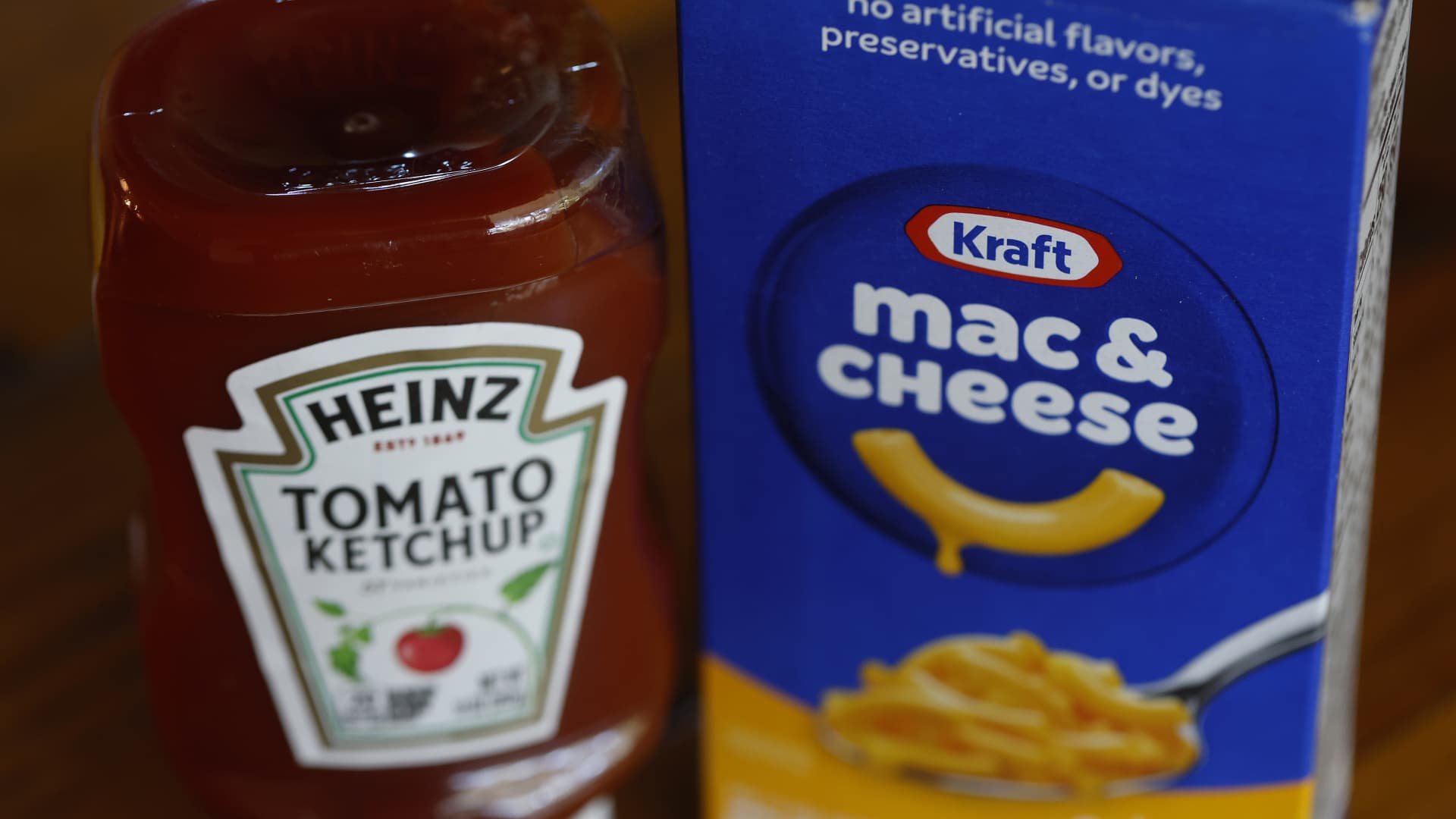
Core Viewpoint - Kraft Heinz is planning to split into two separately traded companies, reversing its 2015 merger, amid a broader trend in the food industry where companies are divesting underperforming brands due to changing consumer preferences and regulatory pressures [1][2][18]. Industry Trends - The consumer products industry is experiencing a significant shift, with nearly half of M&A activity in 2024 coming from divestitures, as companies like Unilever and Keurig Dr Pepper also pursue similar strategies [3][2]. - The trend of breaking up is not limited to consumer packaged goods; industrial companies and legacy media firms are also undergoing similar transformations [4]. Market Dynamics - There is increasing pressure on packaged food and beverage companies due to lower demand and shrinking sales volumes, prompting them to divest underperforming brands to regain investor confidence [5][11]. - Consumers are shifting their purchasing habits towards fresh produce and protein, leading to declining sales for traditional grocery items [7]. Regulatory Environment - Regulatory scrutiny on processed foods is intensifying, influenced by health initiatives and the rise of medications that reduce appetite for sugary and salty snacks [8]. Competitive Landscape - Major consumer packaged goods companies are losing market share to upstart brands and private-label products, with only about 35% of their portfolios in high-growth categories compared to over half for private-label brands [9][10]. Financial Performance - Kraft Heinz has seen a 73% decline in its stock price since its merger, attributed to aggressive cost-cutting measures that neglected brand investment [19]. - The merger of Keurig Green Mountain and Dr Pepper Snapple Group in 2018 is cited as an example of a poorly conceived deal, leading to a significant rise in shares but still underperforming compared to the S&P 500 [15][14]. Strategic Moves - Kraft Heinz has appointed Steve Cahillane, former CEO of Kellogg, to lead the new entity focused on high-growth brands post-split [23]. - The divestiture trend is expected to continue, with companies like General Mills and Nestle also announcing sales of non-core brands to concentrate on their main offerings [25]. Acquisition Landscape - Smaller acquisitions are becoming more common, with deals under $2 billion representing a growing share of consumer products transactions, as larger deals face regulatory hurdles [26][27].


The M&A that shaped the drinks industry in 2025
Yahoo Finance· 2025-12-30 11:19
Core Insights - The beverage industry is experiencing significant mergers and acquisitions, with notable deals including PepsiCo's acquisition of Poppi for $1.95 billion and Celsius Holdings' purchase of Alani Nutrition for $1.8 billion [2] - Diageo is actively offloading assets, including the sale of Cacique rum for $81 million and its stake in Guinness Ghana Breweries [5][10] - Emerging markets are becoming a focal point for major beverage companies, as seen in Coca-Cola HBC's acquisition of a majority stake in Coca-Cola Beverages Africa for $2.6 billion [20] Group 1: Major Acquisitions - PepsiCo announced the acquisition of Poppi, a prebiotic soda brand, for $1.95 billion, highlighting the growing market for healthier beverage options [2] - Keystone Brewing Group acquired North Brewing for £71 million ($88.3 million) as part of a strategic partnership [3] - Molson Coors Beverage Co. acquired an 8.5% stake in Fevertree Drinks, a UK-based tonic and mixer maker [4] Group 2: Industry Trends - The beverage industry is seeing a trend of portfolio pruning, with companies like Diageo and Campari selling off non-core assets to focus on brands with stronger growth potential [6][11] - Diageo's CFO indicated plans for substantial changes to its product portfolio, aiming to save around $500 million in costs over three years [10] - The trend of vertical integration is evident, as NewPrinces acquired Carrefour's operations in Italy to enhance production and distribution [12] Group 3: Emerging Markets Focus - Coca-Cola HBC's acquisition of Coca-Cola Beverages Africa will create the world's second-largest Coke bottler, expanding its operations into 14 new African markets [20] - The acquisition of Alani Nutrition by Celsius Holdings reflects a growing interest in energy drinks and functional beverages in the US market [2] - The sale of Diageo's business in Kenya to Asahi Group Holdings for $2.3 billion underscores the strategic focus on emerging markets [25]

借力渠道放开发动攻势,百事(PEP.US)押注Poppi成就下一个“十亿品牌”
Zhi Tong Cai Jing· 2025-12-17 04:28
Core Insights - PepsiCo aims to establish Poppi as a new billion-dollar brand, as stated by executive Ram Krishnan at a recent event [1] - The company has implemented a franchise transfer initiative to expand Poppi's distribution channels [1] Acquisition Details - PepsiCo completed the acquisition of Poppi in May last year for an initial price of $1.65 billion, with potential total payments reaching $1.95 billion based on performance [1] - Krishnan highlighted that Poppi aligns well with PepsiCo's short, medium, and long-term beverage strategy, emphasizing its rapid growth and strong consumer engagement [1] Market Potential - The prebiotic soda category, to which Poppi belongs, is valued at approximately $440 million and is the fastest-growing segment within low-sugar beverages [1] - Poppi's sales have tripled annually since 2020, reaching $100 million in 2023, with analysts predicting the prebiotic soda market will nearly double by 2030 [1]
What to Watch With PepsiCo (PEP) Stock in 2026
The Motley Fool· 2025-12-12 22:39
Core Viewpoint - PepsiCo is experiencing a challenging period, with stock performance declining for three consecutive years, leading to investor frustration [1][2] Group 1: Company Performance - The company has faced difficulties primarily in its food segment, with Frito-Lay and Quaker Oats reporting revenue and volume declines, particularly a 14% drop in Quaker's revenue and volume [5][10] - Despite these challenges, PepsiCo is implementing changes, such as promoting healthier snack options and launching new products like dye-free Cheetos and Doritos [7][8] - The beverage segment is also undergoing transformation, with the introduction of the world's first prebiotic cola and plans to reduce operating costs by 20% [8][10] Group 2: Future Outlook - Analysts predict a potential revenue growth of 3.4% year-over-year by 2026, which would be a significant achievement for the company [11] - Earnings per share are expected to rise from $8.11 this year to $8.58 next year, indicating a positive trend [11] - Investors will need to monitor sales and volume growth in both food and beverage sectors in the upcoming year to gauge the effectiveness of the company's turnaround efforts [10][12]
PepsiCo Stock Gains 4% in a Month: Is It a Smart Buy or One to Watch?
ZACKS· 2025-12-11 18:11
Core Insights - PepsiCo Inc. has experienced significant growth, with shares increasing by 3.8% in the past month, driven by strong business momentum across key segments [1][10] - The company reported healthy net revenue growth in Q3 2025, primarily due to the North America beverage business and demand for innovative products [1][10] - PepsiCo's performance has outpaced the broader Beverages – Soft Drinks industry and the Consumer Staples sector [3] Business Performance - The North America beverage segment has shown strong growth, particularly with Trademark Pepsi and innovations like Pepsi Zero Sugar and poppi [11] - International operations have maintained steady organic growth, with strong performance in key regions such as Latin America and Europe [12] - Cost-optimization initiatives have improved operating margins, contributing to overall performance [2][13] Competitive Positioning - PepsiCo's stock has outperformed competitors like Coca-Cola and Primo Brands, which have seen declines in the past month [7] - The current share price of $149.70 is 6.5% below its 52-week high, indicating potential for upside [8] - PepsiCo's P/E ratio of 16.92X is below the industry average and its major competitors, suggesting a potentially attractive valuation [18] Future Outlook - The Zacks Consensus Estimate for PepsiCo's 2025 EPS has increased slightly, while the estimate for 2026 has decreased [15] - The company is positioned for sustained organic growth and margin improvement through recent acquisitions and portfolio reshaping [14] - Despite near-term uncertainties, the company's fundamentals are gradually strengthening, making it a potential buy for investors [19][20]
Can PepsiCo Achieve Its Mid-Teens PBNA Margin Ambition by 2026?
ZACKS· 2025-12-01 18:31
Core Insights - PepsiCo Beverages North America (PBNA) is a crucial segment for PepsiCo, encompassing a wide range of beverage categories and contributing significantly to brand equity and profitability [1] Financial Performance - In Q3 2025, PBNA achieved 2% year-over-year organic revenue growth, despite a three-point volume decline due to the transition of its case-pack water business [2][9] - Trademark Pepsi saw volume and net revenue increases, driven by Pepsi Zero Sugar and effective marketing campaigns [2] - Retail sales for poppi grew over 50% year-to-date, while Propel is on track to exceed $1 billion in annual retail sales [3] Strategic Initiatives - PepsiCo is focusing on expanding zero-sugar offerings and scaling functional innovations, such as protein-infused beverages, while enhancing its presence in away-from-home channels [4] - The company has reduced over 35% of SKUs since 2022 to streamline operations and improve market execution [4][9] Margin Goals - PBNA is on a credible path to achieve its mid-teens operating margin target by 2026, supported by ongoing innovation and cost efficiency measures [5] - Execution risks remain, particularly concerning inflation and consumer price sensitivity, but current trends indicate significant progress [5] Competitive Landscape - Coca-Cola and Monster Beverage are also pursuing aggressive growth targets, with Coca-Cola showing strong organic revenue growth and Monster achieving 16.8% net sales growth [6][7] Valuation Metrics - PepsiCo shares have declined by 2.2% year-to-date, contrasting with the industry growth of 8.9% [8] - The forward price-to-earnings ratio for PepsiCo is 17.42X, below the industry average of 18.2X [10] Earnings Estimates - The Zacks Consensus Estimate for PepsiCo's 2025 earnings suggests a slight decline of 0.7%, while 2026 estimates indicate a growth of 5.9% [12]

Don't Give Up on Dividend Stocks. 5 Dividend Kings Down Between 5% and 33% to Buy in November
Yahoo Finance· 2025-11-19 14:15
Core Insights - PepsiCo has made significant acquisitions, including full ownership of Sabra, Obela, Siete Foods, and Poppi, marking a major diversification effort in its portfolio [1] - The company is undergoing a portfolio transformation and cost reduction strategy to enhance operations and respond to the growing demand for wellness and healthy snacks [2] - The consumer staples sector, including PepsiCo, has faced challenges due to rising living costs, inflation, and a weakening job market, leading to decreased foot traffic and demand for snacks and beverages [3][4] Company-Specific Summaries - **PepsiCo**: The company is focusing on diversifying its product offerings through acquisitions that do not overlap with its existing brands, aiming to adapt to changing consumer preferences [2][7] - **Procter & Gamble (P&G)**: P&G is demonstrating strong pricing power and modest earnings growth, with international markets helping to offset weaknesses in North America [8] - **Colgate-Palmolive**: Colgate is primarily focused on oral and home care products, maintaining a strong position in the toothpaste market, and has a high-margin pet nutrition segment [9][10][11] - **Kimberly-Clark**: The company is facing challenges following its acquisition of Kenvue, but it maintains strong brands in the diaper and tissue markets, which are resilient during economic downturns [12][14][15] - **Target**: Target is struggling to compete on price but is improving its in-store experience and e-commerce capabilities, still generating sufficient cash flow to support its dividend [16] Market Performance and Valuation - The consumer staples sector, including Dividend Kings like PepsiCo, P&G, and Colgate, has seen a decline in stock performance, with many companies trading at attractive valuations based on forward earnings projections [17][18] - Kimberly-Clark is noted for trading at a significant discount to its historical average, although this may change post-acquisition of Kenvue [18] - The current market conditions present a compelling opportunity for long-term investors to consider these Dividend Kings, particularly those with strong cash flow and dividend reliability [19]


