PepsiCo(PEP)

Search documents
My Smartest Dividend Stock to Buy Today
The Motley Fool· 2025-07-04 11:13
Group 1: Company Overview - PepsiCo's stock has been impacted by short-term challenges, creating a long-term buying opportunity for investors [1][3] - The company has a strong dividend history, having raised its annual payouts for 53 consecutive years [19] - PepsiCo's product portfolio includes snacks and beverages, differentiating it from Coca-Cola, which primarily focuses on beverages [4][5] Group 2: Financial Performance - PepsiCo's revenues have been falling short of estimates, with profit margins leveling off below pre-pandemic levels due to rising costs [9][10] - The company is expected to see low-single-digit percentage revenue growth in 2025, with earnings growth anticipated to follow [13] - Despite recent challenges, PepsiCo's dividend remains secure, with a forward-looking yield exceeding 4.3%, compared to Coca-Cola's yield of less than 3% [19][20] Group 3: Market Conditions - Inflation rates have stabilized, with the U.S. annualized inflation rate at 2.4%, which may support consumer spending on snacks and drinks [16] - Economic growth is projected, with the IMF expecting better GDP growth globally compared to the U.S. in 2025 [17] - Management is focusing on key factors influencing consumer purchases, such as package sizing and healthy snacking [18]


Is PepsiCo A Better Stock Than Coca-Cola?
Forbes· 2025-07-03 10:05
Group 1: Stock Performance - PepsiCo's stock has decreased by 10% this year, while Coca-Cola's stock has risen by 16%, primarily due to PepsiCo's sluggish North American operations [2] - Since early January 2021, Coca-Cola's stock has increased approximately 40%, while PepsiCo's stock has only risen about 4% [10] - Both Coca-Cola and PepsiCo underperformed relative to the S&P 500 in 2021, 2023, and 2024, with Coca-Cola showing more consistent positive returns [11] Group 2: Revenue Growth - Coca-Cola achieved a 7% average annual revenue growth from 2021 to 2024, increasing from $38.7 billion to $47.1 billion, while PepsiCo's growth was 5%, rising from $79.5 billion to $91.9 billion [4] - Coca-Cola's revenue growth is driven by strong performance in both at-home and away-from-home channels, supported by effective pricing strategies [5] - PepsiCo's revenue growth was impacted by operational difficulties, including a significant recall in its Quaker Foods division, but it still achieved annual revenue growth [6] Group 3: Profitability Metrics - Coca-Cola's net margin declined from 25.3% to 22.6% from 2021 to 2024, while PepsiCo's net margin increased from 9.6% to 10.4% during the same period [8] - Coca-Cola has a better financial risk profile with a debt-to-equity ratio of 16% compared to PepsiCo's 27% [9] Group 4: Valuation Metrics - PepsiCo's stock trades at 17 times its trailing adjusted earnings of $8.03 per share, significantly lower than its four-year average P/E ratio of 22 times, indicating it is undervalued [12] - Coca-Cola's stock is trading at 25 times its trailing adjusted earnings of $2.89 per share, above its four-year average P/E of 22 times [13] Group 5: Future Outlook - Despite recent challenges, PepsiCo is expected to recover, with revenues anticipated to return to mid-single-digit growth starting next year [14] - Investors seeking reduced volatility may consider alternative investment strategies, such as the High Quality portfolio, which has outperformed the S&P 500 [15]

Pepsi: Buyer Beware, The Warning Signs Are There
Seeking Alpha· 2025-07-02 13:09
Core Viewpoint - PepsiCo is recognized as a time-tested company with a durable business model that has consistently rewarded investors with growing dividends over decades [1]. Group 1: Company Overview - PepsiCo is perceived as a reliable investment option, particularly in the context of dividend growth investing, which allows investors to acquire quality companies at favorable prices while generating cash flow [1]. Group 2: Investment Strategy - The article emphasizes the effectiveness of dividend investing as a strategy, highlighting its potential to provide a sustainable income stream for investors without the need to sell stock positions [1].
光华大师课在夏季达沃斯开讲
Sou Hu Cai Jing· 2025-07-02 03:40
Core Insights - The 2025 World Economic Forum Summer Davos held from June 24 to 26 in Tianjin focused on "New Era Entrepreneurial Spirit," addressing global economic challenges and new growth models with participation from over 1,700 guests from around 90 countries [2][4] Group 1: Themes and Discussions - The event featured a masterclass on "Risk, Resilience, and Industrial Transformation Strategies," co-hosted by Peking University's Guanghua School of Management and the World Economic Forum, aimed at exploring governance strategies for businesses amid uncertainty [2][4] - Key discussions included enhancing corporate resilience through advanced analytical tools and frameworks to navigate complex challenges [6][9] Group 2: Insights from Experts - Liu Qiao emphasized the importance of Total Factor Productivity (TFP) in the context of China-U.S. economic competition, noting that China's TFP growth slowed to 1.2%-1.5% post-2010, but strategic initiatives in new energy and digital technology could drive future GDP growth [9][10] - René Rohrbeck introduced the "Future Adaptability" framework, highlighting the need for companies to develop three core capabilities: system observation, foresight, and experimentation, which can significantly enhance profitability and market value [11][12] - Jörgen Sandström discussed the potential of industrial clusters in improving regional cooperation and resource sharing, advocating for data-driven collaborative governance to address supply chain risks [13][14] Group 3: Industry Responses - Wang Nan from Neusoft Group shared challenges faced by companies in international markets, stressing the need for flexible business strategies and local partnerships to navigate rising tariffs and market access issues [17][18] - Caroline Berson from PepsiCo highlighted the importance of a robust strategic framework for managing policy risks, advocating for strong trend scanning capabilities to adapt to ongoing trade changes [19][20] - Dai Xin from Swiss Re pointed out the relatively weak risk protection mechanisms in China, suggesting that improved risk management is essential for sustainable growth [21][22]


PepsiCo's Sell-Off Has Gone Too Far
Seeking Alpha· 2025-07-01 19:35
Core Insights - The article highlights the importance of accessing high-quality analysis of Wall Street buying and selling ideas through a subscription service called Beyond the Wall Investing [1] Group 1 - Daniel Sereda serves as the chief investment analyst at a family office, managing investments across various continents and asset classes [1] - The role requires navigating a vast amount of information daily, focusing on filtering critical data to extract key investment ideas [1] - Beyond the Wall Investing provides access to information prioritized by institutional market participants, enhancing the quality of investment analysis [1]
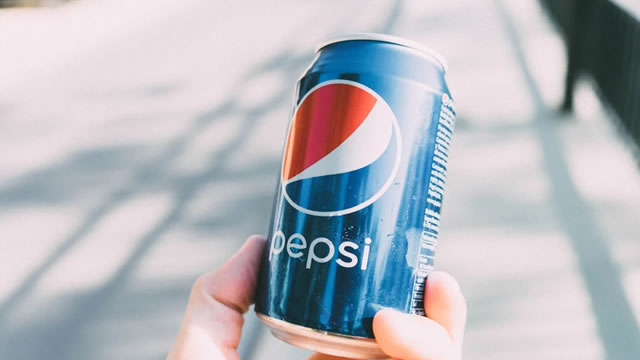
X @The Wall Street Journal
The Wall Street Journal· 2025-07-01 12:34
Market Trends - PepsiCo, Campbell's and others are offering snacks in smaller packages [1] - Companies are attempting to retain shoppers who can no longer afford larger sizes [1]

乐事裸米饼美味推新,配料干净且真材实料,顺应消费新需求
新华网财经· 2025-07-01 12:29
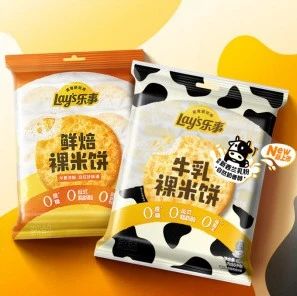
Core Viewpoint - The launch of the new Lays Milk Rice Cake series represents a deep understanding of consumer needs and a commitment to quality, combining clean ingredients with rich flavors [1][9]. Product Innovation - The new product features a clean formula based on high-quality milk and Northeast rice, creating a unique flavor profile that blends sweet rice aroma with rich milk taste [5][9]. - The incorporation of New Zealand imported milk powder enhances the product's flavor and nutritional value, appealing to health-conscious consumers [5][9]. Market Positioning - Lays has positioned itself as a leader in the snack industry by responding to the "reduction revolution," where consumers prefer simple, high-quality ingredients over complex formulations [9][11]. - The brand's collaboration with celebrity spokesperson Jia Nailiang reinforces the product's quality and market appeal, aiming to set new standards in the rice snack category [3][8]. Consumer Engagement - The Lays Milk Rice Cake series is designed for convenience, featuring portable packaging that caters to diverse consumption scenarios, such as snacking between classes or post-workout [7][11]. - The addition of a cute cartoon cow design on the packaging aims to attract family members, enhancing the product's visual appeal [7]. Brand Commitment - The launch signifies Lays' ongoing commitment to providing clean and delicious snacks, focusing on consumer preferences for quality ingredients and innovative processes [11]. - Lays aims to lead the industry towards higher quality and more diverse snack options, continuously injecting positive values into consumers' lifestyles [11].
PepsiCo: Compounder At An Attractive Valuation
Seeking Alpha· 2025-06-30 21:17
Group 1 - PepsiCo, Inc. (PEP) is a global consumer staples company operating in over 200 markets with popular brands such as Pepsi, Mountain Dew, Doritos, and Lay's [1] - The stock is considered to play an important role in most portfolios due to three key factors [1] - The focus is on high-quality companies facing short-term headwinds and misunderstood narratives, along with an emphasis on event-driven strategies [1]

Will the Weak Snack Demand Bite Into PepsiCo's Future Momentum?
ZACKS· 2025-06-30 15:47
Core Insights - PepsiCo is facing challenges in its Frito-Lay North America (FLNA) business due to subdued snack demand, raising concerns about the company's future growth momentum [1][2] - The company reported a modest 1% year-over-year organic revenue growth in the FLNA segment, leading to a downward revision of its 2025 earnings guidance [2][10] - PepsiCo is implementing a multi-pronged recovery strategy, including dual-size pricing tiers and a focus on transforming its snack portfolio to meet changing consumer preferences [2][3] Financial Performance - PepsiCo's shares have declined approximately 13.8% year-to-date, contrasting with the industry's growth of 5.9% [7] - The forward price-to-earnings ratio for PepsiCo is 16.25X, which is below the industry average of 18.32X [9] - The Zacks Consensus Estimate indicates a year-over-year decline of 3.6% in 2025 earnings, with a projected growth of 5.2% in 2026 [10] Competitive Landscape - Mondelez International (MDLZ) is emerging as a key competitor, leveraging a diversified portfolio and focusing on high-growth segments like permissible indulgence and well-being snacks [4][5] - Campbell's Snacks division is gaining market share in the U.S. snack category, particularly in premium and health-conscious segments, responding quickly to consumer demand shifts [6]

Why I Can't Stop Buying These 2 Top High-Yield Dividend Stocks
The Motley Fool· 2025-06-26 10:12
Group 1: PepsiCo - PepsiCo's dividend yield is approaching 4.5%, significantly higher than the S&P 500's yield of less than 1.5%, marking its highest level this decade [4] - The company has a strong history of dividend payments, recently increasing its dividend by 5%, extending its growth streak to 53 consecutive years, with a 7.5% compound annual growth rate over the past 15 years [5] - PepsiCo's robust portfolio generates substantial cash flow, allowing for investments in product innovation and capacity expansions, with expected revenue growth of 4%-6% annually and high-single-digit earnings per share growth [6] - The company has made strategic acquisitions to enhance its portfolio, focusing on healthier options, which positions it for long-term growth and continued dividend increases [7] Group 2: Vici Properties - Vici Properties offers a dividend yield over 5%, supported by a stable and growing rental income stream from its extensive portfolio of gaming and entertainment properties [8] - The REIT owns 54 gaming properties and has a significant number of long-term triple net leases, with 42% of leases tied to inflation, expected to rise to 90% by 2035, ensuring stable rental income [9][10] - Vici pays out approximately 75% of its cash flow in dividends while maintaining an investment-grade balance sheet, allowing for further investments in income-generating real estate [11] - The company has consistently raised its dividend since its formation, achieving a 7.4% compound annual growth rate, outperforming its peers in the NNN REIT sector [12] Group 3: Investment Outlook - Both PepsiCo and Vici Properties are identified as strong candidates for passive income investments due to their high-yielding dividends and solid financial profiles, with a track record of consistent dividend growth [13]