Qualcomm(QCOM)

Search documents
大摩:下调高通评级至“减持”
Ge Long Hui· 2026-02-10 05:49
Group 1 - Morgan Stanley downgraded Qualcomm's rating to "Underweight" with a target price of $132 [1]
内存“超级周期”成新常态?下游利润遭持久挤压,芯片巨头红利期未见尽头
美股IPO· 2026-02-10 04:36
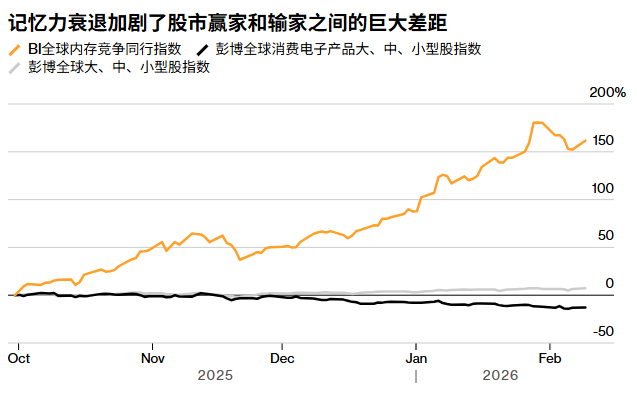
过去数月,内存芯片价格持续飙升,在股市中形成了鲜明的赢家与输家格局,且投资者普遍认为这一趋 势短期内难以逆转。从游戏机制造商任天堂、大型个人电脑品牌到苹果供应链企业,众多公司因盈利前 景承压导致股价下跌。 与此同时,内存芯片生产商的股价却飙升至历史高位,形成强烈反差。当前,基金经理与分析师 正密集评估各企业的应对能力——哪些能通过锁定长期供应协议对冲成本、哪些能通过提价转嫁 压力、哪些又能通过产品重新设计减少内存使用量,从而在这场行业变革中占据优势。 对此,市场早已为此做好准备:自去年9月底以来,彭博社编制的全球消费电子产品制造商指数 已下跌12%,而包括三星电子公司在内的内存制造商一篮子指数则飙升逾160%。问题在于,这 在多大程度上已计入价格。 图1 富达国际(Fidelity International)基金经理维维安·派(Vivian Pai)表示: "目前尚未得到充分重 视的是持续时间方面的风险——当前估值在很大程度上计入的是这样的预期,即行业混乱将在一 到两个季度内恢复正常。" 她补充道:"我们认为行业紧张状况可能会持续下去,"甚至可能持续 到今年剩余时间。 在财报和电话会议中,各公司频繁提及内存 ...

内存“超级周期”成新常态?下游利润遭持久挤压,芯片巨头红利期未见尽头
智通财经网· 2026-02-10 04:06
Core Viewpoint - The memory chip prices have surged in recent months, creating a stark contrast between winners and losers in the stock market, with memory manufacturers seeing stock prices rise to historical highs while companies like Nintendo and major PC brands face declining stock prices due to profit outlook pressures [1] Group 1: Market Trends - The global consumer electronics manufacturers index has dropped by 12% since the end of September last year, while a basket index of memory manufacturers, including Samsung, has surged over 160% [1] - The current memory chip shortage and price issues have become a focal point in earnings reports and conference calls, indicating a shift in market dynamics [4] - The DRAM spot prices have skyrocketed by over 600% in recent months, despite weak demand from end products like smartphones and automobiles [10] Group 2: Company Responses - Companies are evaluating their strategies to cope with the memory chip price surge, including locking in long-term supply agreements, passing on costs through price increases, and redesigning products to reduce memory usage [1] - Qualcomm's stock fell over 8% due to warnings about memory supply constraints limiting smartphone production, while Nintendo experienced its largest drop in 18 months due to profit margin pressures from supply shortages [4] - Logitech's stock has declined about 30% from its peak last November, attributed to rising chip prices impacting PC demand outlook [4] Group 3: Industry Outlook - The ongoing investment by major U.S. companies in AI infrastructure may exacerbate the memory chip shortage, complicating the supply-demand dynamics further [5] - The current memory cycle is described as a "super cycle," breaking the traditional boom-and-bust pattern of memory supply and demand [6] - The length and scale of the current memory cycle have exceeded previous cycles, with no signs of demand momentum weakening [12]
Why This Analyst Just Slashed Their Price Target on Qualcomm Stock by 30%
Yahoo Finance· 2026-02-09 18:37
Group 1 - Qualcomm's stock has declined by 23% in the last month due to growth concerns, despite potential buying opportunities [1] - Bank of America Securities downgraded Qualcomm's stock to "Neutral" from "Buy" with a price target of $155, citing memory supply constraints affecting the handset market [2] - Memory price increases have disrupted inventory plans for smartphone OEMs, particularly in China, and these constraints are expected to last until calendar year 2028 [2] Group 2 - Qualcomm reported a 5% year-on-year revenue growth for Q1 FY26, totaling $12.3 billion, but has faced challenges in the handset market [4][5] - The company anticipates QCT handset revenue to drop to $6 billion for Q2 2026 due to higher memory prices and lower availability [7] - While growth is expected in the QCT IoT and QCT Automotive segments, the handset segment remains crucial for growth and cash flow, with the automotive segment projected to grow by 35% year-on-year in Q2 [8]
Does Qualcomm's Solid Q1 Earnings Warrant a Portfolio Re-Look?
ZACKS· 2026-02-09 15:17
Core Insights - Qualcomm Incorporated (QCOM) reported strong first-quarter fiscal 2026 results, achieving record revenues driven by demand in IoT and automotive sectors, although revenues missed consensus estimates despite year-over-year growth [1][7] Financial Performance - Adjusted earnings exceeded Zacks Consensus Estimate, reflecting the strength of Qualcomm's business model and diversification initiatives [1] - The company expects GAAP revenues for the second quarter to be between $10.2 billion and $11 billion, with non-GAAP earnings projected at $2.45 to $2.65 per share [3] Market Challenges - Qualcomm faces supply chain headwinds, particularly in the handset market, due to memory suppliers redirecting capacity to AI data centers, leading to shortages and inflated prices [2] - The company anticipates continued softness in the handset market and a weaker mix of devices in the near future [3] Geopolitical Factors - Ongoing U.S.-China trade tensions are expected to negatively impact Qualcomm's operations and demand in China, where the company has a significant presence [4][5] - Trade restrictions imposed by the U.S. Commerce Department against China pose challenges for Qualcomm, as they face increased competition from domestic chipmakers [5] Competitive Landscape - Qualcomm is experiencing stiff competition from rivals like Hewlett Packard Enterprise and Broadcom, which may affect profit margins [6] - The global smartphone market is projected to grow, but much of this growth is expected to come from low-cost emerging markets, potentially weighing on Qualcomm's margins [6] Business Segments - Qualcomm's automotive revenues rose 15% to a record $1.1 billion in the first quarter, driven by the Snapdragon Digital Chassis platform [9] - The company is gaining traction in vehicle-to-everything (V2X) communication systems, enhancing its automotive offerings through acquisitions [9][8] Stock Performance - Over the past year, Qualcomm's stock has declined by 19.8%, underperforming the industry growth of 34.7% [10] - Earnings estimates for fiscal 2026 have decreased by 19 cents to $11.74, indicating bearish sentiment among investors [13]

美股中概股集体下跌
第一财经· 2026-02-09 14:49
Market Overview - On February 9, US stock indices opened lower, with the Nasdaq down 0.37%, the Dow Jones down 0.21%, and the S&P 500 down 0.26% [1] - The Nasdaq China Golden Dragon Index fell by 0.7%, with notable declines in several Chinese concept stocks, including Li Auto, Bilibili, New Oriental, and NIO, which all dropped over 3% [2] Chinese Concept Stocks - Li Auto decreased by 3.80% to $18.250 - Bilibili and New Oriental both fell by 3.30%, with prices at $30.490 and $60.650 respectively - Other significant declines included Ctrip Group down 1.95% to $58.240, Baidu down 1.64% to $143.540, and JD Group down 1.10% to $27.760 [3] Large Tech Stocks - Large technology stocks showed mixed performance, with SanDisk dropping over 4% and AMD down nearly 2%, while Oracle saw an increase of nearly 5% [4] - SanDisk fell by 4.55% to $570.725, while Oracle rose by 4.93% to $149.855 [5]




高通公司任命布雷特·辛普森为投资者关系高级副总裁。

Xin Lang Cai Jing· 2026-02-09 14:13
Group 1 - Qualcomm has appointed Brett Simpson as the Senior Vice President of Investor Relations [1]
My Top 8 Tech Picks For Income Amid The AI Correction
Seeking Alpha· 2026-02-09 13:39
Core Viewpoint - The current period is an exciting time for tech analysts, particularly in the context of the ongoing AI revolution, which presents numerous opportunities for investment in tech stocks [1]. Group 1: Analyst Perspective - The analysis focuses on tech stocks that are personally interesting for portfolio addition, indicating a hands-on approach to investment [1]. - The writing is tailored for both beginners and advanced readers, aiming to provide a clear and well-reasoned perspective on the tech sector [1]. Group 2: Disclosure Information - The analyst holds a beneficial long position in shares of IBM, QCOM, DELL, and MSFT, either through stock ownership, options, or other derivatives [2]. - The article reflects the analyst's personal opinions and is not influenced by compensation from any company mentioned [2].




互联网行业AI Agent专题:Opus 4.5开启AI Agent拐点,CPU需求迎高增
Guoxin Securities· 2026-02-09 12:49
Investment Rating - The investment rating for the industry is "Outperform" (maintained) [3] Core Insights - The release of the Claude Opus 4.5 model by Anthropic in November 2025 marked a significant turning point for AI agents, leading to a notable increase in CPU demand as it transitioned from a supportive unit to a central scheduling and execution hub [4][6] - The report anticipates a substantial rise in CPU demand driven by the explosion of AI agents, with server CPU configurations evolving from 1:32 to 1:4, and even reaching 1:2 in next-generation products [4][60] - The CPU market is expected to experience a price increase due to rising demand, precious metal material costs, and a scarcity of advanced process capacity, with a 10% price increase already observed as of February 2026 [4][66][69] - The report highlights the competitive landscape of the global CPU market, predicting Intel's market share in server CPUs to be around 55% and AMD's to be approximately 40% by 2026, indicating a clear dominance and head effect [4][72] Summary by Sections 01 Phenomenon of AI Agents - The report discusses the emergence of AI agents as a transformative event in the industry, emphasizing their capabilities in autonomous perception, planning, execution, reflection, and memory [12][18] 02 Evolution of Opus 4.5 Model - Opus 4.5 is described as a significant advancement in AI coding, enabling end-to-end autonomous software engineering capabilities and improving the delivery rate of complex tasks [27][29] - The model's pricing strategy allows for a balance between performance and cost, enhancing its market competitiveness [28][29] 03 Explosion of CPU Demand Under AI Agents - The report outlines how the shift to AI agents necessitates a reevaluation of CPU roles, with CPUs becoming essential for executing complex tasks and managing high concurrency [60][61] - It predicts that the server CPU market will see a significant increase in demand, with a projected market size of $45 billion by 2026 [72]


从数据中心到边缘AI:半导体收并购浪潮加速蔓延
2 1 Shi Ji Jing Ji Bao Dao· 2026-02-09 12:45
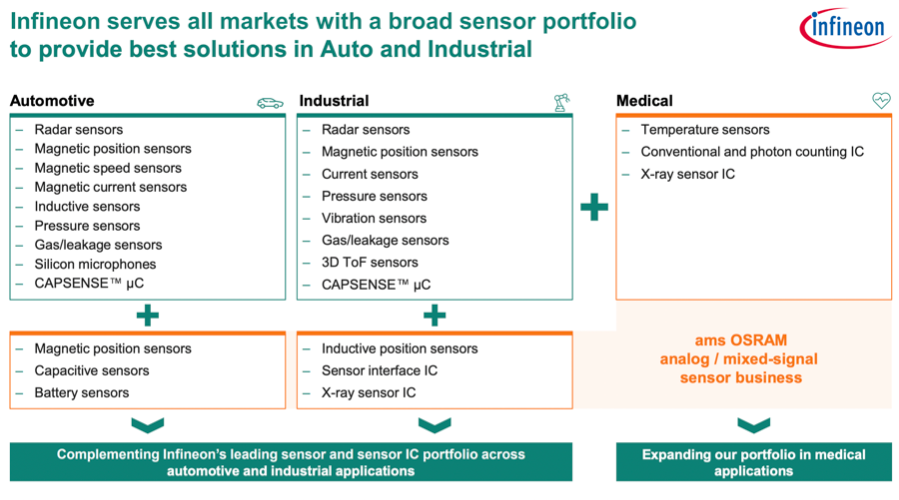
Group 1 - The semiconductor industry is experiencing a wave of mergers and acquisitions, expanding from AI chip manufacturers to include analog chips and other sectors [1][12] - Texas Instruments announced a cash acquisition of Silicon Labs for $231 per share, aiming to enhance its embedded wireless connectivity solutions, with an expected annual synergy benefit of approximately $450 million over three years [1][2] - Infineon plans to acquire OSRAM's non-optical analog/mixed-signal sensor product portfolio for €570 million, which is expected to create growth opportunities in current target markets and emerging fields like humanoid robotics [2][12] Group 2 - Renesas Electronics is also involved in consolidation, with SiTime Corporation acquiring part of Renesas's timing business, which will accelerate SiTime's path to $1 billion in revenue [5] - The recent mergers focus on strengthening foundational chip capabilities for edge AI applications, particularly in sectors like robotics and smart vehicles, aligning with the industry's current trend of accelerating AI application deployment [6][12] - Qualcomm has been actively acquiring companies to enhance its capabilities in edge AI, data centers, and software, with at least six acquisitions reported in the current year [8][11] Group 3 - The semiconductor industry's M&A activities are evolving beyond mere scale expansion to a systematic capability restructuring aimed at the AI-driven era, covering core computing power in data centers and intelligent perception in edge devices [12] - The trend indicates that edge AI is becoming a critical battleground for AI implementation across various industries, necessitating refined chip capabilities for low power, high reliability, and strong connectivity [12] - The future of the semiconductor industry will likely be dominated by mergers and integrations, emphasizing the importance of ecosystem building, cross-scenario technology fusion, and industry insight [12]