Qualcomm(QCOM)

Search documents
X @TechCrunch
TechCrunch· 2026-03-09 16:01
Qualcomm’s partnership with Neura Robotics is just the beginning https://t.co/mgAMkGOrcr ...

QUALCOMM, Inc. (QCOM) and T-Mobile Expand Strategic Collaboration to Expedite the Industry’s Evolution from 5G Advanced to 6G
Yahoo Finance· 2026-03-09 08:41
Group 1 - Qualcomm, Inc. and T-Mobile have expanded their strategic collaboration to accelerate the transition from 5G Advanced to 6G, with commercial deployments targeted to begin in 2029 [1][2] - The collaboration builds on a long history of joint innovation, focusing on foundational technologies that will power 6G, with T-Mobile leading efforts in ecosystem alignment and early research [2] - Qualcomm and Siemens showcased technology implementation at MWC Barcelona, demonstrating AI integration in autonomous factory models, highlighting the use of private Industrial 5G connectivity with edge AI for enhanced production efficiency [3] Group 2 - Qualcomm develops and commercializes foundational technologies for the wireless industry, including 3G, 4G, and 5G connectivity, as well as high-performance computing and on-device AI, operating in high-growth markets like autonomous vehicles and smartphones [4]
电子行业周报:AI ASIC订单加速兑现,定制算力进入黄金周期
Xinda Securities· 2026-03-08 12:24
AI ASIC 订单加速兑现,定制算力进入黄金周期 [Table_ReportDate] 2026 年 3 月 8 日 证券研究报告 行业研究 [行业周报 Table_ReportType] | [Table_StockAndRank] 电子 | | | --- | --- | | 投资评级 | 看好 | | 上次评级 | 看好 | [Table_Author] 莫文宇 电子行业首席分析师 执业编号:S1500522090001 邮 箱:mowenyu@cindasc.com 郭一江 电子行业分析师 执业编号:S1500524120001 邮 箱:guoyijiang@cindasc.com 杨宇轩 电子行业分析师 执业编号:S1500525010001 邮 箱:yangyuxuan@cindasc.com 王义夫 电子行业分析师 执业编号:S1500525090001 邮 箱:wangyifu@cindasc.com 信达证券股份有限公司 CINDA SECURITIES CO.,LTD 北京市西城区宣武门西大街甲127号金隅 大厦B座 邮编:100031 [Table_Title] AI ASIC 订单加 ...





Qualcomm: 9% FCF Yield Underscores The Value Case
Seeking Alpha· 2026-03-08 04:14
Core Insights - Qualcomm (QCOM) has been one of the worst-performing global semiconductor stocks over the past year, with a total return decline of 11% [1] Group 1: Company Performance - Qualcomm's performance lags behind the State Street Technology Select Sector SPDR ETF, indicating a significant underperformance in the semiconductor sector [1]



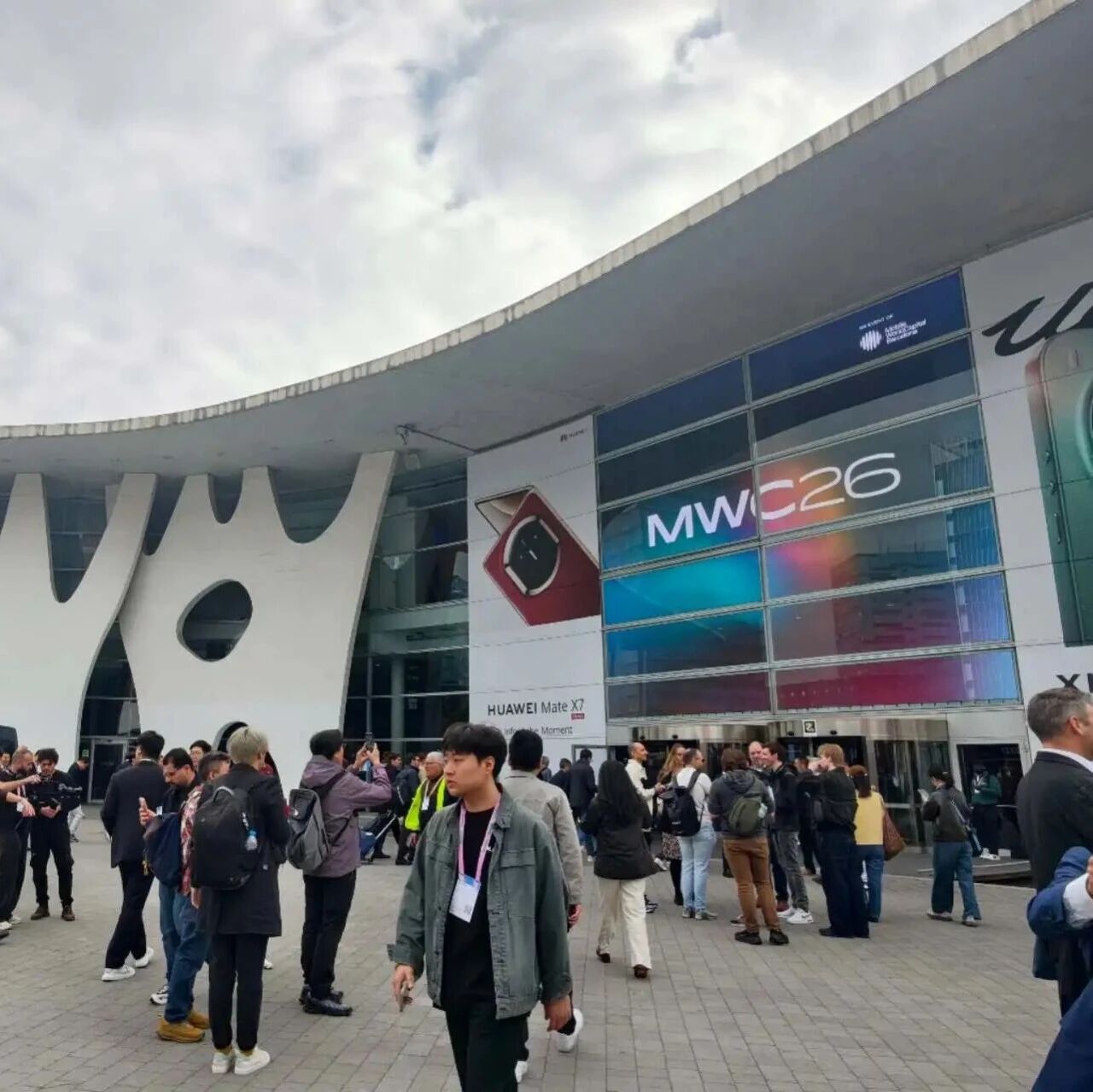
MWC落幕:无网化与网络智能,6G开启“下一代网络”起点
第一财经· 2026-03-07 12:02
Core Viewpoint - The article discusses the significance of 6G and AI in shaping the future of digital economy and smart society, highlighting China's proactive approach in 6G development and the global telecommunications industry's focus on AI and 6G during the Mobile World Congress 2026 [3][4]. Group 1: 6G Development - China has initiated its 6G layout, with the technology first mentioned in the government work report in 2025 and the second phase of 6G technology testing starting in January 2026 [3]. - The global telecommunications industry showcased future network forms at the Mobile World Congress 2026, emphasizing AI and 6G as central themes [4][5]. - The expected timeline for 6G standardization is around 2030, with initial devices anticipated to be available by 2029 [18][19]. Group 2: AI and Computing Power - AI and computing power have become the main focus of the Mobile World Congress 2026, with AI capabilities being integrated into various devices and networks [6][7]. - Companies like Huawei and NVIDIA are positioning themselves in the AI computing infrastructure space, with Huawei showcasing its supernode computing cluster and NVIDIA collaborating with telecom giants to build AI-native 6G networks [8][9]. - The demand for computing power is rising, leading to a shift from single-machine performance to system-level architecture capabilities in AI data centers [8]. Group 3: Network Structure Evolution - The traditional network structure is evolving as devices gain computing capabilities, allowing for direct communication and collaborative computing among devices, potentially reducing reliance on centralized networks [10][16]. - The concept of "device-to-device" communication and satellite communication is being explored to enhance network coverage and capabilities, especially in areas with weak or no network [16][17]. - The rise of lightweight applications, such as offline games, demonstrates a shift towards less network-dependent experiences, enhancing user engagement [14][15]. Group 4: Industry Competition - The competition in the telecommunications industry is intensifying as the focus shifts from speed to the integration of network, computing, and cloud services, with 6G expected to be the starting point for this next-generation network [20]. - The rapid growth of AI devices and applications is challenging the existing communication structure, necessitating new solutions to meet increasing demands for low latency and reliability [19].




Anterix (ATEX), Qualcomm (QCOM) Expand Collaboration for Next-Gen Utility Wireless
Yahoo Finance· 2026-03-06 20:01
Core Insights - Anterix Inc. (NASDAQ:ATEX) is positioned for significant growth, with expectations to double in value over the next three years due to its collaboration with Qualcomm Technologies (NASDAQ:QCOM) aimed at enhancing private wireless broadband for the utility sector [1][7]. Group 1: Collaboration Details - The partnership between Anterix and Qualcomm focuses on advancing the utility sector from basic spectrum access to a comprehensive connectivity platform, facilitating the deployment and evolution of private networks [1]. - This collaboration supports the development of industrial-grade IoT chipsets optimized for utility applications, utilizing Qualcomm's Snapdragon SDX35-3 and SDX32-3 IoT modems to provide 4G and 5G connectivity on Anterix's 900 MHz broadband platform [2]. - The technologies introduced are designed to enhance distributed intelligence and operational visibility at the grid edge, following the FCC's decision to expand the 900 MHz band to 10 MHz [2]. Group 2: Future Implications - The collaboration offers utilities a scalable roadmap to 5G, ensuring that private wireless networks can support future energy systems, including electrification and distributed energy resources [3]. - Members of the Anterix Active Ecosystem, such as Easymetering, are already integrating the Snapdragon SDX35-3 modem into AMI 2.0 and grid-edge solutions, showcasing the reliability and security of utility-owned networks while promoting customer engagement and digital transformation [3]. - Anterix commercializes spectrum assets to enable targeted utility and critical infrastructure customers to deploy private broadband networks and solutions [4].

Should You Avoid QCOM Stock Amid Declining Estimate Revisions?
ZACKS· 2026-03-06 15:10
Core Insights - Earnings estimates for Qualcomm Incorporated (QCOM) for fiscal 2026 and fiscal 2027 have declined by 7.3% and 8.4% respectively, indicating bearish sentiments about the stock's growth potential [1][6] Group 1: Market Challenges - The ongoing U.S.-China trade tensions have negatively impacted Qualcomm's growth potential, as the company has a significant presence in China and supplies chips to local smartphone manufacturers [3][4] - Trade restrictions imposed by the U.S. Commerce Department on high-tech equipment and components have created a dual challenge for Qualcomm, leading to potential market restrictions and increased competition from domestic chipmakers in China [4][6] - Weaker consumer and enterprise spending, particularly in China, has resulted in higher inventory levels among Qualcomm's customers [4][6] Group 2: Demand and Revenue Outlook - Qualcomm anticipates softness in demand, projecting GAAP revenues of $10.2 billion to $11 billion for the second quarter of fiscal 2026, with constrained handset revenues around $6 billion due to reduced chip orders [5][6] - OEMs in China are pulling back on new 4G device orders and managing inventory in preparation for the transition to 5G, which is expected to significantly impact device shipments [5][6] Group 3: Competitive Landscape - Qualcomm faces intense competition from rivals such as Broadcom and Hewlett Packard, as well as low-cost chip manufacturers, which may adversely affect its profitability [8][16] - The global smartphone market is expected to grow, but much of this growth will come from low-cost emerging markets, potentially weighing on Qualcomm's margins [8] Group 4: Strategic Initiatives - Qualcomm is focusing on growth opportunities within the mobile space, leveraging its Snapdragon portfolio, which includes advanced processors and AI capabilities [11][13] - The company is expanding into the vehicle-to-everything (V2X) communication systems market through the acquisition of Autotalks, enhancing its automotive solutions [14][15] Group 5: Stock Performance - Qualcomm's shares have declined by 15% over the past year, significantly underperforming the industry growth of 57.1% and lagging behind competitors like Hewlett Packard and Broadcom [10][16]

Samsung reveals first details of its AI smart glasses to CNBC
CNBC· 2026-03-06 13:15
Core Insights - Samsung Electronics is preparing to enter the smart glasses market, featuring a built-in camera and smartphone connectivity, as highlighted by a top executive [1][2] Group 1: Product Features - The upcoming smart glasses will include a camera positioned at "eye level" and will connect to smartphones for processing information received from the camera [2] - The glasses are part of a broader initiative involving mixed-reality technology, which combines augmented and virtual reality [4] - Samsung is collaborating with Qualcomm and Google to develop the operating system and hardware for these smart glasses [4][5] Group 2: Market Context - Meta's Ray-Ban glasses currently dominate the smart glasses market with an 82% global share, prompting competitors like Samsung to enter the space [3] - The smart glasses are seen as having greater market potential compared to other XR products due to their smaller size and the fact that glasses are widely worn [5] Group 3: Industry Trends - The development of advanced AI applications is driving interest in smart glasses, with companies exploring new interaction methods, such as voice commands and camera inputs for AI [6][7] - Samsung aims to have a product ready for industry use within the year, with Qualcomm indicating that the smart glasses will be released in 2024 [8]


2025Q4半导体排名:五大存储厂增27%
芯世相· 2026-03-06 07:12
Core Insights - The semiconductor market is projected to grow significantly, with a 25.6% year-on-year increase in 2025, reaching a total market size of $792 billion, the highest growth rate since the post-pandemic recovery in 2021 [7] - Major memory manufacturers, including Samsung, SK Hynix, Micron, Kioxia, and SanDisk, are expected to see strong performance driven by AI demand, with an average growth of 27% in Q4 2025 [4][7] - NVIDIA leads the semiconductor sales ranking with $68.1 billion in revenue for Q4 2025, reflecting a 20% quarter-on-quarter growth, primarily due to AI demand [4][5] Group 1: Market Performance - In Q4 2025, the top semiconductor companies achieved significant revenue growth, with Samsung at $30 billion (33% growth) and SK Hynix at $22.4 billion (34% growth) [4][5] - A total of 16 out of the top 20 semiconductor companies reported quarter-on-quarter sales growth, indicating a robust market environment [6][7] - The memory segment's growth is particularly notable, with companies like Micron and SanDisk also reporting substantial increases in sales [5][7] Group 2: Future Outlook - For Q1 2026, Micron anticipates a 37% increase in sales, Kioxia expects a 64% increase, and SanDisk projects a 52% increase, driven by AI demand and data center needs [8] - Despite the strong performance in the memory sector, challenges are anticipated in the PC and smartphone markets due to storage shortages, with Intel and Qualcomm projecting declines in sales [8][9] - The semiconductor market is expected to maintain a growth rate of over 20% in 2026, supported by stable demand in AI, industrial, and automotive sectors [9]



MWC 2026 | Fibocom Unveils 5G MiFi Solution Based on Linux OS and Qualcomm QMB415 Platform
Prnewswire· 2026-03-05 19:39
Core Insights - Fibocom launched the FG205 module and 5G MiFi solution at MWC 2026, utilizing the Qualcomm QMB415 platform which supports Linux OS, offering optimized performance for wireless broadband applications [1][1][1] Product Features - The QMB415 platform is built on the Qualcomm SM4450 chipset, featuring a streamlined architecture that reduces unnecessary CPU power and removes the GPU to enhance network connectivity performance [1][1] - The MiFi solution's support for Linux OS significantly lowers memory requirements from the typical 3GB for Android to as low as 1GB, reducing costs and supply risks associated with memory components [1][1][1] - The FG205 module maintains pin-to-pin compatibility with Fibocom's FG180/190 series modules, allowing device manufacturers to switch performance tiers without redesigning the PCB, facilitating faster product upgrades [1][1] Wi-Fi Integration - Fibocom plans to offer multiple configurations for the FG205 solution, supporting Wi-Fi 5, Wi-Fi 6, Wi-Fi 6E, and Wi-Fi 7, thereby expanding its mobile broadband product portfolio to meet diverse customer needs [1][1][1] Company Overview - Founded in 1999, Fibocom is China's first wireless communication module company listed on both A-share and H-share markets, recognized as a global leader in wireless communication modules and AI solutions [1][1] - The company focuses on integrated hardware and software solutions that drive the transformation towards "Intelligent Connectivity" across various industries, including robotics, consumer electronics, and smart energy [1][1][1]