Rivian Automotive(RIVN)

Search documents
MEDIA ADVISORY: Rivian to Host AI & Autonomy Day on December 11
Businesswire· 2025-12-08 23:01
Group 1 - The article discusses the necessity of strictly necessary cookies for website functionality, which cannot be disabled in the system [1] - These cookies are set in response to user actions that request services, such as setting privacy preferences or logging in [1] - Users can block or receive alerts about these cookies, but doing so may affect the functionality of certain parts of the site [1] Group 2 - Strictly necessary cookies do not store any personally identifiable information [1]



Netflix, Tesla downgraded: Wall Street's top analyst calls
Yahoo Finance· 2025-12-08 14:45
Upgrades - HSBC upgraded Visa (V) to Buy from Hold with a price target of $389, up from $335, citing strong financial performance and growth in services [2] - BofA upgraded Synopsys (SNPS) to Neutral from Underperform with a price target of $500, down from $525, anticipating a positive outlook on its upcoming EPS call [3] - Morgan Stanley upgraded General Motors (GM) to Overweight from Equal Weight with a price target of $90, up from $54, reflecting a change in analyst coverage and a revised outlook for the auto sector [4] - TD Cowen upgraded Ulta Beauty (ULTA) to Buy from Hold with a price target of $725, up from $600, due to expectations of stronger merchandising and global growth under new management [4] - Truist upgraded Five Below (FIVE) to Buy from Hold with a price target of $216, up from $179, highlighting the significance of the company's Q3 report [5] Downgrades - Rosenblatt downgraded Netflix (NFLX) to Neutral from Buy with a price target of $105, down from $152, following a significant acquisition announcement [6] - Morgan Stanley downgraded Rivian (RIVN) to Underweight from Equal Weight with an unchanged price target of $12, expressing caution regarding the electric vehicle market [6] - Morgan Stanley also downgraded Lucid Group (LCID) to Underweight from Equal Weight with a price target of $10, down from $30, reflecting a similar cautious outlook [6] - Morgan Stanley downgraded Tesla (TSLA) to Equal Weight from Overweight with a price target of $425, up from $410, citing high valuation and a cautious industry outlook [6] - Deutsche Bank downgraded 3M (MMM) to Hold from Buy with a price target of $178, down from $199, indicating limited upside potential through 2028 [6] - Benchmark downgraded Marvell (MRVL) to Hold from Buy, removing the price target, due to competitive losses impacting growth projections [6]


2026 展望:在汽车行业不确定的前路中导航-Autos & Shared Mobility -2026 Outlook Navigating the Auto Industry's Uncertain Road Ahead
2025-12-08 02:30
Summary of the Auto Industry and Shared Mobility Conference Call Industry Overview - The report focuses on the **North American Auto Industry** and **Shared Mobility** for the year 2026, highlighting a cautious outlook due to an anticipated 'EV Winter' expected to persist through 2026 [1][4][10]. Key Points and Arguments 1. **Sales Forecasts**: - The 2026 US Auto sales forecast is set at **15.9 million** units, reflecting a **1.0% year-over-year decline**. This includes **14.9 million** Internal Combustion Engine (ICE) vehicles (+1.0% y/y) and **1.0 million** Electric Vehicles (EVs) (-20% y/y) [5][11][25]. 2. **Market Dynamics**: - The **2025 US Auto sales** showed unexpected resilience, driven by pre-buying before tariff implementations and the expiration of consumer tax credits for battery electric vehicles (BEVs) [4][10]. - Factors contributing to the cautious outlook include: - Continued lack of affordability due to the expiration of EV tax credits and rising average transaction prices (ATPs) [5][10]. - Tightened credit standards, particularly affecting subprime borrowers, although some modest loosening has been noted recently [5][10]. - Inflationary pressures from tariffs expected to impact consumer prices through the first quarter of 2026 [5][10]. 3. **Consumer Behavior**: - There is pent-up demand in the market, with US Auto SAAR still below pre-COVID levels and an aging car parc averaging nearly **13 years** [5][10]. - Rate cuts may marginally improve affordability for consumers [5][10]. 4. **Scenario Analysis**: - **Bull Case**: Forecasts a SAAR of **17.5 million** (+8.7% y/y) if consumer confidence improves and OEMs focus on core ICE/hybrid offerings [12][25]. - **Bear Case**: Projects a SAAR of **14.5 million** (-9.9% y/y) if credit availability tightens further and consumer affordability worsens [12][25]. 5. **Stock Ratings Changes**: - **General Motors (GM)** upgraded to **Overweight** with a target price of **$90**, citing strong execution and capital allocation strategies [8][48]. - **Tesla (TSLA)** downgraded to **Equal-weight** with a target price of **$425**, reflecting high expectations and near-term headwinds [8][51]. - **Rivian (RIVN)** and **Lucid (LCID)** downgraded to **Underweight** due to negative EV outlooks [8][54]. Additional Insights - The report emphasizes the importance of monitoring policy updates regarding tariffs and consumer health indicators such as unemployment and inflation [12][13]. - The **EV market** is expected to face significant headwinds, with a projected **20% decline in volume** and a penetration rate of **6.5%** for BEVs in 2026 [10][31]. - Companies with diversified sourcing and regional manufacturing strategies are seen as better positioned amid geopolitical tensions and market shifts [47]. Conclusion - The North American auto industry is navigating a complex landscape with mixed signals for 2026. While there are opportunities for companies with strong execution and adaptability, significant challenges remain, particularly in the EV segment. Investors are advised to remain selective and focus on companies that can effectively manage costs and capitalize on market dynamics.




Rivian: Improving Margins, Nice Catalyst Ahead (Rating Upgrade)
Seeking Alpha· 2025-12-05 09:48
Core Insights - The investor adopts a contrarian investment style, focusing on high-risk, illiquid options and shares, with a balanced portfolio of approximately 50% in each [1] - The investment strategy emphasizes buying stocks that have recently experienced sell-offs due to non-recurrent events, particularly when insiders are purchasing shares at lower prices [1] - Fundamental analysis is employed to assess the health of companies, their leverage, and to compare financial ratios with sector and industry averages [1] - Technical analysis is utilized to optimize entry and exit points, using multicolor lines for support and resistance levels on weekly charts [1] Investment Strategy - The investor's timeframe for holding positions typically ranges from 3 to 24 months [1] - A thorough professional background check is conducted on insiders who purchase shares following a sell-off [1] - The investor screens through thousands of stocks, primarily in the US, but may also invest in companies from less stable economies [1]
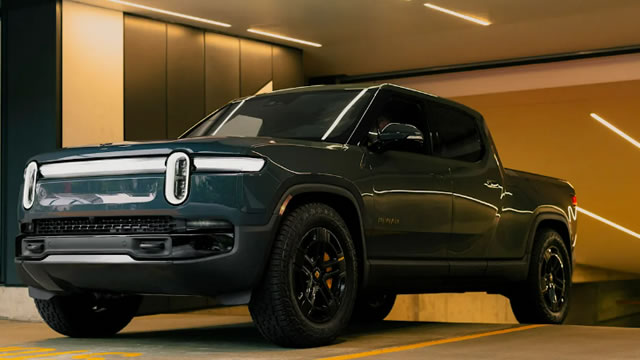
Rivian Automotive, Inc. (NASDAQ:RIVN) Eyes Mass Market with R2 SUV
Financial Modeling Prep· 2025-12-04 21:12
Core Insights - Rivian Automotive, Inc. is a significant player in the electric vehicle market, particularly known for its R1T pickup and R1S SUV, which target the high-end segment similar to Tesla's early offerings [1] - The company's future growth is heavily reliant on the upcoming R2 mass-market SUV, priced at $45,000, which aims to broaden its market reach [1][3] Stock Performance - RBC Capital has updated Rivian's rating to "Sector Perform," suggesting investors hold the stock, which was priced at $17.54 at the time of the update [2] - The stock has experienced a slight decline to $17.51, reflecting a 0.14% drop, although it reached a yearly high of $18.17 [2] - Rivian's market capitalization stands at approximately $21.39 billion, with trading volumes exceeding 15.3 million shares [3] Market Activity - The stock has fluctuated between $17.43 and $18.17 recently, indicating active investor interest [3] - Over the past year, Rivian's stock has seen a low of $10.36, showcasing its volatility [3] Strategic Positioning - Rivian's strategy mirrors Tesla's successful approach by introducing a more affordable model to increase market volume, with the R2 SUV potentially doubling its stock value [3] - The successful capture of the mass market by the R2 SUV could significantly enhance Rivian's market presence, akin to Tesla's transformation with the Model 3 [3]
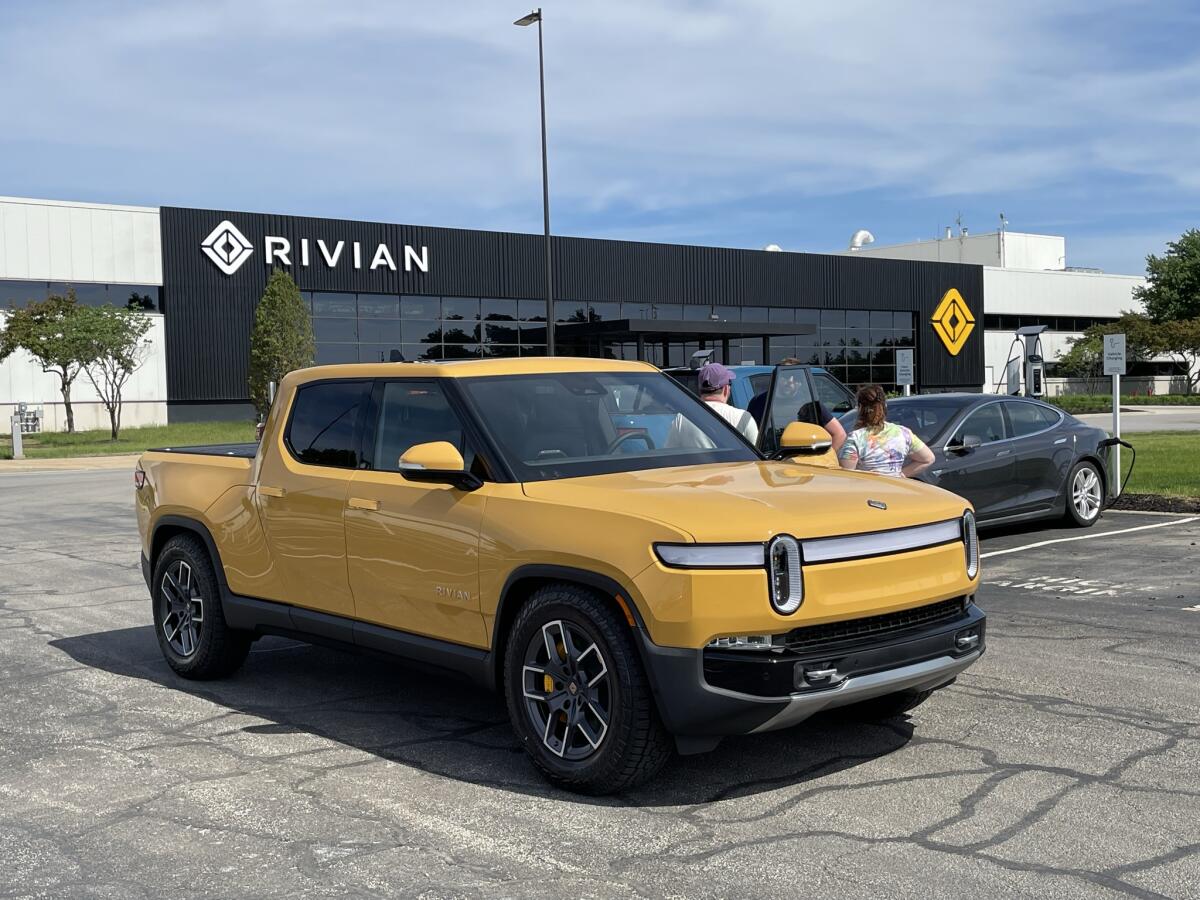
Trump’s Market Whiplash: A Rollercoaster for Your Portfolio (and Sanity)
Stock Market News· 2025-12-04 18:00
Market Volatility and Policy Changes - The stock market is experiencing significant volatility driven by recent policy announcements from the Trump administration, affecting various sectors and investor sentiment [1][2] - The rollback of the Biden-era Corporate Average Fuel Economy (CAFE) standards to a target of 34.5 miles per gallon by 2031 has been welcomed by traditional automakers, leading to stock price increases for companies like Ford, Stellantis, and General Motors [3][4] - Conversely, electric vehicle manufacturers such as Tesla and Rivian may face challenges due to the rollback of the CAFE credit trading program, potentially impacting their revenue streams [5] Trade Relations and Tariffs - The Trump administration is threatening to withdraw from the United States-Mexico-Canada Agreement (USMCA) and impose new tariffs on goods from China, Mexico, and Canada, creating uncertainty for companies in the North American supply chain [7][10] - The Canadian Dollar showed only mild weakness in response to these threats, indicating a level of market fatigue regarding trade uncertainties [8] - Analysts predict that the effective tariff rate could approach 20%, leading to higher inflation and increased market volatility, with companies likely passing on 70% of tariff costs to consumers [11][10] Impact on Specific Companies - Costco is proactively suing the U.S. government for refunds on duties already paid, highlighting the financial impact of tariffs on corporate bottom lines [12][13] - The pharmaceutical sector is reacting to Trump's plans to negotiate lower prices for GLP-1 weight-loss drugs, with shares of major manufacturers like Eli Lilly and Novo Nordisk experiencing declines [14][15] - Analysts are concerned about the long-term implications for these companies' revenues, particularly for Novo Nordisk, which holds a significant market share in the GLP-1 drug market [15] Broader Market Implications - The unpredictability of the Trump administration continues to create a complex environment for investors, necessitating a diversified portfolio and vigilance in response to ongoing policy shifts [16][17] - The market is characterized by a mix of deregulation and protectionism, with the potential for significant impacts on corporate margins and stock valuations [17][18]



How is Rivian Addressing Its Delivery Van Seat Belt Issue?
ZACKS· 2025-12-04 16:16
Core Insights - Rivian Automotive, Inc. is recalling 34,824 electric delivery vans in the U.S. due to a defect in the seat belt system that may fail to properly restrain drivers, increasing injury risk in crashes [1][7] - The National Highway Traffic Safety Administration (NHTSA) initiated an investigation into 17,198 Rivian delivery vans after reports of fraying and breaking seat belt cables [2] - Rivian is implementing an over-the-air software update to detect improper seat belt use and will inspect and replace the driver's seat belt pretensioner assembly at no cost [3][7] Company Performance - Rivian's stock has outperformed the Zacks Automotive-Domestic industry year to date, with shares gaining 31.8% compared to the industry's growth of 14.2% [6] - From a valuation perspective, Rivian appears undervalued, trading at a forward price/sales ratio of 3.25, slightly lower than the industry's 3.36 [8] Earnings Estimates - The Zacks Consensus Estimate for Rivian's EPS for 2025 and 2026 has narrowed by 13 cents and 6 cents, respectively, over the past 30 days [10]
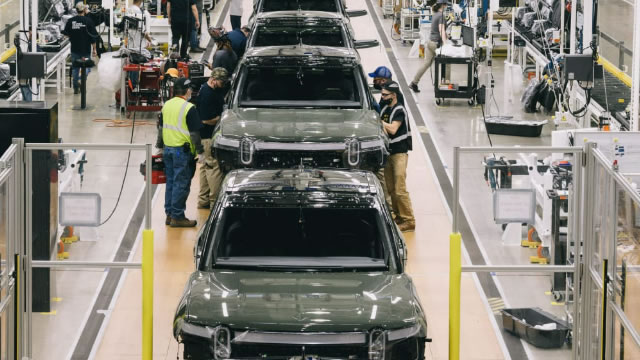
Rivian Stock Could Double On Affordable R2 SUV Launch
Forbes· 2025-12-04 14:31
Core Insights - Rivian's upcoming R2 SUV is positioned as a potential catalyst to significantly increase the company's stock value, similar to how Tesla's Model 3 transformed its market presence [3][4] - The R2, priced at $45,000, aims to penetrate the mass market, moving Rivian from a niche luxury brand to competing with mainstream vehicles like the Toyota RAV4 and Honda CR-V [8][9] - Rivian's strategy includes learning from Tesla's manufacturing challenges to avoid pitfalls and enhance production efficiency [5][9] Market Positioning - Rivian's current offerings, the R1T and R1S, are high-priced vehicles, limiting market reach; the R2 is crucial for expanding its customer base [3][4] - The R2's design focuses on ruggedness and simplicity, differentiating it from competitors like the Tesla Model Y, which has design limitations [8][9] Manufacturing Strategy - Rivian has opted to produce the R2 in its existing Illinois facility instead of building a new factory in Georgia, saving $2.25 billion and reducing risk [9] - The R2 utilizes "Zonal Architecture" to simplify production, reducing costs and assembly time [9] Financial Projections - Revenue growth is projected at 28% for the upcoming year, with potential to reach $13 billion by 2028 if annual growth hits 35% [9] - Rivian aims for a Bill of Materials (BOM) of $32,000 per R2 vehicle, which, along with cost reductions, could lead to a 10% net margin by 2028, translating to $1.3 billion in net income [9] Valuation Outlook - A conservative P/E multiple of 30x applied to projected earnings suggests a market cap of $40 billion, indicating a potential 2x upside from current stock levels [9]