Raytheon Technologies(RTX)

Search documents
RTX Q4 Earnings Surpass Estimates, Revenues Increase Y/Y
ZACKS· 2026-01-27 20:10
Core Insights - RTX Corporation's fourth-quarter 2025 adjusted earnings per share (EPS) of $1.55 exceeded the Zacks Consensus Estimate of $1.46 by 5.9% and improved 0.6% from the previous year's $1.54 [1] - The company reported total revenues of $24.24 billion for the fourth quarter, surpassing the Zacks Consensus Estimate of $22.74 billion by 6.6% and reflecting a 12.1% increase from $21.62 billion in the fourth quarter of 2024 [2] - RTX's total costs and expenses rose nearly 10.9% year over year to $21.95 billion, while adjusted operating profit increased to $2.6 billion from $2.1 billion in the prior-year quarter [3] Revenue Breakdown - Collins Aerospace segment sales reached $7.74 billion, up 3% year over year, driven by a 9% increase in commercial OE, a 13% increase in commercial aftermarket, and a 2% increase in defense [4] - Pratt & Whitney segment sales totaled $9.5 billion, reflecting a 25% year-over-year improvement, with commercial OE sales up 28% and military sales up 30% [5] - Raytheon segment recorded sales of $7.66 billion, up 7% year over year, supported by higher volume in land and air defense systems [6] Financial Performance - As of December 31, 2025, RTX had cash and cash equivalents of $7.44 billion, an increase from $5.58 billion a year earlier [7] - Long-term debt decreased to $34.29 billion from $38.73 billion as of December 31, 2024 [9] - Net cash flow from operating activities for 2025 was $10.57 billion, up from $7.16 billion the previous year, while free cash flow totaled $7.94 billion compared to $4.53 billion in 2024 [9] Future Guidance - RTX expects 2026 adjusted EPS to be in the range of $6.60-$6.80, with sales projected between $92-$93 billion [10] - The company anticipates generating free cash flow of $8.25-$8.75 billion in 2026 [10]



Raytheon's Strong Free Cash Flow and FCF Margin Could Push RTX Stock Higher
Yahoo Finance· 2026-01-27 18:08
Core Viewpoint - Raytheon Corp (RTX) reported strong free cash flow (FCF) for Q4 and 2025, projecting further growth in 2026, indicating potential for a 10% increase in stock value to $217.00 or higher [1][6]. Financial Performance - RTX's revenue for 2025 was reported at $88.6 billion, exceeding analysts' expectations of $87 billion by 1.83% [4]. - The company reported $3.195 billion in FCF for Q4, leading to a total FCF of $7.94 billion for 2025, which is 75% higher than the previous year and 51% higher than the previous quarter's TTM figure [5][6]. - For 2026, Raytheon projects FCF to rise to between $8.25 billion and $8.75 billion, based on a revenue forecast of $92 billion to $93 billion [6]. Cash Flow Margins - In Q4, Raytheon's FCF of $3.2 billion represented a record 13.18% of its quarterly revenue of $24.2 billion, significantly higher than last year's 2.3% FCF margin [7]. - For the full year, the FCF of $7.94 billion accounted for almost 9% of sales (8.96%), compared to just 6.09% over the last 12 months as of Q3, indicating improved cash generation from operations [8].
Adidas: Updating For 2026 With A 'Buy'
Seeking Alpha· 2026-01-27 17:10
Core Viewpoint - The article discusses the investment position in ADDYY, indicating a beneficial long position held by the author, which suggests confidence in the company's future performance [1]. Group 1 - The author expresses a personal opinion on ADDYY, emphasizing that the article is not receiving compensation from any company mentioned [1]. - The author clarifies that they are not a licensed financial advisor, and the content should not be construed as financial advice [2]. - The article highlights the importance of due diligence and research by investors before making any investment decisions [2]. Group 2 - The author mentions a watchlist position in Adidas, indicating potential interest in increasing the investment in the future [2].


Raytheon Technologies(RTX) - 2025 Q4 - Earnings Call Transcript
2026-01-27 14:32
RTX (NYSE:RTX) Q4 2025 Earnings call January 27, 2026 08:30 AM ET Company ParticipantsChris Calio - Chairman and CEOKristine Liwag - Executive Director and Head of Aerospace and Defense Equity ResearchNathan Ware - VP of Investor RelationsNeil Mitchill - CFOConference Call ParticipantsPeter Arment - Senior Research AnalystRonald Epstein - Managing Director and Senior Aerospace and Defense AnalystOperatorGood day, ladies and gentlemen, and welcome to the RTX Fourth Quarter 2025 earnings conference call. My n ...
Raytheon Technologies(RTX) - 2025 Q4 - Earnings Call Transcript
2026-01-27 14:32
Financial Data and Key Metrics Changes - For the full year, adjusted sales were $88.6 billion, up $9 billion year-over-year, or 11% organically, driven by 10% growth in commercial OE, 18% growth in commercial aftermarket, and 8% growth in defense [4] - Adjusted EPS of $6.29 was up 10% year-over-year, and free cash flow was $7.9 billion, up $3.4 billion year-over-year [4][18] - The company ended 2025 with a book-to-bill of 1.56, resulting in a record backlog of $268 billion, up 23% year-over-year [4] Business Line Data and Key Metrics Changes - Collins' sales were $7.7 billion in the fourth quarter, up 3% on an adjusted basis and 8% organically, driven by strength in commercial OE and aftermarket [21] - Pratt & Whitney's sales were $9.5 billion, up 25% on both an adjusted and organic basis, driven by strength across all channels [23] - Raytheon's sales were $7.7 billion in the quarter, up 7% on both an adjusted and organic basis, driven by higher volume on land and air defense systems [24] Market Data and Key Metrics Changes - Commercial air travel is expected to grow again, with global RPKs projected to increase around 5% this year, on top of the 5% seen in 2025 [7] - NATO allies are expected to increase their core defense spending to approximately 3.5% of GDP by 2035, supporting strong demand for defense products [9] Company Strategy and Development Direction - The company is committed to making the right investments to support favorable long-term demand and drive sustainable growth [33] - Increased production rates are expected in 2026, particularly on the A320neo, 737 MAX, and 787 platforms, as well as on business jet and general aviation aircraft [8] - The company plans to invest approximately $10.5 billion in CapEx in 2026, focusing on expanding production capacity and factory automation [15] Management's Comments on Operating Environment and Future Outlook - Demand remains strong, and the company is well-positioned for another year of top-line growth [7] - For 2026, adjusted sales are expected to be between $92 billion and $93 billion, with 5%-6% organic growth year-over-year [9][26] - The company expects adjusted EPS to be between $6.60 and $6.80, with free cash flow projected to be between $8.25 billion and $8.75 billion [10][29] Other Important Information - The company invested over $10 billion in CapEx and R&D in 2025, with a focus on expanding production capacity and factory automation [13] - The GTF Fleet Management Plan is on track, with MRO output up 39% in the fourth quarter and expected to continue growing in 2026 [40] Q&A Session Summary Question: Update on GTF Fleet Management Plan - The financial and technical outlook remains on track, with AOG down over 20% from the highs of 2025, and MRO output is expected to continue improving [38][40] Question: Thoughts on Executive Order for Defense Companies - The company recognizes the responsibility to deliver more and faster, aligning resources with the Department of Defense's mandate to ramp production and invest in capacity [44][46] Question: Portfolio Composition and Monetization Opportunities - The company believes it is well-positioned to meet the ramp in defense and commercial sectors, with a strong balance sheet to support investments [50][52] Question: 2026 Guidance for Pratt & Whitney - The company expects large commercial engine deliveries to grow mid to high single digits, balancing the need to support the flying fleet and new installs [58] Question: Raytheon Segment Growth Rates - The majority of sales increase is coming from land and air defense systems, with a strong backlog supporting the outlook for 2026 [74]
Raytheon Technologies(RTX) - 2025 Q4 - Earnings Call Transcript
2026-01-27 14:30
RTX (NYSE:RTX) Q4 2025 Earnings call January 27, 2026 08:30 AM ET Speaker1Good day, ladies and gentlemen, and welcome to the RTX Fourth Quarter 2025 earnings conference call. My name is Livia and I'll be your operator for today. As a reminder, this conference is being recorded for replay purposes. On the call today are Chris Calio, Chairman and Chief Executive Officer; Neil Mitchill, Chief Financial Officer; and Nathan Ware, Vice President of Investor Relations. This call is being webcast live on the Intern ...
Raytheon Technologies(RTX) - 2025 Q4 - Earnings Call Presentation
2026-01-27 13:30
Earnings conference call 4th quarter 2025 January 27, 2026 © 2026 RTX Corporation. All rights reserved. Forward looking statements Note: This investor webcast presentation contains statements which, to the extent they are not statements of historical or present fact, constitute "forward-looking statements" under the securities laws. These forward-looking statements are intended to provide RTX Corporation ("RTX") management's current expectations or plans for our future operating and financial performance, b ...
美股盘前要点 | 美联储官员预计本周将暂停降息!iPhone内存成本或飙升100%
Ge Long Hui A P P· 2026-01-27 12:52
Group 1 - U.S. stock index futures show mixed performance, with Nasdaq futures up 0.63% and S&P 500 futures up 0.25%, while Dow futures are down 0.44% [1] - Major European indices also display mixed results, with Germany's DAX down 0.09%, UK's FTSE 100 up 0.35%, France's CAC up 0.37%, and the Euro Stoxx 50 up 0.28% [1] - The Federal Reserve officials expect to pause interest rate cuts this week, with an unclear path for future cuts [1] Group 2 - Samsung Electronics and SK Hynix are negotiating with Apple to significantly increase the price of LPDDR memory used in iPhones, with a potential increase of up to 100% [2] Group 3 - The European Union has initiated two compliance procedures to ensure Google meets its obligations under the Digital Markets Act [3] Group 4 - Microsoft has received approval to build 15 additional data centers in Wisconsin, USA [4] Group 5 - Micron Technology is investing $24 billion to expand production in Singapore to address AI chip shortages [5] - Synopsys CEO anticipates that the price increase and shortage of memory chips will persist until 2027 [5] Group 6 - Nike is reportedly planning to lay off 775 employees to enhance profitability and accelerate automation [6] Group 7 - Alibaba has officially launched its flagship reasoning model Qwen3-Max-Thinking, which is noted for its stronger initiative and proficiency in logical reasoning [7] Group 8 - XPeng Motors' CEO expects "very strong" growth this year, with overseas sales growth potentially surpassing that of the domestic market [8] Group 9 - VinFast is collaborating with AI company Autobrains to develop autonomous driving technology [9] Group 10 - The U.S. Treasury has terminated its contract with consulting firm Booz Allen, related to the leak of tax records for Trump and Musk [10] Group 11 - UnitedHealth reported Q4 revenue of $113.215 billion, with adjusted EPS down 69.02% year-over-year to $2.11 [11] - General Motors reported Q4 revenue of $45.29 billion, with a loss of $3.31 billion; the company approved a $6 billion stock buyback plan [12] - American Airlines reported Q4 adjusted EPS of $0.16, which was below expectations, and anticipates a revenue decrease of $150 million to $200 million due to winter storms [13] - Raytheon Technologies reported a 12% year-over-year increase in Q4 sales to $24.24 billion, with adjusted EPS of $1.55, exceeding expectations [14]




RTX Stock Jumps After Earnings. It Has ‘Great Momentum,' Says CEO.
Barrons· 2026-01-27 12:21
Core Viewpoint - The defense and aerospace company reported better-than-expected earnings and sales for the fourth quarter [1] Financial Performance - The company achieved higher earnings than analysts' expectations for the fourth quarter [1] - Sales figures also surpassed forecasts, indicating strong demand in the defense and aerospace sectors [1]
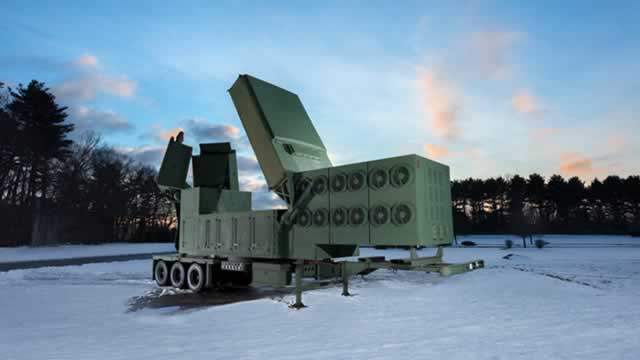
RTX Posts Higher Sales, Issues Upbeat Outlook
WSJ· 2026-01-27 12:07
Core Insights - RTX reported higher sales in the fourth quarter, driven by strong demand for munitions and missiles, indicating robust market conditions and potential for future growth [1] Company Performance - The company experienced increased sales in the fourth quarter, attributed to ongoing demand for its products [1] - RTX has provided guidance for continued growth in the upcoming year, suggesting confidence in its market position and operational strategy [1]