
Raytheon Technologies(RTX)

Search documents
RTX posts higher quarterly sales on strong engine demand, aircraft repairs
Reuters· 2026-01-27 11:58
Core Insights - Aerospace and defense giant RTX reported an increase in fourth-quarter revenue and profit, attributed to higher sales in its engines and robust demand for commercial aircraft maintenance and repairs [1] Group 1: Financial Performance - The company experienced a rise in fourth-quarter revenue and profit, indicating strong financial performance [1] Group 2: Sales Drivers - The increase in revenue was primarily driven by a surge in sales for its engines [1] - There was also a strong appetite for commercial aircraft maintenance and repairs, contributing to the overall sales growth [1]



Raytheon Technologies(RTX) - 2025 Q4 - Annual Results
2026-01-27 11:57
Financial Performance - RTX reported fourth quarter 2025 sales of $24.2 billion, up 12% year-over-year, and full year sales of $88.6 billion, up 10% year-over-year[6][9] - GAAP EPS for Q4 2025 was $1.19, reflecting an 8% increase from $1.10 in Q4 2024, while full year GAAP EPS was $4.96, up 40% from $3.55[9][6] - Adjusted EPS for Q4 2025 was $1.55, a 1% increase from the prior year, and full year adjusted EPS was $6.29, up 10% year-over-year[6][9] - Net sales for Q4 2025 reached $24,238 million, a 12% increase from $21,623 million in Q4 2024[28] - Operating profit for Q4 2025 was $2,596 million, up 23% from $2,111 million in Q4 2024[28] - Net income attributable to common shareholders for Q4 2025 was $1,622 million, compared to $1,482 million in Q4 2024, reflecting a 9% increase[28] - Basic earnings per share (EPS) for Q4 2025 was $1.21, up from $1.11 in Q4 2024, representing a 9% growth[28] - Consolidated net sales for the quarter ended December 31, 2025, reached $24,238 million, an increase from $21,623 million in the same quarter of 2024, representing a growth of 7.5%[29] - Operating profit for the total segments was $3,060 million for the quarter ended December 31, 2025, compared to $2,434 million in the same quarter of 2024, reflecting a year-over-year increase of 25.6%[29] - Net income for the twelve months ended December 31, 2025, was $7,069 million, significantly higher than $5,013 million for the same period in 2024, representing a growth of 40.9%[31] - Total adjusted net sales for the twelve months ended December 31, 2025, reached $88,603 million, a 9.0% increase from $80,738 million in 2024[33] Cash Flow and Liquidity - Operating cash flow for Q4 2025 was $4.2 billion, with free cash flow of $3.2 billion, representing a 549% increase from $492 million in Q4 2024[9][8] - Free cash flow for the quarter ended December 31, 2025 was $3,195 million, a significant increase from $492 million in the same quarter of 2024[38] - For the twelve months ended December 31, 2025, free cash flow reached $7,940 million, compared to $4,534 million in 2024, reflecting a year-over-year growth of 75%[38] - The company reported a net cash flow from operating activities of $4,165 million for the quarter ended December 31, 2025, compared to $1,561 million in the same quarter of 2024, indicating a substantial increase of 167.5%[31] - The company reported net cash flows from operating activities of $10,567 million for the twelve months ended December 31, 2025, up from $7,159 million in 2024[38] Segment Performance - Collins Aerospace reported Q4 2025 sales of $7.736 billion, up 3% year-over-year, driven by a 9% increase in commercial OE and a 13% increase in commercial aftermarket[11][12] - Pratt & Whitney's Q4 2025 sales were $9.496 billion, a 25% increase year-over-year, supported by a 28% rise in commercial OE and a 30% increase in military sales[16][17] - Raytheon reported Q4 2025 sales of $7.657 billion, up 7% year-over-year, driven by higher volume in land and air defense systems[18][19] - Collins Aerospace segment reported net sales of $7,736 million for the quarter, an increase from $7,537 million in the same quarter of 2024[32] - Pratt & Whitney segment net sales increased to $9,496 million from $7,569 million year-over-year, reflecting a growth of 25.5%[32] - Raytheon segment net sales were $7,657 million, up from $7,157 million in the same quarter of 2024, marking a 7.0% increase[32] Guidance and Future Outlook - For full year 2026, RTX expects adjusted sales between $92.0 billion and $93.0 billion, with organic sales growth projected at 5% to 6%[6] - Adjusted EPS guidance for 2026 is estimated to be between $6.60 and $6.80, with free cash flow expected to be between $8.25 billion and $8.75 billion[6] - The company anticipates continued growth in adjusted net sales and operating profit, although specific forward-looking guidance is subject to variability[25] Costs and Expenses - The total costs and expenses for Q4 2025 were $21,948 million, an increase from $19,770 million in Q4 2024[28] - Interest expense for Q4 2025 was $400 million, down from $486 million in Q4 2024, indicating improved cost management[28] - Research and development expenses for Q4 2025 were $789 million, slightly down from $808 million in Q4 2024[28] Strategic Initiatives - The company is focused on strategic initiatives such as digital transformation and operational efficiency to enhance future performance[25] - The company’s backlog reached $268 billion, with $161 billion in commercial and $107 billion in defense[6] Balance Sheet Highlights - Cash and cash equivalents increased to $7,435 million as of December 31, 2025, up from $5,578 million a year earlier, marking a growth of 33.3%[30] - Total assets rose to $171,079 million as of December 31, 2025, compared to $162,861 million in 2024, indicating an increase of 5.5%[30] - Total current liabilities increased to $58,784 million as of December 31, 2025, from $51,499 million in 2024, reflecting a rise of 14.2%[30] - Total liabilities amounted to $103,941 million as of December 31, 2025, up from $100,903 million in 2024, which is an increase of 2.0%[30] - The company’s total equity increased to $67,102 million as of December 31, 2025, compared to $61,923 million in 2024, representing a growth of 8.4%[30] Non-Recurring Items - The company incurred a net pre-tax charge of approximately $0.1 billion related to a customer bankruptcy at Pratt & Whitney for the twelve months ended December 31, 2025[45] - A pre-tax gain of $0.1 billion was recorded for the sale of the Simmonds Precision Products business at Collins during the quarter ended December 31, 2025[45] - The twelve months ended December 31, 2025 included a non-cash pre-tax pension settlement charge of $0.3 billion related to a buy-out conversion of a group annuity contract[46]
RTX Reports 2025 Results and Announces 2026 Outlook
Prnewswire· 2026-01-27 11:55
Core Insights - RTX delivered strong sales, adjusted EPS, and free cash flow in 2025, with expectations for continued growth in 2026 [3][4][7] Financial Performance - Fourth quarter 2025 reported and adjusted sales were $24.2 billion, up 12% from the previous year, with GAAP EPS of $1.19 and adjusted EPS of $1.55, up 1% [4][7] - Full year 2025 sales reached $88.6 billion, a 10% increase year-over-year, with adjusted EPS of $6.29, up 10% [7][9] - Operating cash flow for Q4 was $4.2 billion, leading to free cash flow of $3.2 billion, a significant increase from $492 million in the prior year [5][9] Segment Performance - Collins Aerospace reported Q4 sales of $7.736 billion, a 3% increase, with operating profit up 27% to $1.402 billion [10][11] - Pratt & Whitney saw Q4 sales of $9.496 billion, a 25% increase, with operating profit rising 53% to $773 million [12][13] - Raytheon achieved Q4 sales of $7.657 billion, a 7% increase, with operating profit up 7% to $885 million [14][15] 2026 Outlook - The company anticipates adjusted sales between $92.0 billion and $93.0 billion for 2026, with organic sales growth projected at 5% to 6% and adjusted EPS expected between $6.60 and $6.80 [7][9]

RTX Corporation's Upcoming Earnings: A Deep Dive into Its Financial Health and Market Position
Financial Modeling Prep· 2026-01-26 11:00
Core Insights - RTX Corporation is a key player in the aerospace and defense sector, with an upcoming quarterly earnings report expected to show an EPS of $1.46 and revenue of approximately $22.7 billion [1][6] Group 1: Financial Performance - Analysts predict a 5.2% year-over-year decrease in RTX's EPS, while revenues are expected to increase by 5.2% to $22.7 billion [4][6] - The consensus EPS estimate has been revised upward by 1.3% over the last 30 days, indicating potential positive investor sentiment [4][6] - RTX's stock has seen a 6% increase over the past month, outperforming both the Zacks S&P 500 composite and the Zacks Aerospace - Defense industry [5] Group 2: Market Positioning - The company has secured significant contracts, particularly with the FAA, enhancing its revenue visibility in the aerospace domain [2] - RTX's engagement in the commercial aerospace market provides diversification, contributing to stable revenue streams [3] - The company's extensive product portfolio positions it favorably within the current market dynamics, especially amid rising demand for sophisticated military systems due to global geopolitical tensions [2][3] Group 3: Valuation Metrics - RTX trades at a marginally lower price-to-book valuation compared to General Dynamics, with a P/E ratio of approximately 39.83 [3][5] - The company's debt-to-equity ratio stands at approximately 0.63, indicating a moderate level of debt relative to its equity [5]
再武装”大势席卷全球 摩根大通高呼“逢低买入军工股
Zhi Tong Cai Jing· 2026-01-22 13:30
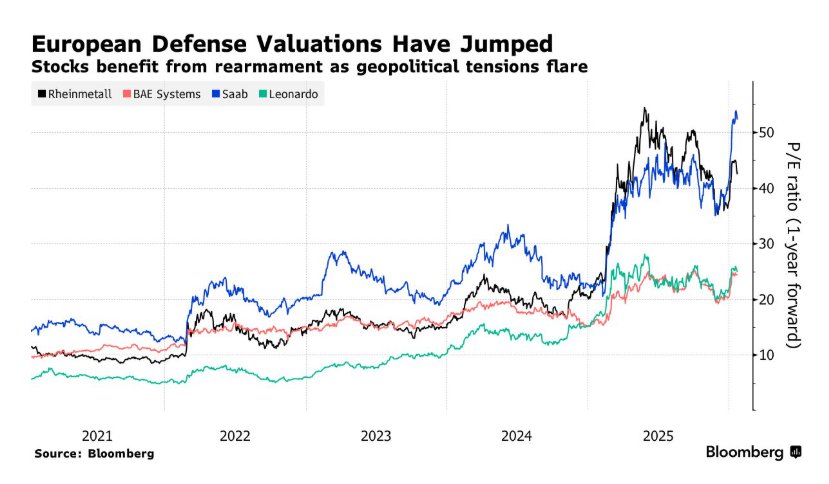
Core Viewpoint - Morgan Stanley's report indicates a significant short-term decline in global defense stocks, including European defense stocks, presenting a major opportunity for investors to buy on dips, as the sector is expected to enter a long-term upward cycle driven by global rearmament [1][3] Group 1: Market Trends - The European defense stock index compiled by Goldman Sachs fell by 3.0% on Thursday, marking three consecutive days of decline [2] - Rheinmetall AG, a major player in the defense sector, saw its stock drop by 5.6% over the past three trading days [2] Group 2: Investment Recommendations - Investors are advised to buy European defense stocks during any weakness, as the sector is in the early stages of a new global defense spending cycle that could last another decade [3] - The sensitivity of military stocks to geopolitical news has increased, particularly after significant price increases in 2025, with Rheinmetall's stock priced at 40 times its expected earnings, double the valuation from a year ago [3] Group 3: Geopolitical Context - The ongoing peace negotiations surrounding Russia and Ukraine remain a focal point for the defense market, with expectations that the conflict will persist until one side is exhausted [5] - Analysts suggest that the current global geopolitical climate is characterized by chaos and restructuring, making defense stocks a more favorable investment compared to traditional defensive sectors [6] Group 4: Sector Performance - Defense and aerospace stocks in the U.S. have recorded a 36% increase in 2025, while European defense stocks have surged by 60%, outperforming the semiconductor sector's 45% increase [6] - The international rearmament trend is expected to become a structural theme in global defense demand, with major defense contractors experiencing record international backlogs [8] Group 5: Key Players - Raytheon Technologies (RTX) is highlighted as a core beneficiary in the international defense sector due to its higher international revenue exposure compared to peers [7] - The company's defense systems, such as the Patriot missile system, are widely used by multiple countries, enhancing its market position [9]
“再武装”大势席卷全球 摩根大通高呼“逢低买入军工股”
智通财经网· 2026-01-22 13:20
Core Viewpoint - Morgan Stanley's recent report indicates that the short-term decline in global defense stocks, including European defense stocks, presents a significant buying opportunity in a sector that remains in a high-growth phase. The firm believes that the defense sector is suitable for "buying on dips" and that a new upward trajectory in global defense spending is in its early stages, potentially lasting another decade [1][3]. Group 1: Market Trends - The Goldman Sachs index of European defense stocks fell by 3.0%, marking a three-day decline, with Rheinmetall AG, a major player, dropping 5.6% over the past three trading days [2]. - The defense sector is experiencing heightened sensitivity to geopolitical news, particularly after significant price increases in military stocks, with Rheinmetall's stock priced at over 40 times its expected earnings for the next year, double the valuation from a year ago [3]. Group 2: Investment Recommendations - Investors are advised to buy European defense stocks during any weakness, as the sector is in the early stages of a new global defense spending cycle, which could last around ten years [3]. - Citigroup shares a similar bullish stance on defense stocks, predicting that the "International Rearmament" trend will become a structural theme driving global defense demand for years to come [7]. Group 3: Geopolitical Context - The ongoing peace negotiations surrounding the Russia-Ukraine conflict remain a focal point for the defense market, with expectations that the war will continue until one side is exhausted [5]. - Analysts suggest that the current global geopolitical climate is characterized by chaos and restructuring, making defense stocks a more favorable investment compared to traditional defensive sectors [6]. Group 4: Key Players and Products - Raytheon Technologies (RTX) is highlighted as a core beneficiary in the international defense sector due to its higher exposure to international business and orders compared to peers [7]. - The defense market is seeing record international backlogs driven by increased NATO military spending and potential EU budget increases, indicating a structural upward shift in defense budgets [8].
Should You Buy, Hold or Sell RTX Stock Ahead of Q4 Earnings?
ZACKS· 2026-01-21 19:22
Core Viewpoint - RTX Corporation is expected to report fourth-quarter 2025 results on January 27, 2026, with projected revenues of $22.74 billion, reflecting a 5.2% increase year-over-year, while earnings per share (EPS) is estimated at $1.45, indicating a 5.8% decline from the previous year [1][5]. Revenue Estimates - The Zacks Consensus Estimate for Q4 2025 revenues is $22.74 billion, with a year-over-year growth estimate of 5.18% [2]. - The high estimate for Q4 2025 revenues is $22.92 billion, while the low estimate is $22.53 billion [2]. - For the full year 2025, revenues are estimated at $87.07 billion, with a year-over-year growth of 7.84% [2]. Earnings Estimates - The Zacks Consensus Estimate for Q4 2025 EPS is $1.45, reflecting a year-over-year decline of 5.84% [3]. - The high estimate for Q4 2025 EPS is $1.50, and the low estimate is $1.41 [3]. - For the full year 2025, EPS is estimated at $6.19, with a year-over-year growth of 8.03% [3]. Performance Insights - RTX has consistently beaten the Zacks Consensus Estimate in the past four quarters, with an average surprise of 12.15% [3][4]. - The company is experiencing strong demand for commercial aftermarket services and jet engines, which is expected to support revenue growth in the Pratt & Whitney segment [5][10]. Market Dynamics - Rising flight hours and increasing air passenger traffic are driving demand for commercial aircraft aftermarket services and jet engines, benefiting RTX's sales [8][9]. - Strong sales of military engines for key programs, including the F-35, are likely to enhance the performance of the Pratt & Whitney segment [10]. Cost Considerations - Higher tariff-related costs may negatively impact earnings despite increased sales volume and operational performance across RTX's segments [12]. - The company is implementing measures to mitigate tariff impacts, which may help reduce cost pressures [13]. Stock Performance - RTX shares have increased by 57.9% over the past year, outperforming the Zacks aerospace-defense industry growth of 30.4% [14]. - The forward 12-month price-to-sales (P/S) ratio for RTX is 2.82X, higher than the industry average of 2.77X, indicating a premium valuation [16]. Investment Outlook - RTX is well-positioned for long-term growth in commercial aerospace and defense markets, supported by a healthy order backlog and strong free cash flow generation [18]. - Near-term challenges include supply-chain constraints and tariff-related cost pressures, which could affect margins and revenue realization [19][22].

Is RTX Corporation (RTX) the Best Defense Stock to Buy in the S&P 500?
Yahoo Finance· 2026-01-21 12:37
Core Insights - RTX Corporation is recognized as one of the top 10 defense stocks to buy in the S&P 500, highlighting its strong position in the defense sector [1] - The company’s subsidiary, Blue Canyon Technologies, successfully launched a satellite for NASA's Pandora mission, marking the 87th spacecraft deployed by the subsidiary [2] - RTX and Spain's Indra Sistemas were awarded a contract by the U.S. government to provide new radars as part of a $12.5 billion initiative to modernize the air traffic control system [3] Analyst Ratings and Price Targets - Analysts have rated RTX as a Moderate Buy, with a one-year average share price target of $198.92, indicating a potential downside of 1.49% as of January 19 [3] - Recent updates from analysts include Susquehanna raising its price target from $205 to $230 while maintaining a Positive rating, and Citigroup increasing its target from $211 to $227 with a Buy rating [4] Company Overview - RTX Corporation is a major player in the global aerospace and defense industry, providing systems and services to commercial, military, and government clients [5]
5 Stocks Poised to Benefit as US-NATO Tensions Escalate Over Tariffs and Greenland
Investing· 2026-01-21 08:20
Core Viewpoint - Rising US-NATO tensions over tariffs and Greenland's strategic resources are expected to drive a rally in defense, mining, and industrial stocks, with five companies highlighted as key beneficiaries: Lockheed Martin, RTX, Critical Metals, Teck Resources, and Caterpillar [1] Group 1: Lockheed Martin - Lockheed Martin is positioned as a major beneficiary of escalating US-NATO tensions, particularly due to Greenland's strategic importance and the need for advanced military systems [2] - The company's F-35 fighter jets and missile defense technologies are critical for Arctic operations, with shares climbing about 19% year-to-date in 2026, driven by a proposed $1.5 trillion defense budget for 2027 [3][4] Group 2: RTX - RTX, formerly Raytheon, benefits from its defense technology portfolio that meets the complex requirements of Arctic operations, with its Patriot missile defense system gaining renewed importance [5][6] - RTX stock has risen approximately 7% year-to-date in 2026, building on a 60% gain in 2025, supported by a record $251 billion backlog and surging orders from the Middle East [6][7] Group 3: Critical Metals - Critical Metals owns the Tanbreez project, the largest non-Chinese rare earth deposit in Greenland, which aligns with U.S. acquisition ambitions amid geopolitical tensions [8][9] - The company has seen its stock skyrocket almost 150% in 2026, driven by high-grade drilling results and approval for its Greenland pilot plant, with potential to control 50% of the Western rare earth market [9][10] Group 4: Teck Resources - Teck Resources is a diversified miner with exposure to key industrial metals, positioned to benefit from strong commodity demand and geopolitical competition [11][12] - The company has gained around 5% year-to-date, reaching new 52-week highs amid copper price surges, with analysts targeting $80–90 per share due to structural supply deficits [12][13] Group 5: Caterpillar - Caterpillar is a significant beneficiary through its heavy machinery essential for Arctic infrastructure development and military base construction [14][15] - The company has advanced about 10% year-to-date in 2026, following a 58% run in 2025, with a record $39.9 billion backlog and projected 20.5% EPS growth [15][16]


主题 Alpha:推出美洲主题焦点清单-Thematic Alpha-Introducing the Americas Thematic Focus List
2026-01-19 02:32
Summary of the Americas Thematic Focus List Conference Call Industry and Company Overview - **Industry**: The thematic focus is on various sectors across North America and Latin America, particularly in technology, energy, healthcare, and education. - **Companies Featured**: The focus list includes notable companies such as Amazon, Microsoft, NVIDIA, Eli Lilly, and Walmart, among others. Key Themes for 2026 1. **Tech Diffusion**: Emphasizes the rapid adoption of AI technologies across various sectors, with significant implications for productivity and competitive dynamics [12][14]. 2. **The Future of Energy**: Focuses on the increasing demand for energy driven by AI infrastructure and the transition to renewable energy sources [12][17]. 3. **The Multipolar World**: Highlights the shift towards localized supply chains and national economic security, impacting multinational corporations [12][13]. 4. **Societal Shifts**: Explores the implications of demographic changes, AI-driven employment disruption, and evolving consumer preferences [12][18]. Americas Thematic Focus List - **List Composition**: The focus list includes 18 high-conviction stock ideas, with a target holding period of 12-18 months [9][20]. - **Key Companies on the List**: - **Amazon (AMZN)**: Positioned as a leader in AI infrastructure, with a projected 32% upside to a price target of $238.18 [23]. - **Microsoft (MSFT)**: Expected to capture significant AI spending, with a 42% upside to a price target of $456.66 [23]. - **Eli Lilly (LLY)**: A leader in the GLP-1 market, with a 25% upside to a price target of $1,032.97 [23]. - **Walmart (WMT)**: Leveraging AI for operational efficiency, with a 13% upside to a price target of $119.20 [23]. Methodology and Specifications - **Focus List Size**: 15-20 stocks, with equal weighting upon construction [21]. - **Sector Weights**: No fixed sector weights, aiming for diversification [21][22]. - **Regional Weights**: Targeting 80-85% in the USA and 15-20% in Latin America [28]. Important Insights and Data - **Amazon's Growth**: Amazon's custom silicon strategy has grown 150% sequentially, indicating strong demand for its AI capabilities [29]. - **Eli Lilly's Market Potential**: The global diabesity market is projected to exceed $150 billion by the early 2030s, with significant growth opportunities for Eli Lilly [39]. - **NVIDIA's Dominance**: NVIDIA is positioned to capture a significant share of the projected $3-4 trillion in annual AI infrastructure spending by the end of the decade [53]. - **Walmart's AI Strategy**: Walmart's AI initiatives have led to a 50% automation rate in its supply chain, significantly reducing delivery costs [68]. Conclusion The Americas Thematic Focus List presents a strategic overview of high-conviction investment opportunities across key sectors, driven by transformative themes such as technology diffusion and energy transition. The insights provided highlight the potential for significant growth and the evolving landscape of investment in the Americas.


