Raytheon Technologies(RTX)

Search documents
美军费要暴涨,真要“星球大战”?
Xin Lang Cai Jing· 2026-01-18 17:25
Group 1 - The core viewpoint of the article is that President Trump has proposed increasing the U.S. military budget for the fiscal year 2027 from $1 trillion to $1.5 trillion, aiming to build a "dream army" [2][3] - Trump has previously signed a defense authorization bill for fiscal year 2026, raising military spending to $901 billion, which includes salary increases for active-duty military personnel and support for border security [3] - The proposed budget increase is seen as a preparation for potential global or regional conflicts, with former Fox News host Tucker Carlson suggesting it indicates the U.S. is gearing up for a "world war" [4] Group 2 - The "Iron Dome" missile defense system, renamed "Gold Dome," is a significant part of Trump's military plans, with an estimated cost of $175 billion, and aims to integrate thousands of satellites for missile detection and interception [6][9] - The "Gold Fleet" project includes the construction of new warships, with plans for two "Trump-class" ships that are expected to be the largest and most powerful in U.S. history, costing between $10 billion to $15 billion each [7][9] - Experts have raised concerns about the feasibility of these ambitious military projects, citing challenges in technology development and funding, with estimates suggesting the "Gold Dome" project could exceed $500 billion and take 20 years to complete [9][11] Group 3 - The proposed military budget increase of $1.5 trillion represents a 50% rise from current levels, marking the largest increase since World War II, which could potentially weaken U.S. national strength [12] - The U.S. government aims to revitalize the domestic shipbuilding industry through the "Gold Fleet" project, but experts question whether the ambitious timelines and costs can be met [10][11] - Trump's administration claims that tariffs and revenue will support the military budget increase, but actual revenue from tariffs was significantly lower than projected, raising doubts about the financial viability of the proposed budget [12]


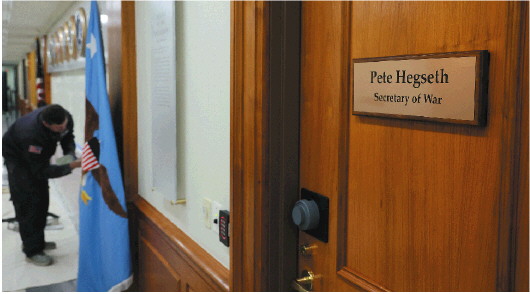
5 Defense Stocks to Buy on Pentagon Spending Boost
Benzinga· 2026-01-14 18:34
Industry Overview - The defense and aerospace industry is experiencing volatility due to President Trump's proposals, including limiting defense stock buybacks and capping executive pay, which are seen as negative but unlikely to become law [1] - A proposed increase in the Pentagon's budget to $1.5 trillion by 2027 represents a 66% increase over the current 2026 defense budget, indicating a priority for increased defense spending [1][2] Company Highlights Kratos Defense and Security Solutions Inc. - Kratos has emerged as a significant player in the defense sector, reaching a market cap of $20 billion, driven by innovations in unmanned systems [3] - The company has consistently generated over $300 million in sales for three consecutive quarters and has surpassed analysts' EPS projections [3] - Kratos' stock has received three price target increases in 2026, including a new high target of $134 from Stifel [3] RTX Corp. - RTX, formed from the merger of Raytheon and United Technologies, has a market cap of nearly $260 billion and generates over $80 billion in annual sales [8] - The company is trading at 31 times forward earnings with a dividend yield of 1.4%, and is expected to report record quarterly revenue of over $22.7 billion in its upcoming Q4 2025 earnings report [8] L3Harris Technologies Inc. - L3Harris received a $1 billion investment promise from the Department of Defense and plans to spin out its missile business into a separate entity [9] - The stock has increased over 16% since the start of January 2026, driven by solid fundamentals and a bullish MACD crossover [12] General Dynamics Corp. - General Dynamics, a $97 billion defense contractor, has a strong history of dividend payouts, raising them for 34 consecutive years with a yield of 1.66% [13] - The company has a favorable valuation at 24 times forward earnings and recently secured a $900 billion deal with the U.S. Navy [15] Northrop Grumman Corp. - Northrop Grumman is the fifth-largest U.S. contractor by defense spending and has recently broken out of a multi-month downtrend [17][20] - The stock has retaken the 50-day SMA, with the breakout confirmed on the MACD, indicating potential for further upside [20]





RTX provides Blue Canyon satellite for interstellar mission
Prnewswire· 2026-01-14 14:00
Group 1 - The Pandora mission aims to study the atmospheres of at least 20 exoplanets by observing transits, which occur when a planet passes in front of its host star, causing a temporary dimming of the star's light [2] - The mission will focus on detecting planets with atmospheres primarily composed of hydrogen or water, allowing astronomers to assess their potential to support life [2] - The Saturn-200 minisatellite, developed by Blue Canyon Technologies, features the largest telescope payload ever integrated onto a Blue Canyon spacecraft, providing critical precision and stability for the mission [3] Group 2 - Blue Canyon Technologies has successfully launched a total of 87 spacecraft, with the Pandora mission being a significant addition to their portfolio [4] - RTX, the parent company of Blue Canyon Technologies, is the world's largest aerospace and defense company, with projected sales exceeding $80 billion in 2024 [6] - RTX employs over 185,000 people globally and is involved in advancing technology and science across various sectors, including aviation and integrated defense systems [6]

Is RTX Well-Placed to Benefit From Higher Defense Spending?
ZACKS· 2026-01-13 14:56
Core Insights - RTX Corporation (RTX) is gaining attention due to improving expectations around U.S. defense spending, with President Trump proposing a defense budget increase to approximately $1.5 trillion by 2027, up from the $901 billion budget approved for 2026 [1][8] Group 1: Defense Budget Implications - The proposed funding increase could facilitate sustained investments in weapons replenishment, modernization programs, and advanced defense technologies, enhancing funding visibility for large, multiyear defense programs and long-term contracts [2] - A larger defense budget may expand funding for both existing and new programs where RTX serves as a prime or key contractor, including integrated air and missile defense systems and next-generation guided weapons [4] Group 2: RTX's Position and Performance - RTX is a major supplier to the U.S. Department of Defense and allied nations, providing systems such as Patriot air and missile defense solutions and AIM-9X Block II missiles, which are typically backed by long-term contracts [3] - RTX shares have surged 62.3% over the past year, outperforming the industry growth of 33.9% [7] - The company's shares are currently trading at a relative discount, with a forward 12-month Price/Earnings ratio of 28.73X compared to the industry's average of 32.00X [9] Group 3: Earnings Estimates - The Zacks Consensus Estimate for RTX's 2026 earnings has seen a downward trend over the past 60 days, with revisions indicating slight increases and decreases across different quarters [10][13]

美国国防:三项公告、一项行政令与十一个问题-未来走向何方-US Defense_ Three posts, an Executive Order, and eleven questions - Where are we headed_
2026-01-13 11:56
Summary of Key Points from the Conference Call Industry Overview - The discussion centers around the **US Defense** sector, particularly in light of recent statements and an Executive Order from President Trump that have created volatility in defense stocks [1][2]. Core Points and Arguments - **Executive Compensation and Performance**: President Trump proposed limiting executive compensation, banning dividends, and share buybacks during periods of underperformance to encourage companies to invest in product development and efficiency [2]. - **Raytheon (RTX) Targeted**: Raytheon was specifically mentioned as a "worst offender" in terms of underperformance, raising questions about the definition of underperformance and how it will be enforced [2][3]. - **Pentagon's Role**: The Pentagon's historical issues, such as ill-conceived weapons systems and bureaucratic processes, are seen as significant contributors to the industry's performance problems. A new acquisition process is being developed to address these issues [3]. - **Budget Increase**: The proposed defense budget for 2027 is set to rise to **$1.5 trillion**, up from **$964 billion** for 2026, indicating a clear upward trend in defense spending [4]. - **Implementation Challenges**: The feasibility of implementing the proposed changes and the new acquisition process is questioned, with concerns about how it will affect defense company economics [3][5]. - **Congressional Approval**: There are uncertainties regarding whether the proposed budget can pass through Congress, especially given the potential need for reconciliation without Democratic support [6]. Investment Implications - The initial posts and Executive Order are viewed as negative for defense stocks due to constraints on companies, particularly Raytheon. However, the proposed budget increase is seen as a positive factor for the overall defense sector [7]. Additional Insights - The lack of a Future Years Defense Plan (FYDP) is causing frustration among Republican defense leaders, complicating the prioritization of spending [6]. - The potential conflict between increased spending and efficiency goals is highlighted, as the proposed budget increase may contradict the administration's push for improved efficiency in the defense sector [6]. - The consolidation of the defense industry means there are few new competitors to challenge existing companies, which may limit the effectiveness of the proposed changes [5]. Financial Metrics - The conference call includes a table with adjusted EPS and P/E ratios for various defense companies, indicating performance expectations for 2024 to 2026 [8]. This summary encapsulates the key points discussed in the conference call regarding the US Defense sector, highlighting the implications of recent government actions and the overall outlook for defense stocks.
RTX (RTX) Laps the Stock Market: Here's Why
ZACKS· 2026-01-13 00:00
Company Performance - RTX's stock price ended at $193.85, reflecting a +2.84% change from the previous day's closing price, outperforming the S&P 500's gain of 0.16% [1] - Over the past month, RTX shares have appreciated by 5.51%, underperforming the Aerospace sector's gain of 10.85% but outperforming the S&P 500's gain of 1.89% [1] Upcoming Earnings - RTX is set to release its earnings report on January 27, 2026, with expected earnings of $1.45 per share, indicating a year-over-year decline of 5.84% [2] - The consensus estimate for revenue is $22.74 billion, which represents a 5.18% increase from the prior-year quarter [2] Annual Forecast - For the entire year, the Zacks Consensus Estimates forecast earnings of $6.19 per share and revenue of $87.07 billion, reflecting changes of +8.03% and 0%, respectively, compared to the previous year [3] - Recent changes to analyst estimates for RTX indicate confidence in the business performance and profit potential [3] Analyst Ratings - The Zacks Rank system, which assesses estimate changes, currently rates RTX at 4 (Sell), with the Zacks Consensus EPS estimate having moved 0.27% lower in the past month [5] - Historically, stocks rated 1 (Strong Buy) have produced an average annual return of +25% since 1988 [5] Valuation Metrics - RTX is currently traded at a Forward P/E ratio of 28.06, which is a premium compared to the industry average Forward P/E of 23.56 [6] - The company has a PEG ratio of 2.74, compared to the average PEG ratio for the Aerospace - Defense industry, which is 1.87 [6] Industry Overview - The Aerospace - Defense industry ranks in the top 43% of all industries, with a current Zacks Industry Rank of 104 [7] - Research indicates that the top 50% rated industries outperform the bottom half by a factor of 2 to 1 [7]
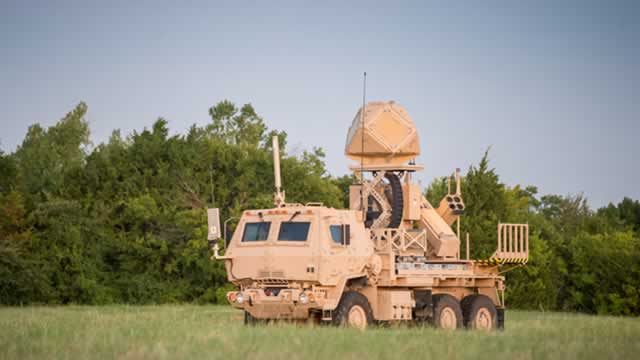
The Trump Market: Where Tweets Are Policy and Volatility Is Just a Feature
Stock Market News· 2026-01-11 18:00
Group 1: Tariffs and Pharmaceutical Sector - President Trump has threatened pharmaceutical tariffs of up to 250% and 500% on India over Russian oil purchases, indicating a shift in the administration's approach to tariffs as a tool for industry reshaping rather than negotiation [2] - Johnson & Johnson (JNJ) has secured an exemption from certain tariffs by committing to lower drug prices, joining 14 other major pharmaceutical companies in the "TrumpRx" program, which aims to align US drug prices with European counterparts [3] - Moody's Analytics reported a "collapse in pharmaceutical imports" as companies stockpiled goods in anticipation of tariffs, demonstrating the market's tendency to react preemptively to presidential announcements [3] Group 2: Energy Sector and Venezuela - Following the capture of Venezuelan President Nicolás Maduro, President Trump declared a national emergency and announced new sanctions, leading to a surge in US energy stocks, with Chevron (CVX) rising 5% and Exxon Mobil (XOM) increasing by 2.2% [4] - However, by January 10, 2026, analysts expressed skepticism about the viability of Venezuelan oil investments, citing a lack of legal pathways and the need for significant infrastructure rebuilding [5] - Venezuelan government bonds saw a rally, with a bond maturing in 2027 increasing from 31.5p to over 40p on the dollar, indicating market interest despite the geopolitical instability [5] Group 3: Credit Card Industry - President Trump proposed a one-year, 10% cap on credit card interest rates, aiming to save Americans "tens of billions of dollars," which has raised concerns among banking executives [6][7] - The banking industry, including the Bank Policy Institute and the American Bankers Association, warned that such a cap could lead consumers to less regulated alternatives and reduce credit availability [8] - Major credit card companies like American Express (AXP) and JPMorgan Chase (JPM) experienced stock declines of -1.92% and -0.18% respectively, reflecting market apprehension about the proposed cap [8] Group 4: Defense Sector - President Trump's executive order threatening to restrict stock buybacks and dividends for defense contractors initially caused a drop in defense stocks, but a subsequent announcement of a $1.5 trillion defense budget for fiscal year 2027 led to a rally in the sector [9][10] - Northrop Grumman (NOC) saw a premarket increase of 6.8%, while Lockheed Martin (LMT) rose 6.7%, indicating strong market response to the budget announcement [10] - The iShares US Aerospace & Defense ETF gained approximately 55% over the past year, significantly outperforming the S&P 500's 17% increase, highlighting robust demand in the defense sector [10] Group 5: Market Reactions and Trends - The US stock market exhibited polarized performance on January 8, 2026, with the DOW gaining 60.94 points (+0.12%) while the S&P 500 and NASDAQ Composite fell [13] - By January 9, 2026, the indices largely recovered, with the S&P 500 climbing 0.6% and the DOW adding 0.5%, indicating a rotation out of high-growth technology into heavy industry [14] - Analysts forecast a 10% increase for the S&P 500 in the remainder of 2026, although they acknowledge that presidential tariffs pose a significant source of uncertainty for market performance [15]



Trump's 'Carrot And Stick' Defense Push: Which Stock Is Best Priced For $1.5 Trillion Budget?
Yahoo Finance· 2026-01-10 17:31
Group 1: Core Insights - The focus for investors is on which defense stock is best priced amid potential increases in defense spending, particularly with a proposed $1.5 trillion defense budget [1] Group 2: Lockheed Martin - Lockheed Martin has a market cap of approximately $115 billion, with a trailing P/E ratio near 28, but a forward P/E ratio dropping to around 17, indicating expected earnings growth [2] - The EV/EBITDA ratio of about 17.4 positions Lockheed as a "steady compounder," suggesting it is priced for reliable delivery if production increases as planned [3] Group 3: RTX Corp - RTX Corp is the most expensive stock among the group, with a market cap near $249 billion, a trailing P/E above 38, and a forward P/E close to 28, reflecting high expectations [4] - Its EV/EBITDA of about 19 indicates confidence in scale and diversification, but the lower earnings yield suggests investors are paying a premium, leaving less room for surprises if defense spending increases [4] Group 4: Northrop Grumman - Northrop Grumman is noted for being the cheapest among the three, with a trailing P/E near 21, a forward P/E just under 20, and an EV/EBITDA below 14, which is the lowest in the group [5] - It has the highest earnings yield, making it appear as the most defensively priced option for capitalizing on increased defense spending, particularly related to long-cycle and classified programs [5] Group 5: Summary of Investment Outlook - If the proposed $1.5 trillion defense budget is realized, RTX is viewed as the premium investment, Lockheed as the execution-focused trade, and Northrop as the value-oriented choice, where expectations are less likely to be negatively impacted by headlines [6]
The Truth According to Truth Social: How a President’s Posts Move Markets (and Mountains of Mortgage Bonds)
Stock Market News· 2026-01-10 06:00
Defense Sector - The defense sector experienced significant volatility following President Trump's announcement of a proposed military budget increase to $1.5 trillion for fiscal 2027, a 50% increase from the $962 billion requested for 2026, leading to a surge in defense stocks [3][4] - Lockheed Martin's shares rose 4.3% on January 8, followed by a 4.2% increase on January 9, closing at $542.78, while Northrop Grumman and RTX also saw gains [3] - Smaller companies like Kratos Defense experienced a remarkable 13.8% increase, and defense-focused ETFs outperformed the broader market [3] Housing Market - President Trump's proposal to ban large institutional investors from purchasing single-family homes caused a decline in major stock indices, with the Dow Jones Industrial Average dropping 0.9% and the S&P 500 slipping 0.3% [5] - Shortly after, Trump announced a directive for federal agencies to purchase $200 billion in mortgage bonds to lower mortgage rates, which led to a rally in housing stocks, with Rocket Companies surging 9.65% and homebuilders like Lennar and D.R. Horton also experiencing significant gains [6][8] - Analysts expressed concerns that while bond purchases might lower mortgage yields, they could also increase housing demand, complicating the affordability issue [7] Energy Sector - The capture of Venezuelan President Nicolás Maduro and Trump's announcement of a $100 billion oil investment plan for Venezuela positively impacted major stock indexes, with energy stocks like Chevron and Exxon Mobil seeing gains [10] - However, by January 7, oil prices fell due to concerns over the long-term implications of Trump's plan to refine and sell Venezuelan crude, indicating a mixed market reaction [11] Tariffs and Legal Uncertainty - The market showed anxiety ahead of a Supreme Court ruling on Trump's tariffs, with Wall Street futures dipping as uncertainty persisted regarding the legality of these policies [13] - Kevin Hassett's expectation that the Supreme Court would side with the Trump administration on tariffs adds another layer of speculation to the ongoing legal battle, highlighting the tension between executive power and trade norms [14] Market Dynamics - The overall market remains highly reactive to Trump's pronouncements, with significant fluctuations observed across various sectors, including defense, housing, and energy, reflecting the interplay between presidential policy and economic fundamentals [15][16] - On January 9, major indices were on track for weekly gains, with the S&P 500 reaching a new all-time high of 6,966, indicating a volatile yet upward trend in the market [16]



ETFs to Consider Amid Geopolitical Woes and Higher US Military Budget
ZACKS· 2026-01-09 17:35
Geopolitical Landscape and Defense Spending - Recent U.S. military operations in Venezuela and Trump's focus on acquiring Greenland indicate a fragile geopolitical landscape, supporting higher defense spending [1] - Trump proposed a $1.5 trillion military budget for 2027, significantly up from the current $901 billion [2] Defense Stocks Performance - The proposal for increased military spending led to a rebound in defense stocks, with Northrop Grumman, Lockheed Martin, and RTX Corporation seeing gains of 2.39%, 4.34%, and 0.78% respectively [3] Budget Concerns and Debt Implications - The proposed military budget increase requires congressional authorization, raising concerns about U.S. debt, which is currently around $38 trillion [4][5] Defense Sector Outlook - The S&P 500 Aerospace & Defense Index has increased by 59.87% over the past year, outperforming the broader S&P 500, which rose by 16.95% [6] - Global defense spending is projected to exceed $3.6 trillion by 2030, a 33% increase from 2024 levels, supported by robust order pipelines and modernization efforts [7] Investment Opportunities in ETFs - Investing in Aerospace and Defense ETFs is recommended due to their strong performance during heightened military activity [8] - Suggested ETFs include iShares U.S. Aerospace & Defense ETF (ITA), Invesco Aerospace & Defense ETF (PPA), and Global X Defense Tech ETF (SHLD) [9] Cybersecurity Sector Growth - The rise in geopolitical tensions has highlighted the importance of cybersecurity, with the global defense cybersecurity market expected to grow at a CAGR of 16.1%, reaching $63.38 billion by 2032 [12][14] - Recommended cybersecurity ETFs include First Trust NASDAQ Cybersecurity ETF (CIBR) and Amplify Cybersecurity ETF (HACK) [14] Artificial Intelligence in Defense - AI is becoming central to military strategy, enhancing real-time data processing and decision-making, with potential benefits for AI-related firms from increased military budgets [15][16] Manufacturing and Space ETFs - Manufacturing ETFs may benefit from Trump's push for increased production in defense companies, with suggested funds including Industrial Select Sector SPDR Fund (XLI) [17] - The evolution of warfare is driving investment in space-based systems, with recommended space ETFs like Procure Space ETF (UFO) and ARK Space & Defense Innovation ETF (ARKX) [18][19]