Sanofi(SNY)

Search documents
SNY & REGN's Dupixent Receives CHMP Backing for Urticaria in EU
ZACKS· 2025-09-22 17:06
Core Insights - Sanofi and Regeneron received a positive opinion from the European Medicines Agency's Committee for Medicinal Products for Human Use recommending the approval of Dupixent for chronic spontaneous urticaria in adults and adolescents [1][2] Group 1: Product Approval and Market Potential - The recommendation targets patients aged 12 years and older with moderate-to-severe chronic spontaneous urticaria who have not responded adequately to antihistamines and are naive to anti-immunoglobulin E therapy [2] - Dupixent was previously approved by the FDA for this indication in April 2025, marking it as the first new targeted therapy for chronic spontaneous urticaria in over a decade [3][4] - Dupixent is already approved for multiple conditions, including severe chronic rhinosinusitis, severe asthma, and atopic dermatitis, with its approval for chronic spontaneous urticaria being its seventh indication in the U.S. [4][11] Group 2: Clinical Data and Efficacy - The positive opinion for Dupixent's approval in the EU is based on Phase III studies that demonstrated significant reductions in itch and hives compared to placebo [9][10] - Both primary and secondary endpoints were met in the studies, showing improved disease control with Dupixent [10] - Safety data from the studies were consistent with the known safety profile of Dupixent in its other approved indications [11] Group 3: Financial Performance - In the first half of 2025, Dupixent generated global product sales of €7.3 billion, reflecting a growth of 20.7% at constant exchange rates [7][13] - Sanofi projects that Dupixent could achieve approximately €22 billion in sales by 2030 [7][13] Group 4: Market Context - Year to date, Sanofi's shares have decreased by 2.5%, while the industry has seen a growth of 0.9% [5]


FDA Extends Review Period of Sanofi's Multiple Sclerosis Drug Filing
ZACKS· 2025-09-22 16:31
Core Insights - Sanofi's new drug application (NDA) for tolebrutinib has had its target action date extended by three months to December 28, 2025, due to the submission of additional analyses deemed a major amendment by the FDA [1][5] - Tolebrutinib is an investigational oral Bruton's tyrosine kinase (BTK) inhibitor aimed at treating non-relapsing, secondary progressive multiple sclerosis (nrSPMS) [1][6] - The NDA is supported by data from three late-stage studies, showing that tolebrutinib delayed disability progression compared to placebo and Aubagio [2][5] Company Overview - Tolebrutinib is the first and only brain-penetrant BTK inhibitor targeting both nrSPMS and relapsing MS (RMS) [6][8] - Currently, there are no approved therapies for nrSPMS, highlighting a significant unmet medical need [6][7] - Sanofi acquired tolebrutinib through its purchase of Principia in 2020, and it holds Breakthrough Therapy designation from the FDA for the nrSPMS indication [8] Clinical Development - The FDA accepted the NDA for tolebrutinib under its priority review pathway in March 2025 [2][5] - A phase III study (PERSEUS) is ongoing to evaluate tolebrutinib in primary progressive MS, with data expected by the end of 2025 [8] - In 2022, the FDA placed a partial clinical hold on phase III studies due to drug-induced liver injury cases, leading to the discontinuation of studies in myasthenia gravis [9] Market Performance - Year-to-date, Sanofi's shares have decreased by 2.5%, while the industry has seen a growth of 0.9% [3]
高额“回扣”下,药企纷纷撤离英国
Hu Xiu· 2025-09-22 06:17
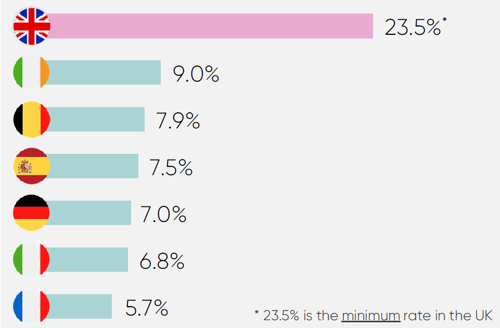
Core Viewpoint - The article discusses a significant retreat of multinational corporations (MNCs) from the UK pharmaceutical sector, driven by increasing tax burdens and unfavorable policy changes, leading to a perception of the UK as an "investment black hole" for the industry [6][30]. Group 1: Corporate Actions - Merck announced the closure of its drug research center in London, transferring all R&D operations to the US [2]. - Eli Lilly halted its planned biotechnology incubator project in the UK, citing a need to wait for a clearer life sciences environment [3]. - AstraZeneca froze a £200 million investment in its Cambridge research center, signaling a broader trend of MNCs withdrawing from the UK [4]. - Sanofi also publicly stated it would adopt a similar stance towards the UK, joining the retreat [5]. Group 2: Tax and Policy Challenges - MNCs are facing multiple tax burdens in the UK, including corporate tax, R&D tax, and drug sales rebates, which are pressuring their operations [8]. - The NHS's pricing scheme requires pharmaceutical companies to rebate a percentage of their sales to the NHS, directly impacting their investment returns [9]. - The rebate rate for drugs under the statutory pricing scheme was increased to 22.9%, with proposals suggesting it could rise to 23.8%, meaning companies may have to return up to 32.2% of their sales to the NHS [12]. Group 3: Impact of Brexit - The UK's exit from the EU has led to a significant decline in approval efficiency for new drugs, with the UK dropping from 6th to 18th in global rankings for drug approvals [19]. - The cancellation of the EU's free movement policy has hindered the formation of cross-border research teams and slowed clinical trial processes [21]. - The UK government's pursuit of higher rebates and budget cuts for drugs has further marginalized the country in the global pharmaceutical landscape [29]. Group 4: Industry Sentiment and Future Outlook - The lack of consensus between the government, pharmaceutical companies, and patients has led to a situation where all parties are losing out, with companies withdrawing, patients facing limited access to drugs, and the government experiencing a trust crisis [30][34]. - The article warns that if the rebate rates remain above 20%, the UK could lose approximately £11 billion (about 106.6 billion RMB) in R&D investments by 2033 [16]. - Despite some companies like BioNTech and GSK remaining in the UK, their commitment is questioned as they also plan significant investments elsewhere, such as GSK's $30 billion investment in the US [16].


Press Release: Update on the US regulatory review of tolebrutinib in non-relapsing, secondary progressive multiple sclerosis
Globenewswire· 2025-09-22 05:00
Core Insights - The FDA has extended the review period for tolebrutinib by three months, with a new target action date set for December 28, 2025, due to the submission of additional analyses [2][4] - Tolebrutinib is the first brain-penetrant BTK inhibitor designated as a breakthrough therapy for non-relapsing, secondary progressive multiple sclerosis (nrSPMS) [3][11] - Sanofi is committed to developing innovative treatments for neurological diseases, with tolebrutinib representing a significant advancement in addressing the underlying causes of disability progression in MS [12][13] Company Overview - Sanofi is an R&D driven biopharma company focused on improving lives through innovative medicines and vaccines, with a strong pipeline in neurology and immunoscience [13] - The company emphasizes its commitment to addressing serious neuro-inflammatory and neuro-degenerative conditions, including multiple sclerosis [12][13] Industry Context - Multiple sclerosis is a chronic, immune-mediated neurodegenerative disease that leads to irreversible disabilities, highlighting a significant unmet medical need in the treatment landscape [5] - Current therapies primarily target peripheral B and T cells, while the innate immunity within the CNS, which contributes to disability accumulation, remains largely unaddressed [5][11]

Press Release: Sanofi and Regeneron’s Dupixent to treat chronic spontaneous urticaria advances in EU with positive CHMP opinion
Globenewswire· 2025-09-22 04:30
Core Viewpoint - The European Medicines Agency's Committee for Medicinal Products for Human Use (CHMP) has issued a positive opinion recommending the approval of Dupixent (dupilumab) for the treatment of chronic spontaneous urticaria (CSU) in adults and adolescents aged 12 years and above who have moderate to severe disease and inadequate response to histamine-1 antihistamines [1][2] Group 1: Clinical Data and Efficacy - Dupixent demonstrated significant reduction in itch and hives at 24 weeks compared to placebo in two studies from the LIBERTY-CUPID phase 3 program [2][10] - A third study provided additional safety data for Dupixent in a different CSU patient population [2] Group 2: Safety Profile - The safety results were consistent with Dupixent's known safety profile, with common adverse events including injection site reactions, COVID-19, hypertension, CSU, and accidental overdose [3] Group 3: Current Approvals and Market Presence - Dupixent is already approved for CSU in certain adults and adolescents in multiple countries, including Japan and the US [4][7] - The drug has received regulatory approvals in over 60 countries for various indications, with more than one million patients currently being treated globally [7] Group 4: Background on CSU and Dupixent - Chronic spontaneous urticaria (CSU) is a chronic inflammatory skin disease often inadequately controlled by standard treatments, leaving patients with limited options [5] - Dupixent is a fully human monoclonal antibody that inhibits interleukin-4 and interleukin-13 signaling pathways, addressing type 2 inflammation [6] Group 5: Ongoing Research and Future Indications - Sanofi and Regeneron are exploring Dupixent for additional diseases driven by type 2 inflammation in ongoing phase 3 studies [9]


Press Release: Sanofi and Regeneron's Dupixent to treat chronic spontaneous urticaria advances in EU with positive CHMP opinion
Globenewswire· 2025-09-22 04:30
Core Viewpoint - The European Medicines Agency's Committee for Medicinal Products for Human Use (CHMP) has issued a positive opinion recommending the approval of Dupixent (dupilumab) for the treatment of chronic spontaneous urticaria (CSU) in adults and adolescents aged 12 years and above, who have moderate to severe disease and inadequate response to histamine-1 antihistamines [1][2] Group 1: Clinical Data and Efficacy - Dupixent demonstrated significant reduction in itch and hives at 24 weeks compared to placebo in two studies from the LIBERTY-CUPID phase 3 program [2][10] - A third study provided additional safety data for a different CSU patient population [2] Group 2: Safety Profile - The safety results were consistent with Dupixent's known safety profile, with common adverse events including injection site reactions, COVID-19, hypertension, CSU, and accidental overdose [3] Group 3: Current Approvals and Market Presence - Dupixent is already approved for CSU in several countries, including Japan and the US, and is being used to treat over one million patients globally [4][7] - The drug has received regulatory approvals in more than 60 countries for various indications, including atopic dermatitis and asthma [7] Group 4: Mechanism of Action - Dupixent is a fully human monoclonal antibody that inhibits interleukin-4 (IL4) and interleukin-13 (IL13) signaling pathways, which are central to type 2 inflammation [6] Group 5: Ongoing Research and Future Indications - Sanofi and Regeneron are exploring Dupixent for additional conditions driven by type 2 inflammation, including chronic pruritus of unknown origin and lichen simplex chronicus, currently under clinical investigation [9]
Dupixent® (dupilumab) to Treat Chronic Spontaneous Urticaria (CSU) Advances in EU with Positive CHMP Opinion
Globenewswire· 2025-09-22 04:29
Core Insights - The European Medicines Agency's Committee for Medicinal Products for Human Use (CHMP) has recommended the approval of Dupixent (dupilumab) for the treatment of chronic spontaneous urticaria (CSU) in adults and adolescents aged 12 years and above, marking it as the first targeted medicine for CSU in over a decade in the EU [1][2][4] Group 1: Clinical Trials and Efficacy - Dupixent's positive CHMP opinion is based on data from two Phase 3 trials (Study A and Study C) that demonstrated significant reductions in itch and hives at 24 weeks compared to placebo [2] - A third trial (Study B) provided additional safety data for a different CSU patient population [2] Group 2: Safety Profile - The safety results from the trials were consistent with Dupixent's known safety profile, with adverse events more commonly observed including injection site reactions, COVID-19, hypertension, CSU, and accidental overdose [3] Group 3: Current Approvals and Market Presence - Dupixent is already approved for CSU in several countries, including Japan and the United States, with over 1,000,000 patients treated globally across various indications [4][7] - The Dupixent development program has involved over 60 clinical trials with more than 10,000 patients, focusing on diseases driven by type 2 inflammation [10] Group 4: Mechanism of Action - Dupixent is a fully human monoclonal antibody that inhibits interleukin-4 (IL-4) and interleukin-13 (IL-13) signaling pathways, which are key drivers of type 2 inflammation [6] Group 5: Future Developments - Regeneron and Sanofi are exploring Dupixent for additional indications related to type 2 inflammation, including chronic pruritus of unknown origin and lichen simplex chronicus, currently under clinical investigation [11]

四强激战糖尿病
3 6 Ke· 2025-09-19 03:32
Group 1: Diabetes Market Overview - Diabetes is a chronic health condition characterized by long-term high blood sugar levels, affecting a significant portion of the global population. In 2021, 537 million adults aged 20-79 were diagnosed with diabetes, projected to rise to 643 million by 2030 [1] - The global diabetes drug market is valued at $88.32 billion in 2024, expected to grow to $1001.48 billion by 2025 and reach $2338.4 billion by 2032, with a compound annual growth rate (CAGR) of 12.7% during the forecast period [1] - The increasing prevalence of diabetes is driving demand for treatment drugs, leading to intensified development efforts by pharmaceutical companies [1] Group 2: Eli Lilly - Eli Lilly's China division merged its Immunology and Oncology divisions into a new "Immunology and Oncology Division," effective October 1, 2025, with a new leader appointed [2] - In the first half of 2025, Eli Lilly's revenue in China reached $917 million, a 19% year-on-year increase, driven by a 1.6-fold increase in sales of GLP-1 drugs [2] - Eli Lilly's total revenue for the first half of 2025 was $28.2862 billion, a 41% increase from the previous year, with diabetes and weight loss drugs contributing nearly half of its revenue [3] Group 3: Novo Nordisk - Novo Nordisk announced a global transformation plan to simplify its organizational structure and refocus resources on growth opportunities in diabetes and obesity [4] - The company plans to cut approximately 9,000 jobs globally, representing about 11% of its workforce, with an expected annual cost saving of 8 billion Danish Krone by the end of 2026 [5] - In the first half of 2025, Novo Nordisk reported revenue of 154.944 billion Danish Krone (approximately 173.7 billion Yuan), an 18% increase at fixed exchange rates, with significant contributions from GLP-1 products [6] Group 4: Merck & Co. - Merck & Co. announced a restructuring of its diabetes division, merging it with other mature product lines into an Entrepreneurial Business Unit, indicating a decline in the diabetes product lifecycle [7] - The company reported total revenue of $31.3 billion for the first half of 2025, a 2% decrease, with a significant drop in revenue from its diabetes products in China [8] - Merck plans to implement a cost-saving initiative aiming to save $3 billion annually by 2027, including a workforce reduction of approximately 6,000 employees [9] Group 5: Sanofi - Sanofi ceased the promotion of its new lipid-lowering drug in China due to global supply issues and strategic adjustments in its cardiovascular market [10] - In the first half of 2025, Sanofi's revenue in China was €1.388 billion (approximately 11.7 billion Yuan), showing a slight growth of 0.1% [10] - Sanofi has shifted its focus from diabetes to immunology and inflammation, attempting to transform from a diabetes giant to a leader in the immunology sector [11]

Sanofi (SNY) Fell on Tariff Uncertainty
Yahoo Finance· 2025-09-17 13:22
Core Viewpoint - Ariel Investments' "Ariel Global Fund" reported a +7.38% return in Q2 2025, underperforming compared to the MSCI ACWI Index (+11.53%) and MSCI ACWI Value Index (+5.84%) [1] Group 1: Fund Performance - The second quarter of 2025 was marked by volatility, with stocks initially falling after the "Liberation Day" tariff announcement and then rebounding due to a pause in tariff implementation [1] - Enthusiasm for AI-themed stocks and strong corporate earnings contributed to new highs in global and U.S. indices [1] Group 2: Sanofi (NASDAQ:SNY) Analysis - Sanofi's stock experienced a one-month return of -7.26% and a 52-week decline of 18.46%, closing at $46.86 with a market capitalization of $114.201 billion on September 16, 2025 [2] - Concerns over potential U.S. tariffs on European pharmaceutical imports and mixed results from Phase 3 trials of Itepekimab negatively impacted Sanofi's performance [3] - Despite challenges, the company’s immunology pipeline is viewed as undervalued, with optimism surrounding the growth of Dupixent and upcoming Phase 3 outcomes for Amlitelimab [3] Group 3: Hedge Fund Interest - Sanofi was held by 24 hedge fund portfolios at the end of Q2 2025, a decrease from 27 in the previous quarter [4] - While Sanofi is recognized for its potential, certain AI stocks are considered to offer greater upside potential with less downside risk [4]
Press Release: EADV: Sanofi's brivekimig achieved positive results in hidradenitis suppurativa in phase 2a study
Globenewswire· 2025-09-17 05:00
Core Insights - Sanofi's brivekimig demonstrated positive results in the HS-OBTAIN phase 2a study for treating moderate-to-severe hidradenitis suppurativa (HS), showing clinically meaningful improvements in the primary endpoint of Hidradenitis Suppurativa Clinical Response (HiSCR50) [1][3][6] - The study indicated that brivekimig was well tolerated, with no serious adverse events reported [1][4] - The results will be presented at the European Academy of Dermatology and Venereology (EADV) 2025 Congress in Paris [1] Study Details - The HS-OBTAIN study was a randomized, double-blind, placebo-controlled trial assessing the efficacy and safety of brivekimig in biologic-naïve adults with moderate-to-severe HS [3][8] - Patients were randomized 2:1 to receive brivekimig 150 mg or placebo subcutaneously every two weeks for 16 weeks, followed by a 12-week open-label period and an 8-week safety follow-up [9] - The primary efficacy endpoint was the percentage of participants achieving HiSCR50 at week 16, with additional endpoints including HiSCR75, HiSCR90, and draining tunnel count [9] Efficacy Results - At week 16, 67% of patients in the brivekimig group achieved HiSCR50 compared to 37% in the placebo group, with a probability of superiority of 99.28% [7] - For HiSCR75, 54% of patients treated with brivekimig achieved this endpoint versus 22% with placebo [7] - HiSCR90 was achieved by 31% of patients in the brivekimig group compared to 9% in the placebo group [7] - The mean percent change from baseline in draining tunnel count was -56.0% for brivekimig versus +10.9% for placebo [7] Company Commitment - Sanofi emphasizes its commitment to addressing underlying inflammation in chronic inflammatory skin diseases through innovative treatments like brivekimig [5][6] - The company is exploring brivekimig's potential across a range of immune-mediated diseases [6][10]