Sanofi(SNY)

Search documents
Sanofi: Information concerning the total number of voting rights and shares – January 2026
Globenewswire· 2026-02-11 17:30
Core Viewpoint - The document provides information regarding the total number of voting rights and shares of Sanofi, a French société anonyme, as required by French commercial regulations. Group 1: Company Information - Sanofi has a registered share capital of €2,438,854,192 [1] - The company is registered at the Paris Commercial and Companies Registry under number 395 030 844 [1] Group 2: Voting Rights and Shares - As of January 31, 2026, Sanofi has issued a total of 1,219,502,262 shares [1] - The number of real voting rights, excluding treasury shares, is 1,341,656,083 [1] - The theoretical number of voting rights, including treasury shares, is 1,353,618,860 [1]


Sanofi: Information concerning the total number of voting rights and shares – January 2026
Globenewswire· 2026-02-11 17:30
Group 1 - Sanofi has a registered share capital of €2,438,854,192 [1] - As of January 31, 2026, the total number of issued shares is 1,219,502,262 [1] - The number of voting rights excluding treasury shares is 1,341,656,083, while the theoretical number of voting rights including treasury shares is 1,353,618,860 [1] Group 2 - The information regarding shares and voting rights is available on Sanofi's official website under "Regulated Information in France" [2] - The Investor Relations Department can be contacted via email at investor.relations@sanofi.com [2]

SNY's Rare Disease Drug Wins FDA Breakthrough and Japan Orphan Status
ZACKS· 2026-02-10 16:45
Core Insights - Sanofi's Wayrilz (rilzabrutinib) has received Breakthrough Therapy designation from the FDA for treating warm autoimmune hemolytic anemia (wAIHA) and Orphan Drug designation from Japan's Ministry of Health, Labour and Welfare for the same indication [1][9] Regulatory Designations - The Breakthrough Therapy designation aims to expedite the development and review of drugs for serious diseases when early clinical data shows significant advantages over existing treatments [3] - Both regulatory designations are supported by clinical data from the ongoing LUMINA 2 phase IIb study, with a late-stage LUMINA 3 study currently assessing rilzabrutinib against placebo in wAIHA patients [2][9] Product Approval and Pipeline - Wayrilz is already approved in the U.S., EU, and UAE for chronic immune thrombocytopenia (ITP) and is under regulatory review in Japan [6][9] - The drug was acquired by Sanofi through the purchase of Principia Biopharma in 2020 [7] - Sanofi is also exploring the use of Wayrilz for other rare autoimmune diseases, including IgG4-related disease (IgG4-RD) [8] Market Context - Over the past year, Sanofi's shares have decreased by 10.5%, while the industry has seen a rise of 17.1% [5] - wAIHA is a rare autoimmune disorder with no approved therapies currently available, accounting for over half of all autoimmune hemolytic anemia cases [11]

全球在研新药月报-20260210
摩熵咨询· 2026-02-10 14:24
Investment Rating - The report does not explicitly provide an investment rating for the industry. Core Insights - The report highlights significant advancements in the pharmaceutical industry, particularly in the development and approval of innovative drugs, with a focus on oncology and immunotherapy [5][6][10]. Summary by Sections 1. Latest Policy Updates - The National Medical Products Administration (NMPA) has issued several key announcements, including guidelines to strengthen the supervision of entrusted drug production and the release of the 2025 Clinical Application Guidelines for Antitumor Drugs [10][15][18]. - New regulations aim to support the development of innovative drugs and ensure the quality and safety of pharmaceuticals through enhanced management practices [11][12][14]. 2. Domestic New Drug Approvals - In January 2026, a total of 172 new drugs were approved for clinical trials, a decrease of 55 from the previous month. Among these, 78 were chemical drugs, 88 were biological products, and 6 were traditional Chinese medicines [22][23]. - The majority of new drug approvals were in the fields of oncology and immune modulation, accounting for 53% of the total [22]. 3. Global Innovative Drug Development - The report lists several drugs that have shown positive clinical results, including Neumora Therapeutics' NMRA-511 and GSK's new hepatitis B drug, which achieved success in phase 3 studies [6][10]. - Notable approvals include the BCL-2 inhibitor from BeiGene, which received dual indications for chronic lymphocytic leukemia and mantle cell lymphoma [40][41]. 4. New Drug Listings - The report details new drug listings, including the approval of the combination drug for ADHD treatment by Aikobai, which has shown significant efficacy in clinical trials [41][43]. - The approval of Merck's drug for pulmonary arterial hypertension represents a new treatment option that addresses the underlying causes of the disease rather than just symptomatic relief [40].



Press Release: Sanofi completes the acquisition of Dynavax
Globenewswire· 2026-02-10 14:00
Core Insights - Sanofi has completed the acquisition of Dynavax Technologies Corporation, enhancing its portfolio in adult immunization with Dynavax's hepatitis B vaccine HEPLISAV-B and shingles vaccine candidate Z-1018 [1][2] Acquisition Details - The tender offer for Dynavax's common stock expired on February 9, 2026, and all conditions were satisfied, leading to Sanofi's acceptance of the shares [3] - The acquisition was finalized through a merger, with Dynavax becoming a wholly owned subsidiary of Sanofi, and shares not tendered in the offer will receive $15.50 per share in cash [4] Strategic Implications - This acquisition strengthens Sanofi's commercial reach and development capabilities in the vaccine market, positioning the company for growth in adult immunization [2]
Sanofi CEO: The enterprise AI shift will reshape pharma in 2026
Yahoo Finance· 2026-02-10 13:00
Group 1: AI's Role in Business Transformation - AI is recognized as a durable engine of transformation that is fundamentally reshaping how companies operate and innovate [1] - The critical factor for companies in 2026 and beyond will be the enterprise-scale implementation of AI, moving from experimentation to operationalization [3] - As organizations implement AI at their core, evidence of long-term value will emerge, particularly in areas like drug discovery and optimized supply chains [3] Group 2: AI in Drug Development - Generative AI has the potential to accelerate early-stage drug breakthroughs, reducing timelines by 25% or more [4] - Sanofi has discovered 10 new drug targets in one year by integrating machine learning and data with lab research, demonstrating AI's active role in decision-making [5] - AI-powered tools have improved clinical trial enrollment rates by 65%, automating patient eligibility and enhancing the efficiency of recruitment processes [6]
Is Sanofi (SNY) One of the Best Healthcare Stocks Under $50 to Invest In?
Yahoo Finance· 2026-02-10 11:41
Group 1 - Sanofi is recognized as one of the best healthcare stocks under $50, with a Hold rating from Kepler Capital and a price target of €85 [1] - The company announced a share buyback program of €1 billion to be executed by the end of 2026, with a mandate established on February 2 [1] - Sanofi reported positive results from the LEAP2MONO phase 3 study, where its investigational drug Venglustat met primary and three out of four key secondary endpoints for treating type 3 Gaucher disease [2] Group 2 - Sanofi operates in three segments: Pharmaceuticals, Consumer Healthcare, and Vaccines, focusing on research, production, and distribution of pharmaceutical products [3]
驱动基因阴性NSCLC专题:下一代治疗范式:双抗、IO+ADC
Southwest Securities· 2026-02-10 03:06
Investment Rating - The report does not explicitly state an investment rating for the industry Core Insights - The proportion of driver gene-negative non-small cell lung cancer (NSCLC) patients is approximately 31% in both China and the United States, indicating a significant market opportunity for treatments targeting this demographic [2][15] - The estimated market size for immune drugs used in first-line treatment of driver gene-negative NSCLC is projected to be around 7.5 billion CNY (approximately 1.1 billion USD) in China and 18 billion CNY (approximately 2.7 billion USD) in the United States by 2030 [2] - The current first-line treatment for advanced driver gene-negative NSCLC primarily relies on PD(L)-1 inhibitors combined with chemotherapy, but there are limitations in long-term efficacy and options for patients intolerant to chemotherapy [3] Summary by Sections Section 1: NSCLC Global Overview - Lung cancer is the leading cancer type globally, with new cases accounting for approximately 12% of all cancer cases in 2022, translating to about 2.5 million new lung cancer cases [10] - In China, lung cancer represents about 22% of new cancer cases, with approximately 1.06 million new cases in 2022 [10] Section 2: Market Potential for Driver Gene-Negative NSCLC - The report highlights the significant market potential for immune therapies in treating driver gene-negative NSCLC, with a focus on the limitations of current treatment options [2][3] Section 3: Next-Generation Immunotherapy Approaches - The report discusses the advancements in dual (multi) antibody therapies and immune-oncology (IO) combined with antibody-drug conjugates (ADC), emphasizing their potential to improve treatment outcomes for patients with driver gene-negative NSCLC [5][8] - The clinical data supporting these new therapies is expected to catalyze further investment and development in this area [5] Section 4: Treatment Guidelines Comparison - The report compares treatment guidelines for driver gene-negative NSCLC between the United States and China, noting differences in treatment stratification and recommended therapies [32][34] - The U.S. guidelines emphasize PD-L1 expression levels, while Chinese guidelines focus more on performance status (PS) [32][34] Section 5: Future Catalysts - Key upcoming clinical data releases and studies are highlighted as potential catalysts for investment opportunities in the sector, particularly regarding dual antibodies and ADC therapies [5][8]


90亿+美金押注MCE赛道:巨头抢滩,为何Biotech寥寥?
Tai Mei Ti A P P· 2026-02-09 08:47
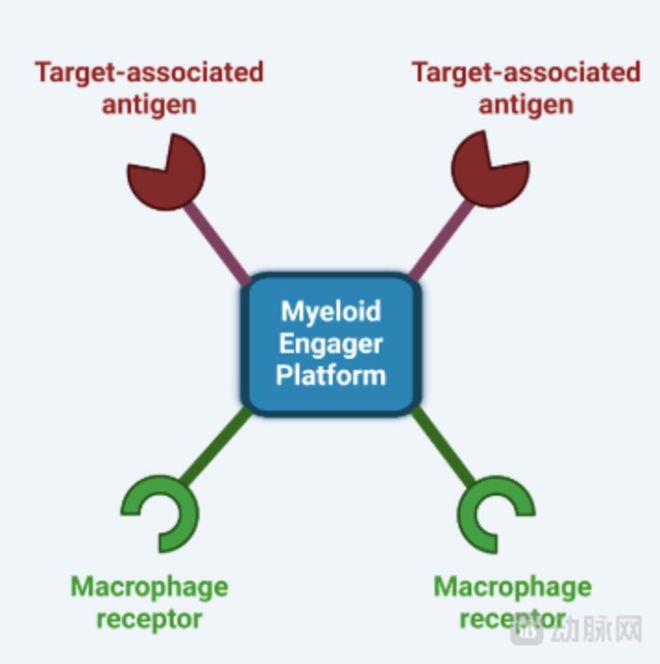
Core Insights - The global MCE (Myeloid Cell Engager) market has surpassed $9 billion in cumulative transaction value from 2022 to 2025, with major pharmaceutical companies like Novartis, Eli Lilly, and GSK actively entering the field through collaborations and acquisitions [1][20] - The year 2025 is anticipated to be a pivotal year for MCE, with significant deals such as Sanofi's $1.9 billion acquisition of Dren Bio and GSK's collaboration with LTZ Therapeutics valued at over $1.5 billion [1][19][12] - Despite the enthusiasm from large pharmaceutical companies, there are only a handful of biotech firms with a clear focus on MCE, raising questions about the early-stage technology and the limited number of players in the field [1][20] Industry Dynamics - The bottleneck in immunotherapy has led to a renewed focus on myeloid cell therapies, as traditional T-cell therapies face limitations in solid tumors [2][22] - Research indicates that myeloid cells, such as macrophages and dendritic cells, play a crucial role in the immune response within the tumor microenvironment, prompting a shift towards targeting these cells for therapeutic purposes [2][3] - The MCE approach utilizes bispecific antibodies to bridge tumor cells and myeloid cells, enhancing the immune response against tumors while addressing the limitations of T-cell therapies [5][7] Competitive Landscape - The MCE market is characterized by a three-tier structure: core biotech firms with proprietary technology, multinational corporations (MNCs) accelerating development through partnerships, and companies with foundational immunology expertise poised to enter the market [9][10] - Key players in the biotech sector include Dren Bio, which focuses on Dectin-1 activation, and LTZ Therapeutics, which employs a dual-pathway activation strategy involving myeloid and NK cells [10][11] - Companies like Elpiscience and Glenmark are also exploring innovative approaches to enhance myeloid cell engagement, indicating a diverse range of strategies within the MCE landscape [14][17] Market Potential - The demand for MCE therapies is driven by the substantial market size in oncology and autoimmune diseases, with the global solid tumor treatment market projected to reach $272 billion by 2032 [22] - MCE therapies are expected to address unmet needs in solid tumors, offering a differentiated mechanism compared to traditional therapies, which often face safety and efficacy challenges [22][23] - The potential for MCE to complement existing therapies like CAR-T and PD-1 inhibitors highlights its strategic importance in the evolving landscape of immunotherapy [23][24] Future Outlook - The success of MCE as a next-generation immunotherapy will depend on clinical trial outcomes and the ability to overcome technical challenges related to safety and efficacy [22][24] - The next 3-5 years will be critical for MCE, as clinical data will determine its viability and potential to reshape treatment paradigms in oncology and beyond [24]


Press Release: Sanofi's rilzabrutinib designated breakthrough therapy in the US and orphan drug in Japan for the treatment of warm autoimmune hemolytic anemia
Globenewswire· 2026-02-09 06:00
Core Viewpoint - Sanofi's rilzabrutinib has received breakthrough therapy designation from the FDA and orphan drug designation in Japan for treating warm autoimmune hemolytic anemia (wAIHA), highlighting the urgent need for effective treatments for this rare autoimmune disorder [1][3][4]. Group 1: Designations and Studies - The FDA's breakthrough therapy designation aims to expedite the development of medicines for serious conditions, indicating rilzabrutinib may show substantial improvement over existing treatments [3]. - Rilzabrutinib is currently being evaluated in the LUMINA 2 phase 2b study and the new LUMINA 3 phase 3 study, which compares rilzabrutinib with placebo for wAIHA patients [2]. - There are no approved treatments specifically targeting the underlying causes of wAIHA, which can lead to severe health complications [2]. Group 2: Rilzabrutinib Overview - Rilzabrutinib is a novel oral, reversible Bruton's tyrosine kinase (BTK) inhibitor, already approved for immune thrombocytopenia (ITP) in the US, EU, and UAE, and under review in Japan [4][8]. - The drug addresses immune system dysregulation through multi-immune modulation, making it a potential treatment for various rare diseases [7][8]. - Rilzabrutinib has received multiple regulatory designations, including orphan drug status for autoimmune hemolytic anemia and other rare diseases [5][9]. Group 3: About wAIHA - Warm autoimmune hemolytic anemia is a rare and potentially life-threatening condition, affecting 4 to 24 individuals per 100,000 in the US and EU, and 3 to 10 per million in Japan [6]. - Symptoms include fatigue, dizziness, and serious complications like thromboembolism, emphasizing the need for effective treatments [6]. Group 4: Company Overview - Sanofi is an R&D-driven biopharma company focused on improving lives through innovative medicines and vaccines, with a commitment to addressing urgent healthcare challenges [10].