Sanofi(SNY)

Search documents
Press release: 2025: strong sales and EPS growth. Continued profitable growth expected in 2026
Globenewswire· 2026-01-29 06:30
Core Insights - The company reported a Q4 sales growth of 13.3% at constant exchange rates (CER) and a business earnings per share (EPS) of €1.53, reflecting strong performance driven by new medicines and Dupixent [1][2]. Sales Performance - In Q4 2025, net sales reached €11.3 billion, marking a 7.0% increase year-over-year at actual exchange rates and a 13.3% increase at CER [5]. - For the full year 2025, net sales totaled €43.6 billion, with a 6.2% increase at actual exchange rates and a 9.9% increase at CER [5]. Earnings Performance - Business EPS for Q4 2025 was €1.53, up by 16.8% at actual exchange rates and 26.7% at CER [5]. - The full year 2025 business EPS improved to €7.83, reflecting a 10.0% increase at actual exchange rates and a 15.0% increase at CER [5]. Product Developments - The company launched three new medicines and vaccines in 2025, contributing to sales growth [3]. - Dupixent sales increased by 32.2% to €4.2 billion, while pharmaceutical launches increased sales by 49.4%, reaching €1.1 billion [4]. Regulatory Approvals and R&D - The company obtained ten regulatory approvals across various therapeutic areas, including immunology and rare diseases [4]. - Research and Development expenses reached €2.3 billion, up by 6.6%, indicating continued investment in innovation [4]. Future Guidance - For 2026, the company expects sales to grow by a high single-digit percentage at CER, with business EPS anticipated to grow slightly faster than sales [2][4]. - A share buyback program of €1 billion is planned for 2026 [2]. Financial Management - The company completed a €5 billion share buyback program and proposed a dividend of €4.12, up by 5.1% [4]. - Free cash flow for Q4 2025 was €2.6 billion, reflecting a 12.7% increase [5].


Sensorion Announces €60 Million Financing With a €20M Strategic Investment from Sanofi and Support from Global Healthcare Specialists To Advance Genetic Medicine Pipeline
Businesswire· 2026-01-28 06:43
Core Viewpoint - Sensorion, a clinical-stage biotechnology company focused on hearing loss therapies, announced a €60 million Reserved Offering to specific investors, including Sanofi and existing shareholders, to advance its gene therapy programs [1][2][4]. Funding and Investment - The Reserved Offering involves the issuance of 214,285,714 new ordinary shares at a price of €0.28 per share, with Sanofi investing €20 million and other investors contributing €40 million [1][5]. - The net proceeds from the offering, approximately €56 million, will primarily fund R&D activities for the gene therapy programs SENS-501 and SENS-601 (GJB2-GT) [5][8]. Gene Therapy Programs - SENS-601 (GJB2-GT) is the second gene therapy program entering clinical trials, targeting GJB2 mutations responsible for about 50% of autosomal recessive non-syndromic congenital hearing loss [3][23]. - SENS-501, which targets deafness caused by otoferlin mutations, is already in clinical development [3][23]. Clinical Milestones - Key upcoming clinical milestones include the submission of the Clinical Trial Application for SENS-601 in Q1 2026 and the follow-up data for SENS-501 [6][8]. Shareholder Impact - The issuance of new shares will result in a capital increase of approximately €59.99 million, representing about 71% of the company's share capital before the offering [8][10]. - Existing shareholders who do not participate in the offering will see their ownership diluted; for example, a shareholder with 1% before the offering will hold approximately 0.58% afterward [12][16]. Lock-up Agreements - The company has entered into a lock-up agreement restricting the issuance of additional shares for 90 days following the subscription agreement with investors [17]. Trading and Admission - The new shares will be admitted to trading on Euronext Growth in Paris, expected to occur on January 30, 2026, and will be fungible with existing shares [10][18].

中金 • 全球研究 | 特朗普政府药价改革背后的因与果
中金点睛· 2026-01-27 23:50
Core Viewpoint - The article discusses the ongoing efforts by the Trump administration to lower drug prices in the U.S., highlighting the strong pricing power of pharmaceutical companies and the complexities of the healthcare payment system, which includes private insurance and pharmacy benefit managers (PBMs) [2][35]. Summary by Sections U.S. Healthcare System Overview - The U.S. healthcare system is characterized by high medical service costs and low insurance coverage rates compared to other developed countries, with total healthcare spending reaching approximately $4.9 trillion in 2023, accounting for 17.6% of GDP [4][5]. - From 1960 to 2023, per capita national health expenditure in the U.S. increased from $146 to $14,570, a 99-fold increase with a compound annual growth rate of 7.6% [4]. Insurance Coverage and Efficiency - The U.S. insurance coverage rate is relatively low among developed nations, with 2023 coverage at 92.4%, lower than most OECD countries [9]. - The efficiency of healthcare services is also a concern, with the U.S. showing only an 8.8% decrease in all-cause mortality from 1999 to 2022, compared to a 25.9% decrease in the UK during the same period [7]. Medicare and Medicaid - Medicare, the primary public insurance program, covers approximately 65 million elderly and disabled individuals, while Medicaid covers about 91.7 million low-income individuals, with a compound annual growth rate of 7.0% in spending from 2013 to 2023 [18][19]. - Private insurance dominates the U.S. healthcare system, covering about 207 million people, or 62% of the population, with employer-sponsored plans being the most common [19]. PBM Role and Pricing Mechanisms - Pharmacy Benefit Managers (PBMs) play a crucial role in the drug supply chain, managing drug formularies and negotiating prices, but their profit mechanisms, including rebate retention and price differentials, contribute to high drug prices [26][28]. - The consolidation of PBMs has raised concerns about their influence on drug pricing and transparency, prompting regulatory scrutiny at both state and federal levels [30]. Drug Pricing Reforms - The Trump administration has initiated several measures to reduce drug prices, including the Inflation Reduction Act, which allows for direct price negotiations for Medicare-covered drugs [33][35]. - The administration's efforts include setting price caps on insulin and negotiating discounts with pharmaceutical companies, with significant reductions observed in negotiated drug prices [33][39]. Pharmaceutical Pricing Trends - According to ICER, the median list price of new drugs is projected to increase by 24% and the net price by 51% from 2022 to 2024, indicating the continued strong pricing power of pharmaceutical companies [2][40]. - The article concludes that the interplay of the healthcare payment system, PBM profit mechanisms, and pharmaceutical pricing power complicates the effectiveness of drug price reform initiatives [39][40].



小核酸赛道,挤满了下一代大药
Ge Long Hui· 2026-01-26 21:06
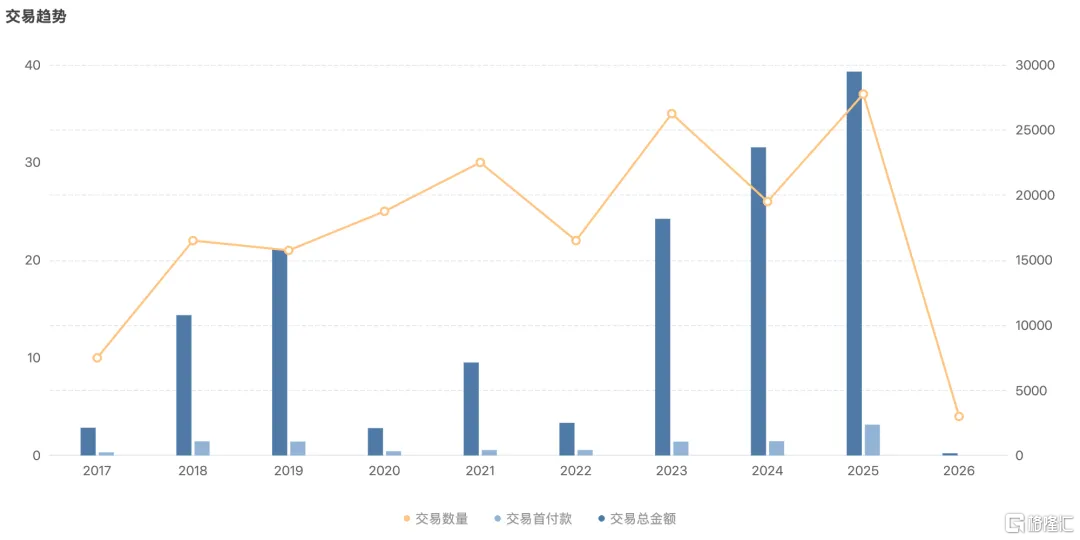
Core Insights - The small nucleic acid drug sector is experiencing a significant surge, marking the beginning of a golden era driven by technological breakthroughs and capital enthusiasm [2][11][22] Industry Developments - On January 5, 2026, Sanofi's APOC3 siRNA drug Plozasiran was approved for domestic market use to treat hyperlipidemia [1] - On January 9, 2026, Rebio Biotech, known as "China's first small nucleic acid stock," successfully listed on the Hong Kong Stock Exchange, with its stock price soaring by 40% on the first day, leading to a market capitalization exceeding 13 billion HKD [1] - China National Pharmaceutical Group announced a 1.2 billion CNY acquisition of Hegia Biotech, securing the world's first clinically validated liver-targeted delivery platform capable of annual dosing [1] Market Trends - The global small nucleic acid drug market has seen nearly 100 business development (BD) collaborations in the past three years, with transaction numbers and amounts increasing annually, reaching over 30 BD deals in 2025 totaling nearly 30 billion USD [4][9] - Notable transactions in 2025 included Novartis acquiring Avidity Biosciences for 12 billion USD and multiple other significant deals involving RNA therapies [7][9] Clinical Advancements - Ionis's APOC3 ASO drug Olezarsen showed promising results in reducing triglyceride levels by up to 72% in patients with severe hypertriglyceridemia, leading to an increase in peak annual sales forecast from 1.5 billion USD to 2.5 billion USD [12] - GSK's ASO therapy Bepirovirsen is expected to be the first drug to achieve functional cure for chronic hepatitis B, with a peak annual sales potential of 2 billion USD [12] Emerging Opportunities - The small nucleic acid drugs are expanding into various therapeutic areas, including obesity and kidney diseases, with promising results from clinical trials demonstrating significant weight loss and metabolic health improvements [13][15] - The number of small nucleic acid drugs in development globally has surpassed 1,200, with siRNA and ASO therapies being the most prominent [17] Strategic Collaborations - Domestic companies are increasingly recognized for their innovative value in small nucleic acid drugs, with active BD transactions, including significant collaborations by Rebio Biotech and other firms [18][21] - Companies like Saintin Biotech are forming strategic partnerships with major pharmaceutical firms to advance their small nucleic acid drug pipelines [19] Conclusion - The convergence of technological advancements, capital influx, and successful clinical outcomes is propelling small nucleic acid drugs into a pivotal position within the pharmaceutical industry, with China poised to become a global innovation hub [22]




Berenberg Bank Remains a Buy on Sanofi (SNY)
Yahoo Finance· 2026-01-26 11:09
Group 1 - Sanofi is considered one of the most undervalued foreign stocks to buy, with a Buy rating and a price target of $62 from Berenberg Bank [1] - UBS downgraded Sanofi from Buy to Neutral, lowering the price target from €105 to €88 due to recent clinical trial failures and a weak pipeline [2][3] - The failure of Tolebrutinib in treating progressive multiple sclerosis and the FDA's delay in approval due to liver injury risks have raised concerns about Sanofi's future [3] Group 2 - Sanofi is a global healthcare company involved in the research, development, manufacture, and marketing of therapeutic solutions across pharmaceuticals, vaccines, and consumer healthcare [4]
Sanofi Says Its Amlitelimab Drug Showed Promising Results in Treating Eczema
WSJ· 2026-01-23 06:29
Core Insights - Sanofi's amlitelimab drug has demonstrated its potential to treat eczema in patients aged 12 years and older through two late-phase studies [1] Group 1 - The drug's efficacy was confirmed in late-phase studies, indicating a significant advancement in eczema treatment options for adolescents and adults [1]

Press Release: Sanofi's amlitelimab confirms its potential in atopic dermatitis
Globenewswire· 2026-01-23 06:00
Core Insights - Amlitelimab shows promising results in treating moderate-to-severe atopic dermatitis (AD) in patients aged 12 years and older, supported by positive outcomes from two phase 3 studies, SHORE and COAST 2 [1][2] Study Results - In the SHORE study, amlitelimab met all primary and key secondary endpoints at Week 24, demonstrating significant efficacy compared to placebo [3][5] - The primary endpoint for SHORE was the proportion of patients achieving a validated investigator global assessment scale for AD (vIGA-AD) of 0 or 1, with a reduction from baseline score of ≥2 points [2][4] - In the COAST 2 study, amlitelimab met the primary endpoint for the US and US reference countries but did not achieve statistical significance for co-primary endpoints in the EU and EU reference countries [5][8] Efficacy Data - In the SHORE study, the proportion of patients achieving vIGA-AD 0/1 was 28.7% for Q4W dosing and 32.3% for Q12W dosing, both statistically significant [4] - The EASI-75 response rates were 48.1% for Q4W and 46.8% for Q12W, also showing statistical significance [4] - In the COAST 2 study, the vIGA-AD 0/1 rates were 25.3% for Q4W and 25.7% for Q12W, with EASI-75 rates of 41.8% and 40.5% respectively [9] Safety Profile - Amlitelimab was well-tolerated in both studies, with treatment-emergent adverse events (TEAEs) similar to placebo [12][13] - Common TEAEs in the SHORE study included nasopharyngitis (9.5% vs 12.5% in placebo) and upper respiratory tract infection (7.9% vs 4.4%) [12] - In the COAST 2 study, the most common TEAEs were nasopharyngitis (5.9% vs 7.4% in placebo) and upper respiratory tract infection (4.8% vs 4.0%) [13] Future Directions - Sanofi plans to move forward with global regulatory submissions for amlitelimab based on the totality of data from the studies [5] - Preliminary analysis from the ATLANTIS phase 2 study indicates continued improvements in skin clearance and disease severity beyond Week 24 [14][16] - Additional phase 3 studies, AQUA and ESTUARY, are expected to report results in H2 2026 [18]

Sanofi (NASDAQ:SNY) Maintains "Buy" Rating Amidst New Drug Approvals
Financial Modeling Prep· 2026-01-17 01:05
Company Overview - Sanofi is a global healthcare leader engaged in the research, development, manufacturing, and marketing of pharmaceutical products, focusing on innovative solutions in vaccines, rare diseases, multiple sclerosis, oncology, immunology, and cardiovascular diseases [1] - The company competes with other pharmaceutical giants like Pfizer and GlaxoSmithKline [1] Recent Developments - Sanofi achieved a significant milestone with the approval of two innovative medicines, Myqorzo and Redemplo, by China's National Medical Products Administration, indicating a strong commitment to the Chinese market [3] - Myqorzo treats obstructive hypertrophic cardiomyopathy, while Redemplo targets triglyceride levels in patients with familial chylomicronemia syndrome [3] Stock Performance - The current stock price of Sanofi (SNY) on NASDAQ is $46.59, reflecting a decrease of approximately 1.86%, with a trading range from $46.49 to $47.03 [4] - Over the past year, the stock has seen a high of $60.12 and a low of $44.62, indicating some volatility [4] - Sanofi's market capitalization is approximately $113.5 billion, with a trading volume of 1,517,570 shares, reflecting a strong position in the pharmaceutical industry despite recent fluctuations [5] Analyst Ratings - Deutsche Bank maintained a "Buy" rating for Sanofi, with the stock trading at $46.63, but adjusted the price target from EUR 110 to EUR 105, indicating a more conservative outlook [2][6]
Sanofi (SNY) Secures Approval for Cablivi in the US and Plozasiran in China
Yahoo Finance· 2026-01-16 17:12
Core Insights - Sanofi is recognized as a top blue-chip stock for investment in 2026, following the FDA's approval of Cablivi for pediatric patients with acquired thrombotic thrombocytopenic purpura (aTTP) [1] Group 1: Product Approvals - Cablivi was initially approved in 2019 for adults with aTTP and is notable for its effectiveness in treating rare blood disorders affecting 1 to 10 million children annually, with 80% of patients achieving clinical remission [2] - Sanofi has also received approval for plozasiran in China, aimed at reducing triglyceride levels in adult patients with familial chylomicronemia syndrome (FCS), following its approvals in the US and Canada [3][4] Group 2: Market Sentiment and Analyst Ratings - Jefferies maintained a Buy rating on Sanofi with a price target of €100, despite some investor concerns regarding management communication after the FDA's Complete Response Letter for tolebrutinib [4]
Why Sanofi May Need To Top $2.4 Billion For Ocular Therapeutix (NASDAQ:SNY)
Seeking Alpha· 2026-01-15 16:47
Group 1 - The article emphasizes the importance of combining scientific expertise with financial analysis in the biotechnology sector to identify promising companies and investment opportunities [1] - The focus is on biotechnology companies that are innovating through unique mechanisms of action, first-in-class therapies, or platform technologies that could reshape treatment paradigms [1] - The analysis will cover companies at various stages of development, from early clinical pipelines to commercial-stage biotechs, evaluating the science behind drug candidates and the competitive landscape [1] Group 2 - The goal is to provide insights that help investors understand both the opportunities and risks in the biotech sector, where breakthrough science can lead to significant returns [1] - The approach includes careful scrutiny of clinical trial design and potential market opportunities while balancing financial fundamentals and valuation [1]