Boston Dynamics

Search documents
新兴机器人技术_2026 年春晚带来的关键惊喜-Asia Emerging Robotics Key surprises from the 2026 Spring Festival Gala
2026-02-24 14:16
on 23-Feb-2026 23 February 2026 Asia Emerging Robotics Asia Emerging Robotics: Key surprises from the 2026 Spring Festival Gala Dien Wang, Ph.D. +852 2123 2622 dien.wang@bernsteinsg.com Jay Huang, Ph.D. +852 2123 2631 jay.huang@bernsteinsg.com Weibin Liang, Ph.D. +852 2123 2666 weibin.liang@bernsteinsg.com On Feb 16, humanoid robots took center stage (video) at the 2026 Spring Festival Gala, the most-watched TV show in China. Unlike the 2025 Gala, where only Unitree's robots performed, this year featured 4 ...

野村上调现代汽车和起亚汽车目标价
Ge Long Hui· 2026-02-24 04:40
野村将现代汽车目标价从570,000韩元上调至650,000韩元,将起亚汽车目标价从220,000韩元上调至 240,000韩元。分析师表示,两家公司将受益于其机器人技术关联公司Boston Dynamics及其从2028年开 始在制造工厂部署人形机器人的计划,但起亚较低的估值可能使其股价有更大的上涨空间。 ...
野村:起亚可能比现代汽车更多地受益于机器人技术
Xin Lang Cai Jing· 2026-02-24 04:37
野村分析师在一份报告中写道,与兄弟公司现代汽车相比,韩国汽车制造商起亚可能从其母集团的机器 人技术计划中获得更大的估值提升。这些分析师表示,两家公司将同样受益于其机器人技术关联公司 Boston Dynamics及其从2028年开始在制造工厂部署人形机器人的计划,但起亚较低的估值可能使其股 价有更大的上涨空间。他们认为起亚股票的估值为其2026年预期收益的8倍,而现代汽车股票的估值为 11倍。野村将起亚的目标价上调9.1%至240,000韩元,并维持其买入评级,理由是人形机器人将带来生 产率的提升。 ...
Toyota hires seven Agility humanoid robots for Canadian factory
TechCrunch· 2026-02-19 20:29
Core Insights - Toyota's Canadian manufacturing subsidiary has integrated seven humanoid robots into its RAV4 SUV production line under a robots-as-a-service agreement, aiming to enhance operational efficiency and improve the work experience for human team members [1][8] Group 1: Robot Deployment - The humanoid robots, named Digit, are developed by Agility Robotics and are designed to operate in industrial settings, specifically to unload auto parts from an automated warehouse [2] - Deploying humanoid robots in real-world environments is challenging, as it requires integration into existing workflows, including maintenance and charging [3] - Agility Robotics is recognized for successfully transitioning robots from laboratory settings to practical applications, with similar robots already in use by logistics companies like GXO, Schaeffler, and Amazon [5] Group 2: Cost and Efficiency - The cost of deploying robots can significantly exceed the purchase price, but AI tools are being utilized to reduce these deployment costs and improve operational performance [6] - The collaboration between Toyota and Agility aims to explore additional use cases that can alleviate repetitive physical tasks for human workers, allowing them to focus on more valuable work [8] Group 3: Future Developments - Agility Robotics is developing a next-generation robot that will be safe to operate alongside human workers, addressing current reliability concerns with existing humanoid robots [9] - Competitors in the humanoid robot space, such as Figure.AI, have also conducted pilot programs, demonstrating the growing interest and investment in this technology across various industries [10]


Our latest reports on robots | 60 Minutes Full Episodes
60 Minutes· 2026-02-14 12:01
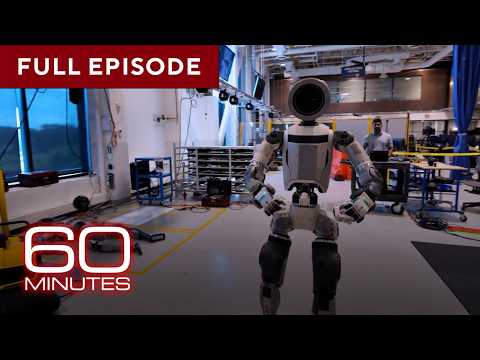
For decades, engineers have been trying to create robots that look and act human. Now, rapid advances in artificial intelligence are taking humanoids from the lab to the factory floor. As fears grow that AI will displace workers, a global race is underway to develop human-like robots able to do human jobs. Competitors include Tesla, startups backed by Amazon and Nvidia and stateup supported Chinese companies. Boston Dynamics is a frontr runner. The Massachusetts company valued at more than a billion dollars ...
CEO of Boston Dynamics to step down, as Hyundai's robot strategy in focus
Reuters· 2026-02-11 08:43
Core Insights - Robert Playter, the CEO of Hyundai Motor Group's robot affiliate Boston Dynamics, is stepping down [1] Company Summary - Boston Dynamics, based in Waltham, Massachusetts, announced the resignation of its CEO on its X account [1]

X @TechCrunch
TechCrunch· 2026-02-10 21:21
Boston Dynamics CEO Robert Playter steps down after 30 years at the company https://t.co/nEpOaJuUgK ...
Boston Dynamics CEO Robert Playter steps down after 30 years at the company
Yahoo Finance· 2026-02-10 21:20
Core Viewpoint - Boston Dynamics is undergoing a leadership change as CEO Robert Playter steps down, with CFO Amanda McMaster temporarily taking over while a replacement is sought [1][2]. Group 1: Leadership Change - Robert Playter announced his resignation as CEO in an internal memo, marking a significant transition for the company [1]. - Amanda McMaster, the current CFO, will serve as interim CEO during the search for a new leader [1]. Group 2: Company Background - Boston Dynamics was founded in 1992 as a spinoff from the Massachusetts Institute of Technology by Marc Raibert [3]. - The company has changed ownership multiple times, being acquired by Alphabet in 2013, sold to SoftBank in 2017, and then acquired by Hyundai in 2021 [3]. Group 3: Contributions of Robert Playter - Playter has been with Boston Dynamics for 30 years, holding various roles including vice president of engineering and COO before becoming CEO in 2020 [2]. - Under his leadership, the company transitioned from a research lab to a leader in mobile robotics, notably commercializing the quadruped robot Spot in 2020 [2][4].
物理人工智能
美国安全与新兴技术中心· 2026-02-06 02:00
Investment Rating - The report does not explicitly provide an investment rating for the Physical AI industry Core Insights - The convergence of AI and robotics, termed Physical AI, is seen as a potential breakthrough akin to previous technological revolutions, with significant market growth anticipated, particularly in humanoid robotics, projected to reach $5 trillion by 2050 [3][12][49] - The industry faces challenges including technology and economic barriers, with a lack of standardization in the robotics supply chain hindering scalability and innovation [4][14][21] - Policymaker interest in Physical AI is driven by economic, social, and national security factors, particularly in addressing labor shortages and enhancing operational efficiency in various sectors [12][14] Summary by Sections Introduction - Physical AI enables autonomous machines to learn and interact with their environment, with current focus on humanoid, industrial, and autonomous mobile robots [8][10] AI-Robotics Supply Chain - The report outlines the hardware and software supply chains essential for Physical AI, highlighting the need for breakthroughs in both areas to support the convergence of AI and robotics [5][16] Robotics Hardware Supply Chain - The hardware supply chain is characterized by a lack of standardization, which limits economies of scale and innovation among component suppliers [21][64] - Key components include structural systems, actuation systems, power systems, computing systems, and sensor systems, each with specific requirements and challenges [19][22] Robotics Software Supply Chain - Advances in AI, including large language models and reinforcement learning, are enhancing how robots are trained and how they learn from their environments [27][28] - The software ecosystem is critical for enabling robots to understand and interact with the physical world effectively [34][60] Competitiveness Assessment - The report assesses global competitiveness in AI-robotics convergence, noting that while China leads in research output, the U.S. excels in highly cited work and investment [37][42] - U.S. firms dominate in investment and patenting activities, particularly in specific sub-markets of robotics [44][43] Market Analysis - The global AI-robotics market is projected to grow significantly, with estimates suggesting it could exceed $100 billion in the next decade [49][50] - The market for humanoid robots is expected to grow from $6 billion today to $38 billion by 2035, with substantial investment directed towards warehouse robotics [48][49]
第一波人形机器人倒闭潮,来了
芯世相· 2026-02-03 08:37
Core Viewpoint - The humanoid robot industry is experiencing a dual reality in 2025, with significant financing and market activity on one side, while many companies face collapse due to operational and financial challenges on the other [4][10]. Group 1: Industry Overview - In 2025, the humanoid robot sector saw 57 billion yuan in financing, with nearly 30 companies preparing for IPOs, while over 100 companies are struggling, leading to a stark divide between the leading and lagging firms [4][14]. - The industry is undergoing a brutal elimination process, with many once-prominent companies failing to transition from concept to production, revealing a gap between technological enthusiasm and commercial viability [4][9]. Group 2: Company Failures - K-Scale Labs, a notable startup, collapsed just before mass production due to cash flow issues, highlighting the challenges faced by U.S. companies lacking a complete local supply chain [5][10]. - Rethink Robotics, a pioneer in collaborative robots, faced its second closure in 2025 after failing to meet market expectations, demonstrating the risks of rushed product launches [6][10]. - The closure of Embodied, which produced a social robot for children, underscores the vulnerabilities of cloud-dependent models, as the company's failure rendered its product useless [8][10]. - iRobot, known for its Roomba, filed for bankruptcy in December 2025, attributed to prolonged financial struggles and competition from lower-priced alternatives [8][10]. Group 3: Common Causes of Failure - The primary reasons for company failures include funding shortages, commercialization failures, product homogeneity, and insufficient technological reserves [10][11]. - Funding shortages are critical, as many companies, like K-Scale Labs and iRobot, faced insurmountable debts and cash flow issues leading to their demise [10][11]. - Over 50% of humanoid robot orders are primarily for public relations and data collection rather than genuine productivity, indicating a failure in commercial viability [11][12]. - Product homogeneity has led to a competitive landscape where many companies produce similar offerings, diluting their market differentiation [12][13]. Group 4: Future Outlook - The humanoid robot industry is expected to see a significant shift in 2026, with a focus on industrial applications rather than academic research, as companies seek to establish reliable commercial orders [14][15]. - Predictions for global humanoid robot shipments in 2026 vary, with estimates ranging from 30,000 to over 50,000 units, depending on technological advancements [15]. - Surviving companies must differentiate their products, establish real commercial cycles, maintain funding capabilities, and leverage data to enhance AI models [15][16].