Bosch

Search documents
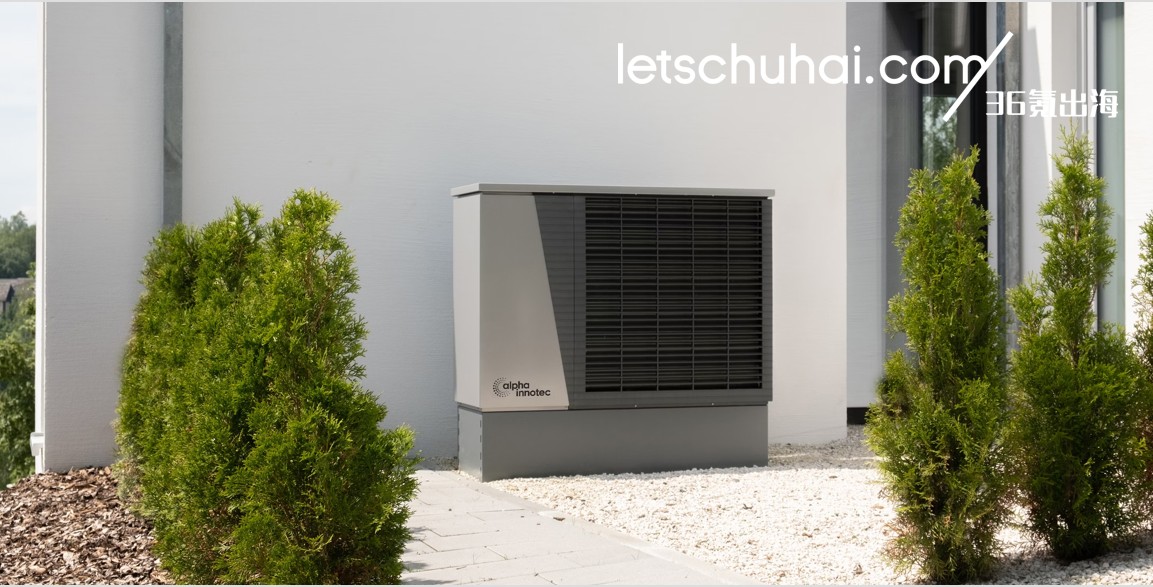
36氪出海·欧洲|这个夏天,德国热泵市场战火重燃
3 6 Ke· 2025-05-08 07:35
Core Points - The new Building Energy Act (GEG) has become a focal point in German politics, influencing the recent elections and leading to the CDU's commitment to repeal it after their victory [2][4][5] - GEG aims to implement a new national energy standard in the construction sector, requiring a minimum of 65% renewable energy usage in heating systems for new buildings starting January 2024 [5][6] - The act has faced significant opposition, particularly from the CDU, which argues it exacerbates housing costs and benefits only high-income groups [8][11] Summary by Sections GEG Overview - GEG was drafted by Merkel's government in 2020 and passed in April 2023, with the goal of reducing greenhouse gas emissions by 65% by 2030 and achieving carbon neutrality by 2045 [5][6] - The law mandates that all new housing must use heating systems that meet the 65% renewable energy requirement, phasing out traditional oil and gas boilers [5][6] Impact on the Heat Pump Industry - The heat pump industry is the primary beneficiary of GEG, with the market experiencing explosive growth, reaching a size of €7.3 billion and over 350,000 units installed by 2023 [9][11] - The introduction of the BEG subsidy program encourages homeowners to replace old heating systems with heat pumps, covering 30% to 70% of installation costs [7][12] Market Dynamics and Challenges - Despite the initial boom, the heat pump market is expected to decline by over 46% in 2024 due to political uncertainty and a sluggish real estate market [11][12] - The new government plans to adopt more flexible policies, such as CO2 trading mechanisms, instead of enforcing strict installation of renewable heating systems [11][12] Opportunities for Chinese Companies - The BEG subsidy program will continue into 2025, providing a stable funding source for the heat pump market, which could benefit Chinese manufacturers [12][17] - Chinese brands like Gree are already making strides in the European market, with Gree selling nearly 20,000 units annually in Germany [14][17] - The presence of over 30 Chinese heat pump companies at recent trade shows indicates a growing interest in capturing market share in Germany [20]

GLOBALFOUNDRIES(GFS) - 2025 Q1 - Earnings Call Presentation
2025-05-06 11:16
Financial Performance - Revenue reached $1.59 billion, a 2% year-over-year increase[12] - Non-IFRS Gross Margin was 23.9%, a decrease of 220 bps year-over-year[12] - Non-IFRS Earnings per Share was $0.34, a 10% year-over-year increase[12] - Non-IFRS adjusted free cash flow margin was approximately 10%[19] End Market Analysis - Smart Mobile Devices revenue was $586 million, a decrease of 14% year-over-year[41] - Automotive revenue was $309 million, a 16% year-over-year increase[43] - Home and Industrial IoT revenue was $328 million, a 6% year-over-year increase[46] - Communications Infrastructure and Datacenter revenue was $174 million, a 45% year-over-year increase[51] Q2 2025 Guidance (Non-IFRS) - Net Revenue is expected to be $1.675 billion ± $25 million[58] - Gross Margin is expected to be 25.0% ± 100bps[58] - Operating Expenses are expected to be $185 million ± $10 million[58] - Diluted EPS is expected to be $0.36 ± $0.05[58]

GlobalFoundries Reports First Quarter 2025 Financial Results
GlobeNewswire News Room· 2025-05-06 11:00
Core Insights - GLOBALFOUNDRIES Inc. reported strong preliminary financial results for Q1 2025, achieving revenue and earnings at the high end of its Non-IFRS guidance ranges, driven by growth in key markets such as Automotive, Communications Infrastructure, and Datacenter [3][7] Financial Highlights - Net revenue for Q1 2025 was $1.585 billion, a year-over-year increase of 2% from $1.549 billion in Q1 2024 [6][14] - Gross profit was $355 million, with a gross margin of 22.4%, down from 25.4% in Q1 2024 [6][7] - Non-IFRS gross profit was $379 million, with a Non-IFRS gross margin of 23.9% [6][7] - Operating profit was $151 million, with an operating margin of 9.5% [9][14] - Net income was $211 million, translating to diluted earnings per share of $0.38, compared to $0.24 in Q1 2024 [7][14] Business Developments - The company announced a strategic partnership with indie Semiconductor to develop high-performance radar systems-on-chip, targeting advanced driver assistance systems [8] - Ayar Labs will utilize GF's monolithic photonics platform for the industry's first Universal Chiplet Interconnect Express optical interconnect chiplet, enhancing AI infrastructure performance [8] - Bosch launched a next-generation single chip radar sensor at Auto Shanghai, continuing its partnership with GF to enable high-performance automotive radar technology [8] Guidance for Q2 2025 - The company expects Q2 2025 net revenue to be approximately $1.675 billion, with a gross margin of around 24.1% [10][11] - Diluted EPS is projected to be approximately $0.27 under IFRS and $0.36 under Non-IFRS measures [10][11]

Item 8.01. Other Events. Chicago Rivet & Machine Company
Prnewswire· 2025-05-01 21:42
Group 1 - Chicago Rivet & Machine Co. announced the appointment of James T. Tanner as Senior Vice President of Sales and Marketing, effective immediately [1] - Mr. Tanner has over 30 years of sales and leadership experience in the manufacturing industry, with a strong background in revenue generation and corporate branding [2] - CEO Gregory Rizzo expressed confidence in Mr. Tanner's ability to enhance sales efforts and develop new customer relationships [3] Group 2 - Mr. Tanner has held executive positions at notable companies such as Bosch and MacLean-Fogg, and has more than a decade of experience in the fastener industry [2] - There are no family relationships or related party transactions between Mr. Tanner and the Company that require disclosure [3]


Auto Shanghai 2025 Kicks Off with Innovation and Global Collaboration
Globenewswire· 2025-04-30 06:17
Core Insights - Auto Shanghai 2025 is a significant event showcasing advancements in technology and innovation in the automotive industry, reflecting the global market's shift towards China [1][6] - The exhibition spans over 360,000 square meters with nearly 1,000 exhibitors from 26 countries, marking it as the largest in its history [2] - The event emphasizes electric vehicles, with major Chinese companies like BYD, NIO, XPeng, and Li Auto highlighting China's role in automotive innovation [2][3] Industry Trends - The exhibition features a dedicated area for automotive technology and supply chain, with over 50,000 square meters allocated to this sector [3] - Leading global auto parts suppliers and domestic leaders are showcasing innovations in autonomous driving, AI, and Internet of Vehicles (IoV) solutions [3] - Forums and symposiums, including the 2025 Global Automotive Leaders Roundtable, will discuss key trends such as electrification, autonomous driving, and digital transformation [4] Visitor Engagement - Public days from April 27 to May 2 will offer immersive experiences, integrating automotive innovation with urban culture and interactive elements [5] - Collaborations with tech platforms aim to engage visitors dynamically, highlighting the intersection of the automotive industry with modern lifestyles [5] Organizational Aspects - The event is organized by the Shanghai Council for the Promotion of International Trade and the China Association of Automobile Manufacturers, serving as a hub for global collaboration [6]
Flex's Liquid Cooling Business Expands Portfolio with High-Performance Coolant Distribution Unit for AI and HPC Applications
Prnewswire· 2025-04-29 08:00
Core Insights - Flex's JetCool has launched the SmartSense Coolant Distribution Unit (CDU), a modular liquid cooling solution designed for data centers, capable of cooling up to 300kW in a single rack [1][2] - The SmartSense CDU enables "free cooling" with inlet temperatures above 60°C, eliminating the need for chillers and significantly reducing energy and water consumption [2][3] - Flex emphasizes its advanced manufacturing capabilities and services to support the deployment and lifecycle management of liquid cooling infrastructure [3][4] Company Overview - Flex is a global manufacturing partner that provides technology innovation, supply chain, and manufacturing solutions across diverse industries [5] - JetCool, a subsidiary of Flex, specializes in thermal management solutions for compute-intensive applications, supporting advancements in high-performance computing [6][9] Product Features - The SmartSense CDU supports hyperscale, enterprise, and colocation applications, enhancing the scalability of liquid cooling infrastructure [7] - The system includes features such as commissioning and system validation, rapid fulfillment of critical spare parts, and ongoing maintenance with integrated telemetry for performance optimization [8] Industry Context - The introduction of the SmartSense CDU addresses the challenges posed by AI and high-density workloads in traditional thermal management systems [2] - Flex's solutions are positioned to accelerate data center infrastructure deployment in the AI era, meeting the growing demands for power and cooling [4]


2025年全球自动驾驶行业洞察报告
亚瑟·D·利特尔咨询公司· 2025-04-08 01:50
Investment Rating - The report does not explicitly provide an investment rating for the autonomous mobility industry Core Insights - The autonomous mobility sector is experiencing a paradigm shift with increasing integration of autonomous vehicles (AVs) into daily life, driven by advancements in technology and changing consumer preferences [8][10] - Despite a challenging venture-funding environment, real-world testing and deployment of AVs are expanding globally, particularly in the US and China, with notable developments in the Gulf Cooperation Council (GCC) region [13][14][16] - The successful commercialization of AVs requires an ecosystem approach, emphasizing collaboration among public and private sectors, technology providers, and transport agents [17][24] Industry Dynamics - The autonomous driving sector is pursuing commercialization despite a sluggish venture-funding environment, with trends including the exploration of robobuses and robotaxis as part of mobility-as-a-service (MaaS) offerings [13][14] - AV companies are scaling up testing and commercial pilot efforts globally, with significant activity in the US and China, while the GCC is emerging as a hotspot for AV pilots [14][16] - Financial struggles persist in the AV industry, with a shift in investor focus towards targeted applications like trucking and last-mile delivery, as companies seek profitability through specific use cases [18][20] Use Case of the Semester - Autonomous buses, or robobuses, are being integrated into urban transportation systems, offering efficiency and safety improvements while addressing driver shortages [44][45] - Successful integration of robobuses faces challenges such as safety, connectivity, and consumer acceptance, necessitating a thorough piloting process [46][48] - The deployment of robobuses requires careful planning and execution, including regulatory approvals, infrastructure modifications, and operational testing [52][55] City of the Semester: Beijing - Beijing is recognized for its rapid advancement in AV deployment, with over 300 autonomous delivery vehicles fulfilling over 4 million orders by January 2024 [70][71] - The city has established a supportive regulatory environment, advanced testing infrastructure, and public awareness initiatives to facilitate AV integration [71][89] - Beijing's digital infrastructure, including high-speed 5G networks and smart traffic management systems, supports the growth of autonomous mobility [87][90] Interview of the Semester - The interview with Dr. Tony Han, CEO of WeRide, highlights the industry's transition from testing to commercialization, emphasizing technological advancements and regulatory developments [91][92]

Electric Mobility HV Cables Market To Reach USD 5.26 Billion With Growing CAGR 16.8% | Industry Trends 2024-2032
Globenewswire· 2025-03-24 11:45
Core Insights - Bosch has introduced a new lightweight charging cable for electric vehicles, which is approximately 40% lighter than traditional cables with a "charging brick" [1] - The Global Electric Mobility HV Cables Market was valued at USD 1.30 billion in 2023 and is projected to grow to USD 5.26 billion by 2032, reflecting a compound annual growth rate (CAGR) of 16.8% from 2024 to 2032 [1][2] Market Drivers - The high-voltage (HV) cables market is experiencing rapid growth due to the increasing adoption of electric vehicles (EVs) as sustainability becomes a priority for both governments and consumers [3] - Technological advancements are enhancing the efficiency and safety of HV cables, which are essential for effective power transfer in electric mobility systems [3] - Manufacturers are focusing on improving the durability and reliability of HV cables to withstand automotive conditions, which is crucial for consumer trust [3] Market Restraints - The Electric Mobility HV Cables Market faces challenges due to the limited availability of essential raw materials like copper and aluminum, which are critical for efficient power transmission [6] - Political circumstances and rising metal consumption are causing shortages and price fluctuations, impacting overall production costs for HV cables [6] Market Opportunities - Government initiatives are significantly driving the expansion of the HV cable market for EVs, with funding for charging infrastructure and financial incentives for EV buyers [7] - The demand for efficient HV cable systems is increasing as environmental awareness grows, prompting manufacturers to innovate and optimize cable designs [7] Market Challenges - The HV cables market must contend with extreme environmental conditions that can damage cable insulation, affecting power transmission reliability and safety [8] Key Players - Notable companies in the Electric Mobility HV Cables Market include Prysmian Group, Nexans, LEONI, Sumitomo Electric Industries, LAPP Group, Huber+Suhner, TE Connectivity, and General Cable [11] Regional Insights - In Europe, the utilization of electric vehicles is rising due to regulatory measures and government-sponsored programs, with Norway and the Netherlands leading in market share [13]